PE Anti‑Static Inner Film Detection – Accredited Electrical, Mechanical and Barrier Performance Evaluation for Global Markets
Our internationally accredited laboratory delivers a specialist PE anti‑static inner film detection service that provides flexible‑packaging converters, electronic‑component manufacturers, medical‑device packagers and industrial‑bag producers worldwide with the independent, traceable data they need to verify the static‑dissipative properties, the mechanical strength and the contamination‑control capability of their polyethylene protective liners. Every measurement is performed under the rigorous framework of ISO/IEC 17025, and each report bearing the ILAC mark is unconditionally accepted by regulatory authorities, notified bodies and supply‑chain partners in all major economies. The PE anti‑static inner film detection programme subjects the film to a complete suite of electrical, physical, thermal and cleanliness evaluations, quantifying the surface resistivity, the static decay time, the tensile strength and the puncture resistance, the water‑vapour and the oxygen barrier, and the level of the ionic contamination, ensuring that the liner will reliably protect the enclosed electronic or pharmaceutical product from the electrostatic discharge, the physical damage and the environmental degradation throughout its service life.
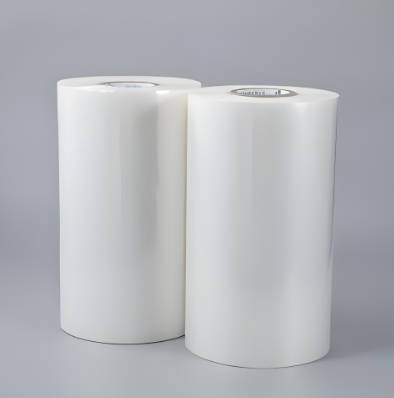
Product Samples We Regularly Test Using PE Anti‑Static Inner Film Detection
The resistivity meters, static‑decay analysers, universal tensile testers, barrier‑permeation instruments and clean‑room extraction facilities in our laboratory accommodate a broad variety of anti‑static polyethylene films and finished liners. The following categories represent the most frequently tested items:
- Anti‑static polyethylene film rolls and sheets – low‑density and linear‑low‑density polyethylene films containing the migratory or the permanent anti‑static additives, used for the fabrication of the bags, the pouches and the pallet‑covers that protect the static‑sensitive electronic components
- Anti‑static bubble wrap and foam laminates – air‑cellular cushioning materials with an anti‑static PE outer layer, evaluated for the combined cushioning performance and the surface‑resistivity compliance
- Metallised and conductive‑coated PE anti‑static films – films with a vapour‑deposited aluminium or a conductive‑polymer coating that achieve the very low surface resistivity required for the shielding of the electromagnetic interference
- Anti‑static polyethylene bags and tubing – finished, heat‑sealed bags, zipper‑lock pouches and lay‑flat tubing that are used as the primary packaging for the printed‑circuit‑board assemblies, the hard‑disk drives and the medical‑device kits
- Co‑extruded multi‑layer anti‑static films – structures that combine an anti‑static inner layer with a high‑barrier outer layer of the nylon, the ethylene‑vinyl‑alcohol or the polyester, designed for the vacuum‑packaging and the modified‑atmosphere packaging of the sensitive devices
- Aged and field‑retrieved anti‑static PE films – samples that have been stored in the warehouse or have been in service for a defined period, submitted for the verification of the long‑term retention of the anti‑static properties
Electrical Properties and Static Dissipation Testing – PE Anti‑Static Inner Film Detection According to ASTM D257 and IEC 61340‑2‑3
- Determination of the surface resistivity and the resistance to the ground by the concentric‑ring electrode method according to ASTM D257 (Standard Test Methods for DC Resistance or Conductance of Insulating Materials) and IEC 61340‑2‑3 (Electrostatics – Part 2‑3: Methods of test for determining the resistance and resistivity of solid materials used to avoid electrostatic charge accumulation): a specimen of the film is placed in a guarded‑electrode test fixture, and a defined direct‑current voltage – typically 100 V or 500 V – is applied. The surface resistivity in ohms per square and the volume resistivity in ohm‑metres are calculated from the measured current and the electrode geometry. The results are reported after a defined electrification time, and the film is classified as “conductive”, “static‑dissipative” or “insulative” according to the ranges specified by the ANSI/ESD S20.20 and the IEC 61340‑5‑1 standards. This PE anti‑static inner film detection is the primary acceptance criterion for the packaging materials used in the electrostatic‑discharge protected areas.
- Measurement of the static‑decay time by the charged‑plate method according to IEC 61340‑2‑1 (Electrostatics – Part 2‑1: Measurement methods – Ability of materials and products to dissipate static electric charge) and the US Federal Test Standard 101C Method 4046: the film specimen is mounted on a grounded metal plate, and a high‑voltage corona source charges the surface to a defined initial potential, typically 5 000 V. The time required for the surface potential to decay to 1 % or 10 % of its initial value is recorded in seconds, and the result must be below the limit – usually 2.0 seconds – to guarantee the rapid dissipation of any accidental static discharge during the handling of the packaged device.
- Evaluation of the triboelectric charging and the charge‑generation tendency according to IEC 61340‑4‑4 (Electrostatics – Part 4‑4: Standard test methods for specific applications – Electrostatic classification of flexible intermediate bulk containers) and the internal procedures: the film is rubbed against a standardised reference material under the controlled conditions, and the magnitude of the generated electrostatic charge is measured by a field‑meter, providing the data that the user employs to select the liner that will not itself become a source of the dangerous static buildup during the automated bag‑filling operation.
- Influence of the relative humidity and the temperature on the electrical properties: the surface resistivity and the static‑decay time are measured after the conditioning at 12 %, 23 °C and 50 % relative humidity, and at 30 °C and 80 % relative humidity, ensuring that the film maintains its anti‑static function in the dry‑winter and the humid‑tropical environments encountered in the global supply chain.
- Long‑term stability and the humidity‑aging of the anti‑static performance: the film is stored at the elevated temperature and the humidity for a defined period, and the surface resistivity is remeasured at intervals, quantifying the rate of the anti‑static‑additive depletion and the shelf‑life of the protective packaging material.
Mechanical Strength and Physical Integrity – PE Anti‑Static Inner Film Detection According to ASTM D882 and ASTM D1709
- Determination of the tensile strength, the elongation at break and the Young's modulus according to ASTM D882 (Standard Test Method for Tensile Properties of Thin Plastic Sheeting) and ISO 527‑3: the film is cut into standardised strips and pulled at a constant rate, and the ultimate tensile strength, the elongation and the secant modulus are reported for both the machine and the transverse directions. This PE anti‑static inner film detection verifies that the anti‑static additive has not embrittled the polyethylene and that the film retains the mechanical robustness required for the fabrication of the bags and the pouches.
- Dart‑drop impact resistance according to ASTM D1709 (Standard Test Methods for Impact Resistance of Plastic Film by the Free‑Falling Dart Method): the energy required to cause the failure of the film under a high‑speed puncture is measured, and the result is expressed as the mass of the dart that causes 50 % of the specimens to break, providing the data that the converter uses to guarantee the protection of the packaged product against the accidental drops and the impacts during the transport.
- Elmendorf tear resistance according to ASTM D1922 (Standard Test Method for Propagation Tear Resistance of Plastic Film and Thin Sheeting by Pendulum Method): the force required to propagate a pre‑cut slit through the film is recorded, and the tear resistance in newtons or millinewtons is reported, ensuring that any small puncture or the nick created during the heat‑sealing will not propagate into a catastrophic rupture.
- Heat‑seal strength and the hot‑tack performance according to ASTM F88 (Standard Test Method for Seal Strength of Flexible Barrier Materials) and ASTM F1921: a strip containing a laboratory‑produced or an in‑line seal is peeled apart, and the peak seal‑force per unit width is measured. The hot‑tack test evaluates the strength of the seal while it is still hot, simulating the behaviour of the film on the vertical‑form‑fill‑seal machine, and both parameters must meet the specification to guarantee the hermeticity and the cleanliness of the finished package.
- Measurement of the film thickness, the basis weight and the dimensional stability: the thickness is measured by a calibrated micrometre, and the grammage is determined by the gravimetric method, while the unrestrained thermal shrinkage at the specified heat‑seal temperature is measured according to ASTM D2732, providing the fundamental process‑control data for the film producer and the converter.
Barrier, Cleanliness and Contamination Control – PE Anti‑Static Inner Film Detection According to ASTM F1249, ASTM E595 and IEST‑STD‑CC1246
- Determination of the water‑vapour transmission rate by the modulated‑infrared‑sensor method according to ASTM F1249 (Standard Test Method for Water Vapor Transmission Rate Through Plastic Film and Sheeting Using a Modulated Infrared Sensor) and ASTM E96: the film is clamped in a diffusion cell, and the steady‑state WVTR in grams per square metre per day is reported, verifying that the anti‑static liner provides the adequate moisture barrier for the enclosed desiccant and the moisture‑sensitive components.
- Oxygen transmission rate by the coulometric sensor method according to ASTM D3985 (Standard Test Method for Oxygen Gas Transmission Rate Through Plastic Film and Sheeting Using a Coulometric Sensor) and ISO 15105‑2: the oxygen permeability is measured, and the result is used to calculate the shelf‑life of the oxygen‑sensitive electronic or medical device packaged in the anti‑static liner.
- Outgassing and the non‑volatile residue testing according to ASTM E595 (Standard Test Method for Total Mass Loss and Collected Volatile Condensable Materials from Outgassing in a Vacuum Environment) and the internal gravimetric methods: the film is heated in a vacuum, and the total mass loss and the collected volatile condensable material are reported, ensuring that the anti‑static film does not emit the organic vapours that could condense on the optical surfaces, the hard‑disk platters or the semiconductor wafers.
- Ionic contamination and the surface‑cleanliness assessment according to the IEST‑STD‑CC1246 (Product Cleanliness Levels – Applications, Requirements, and Determination) and the IPC‑TM‑650 Method 2.3.25: the film surface is rinsed with a deionised water‑isopropanol mixture, and the resistivity of the extract is measured, yielding the sodium‑chloride‑equivalent ionic contamination in micrograms per square centimetre, which must be below the limit for the assembly‑clean‑room compatibility.
- Anti‑static‑additive bloom and the transfer test: the film is pressed against a clean glass plate under a defined load and temperature, and the transferred organic residue is measured by the contact‑angle goniometry or the FTIR spectroscopy, ensuring that the anti‑static agent does not migrate and contaminate the surface of the packaged component.
Report Acceptance and Global Regulatory Compliance
All measurements performed within our PE anti‑static inner film detection service are executed under the fully accredited scope of our ISO/IEC 17025 quality management system. Each test report that carries the ILAC mark is therefore automatically recognised by regulatory authorities, notified bodies, customs offices and supply‑chain partners in all major economies. For PE film converters, electronic‑component packagers, medical‑device manufacturers and industrial‑packaging suppliers anywhere in the world, the report constitutes legally robust, internationally accepted evidence that the surface resistivity, the static‑decay performance, the mechanical strength, the barrier properties and the contamination potential of the anti‑static polyethylene film have been determined in accordance with the applicable ASTM, IEC, ISO and customer‑specified methods. The documentation can be directly used to support the ANSI/ESD S20.20 compliance, the CE marking, the issue of inspection certificates according to EN 10204 or equivalent national standards, and the resolution of commercial and technical disputes concerning the electrostatic‑discharge protection and the long‑term reliability of any PE anti‑static inner film.