
Oxygen Permeability Testing Service – Accredited Barrier Property Evaluation for the Czech Market
Our laboratory provides a specialist oxygen permeability experiment service that enables manufacturers of food packaging, pharmaceutical blister films, medical device pouches and flexible laminates to independently verify the oxygen transmission rate of their materials. All tests are performed under our ISO/IEC 17025 accreditation, and every report bearing the ILAC mark is automatically accepted by the Czech Trade Inspection Authority, the State Institute for Drug Control and all notified bodies within the European Union. An accurate oxygen permeability experiment quantifies the volume of oxygen that diffuses through a unit area of material per day under controlled temperature and humidity, providing the critical data needed to predict product shelf life, to select the correct barrier structure and to demonstrate compliance with EU food-contact regulations and pharmacopoeial standards.
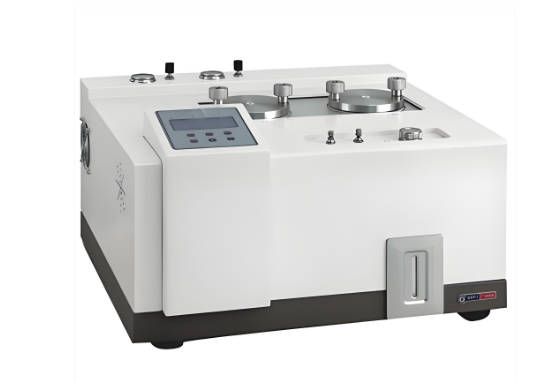
Product Samples We Regularly Subject to Oxygen Permeability Experiments
Our coulometric and manometric permeation analysers accept flat films, sheets and complete packages. The following categories represent the most frequently tested items:
- Flexible packaging films and laminates – polyethylene, polypropylene, polyester, polyamide, ethylene‑vinyl alcohol copolymer and metallised films for food, beverage and personal‑care products
- Rigid containers and bottles – polyethylene terephthalate bottles, multilayer co‑extruded containers, glass jars with metal closures and plastic tubs with sealed lids
- Pharmaceutical blister foils and cold‑form laminates – aluminium‑based and high‑barrier polymer structures for tablets, capsules and medical devices
- Medical device packaging – sterilisation pouches, header bags and rigid trays with Tyvek or film lids
- Coatings and barrier treatments – silicon oxide, aluminium oxide and nanoclay‑coated films, and plasma‑treated surfaces intended to reduce the oxygen permeability of the base substrate
- Closures, gaskets and sealing layers – induction‑seal liners, crown‑cork gaskets and elastomeric septa for vials and syringes
Flexible Films and Sheet Materials – Oxygen Permeability Experiment According to ISO 15105‑2 and ASTM D3985
- Determination of the oxygen transmission rate by the coulometric equal‑pressure method according to ČSN EN ISO 15105‑2 and ASTM D3985: a flat specimen is clamped in a diffusion cell, and one side is exposed to a flowing oxygen stream while the other side is swept by a nitrogen carrier gas. Oxygen molecules that permeate through the material are transported to a coulometric sensor, and the steady‑state transmission rate is reported in cm³/(m²·day) or cm³/(package·day). The measurement is performed at a controlled temperature of 23 °C and a relative humidity typically set to 0 % or 50 %, and the result is directly used to verify the declared barrier class of the packaging film.
- Oxygen permeability at elevated temperature and humidity: the test chamber is heated to 38 °C or 40 °C, and the relative humidity is increased to 90 % to simulate the accelerated shelf‑life conditions. The increase in the oxygen transmission rate under these stressed conditions is reported, and the data are used to predict the product shelf life in the Czech retail supply chain where summer temperatures can exceed 30 °C.
- Measurement of the oxygen permeability of metallised and coated barrier films: the specimen is placed with the barrier layer facing either the oxygen or the carrier‑gas side, and the influence of the orientation and any pinhole or cracking effect is evaluated. The oxygen permeability experiment identifies the minimum coating thickness and the optimum substrate that achieve the target barrier performance.
- Oxygen transmission rate after flex‑cracking and Gelbo‑flex testing: the film is subjected to a defined number of flexing cycles according to ASTM F392, and the oxygen permeability is remeasured. The test reveals the sensitivity of the metallised or the oxide‑coated barrier to the mechanical stresses that occur during the form‑fill‑seal packaging process and the transport vibration.
Complete Packages, Bottles and Closures – Oxygen Permeability Experiment for Finished Articles
- Determination of the total oxygen ingress into a bottle or a container according to ASTM F1307: the package is attached to the permeation analyser, and the interior is purged with nitrogen while the exterior is exposed to an oxygen‑rich environment. The oxygen that enters the package through the walls, the closure and the seal is detected, and the result is expressed as cm³/(package·day). This oxygen permeability experiment provides the most direct measurement of the shelf‑life performance of a packaged product, because it includes the contributions of all the components of the package.
- Closure and seal integrity evaluation by oxygen permeation: a bottle with a perfect barrier body is fitted with the test closure, and the oxygen transmission rate is measured. The difference between the package‑level and the wall‑level permeation quantifies the oxygen leakage or the permeation through the closure liner, enabling the selection of the correct liner material and the tightening torque for the capping machine.
- Oxygen permeation of pharmaceutical vials and pre‑filled syringes: the sealed container is placed in a specially adapted test cell, and the oxygen ingress is measured over several days. The test supports the demonstration of the container‑closure integrity required by the State Institute for Drug Control for the registration of sterile and oxygen‑sensitive drug products in the Czech Republic.
Pharmaceutical and Medical Device Barrier Materials – Oxygen Permeability Experiment According to Pharmacopoeial Methods
- Oxygen transmission rate of blister‑packaging foils according to the principles of the European Pharmacopoeia and USP ⟨671⟩: the aluminium‑based cold‑form or the high‑barrier polymer‑based thermoformable film is tested by the coulometric method, and the result is checked against the maximum transmission rate permitted for the specific drug product. The report provides the objective evidence that the packaging will protect the tablets or the capsules from oxidative degradation over the labelled shelf life.
- Oxygen permeability of sterilisation pouches and medical‑device header bags according to EN 868‑5 and ISO 11607‑1: the porous or the film‑based packaging is tested before and after the sterilisation process, and the oxygen transmission rate is reported. The experiment verifies that the sterile barrier system maintains its integrity and its barrier properties after the ethylene oxide, gamma or steam sterilisation, as required by Czech medical‑device regulations.
- Correlation of the oxygen permeability with the water‑vapour transmission rate for a complete barrier characterisation: the same material is tested for both the oxygen and the water‑vapour transmission, and the combined data are used to calculate the shelf life of the product under the climatic conditions of Central Europe. This oxygen permeability experiment provides the multi‑parameter barrier profile that the packaging engineer needs to select the most cost‑effective laminate structure.
Report Acceptance and Regulatory Compliance in the Czech Republic
All measurements performed within our oxygen permeability experiment service are executed under the fully accredited scope of our ISO/IEC 17025 quality management system. Each test report that carries the ILAC mark is therefore automatically recognised by the Czech Trade Inspection Authority, the State Institute for Drug Control and all notified bodies in the European Union. For packaging converters, food processors, pharmaceutical manufacturers and medical‑device producers in the Czech Republic, the report constitutes legally robust evidence that the oxygen barrier properties of the material or the package have been determined in accordance with the applicable ISO, ASTM, EN and pharmacopoeial methods. The documentation can be directly used to support the declaration of compliance for food‑contact materials, the registration dossier for medicinal products and the technical file for CE‑marked medical devices.




