Modified Asphalt Testing Service – Accredited Performance and Characterization for Global Markets
Our internationally accredited laboratory delivers a comprehensive modified asphalt testing service that provides polymer and crumb‑rubber modified binder producers, pavement engineers, highway agencies, roofing membrane manufacturers and research institutes worldwide with the independent, traceable data they need to verify formulation consistency, predict pavement performance and certify compliance with contract specifications. Every test is performed under the rigorous framework of ISO/IEC 17025, and each report bearing the ILAC mark is unconditionally accepted by regulatory authorities, notified bodies and supply‑chain partners in all major economies. The modified asphalt testing programme subjects the binder to a complete suite of physical, rheological, chemical and ageing protocols, quantifying the softening point, penetration, elastic recovery, storage stability, viscosity, dynamic shear modulus, creep stiffness and low‑temperature cracking resistance. For an asphalt terminal supplying a styrene‑butadiene‑styrene modified binder for a motorway pavement, a roofing plant qualifying an atactic polypropylene blend, or a research consortium evaluating a novel bio‑oil modifier, this service delivers the legally robust, defensible performance data that underpin mix design, pavement service‑life prediction and conformance with the relevant AASHTO, ASTM, EN and customer‑specified standards.
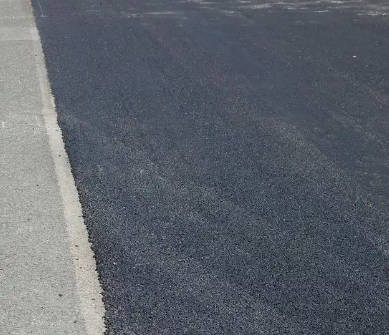
Product Samples We Regularly Subject to Modified Asphalt Testing
Our rheometers, ageing ovens, ductility baths and chemical‑analysis instruments accommodate a broad variety of modified binders and their components. The following categories represent the most frequently tested items:
- Polymer‑modified bitumen (PMB) – binders modified with styrene‑butadiene‑styrene, styrene‑butadiene rubber, ethylene‑vinyl acetate, polyethylene, polypropylene and reactive‑elastomeric terpolymers, intended for road paving, airfield runways and bridge‑deck waterproofing
- Crumb‑rubber modified asphalt – wet‑process and dry‑process binders incorporating recycled tyre rubber, evaluated for the viscosity build, the elastic response and the storage stability
- Roofing and industrial modified bitumen – atactic polypropylene and styrene‑butadiene‑styrene modified mopping‑grade and torch‑applied membranes, characterised by the softening point, the penetration and the low‑temperature flexibility
- Emulsified and cut‑back modified asphalts – polymer‑modified cationic and anionic emulsions for chip seals, micro‑surfacing and cold‑mix applications, tested for the residue properties after the evaporation or the breaking
- Additives and modifier concentrates – raw polymers, cross‑linking agents, compatibilisers and anti‑stripping agents that are blended into the base bitumen to produce the finished modified binder
- Extracted and recovered binders from the field cores – binders recovered from the pavement samples by the solvent‑extraction or the ignition‑oven method, tested to assess the degree of the field ageing and the residual modification effectiveness
Physical and Empirical Properties – Modified Asphalt Testing According to ASTM D36, ASTM D5, EN 1426 and EN 1427
- Determination of the softening point by the ring‑and‑ball method according to ASTM D36 (Standard Test Method for Softening Point of Bitumen – Ring‑and‑Ball Apparatus) and EN 1427: a steel ball is placed on a disk of the modified binder contained within a horizontal ring, and the assembly is heated at a controlled rate in a liquid bath. The temperature at which the binder softens sufficiently to allow the ball to fall a defined distance is recorded and reported as the softening point. This modified asphalt testing provides the fundamental high‑temperature consistency parameter that governs the rutting resistance of the pavement and the flow resistance of the roofing membrane.
- Measurement of the needle penetration at 25 °C according to ASTM D5 (Standard Test Method for Penetration of Bituminous Materials) and EN 1426: a standard needle is allowed to penetrate into the binder under a total load of 100 g for 5 seconds, and the depth in tenths of a millimetre is reported. The penetration grade is used to classify the binder for the paving and the industrial applications and to monitor the stiffening effect of the polymer addition.
- Elastic recovery and the ductility of the modified binder according to ASTM D6084 (Standard Test Method for Elastic Recovery of Bituminous Materials by Ductilometer) and EN 13398: a briquette specimen is stretched in a ductilometer at a constant speed and a controlled temperature, typically 25 °C or 5 °C, and the length at break is recorded. For the elastic‑recovery test, the specimen is stretched to a defined elongation, cut and allowed to recover, and the percentage of the recovered strain is calculated. This modified asphalt testing quantifies the elastomeric contribution of the polymer modifier and is a mandatory parameter for the polymer‑modified binder specification.
- Storage stability and the high‑temperature segregation test according to ASTM D7173 (Standard Practice for Determining the Separation Tendency of Polymer from Polymer Modified Asphalt) and EN 13399: a tube filled with the hot modified binder is stored vertically at 163 °C for 48 hours or longer, then cooled and sectioned into the top and the bottom thirds. The difference in the softening point or the dynamic shear modulus between the top and the bottom is measured, and a difference of less than 2.5 °C indicates a storage‑stable, non‑segregating formulation that will not require the continuous agitation in the tank farm.
- Viscosity by the rotational viscometer according to ASTM D4402 (Standard Test Method for Viscosity Determination of Asphalt at Elevated Temperatures Using a Rotational Viscometer) and EN 13302: the binder is sheared at a constant rate in a thermostatted chamber, and the apparent viscosity in pascal‑seconds is reported at the specified handling and mixing temperatures, providing the data that the paving contractor uses to set the pump and the spray‑bar temperatures.
Rheological and Performance‑Graded Testing – Modified Asphalt Testing According to AASHTO M 320, ASTM D7175 and EN 14770
- Determination of the dynamic shear modulus |G*| and the phase angle δ by the dynamic shear rheometer according to AASHTO T 315 (Standard Method of Test for Determining the Rheological Properties of Asphalt Binder Using a Dynamic Shear Rheometer) and ASTM D7175: the binder is sandwiched between two parallel plates and subjected to an oscillatory shear strain at a defined frequency and temperature. The complex shear modulus |G*| and the phase angle δ are reported. The rutting parameter |G*|/sin δ is calculated for the unaged and the short‑term aged binder, and the fatigue‑cracking parameter |G*|·sin δ is calculated for the long‑term aged binder, providing the performance‑grade classification according to the Superpave system. This modified asphalt testing is the core of the performance‑based specification and directly links the binder rheology to the pavement distress.
- Low‑temperature creep stiffness and the m‑value by the bending beam rheometer according to AASHTO T 313 (Standard Method of Test for Determining the Flexural Creep Stiffness of Asphalt Binder Using the Bending Beam Rheometer) and ASTM D6648: a beam of the long‑term aged binder is subjected to a constant load at a sub‑zero temperature, and the creep stiffness S and the slope of the creep‑compliance curve m are reported. The binder must meet the stiffness limit of 300 MPa and the m‑value minimum of 0.300 at the specified low‑temperature grade, ensuring the resistance to the thermal cracking in the cold climate.
- Multiple stress creep and recovery test for the high‑temperature performance according to AASHTO T 350 (Standard Method of Test for Multiple Stress Creep Recovery Test of Asphalt Binder Using a Dynamic Shear Rheometer) and EN 16659: the binder is subjected to a repeated creep‑and‑recovery cycle at two stress levels – 0.1 kPa and 3.2 kPa – and the non‑recoverable creep compliance Jnr and the percent recovery are reported. This modified asphalt testing distinguishes the true polymer‑modified binders that exhibit a high elastic recovery from the non‑modified or the lightly modified binders, and it is increasingly required by the highway agencies as a replacement for the empirical elastic‑recovery test.
- Frequency and temperature sweeps for the master‑curve construction: the dynamic shear modulus and the phase angle are measured over a wide range of frequencies and temperatures, and the master curve is constructed using the time‑temperature superposition principle, providing the complete viscoelastic characterisation of the binder that is used in the mechanistic‑empirical pavement design software.
Ageing and Durability – Modified Asphalt Testing According to ASTM D1754, ASTM D6521 and EN 14769
- Rolling thin‑film oven test for the short‑term ageing according to ASTM D2872 (Standard Test Method for Effect of Heat and Air on a Moving Film of Asphalt – Rolling Thin‑Film Oven Test) and EN 12607‑1: a thin film of the modified binder is heated in a rotating oven at 163 °C for 85 minutes, and the change in the mass, the softening point, the viscosity and the dynamic shear modulus is measured, simulating the ageing that occurs during the mixing, the transport and the paving of the hot‑mix asphalt. This modified asphalt testing verifies that the polymer network resists the thermal‑oxidative degradation during the construction.
- Pressure ageing vessel for the long‑term ageing according to ASTM D6521 (Standard Practice for Accelerated Aging of Asphalt Binder Using a Pressurized Aging Vessel) and EN 14769: the residue from the rolling thin‑film oven test is further aged in a pressure vessel at 100 °C under 2.1 MPa of air for 20 hours, reproducing the in‑service oxidative hardening of the binder over 5 to 10 years of the pavement life. The aged residue is tested by the dynamic shear rheometer and the bending beam rheometer to determine the performance‑grade fatigue and the thermal‑cracking limits.
- Ultraviolet and the moisture‑enhanced ageing for the roofing and the exposed‑surface binders: the modified bitumen is exposed to a cycle of the UV radiation, the water spray and the elevated temperature in a xenon‑arc or a fluorescent‑UV apparatus, and the retained low‑temperature flexibility, the softening point and the mass loss are measured, predicting the weathering resistance of the roofing membrane and the crack sealant.
- Oxidative‑induction time and the Fourier‑transform infrared spectroscopy analysis of the carbonyl and the sulfoxide indices: the chemical changes in the binder after the ageing are monitored by the infrared spectroscopy, and the increase in the carbonyl and the sulfoxide absorption bands is correlated with the embrittlement, providing the forensic data that the binder formulator uses to optimise the antioxidant package.
Chemical, Microscopic and Specialised Analytical Techniques – Modified Asphalt Testing for Research and Development
- Determination of the polymer content and the modifier identification by the Fourier‑transform infrared spectroscopy and the gel‑permeation chromatography: the binder is dissolved in a solvent and analysed by the FTIR to identify the polymer type, and the molecular‑weight distribution of the extracted modifier is measured by the GPC, providing the quality‑control check that the correct polymer grade and the dosage have been used.
- Fluorescence and the confocal laser‑scanning microscopy for the polymer‑network morphology: a thin film of the binder is examined under the fluorescence microscope, and the size, the shape and the continuity of the polymer‑rich phase are observed. This modified asphalt testing visualises the degree of the dispersion and the phase inversion that determine the storage stability and the elastic behaviour of the modified binder.
- Differential scanning calorimetry for the glass‑transition temperature and the crystalline‑melting peaks: the thermal transitions of the base bitumen and the polymer modifier are measured, and the compatibility of the two phases is assessed by the shift in the glass‑transition temperatures, supporting the selection of the compatibiliser and the processing conditions.
- Asphaltene‑dispersion and the SARA fraction analysis: the binder is separated into the saturate, aromatic, resin and asphaltene fractions by the thin‑layer chromatography or the precipitation method, and the colloidal stability index is calculated, predicting the compatibility of the base bitumen with the polymer modifier.
- Recovery of the binder from the emulsion and the cut‑back products according to ASTM D6934 (Standard Practice for Residue Recovery of Emulsified Asphalt Residue by Evaporation) and EN 13074: the water or the solvent is removed by the evaporation or the distillation, and the recovered residue is subjected to the full suite of the physical and the rheological tests, verifying that the modified binder meets the specification after the application.
Report Acceptance and Global Regulatory Compliance
All measurements performed within our modified asphalt testing service are executed under the fully accredited scope of our ISO/IEC 17025 quality management system. Each test report that carries the ILAC mark is therefore automatically recognised by regulatory authorities, notified bodies, customs offices and supply‑chain partners in all major economies. For polymer‑modified binder producers, paving contractors, highway agencies, roofing‑membrane manufacturers and pavement‑engineering consultants anywhere in the world, the report constitutes legally robust, internationally accepted evidence that the physical, rheological, ageing and chemical properties of the modified asphalt have been determined in accordance with the applicable AASHTO, ASTM, EN and customer‑specified methods. The documentation can be directly used to support CE marking under the Construction Products Regulation, the issue of inspection certificates according to EN 10204 or equivalent national standards, the compilation of the mix‑design approval dossier, and the resolution of commercial and technical disputes concerning the quality and the performance of any polymer‑ or rubber‑modified bituminous binder.