Mixing Equipment Inspection Service for Global Process and Manufacturing Compliance
As an ISO/IEC 17025 accredited laboratory, we deliver a comprehensive mixing equipment inspection service that verifies mechanical integrity, mixing performance, electrical safety, material quality, and long-term reliability of industrial mixers, agitators, blenders, and homogenizers. Our mixing equipment inspection service supports manufacturers and exporters of ribbon blenders, planetary mixers, high-shear dispersers, static mixers, and continuous mixing systems who must demonstrate conformity to ISO, EN, ASME, and regional process safety standards across the European Union, North America, the Middle East, and Asia. Every test is performed under our CNAS-accredited quality system, producing reports accepted by notified bodies, plant engineers, and procurement teams worldwide.

Product Samples We Regularly Test in Our Mixing Equipment Inspection Service
- Ribbon and paddle mixers — for powders, granules, and viscous pastes in food, pharmaceutical, and chemical processing
- Planetary and double-planetary mixers — for high-viscosity adhesives, sealants, and battery electrode slurries
- High-shear and rotor-stator dispersers — for emulsification, homogenization, and particle size reduction
- Static and inline mixers — for continuous blending, dosing, and reaction processes
- Conical screw and tumble blenders — for gentle mixing of fragile and free-flowing materials
- Agitators and stirred tank reactors — with impellers, shafts, and drive systems for chemical and bioprocess applications
- Vacuum and pressure mixers — for degassing, drying, and reacting under controlled atmospheres
- Custom and OEM-specific mixing equipment — for specialized industrial and laboratory applications
Mechanical and Structural Integrity Testing of Mixing Equipment
- Static load and deflection measurement per EN 1993-1-1 and customer specifications — the mixer frame, vessel, and supports are subjected to defined static loads to measure deflection and permanent set, verifying the structure can support the weight of the equipment, contents, and any dynamic loads without excessive deformation or failure.
- Impeller and shaft runout and concentricity inspection per ISO 14694 — dial indicators and laser alignment tools measure the radial and axial runout of the mixing shaft and impeller, ensuring the rotating assembly is properly aligned to prevent vibration, bearing wear, and premature seal failure.
- Vibration and resonance testing per ISO 10816-3 and ISO 10816-7 — triaxial accelerometers measure vibration velocity and displacement on the motor, gearbox, and mixer housing under full load to classify the machine into the appropriate vibration severity zone and to detect misalignment, unbalance, or structural resonance.
- Torque and power transmission testing per customer and internal protocols — the input torque, output torque, and power consumption are measured across the operating speed range to verify the drive system delivers the required mixing energy and to detect any overload or efficiency loss.
- Bearing temperature and lubrication verification per ISO 10816 — thermocouples and oil analysis monitor bearing temperatures and lubricant condition during extended operation to confirm the bearings operate within the manufacturer's specified limits and to predict remaining service life.
- Structural fatigue and cyclic loading simulation per ISO 12106 — the mixer frame and drive components are subjected to repeated load cycles representing years of start-up and shutdown operations, with post-test inspection for crack initiation and connection loosening.
Mixing Performance and Homogeneity Testing
- Blend uniformity and mixing time determination per ASTM D5954 and internal validated protocols — tracer materials or colored particles are added to the mixer and samples are taken at defined time intervals to measure the concentration distribution, calculating the coefficient of variation and the mixing time required to achieve the specified homogeneity.
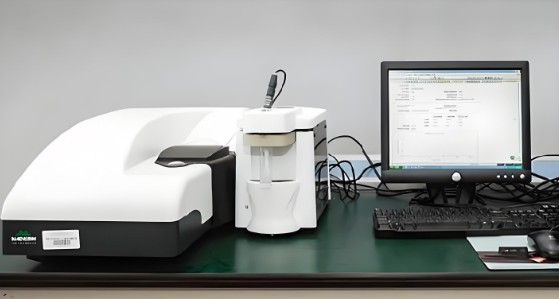
- Particle size distribution after mixing per ISO 13320 — the mixed product is analyzed by laser diffraction to verify the mixing process does not cause particle breakage or agglomeration, and that the final particle size distribution meets the specification.
- Power draw and specific energy consumption per customer protocols — the electrical power drawn by the mixer is recorded during the mixing cycle and the specific energy per unit mass of product is calculated, providing the data required for scale-up and energy optimization.
- Heat generation and temperature rise during mixing — thermocouples placed in the product monitor the temperature increase caused by viscous dissipation and friction, ensuring the mixer does not overheat the product or degrade temperature-sensitive ingredients.
- Discharge and cleanout efficiency testing — the residual material left in the mixer after discharge is weighed and compared to the total batch mass, verifying the mixer empties efficiently and does not cause excessive product loss or cross-contamination between batches.
- Shear and dispersion quality evaluation for emulsifications and dispersions — the droplet or particle size of the dispersed phase is measured to verify the high-shear mixer achieves the specified fineness and uniformity for emulsions, suspensions, and coatings.
Electrical Safety and Control System Testing for Mixing Equipment
- Insulation resistance and dielectric strength per IEC 60204-1 and IEC 60335-2 — the motor, control panel, and wiring of the mixing equipment are tested with a high-voltage withstand test and a megohmmeter insulation resistance measurement to verify protection against electric shock and insulation failure.
- Protective earthing continuity and ground bond test per IEC 60204-1 — a high current is passed through the earth terminal and accessible metal parts to confirm the resistance remains below 0.1 ohm, ensuring a reliable fault current path for the mixer and its auxiliary equipment.
- Motor efficiency class and total mixer input power per IEC 60034-2-1 — the electric motor is tested to determine its IE2, IE3, or IE4 efficiency class, and the complete mixer assembly input power is measured to support energy consumption calculations and regulatory compliance.
- Control system function and safety interlock verification per IEC 60204-1 — the speed controls, temperature sensors, level switches, and emergency stop circuits are tested under normal and fault conditions to verify they reliably protect the operator and the equipment.
- Ingress protection rating verification per IEC 60529 — the mixer electrical enclosures and sensors are subjected to dust and water spray tests to confirm the declared IP code, ensuring reliable operation in washdown, dusty, and outdoor installations.
- Electromagnetic compatibility and emissions per EN 55014-1 and EN 61000-6-2 — the variable speed drive and control electronics are tested for radiated and conducted emissions, and for immunity to electrostatic discharge, surge, and fast transient bursts.
Material Verification and Corrosion Resistance Testing for Mixing Equipment
- Optical emission spectrometry for alloy grade confirmation per ASTM E415 and ISO 14284 — the chemical composition of the mixer vessel, impellers, shafts, and seals is analyzed to confirm the specified grades such as 304, 316L, 2205 duplex stainless steel, or Hastelloy, preventing material substitution and ensuring corrosion compatibility with the process fluid.
- Hardness testing per ISO 6506-1 and ISO 6507-1 — Brinell and Vickers hardness measurements on the impeller, shaft, and wear surfaces verify the specified hardness range for abrasion and wear resistance in high-shear mixing applications.
- Neutral salt spray and cyclic corrosion testing per ISO 9227 and ASTM B117 — the mixer components are exposed to salt fog for defined durations to evaluate pitting, crevice corrosion, and coating degradation in marine and chemical process environments.
- Intergranular corrosion testing for stainless steel parts per ASTM A262 and ISO 3651-2 — the sensitization resistance of welded mixer vessels and impellers is verified after thermal processing to ensure long-term integrity in corrosive service.
- Passivation verification per ASTM A967 — copper sulfate and ferroxyl spot tests confirm the passive layer is intact on stainless steel mixing equipment surfaces after fabrication and cleaning.
- Coating thickness and adhesion per ISO 2178 and ISO 2409 — the dry film thickness and adhesion of paint, powder coating, or polymer lining on the mixer frame and vessel are measured to ensure long-term corrosion protection and cleanability.
Seal and Leakage Integrity Testing for Mixing Equipment
- Hydrostatic pressure test of the mixer vessel per ASME Boiler and Pressure Vessel Code Section VIII and EN 13445 — the pressure-retaining envelope is pressurized with water to 1.5 times the maximum allowable working pressure and held for a code-specified duration with zero leakage or permanent deformation.
- Pneumatic leak tightness and pressure decay test per ASTM E2930 — the mixer vessel is pressurized with dry air or nitrogen and the pressure decay rate is recorded to provide a rapid pass/fail criterion for detecting leaks at flanges, manways, and mechanical seals.
- Helium mass spectrometer leak detection per ISO 20485 — for high-integrity vacuum and pressure mixers, helium tracer gas is applied to external surfaces and the leak rate is measured to confirm hermetic sealing of all joints and rotating shaft seals.
- Mechanical seal leakage and shaft seal performance testing — the mixer is operated with the intended process fluid and the leakage rate at the shaft seal is measured to verify the seal provides the required containment for the application.
- Gasket and O-ring compression set and chemical compatibility per ISO 815-1 and ASTM D471 — the elastomeric seals are tested for long-term sealing performance and resistance to the process fluid to prevent leakage and contamination.
Report Recognition and ISO/IEC 17025 Compliance
Every test method described in this mixing equipment inspection service is covered by our ISO/IEC 17025 scope of accreditation. Our technical reports and certificates of analysis are accepted by European notified bodies under the Machinery and Pressure Equipment Directives, by North American process plant operators and equipment OEMs referencing ASME and ASTM standards, and by customs and procurement authorities across the Middle East, Australia, and Asia. Whether you require a complete qualification dossier for a new mixer design, a batch release inspection for an export shipment, or a root cause failure analysis of a mixing or mechanical issue, our laboratory provides the measurement accuracy and process engineering expertise that the global mixing equipment industry demands.