
Measurement of Elasticity Coefficient for Small Springs – Accredited Precision Spring Constant Testing for Global Markets
Our internationally accredited laboratory provides a specialist measurement of elasticity coefficient for small springs service that supports manufacturers of precision instruments, medical devices, automotive sensors, aerospace actuators, consumer electronics and industrial controls worldwide in accurately determining the spring constant, linearity and repeatability of their miniature spring elements. Every test is conducted under the rigorous framework of ISO/IEC 17025, and each report bearing the ILAC mark is unconditionally accepted by regulatory authorities, notified bodies and supply‑chain partners in all major economies. The measurement of elasticity coefficient for small springs quantifies the fundamental force‑versus‑displacement characteristic of the spring, expressed as the spring constant k in newtons per millimetre, and verifies the conformance of the spring to the designer's specification for stiffness, rate linearity and elastic limit. By employing high‑resolution load cells, laser‑displacement sensors, non‑contact video extensometry and motorised micrometer‑driven compression stages, we provide our global clients with the legally robust, traceable data that underpin component qualification, process control and compliance with the relevant ISO, ASTM, EN and customer‑specified standards.
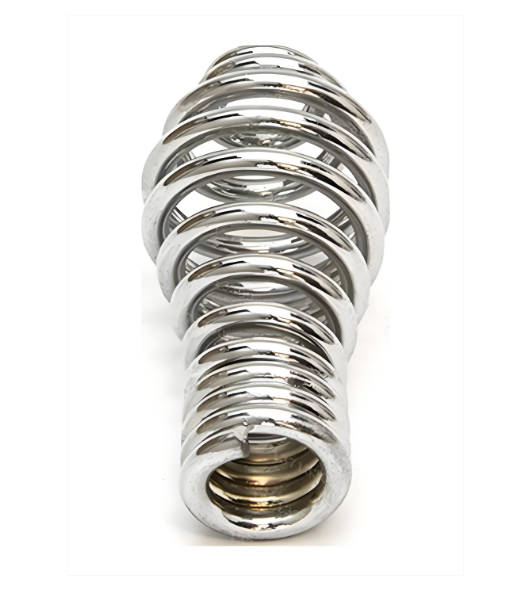
Product Samples We Regularly Subject to Measurement of Elasticity Coefficient
Our micro‑force testers and precision displacement stages accommodate springs with wire diameters from a few micrometres to several millimetres. The following categories represent the most frequently tested items:
- Micro compression springs – miniature helical springs for medical catheters, endoscopic instruments, implantable drug‑delivery pumps, fibre‑optic connectors and MEMS actuators
- Small extension and tension springs – close‑wound extension springs with integral loops or hooks for automotive throttle‑return mechanisms, relay armatures, printer‑head retractors and small‑appliance door interlocks
- Torsion springs and spiral springs – hair‑thin torsion springs for watch mechanisms, gyroscope gimbals, camera shutter assemblies, potentiometer wipers and aerospace fin‑actuator centring devices
- Wire forms and custom‑shaped spring elements – bent‑wire clips, retaining rings, contact‑spring fingers for battery connectors, SIM‑card sockets and antenna contacts
- Flat springs and leaf‑spring elements – stamped and etched leaf springs for relay contacts, switch‑blade detents, disk‑drive head suspensions and optical‑pickup suspensions
- Constant‑force springs and spring motors – prestressed strip‑steel constant‑force springs for counterbalance mechanisms, cable‑retraction reels, window‑regulator assists and point‑of‑sale display lifters
- Prototype and additively manufactured springs – 3D‑printed metal and polymer springs where the elasticity coefficient must be verified against the design intent
Precision Determination of the Elasticity Coefficient – Load‑Deflection, Rate Linearity and Hysteresis Evaluation
- Static spring‑constant measurement by axial compression or tension according to the principles of ISO 7500‑1 (Calibration of the testing system) and the relevant spring‑testing standards such as EN 13906‑1 and ASTM F1847: the spring is mounted between two precisely aligned, polished anvils, and a controlled axial displacement is applied by a ballscrew‑driven or voice‑coil actuator. The resulting force is measured by a calibrated load cell with a resolution down to 0.1 mN, and the displacement is recorded by a laser interferometer or a linear‑variable‑differential transformer. The force‑versus‑displacement curve is plotted, and the elasticity coefficient (spring constant k) is calculated from the slope of the linear regression through the working range. This measurement of elasticity coefficient for small springs provides the fundamental stiffness data that design engineers use to predict the actuation force, the natural frequency and the deflection of the spring‑loaded mechanism.
- Evaluation of the rate linearity and the elastic limit according to the customer‑specified tolerances: the spring is deflected stepwise through its full working range, and the deviation of the measured force from the linear‑spring model is quantified. The point at which the force‑deflection curve departs from linearity by more than a specified percentage – typically 1 % or 2 % – is reported as the elastic limit, providing the safety margin that the designer must observe to prevent permanent set or fatigue damage in service.
- Measurement of the hysteresis and the mechanical energy loss per cycle: the spring is loaded and unloaded at a controlled speed, and the area between the loading and unloading curves is calculated. The hysteresis is reported as a percentage of the elastic‑strain energy, and the result is used to assess the internal‑friction damping of the spring material and to predict the heat generation during high‑frequency cycling.
- Cycle‑repeatability and spring‑set testing according to the relevant clauses of ASTM A125 (Standard Test Method for Tension Testing of Metallic Spring Materials) and EN 13906‑1: the spring is compressed to its solid height or extended to the design maximum a prescribed number of times – commonly 10, 100 or 1 000 cycles – and the change in the free length, the elasticity coefficient and the linearity are remeasured. This measurement of elasticity coefficient for small springs identifies any early‑life relaxation, coil‑closure or permanent set that could affect the function of the spring‑loaded assembly.
- Influence of temperature on the elasticity coefficient: the spring is tested inside a climatic chamber at temperatures from -55 °C to +200 °C, and the change in the spring constant with temperature is reported. The temperature coefficient of the elasticity coefficient is used to correct the design calculations for the spring when it is operated in a hot engine compartment, a cold‑space environment or a sterilisation autoclave.
- Multi‑axis stiffness characterisation for leaf‑spring and wire‑form geometries: for springs that are intended to deflect in a bending or a twisting mode, the elasticity coefficient is measured in the relevant degrees of freedom by applying a controlled moment or a lateral force and recording the angular or linear displacement. The data support the finite‑element‑analysis validation and the optimisation of the spring shape for the required compliance matrix.
Report Acceptance and Global Regulatory Compliance
All measurements performed within our measurement of elasticity coefficient for small springs service are executed under the fully accredited scope of our ISO/IEC 17025 quality management system. Each test report that carries the ILAC mark is therefore automatically recognised by regulatory authorities, notified bodies, customs offices and supply‑chain partners in all major economies. For spring manufacturers, precision‑instrument designers, medical‑device producers and automotive‑component suppliers anywhere in the world, the report constitutes legally robust, internationally accepted evidence that the spring constant, the rate linearity and the elastic limit of the small spring have been determined in accordance with the applicable ISO, ASTM, EN and customer‑specified methods. The documentation can be directly used to support CE marking, the issue of inspection certificates according to EN 10204 or equivalent national standards, the compilation of technical files for type‑examination, and the resolution of commercial and technical disputes concerning the stiffness and the elastic performance of miniature spring elements.




