Main Converter Cabinet Radiator Inspection Service for Global Power Electronics and Rail Transit
As an ISO/IEC 17025 accredited laboratory, we deliver a rigorous main converter cabinet radiator inspection service that validates thermal performance, pressure integrity, mechanical robustness, and long-term corrosion resistance. Our main converter cabinet radiator inspection service is designed for manufacturers and exporters of forced-air and liquid-cooled radiators used in traction converters, wind turbine power cabinets, industrial drives, and energy storage systems who must demonstrate conformity to IEC, EN, ISO, and regional safety standards across the European Union, North America, and Asia. Every test is conducted under our CNAS-accredited quality system, producing reports accepted by notified bodies, rail operators, and procurement teams worldwide.

Product Samples We Regularly Inspect in Our Main Converter Cabinet Radiator Inspection Service
- Aluminum fin-and-tube heat sinks for IGBT converter modules — with pressed, brazed, or epoxy-bonded fins for forced-air cooling
- Liquid-cooled cold plates and water-cooled radiators for high-power converter cabinets — with internal serpentine channels and brazed or friction-stir welded construction
- Copper and copper-alloy radiator cores for traction converters — for locomotive, EMU, and metro train power cabinets
- Skived-fin and zipper-fin heat sinks for SiC power modules — high-density fin structures for next-generation converter cabinets
- Heat pipe radiator assemblies for sealed converter enclosures — for outdoor and harsh-environment cabinet installations
- Gun-drilled and plugged aluminum radiator plates — for medium-power converter stacks and UPS cabinets
- Corrosion-resistant and coated converter cabinet radiators — with chromate conversion coating, anodizing, or epoxy paint for coastal and industrial environments
Thermal Performance and Heat Dissipation Verification in Our Main Converter Cabinet Radiator Inspection Service
- Thermal resistance and pressure drop characterization per ASTM D5470 (modified) and customer-specific protocols — a calibrated heat source applies a known thermal load to the radiator base, and the steady-state temperature difference between the heat input surface and the cooling air or liquid inlet is measured to calculate the thermal resistance in K/W, verifying the radiator meets the cooling specification for the converter power module.
- Air-side pressure drop versus airflow rate per ISO 5801 and AMCA 210 — the static pressure difference across the radiator core is measured at multiple airflow velocities to generate the impedance curve, ensuring the cabinet cooling fans can deliver the required cooling air through the radiator at the specified operating point.
- Liquid-side pressure drop and flow resistance per internal and customer protocols — the differential pressure between the coolant inlet and outlet is measured across the rated flow range to generate the hydraulic resistance curve, supporting pump sizing and system integration for liquid-cooled radiators.
- Heat dissipation capacity and maximum thermal load verification — the radiator is operated at the maximum rated coolant inlet temperature and airflow or liquid flow, and the total heat dissipated is measured to confirm the radiator can handle the full thermal output of the converter cabinet under worst-case ambient conditions.
- Thermal imaging and surface temperature uniformity analysis per ASTM E1933 — infrared thermography maps the temperature distribution across the radiator surface under load, identifying any hot spots, flow maldistribution, or manufacturing defects that would reduce cooling efficiency.
Pressure Integrity and Leak Tightness Testing for Liquid-Cooled Converter Cabinet Radiators
- Hydrostatic pressure test per ISO 1402 and customer specifications — the liquid-cooled radiator is filled with water and pressurized to a minimum of 1.5 times the maximum allowable working pressure, held for a code-specified duration with zero visible leakage, pressure decay, or permanent deformation permitted to verify structural integrity.
- Pneumatic leak test by pressure decay method per ASTM E2930 — the radiator internal volume is pressurized with dry air or nitrogen, and the pressure decay rate is recorded over time to provide a rapid quantitative pass/fail criterion for production-line inspection of brazed and welded radiator assemblies.
- Helium mass spectrometer leak detection per ISO 20485 — the radiator is evacuated and connected to a helium leak detector, then helium tracer gas is applied to external surfaces and joints to detect leak rates down to 10⁻⁹ Pa·m³/s, confirming hermetic sealing of brazed, welded, and mechanically assembled radiator joints.
- Burst pressure and ultimate strength verification per ASTM D1599 and ISO 1402 — the radiator is pressurized hydraulically until rupture to determine the ultimate safety margin, which must exceed a minimum factor of four times the design working pressure for railway and industrial power electronics applications.
- Thermal cycling and pressure pulse endurance per IEC 60068-2-14 and customer protocols — the radiator is subjected to alternating hot and cold coolant cycles combined with pressure pulses to simulate converter start-stop and load-change conditions, followed by helium leak retest and thermal resistance measurement to confirm no performance degradation.
Mechanical Strength and Structural Durability Testing of Converter Cabinet Radiators
- Vibration and shock resistance per IEC 60068-2-6 and IEC 60068-2-27 — the radiator is vibrated on three axes under sinusoidal and random vibration profiles representative of rail vehicle and industrial machinery environments, with post-test leak and thermal performance verification to confirm no mechanical fatigue or loosening.
- Static load and mounting point strength per EN 12663 and customer specifications — the radiator mounting brackets, flanges, and support structure are subjected to a proof load representing the maximum acceleration and weight of the assembly, ensuring the radiator remains securely attached to the converter cabinet under crash and derailment loads for railway applications.
- Impact resistance by falling weight and pendulum methods per ISO 6603-2 and ASTM D5420 — the radiator housing and fin pack are subjected to controlled impacts simulating tool drops, debris strikes, and maintenance handling to verify no fin collapse or coolant leakage.
- Fatigue and vibration life testing per IEC 61373 and MIL-STD-810 — the radiator is subjected to long-duration vibration profiles representing the full service life of a railway vehicle or wind turbine converter, with periodic performance checks to detect any crack initiation or performance drift.
Material Verification and Corrosion Resistance Testing in Our Main Converter Cabinet Radiator Inspection Service
- Optical emission spectrometry for alloy verification per ASTM E1251 and ISO 14284 — the aluminum or copper alloy of the radiator core, fins, and headers is analyzed to confirm it meets the specified grade such as 3003, 6060, 6063-T5, or Cu-DHP, ensuring consistent thermal conductivity and brazing compatibility.
- Neutral salt spray and cyclic corrosion testing per ISO 9227 and ASTM B117 — the complete radiator or representative fin-and-tube coupons are exposed to salt fog for up to 1500 hours, then inspected for pitting, white rust, and under-creep corrosion at brazed joints and coating edges to validate durability in coastal and industrial atmospheres.
- Condensation and damp heat resistance per IEC 60068-2-78 — the radiator is operated in a 40 °C and 93% relative humidity environment, followed by insulation resistance and functional checks to verify no moisture ingress degrades the radiator or creates electrical hazard in the converter cabinet.
- Coating thickness and adhesion per ISO 2178 and ISO 2409 — the dry film thickness of any protective paint, powder coating, or conversion coating on the radiator is measured, and the adhesion is tested by cross-cut method to ensure long-term corrosion protection without flaking.
- Galvanic corrosion compatibility with cooling circuit components per ASTM G71 — the radiator material is tested with the intended coolant, seals, and adjacent metallic components of the converter cabinet to verify no galvanic cell forms that would accelerate corrosion of the radiator or connected parts.
Coolant Compatibility and Cleanliness Inspection for Liquid-Cooled Radiators
- Internal cleanliness and particle contamination per ISO 16232 and SEMI F-40 — the radiator interior is flushed and the rinse fluid is analyzed for particle count, size distribution, and total mass of residue, ensuring the radiator is free from brazing flux residues, metal chips, and assembly debris that would clog downstream valves and damage the pump.
- Coolant compatibility and corrosion inhibitor testing per ASTM D1384 and ASTM D4340 — the radiator material is immersed in the intended water-glycol coolant mixture at elevated temperature for extended periods, and the corrosion rate, pitting susceptibility, and weight change are measured to verify compatibility and to define the required inhibitor package.
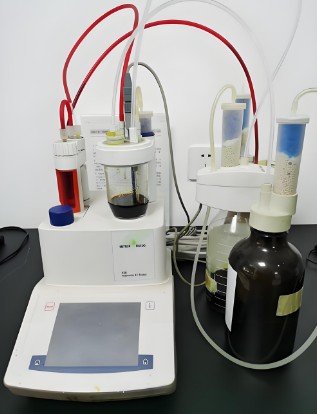
- Residual moisture and drying verification per internal protocols — the radiator interior is evacuated or purged and the residual moisture content is measured by Karl Fischer titration or dew point analysis to confirm the radiator is dry before filling and commissioning in the converter cabinet.
- Pressure decay after internal coating or passivation per ASTM E2930 — for radiators with internal protective coatings, the leak tightness is verified after the coating and curing process to ensure no pinholes or seal damage were introduced during the surface treatment operation.
Report Recognition and ISO/IEC 17025 Compliance
All test methods described in this main converter cabinet radiator inspection service are included within our ISO/IEC 17025 scope of accreditation. Our test reports are accepted by European notified bodies for CE marking under the EMC and Low Voltage Directives, by North American rail and renewable energy authorities, and by procurement and regulatory agencies across the Middle East, Australia, and Asia. Whether you require a complete qualification dossier for a new fin-and-tube radiator design, a batch release inspection for a production shipment, or a root cause failure analysis of an in-service radiator leak, our laboratory provides the measurement accuracy and thermal management expertise that the global power conversion industry demands.