Low Temperature Working Test – Accredited Cold-Start and Operational Performance Evaluation for the Czech Market
Our internationally accredited laboratory provides a dedicated low temperature working test service that gives Czech manufacturers, importers, automotive suppliers, battery producers and industrial equipment designers the independent, traceable data they need to verify that their products will start, operate and survive at the sub‑zero temperatures encountered during a Central European winter. All tests are conducted within the strict framework of ISO/IEC 17025, and every report bearing the ILAC mark is unconditionally accepted by the Czech Trade Inspection Authority, customs offices and all notified bodies across the European Union. A properly executed low temperature working test measures the minimum starting voltage, the time to full functionality, the change in fluid viscosity, the cracking or embrittlement of polymers and the capacity retention of batteries at temperatures that can drop to -40 °C in the Czech mountains. For a Czech producer of outdoor luminaires, an importer of electric vehicle battery packs or a manufacturer of hydraulic rescue tools, this service provides the legally robust proof that the product meets the essential health and safety requirements of the applicable EU directives and will perform reliably when the temperature falls far below freezing.
Product Samples We Regularly Subject to Low Temperature Working Tests
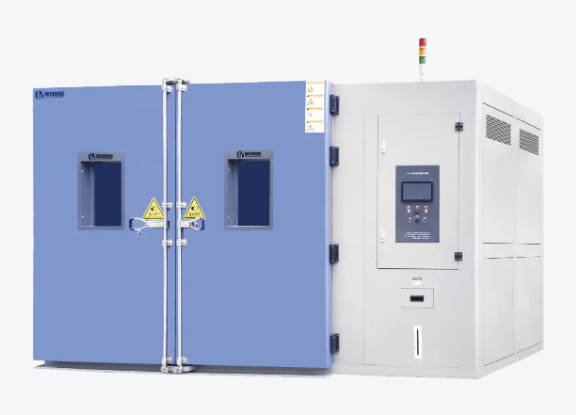
Our temperature‑controlled chambers and cold‑soak facilities accommodate complete assemblies, sub‑systems and individual components. The following categories represent the most frequently tested items:
- Electronic and electrical equipment – control units, power supplies, displays, sensors, printed circuit board assemblies and outdoor lighting fixtures
- Automotive components and systems – engine starters, alternators, actuators, door locks, window regulators, parking brakes and fuel pumps
- Batteries and energy storage devices – lead‑acid, lithium‑ion and nickel‑metal‑hydride cells and packs for automotive, industrial and consumer use
- Mechanical assemblies and moving parts – hinges, latches, bearings, springs, gearboxes and chain drives
- Seals, gaskets and elastomeric components – O‑rings, lip seals, diaphragms, hoses and flexible connectors
- Plastics, polymers and composite parts – enclosures, housings, clips, fasteners and structural components
- Industrial fluids and lubricants – hydraulic oils, engine oils, transmission fluids and greases
- Outdoor and personal protective equipment – safety helmets, visors, harnesses and climbing gear
Electronic and Electrical Equipment – Low Temperature Working Test According to IEC 60068 and Related Standards
- Cold operation test according to ČSN EN 60068‑2‑1 (IEC 60068‑2‑1) Test Ab and Ad: the equipment is placed in a chamber and cooled to the specified temperature, typically -25 °C, -40 °C or -55 °C, and held until temperature stability is achieved. The device is then powered on, and its functional parameters – output voltage, signal frequency, display response, insulation resistance – are monitored. The low temperature working test verifies that the equipment starts and operates within specification after a prolonged cold soak, simulating an outdoor luminaire or a traffic controller during a freezing Czech night.
- Powered cold test with gradual temperature reduction: the equipment is kept energised while the chamber temperature is ramped down at a rate of 3 °C per minute. The temperature at which the first malfunction occurs – the minimum operating temperature – is recorded, and the nature of the failure is documented. Czech manufacturers of industrial sensors use this test to set the lowest guaranteed operating temperature in the product datasheet.
- Combined cold and low‑voltage test: the supply voltage is reduced to the minimum specified by the manufacturer while the equipment is at the low temperature limit. The test confirms that the device will operate reliably from a cold battery that has been discharged by the starter motor, a critical scenario for Czech fleet vehicles in winter.
- Cold‑start functional test for luminaires and LED modules: the luminaire is conditioned at -30 °C and then switched on. The time to reach full light output, any flickering and the electrical safety parameters are recorded. This low temperature working test is required by Czech municipal buyers to guarantee that street lights will illuminate promptly during winter storms.
Automotive Components and Systems – Low Temperature Working Test for Powertrain and Chassis
- Cold‑start simulation and functional testing of engine actuators according to ISO 16750‑4 and OEM specifications: the component – such as a throttle body, EGR valve or turbo actuator – is soaked at -40 °C for a minimum of 8 hours. The actuation force, the response time to a control signal and the current consumption are measured on the first stroke, which represents the initial engine start. Czech tier‑1 suppliers use this data to validate that the actuator will not stall on a frozen engine.
- Low temperature operation of door locks, window regulators and parking brakes: the complete door assembly or the brake caliper is cooled to -30 °C, and the electrical or mechanical actuation is performed. The operating speed, the motor current draw and the number of successful cycles before a jam occurs are recorded. This low temperature working test is essential for the homologation of passenger cars and commercial vehicles sold on the Czech market.
- Cold‑temperature durability cycling of fuel pumps and diesel injection systems: the fuel pump is primed with diesel fuel conditioned to -20 °C, and the pump is cycled on and off. The flow rate, the pressure build‑up time and the motor current are recorded, and any cavitation or seal leakage is noted. Czech importers of fuel system components rely on this test to guarantee reliable cold‑start performance with winter‑grade diesel.
- Low‑temperature testing of vehicle cameras, radar and lidar sensors: the sensor is mounted in a climatic chamber with a target pattern, and the detection range, the image quality and the data communication are evaluated at temperatures down to -30 °C. The test verifies that the advanced driver‑assistance systems function correctly when the vehicle is parked outdoors in a Czech winter.
Batteries and Energy Storage – Low Temperature Working Test for Capacity and Power Delivery
- Cold‑temperature discharge performance of lithium‑ion and lead‑acid batteries according to IEC 61960‑3, EN 50342‑1 and UN 38.3: the battery is soaked at -20 °C or -40 °C for a minimum of 6 hours, then discharged at the current specified by the manufacturer. The capacity delivered, the terminal voltage under load and the time to the low‑voltage cut‑off are recorded and compared with the room‑temperature capacity. The test determines the cold‑cranking capability of a starter battery or the usable energy of an electric‑vehicle pack in a Czech winter morning.
- Low‑temperature charge acceptance test: the battery is cooled to -20 °C, and a charging current is applied. The charge acceptance rate and any lithium‑plating risk are assessed. This low temperature working test is critical for the battery management system calibration of electric buses operating in Prague and other Czech cities.
- Operational test of the battery management system at low temperatures: the complete battery pack with its BMS is cooled to the minimum specified operating temperature, and the cell‑balancing function, the contactor operation and the communication with the vehicle controller are verified. The test ensures that the BMS will not incorrectly isolate the battery when the vehicle is cold‑soaked overnight.
- Cyclic ageing with periodic cold‑temperature operation: the battery is repeatedly cycled at room temperature interspersed with discharge and charge events at -10 °C. The capacity fade curve is constructed, and the acceleration of ageing due to cold‑temperature operation is quantified, providing the data needed by Czech fleet operators to predict the battery service life.
Seals, Plastics and Elastomers – Low Temperature Working Test for Flexibility and Integrity
- Low‑temperature compression set and recovery of seals and O‑rings according to ČSN EN ISO 815‑2 and ASTM D1229: the elastomeric specimen is compressed to a defined strain and held at -20 °C or -40 °C for 24 hours. After the load is removed, the degree of recovery is measured. A high compression set at low temperature indicates that the seal will leak after the joint cools and contracts. Czech manufacturers of hydraulic cylinders and gas valves use this test to qualify their sealing materials.
- Low‑temperature flexibility and brittleness of plastics according to ČSN EN ISO 974 and ČSN EN ISO 812 (for rubbers): notched specimens are cooled to the test temperature and struck with a falling weight. The temperature at which 50 % of the specimens fail by brittle fracture is reported. This low temperature working test identifies polymers that become dangerously brittle in winter and must not be used for safety‑critical clips, fasteners or housings on Czech outdoor equipment.
- Operational test of plastic hinges, snap‑fits and living joints at low temperature: the component is cooled to -25 °C and then flexed or snapped a defined number of cycles. The force required, any whitening or cracking and the number of cycles to failure are recorded, providing the evidence that the design can survive repeated use in freezing conditions.
- Cable flexibility and insulation integrity at low temperature: a cable or wire harness is conditioned at -40 °C and then bent around a mandrel while being visually inspected for cracks in the insulation. The dielectric strength is then measured, confirming that the cable will not fail when flexed during a winter installation on a Czech building site.
Industrial Fluids, Lubricants and Greases – Low Temperature Working Test for Pumpability and Flow
- Determination of the low‑temperature viscosity and apparent viscosity according to ČSN EN ISO 3104 and ASTM D2983: the kinematic viscosity of hydraulic oils, engine oils and transmission fluids is measured at -10 °C, -20 °C and -30 °C using a cold‑bath viscometer or a scanning Brookfield method. The pour point is determined according to ČSN EN ISO 3016. The results are compared with the requirements of the Czech equipment manufacturer, and the lowest temperature at which the fluid can be pumped is specified.
- Low‑temperature startability and pumpability of greases: a centralised lubrication system or a grease pump is filled with the test grease and operated in a cold chamber. The pressure build‑up, the flow rate through the distribution lines and the motor current are recorded. This low temperature working test is used by Czech steel mills and mining operations to ensure that automatic lubrication systems will function after a cold‑weekend shutdown.
- Cold‑flow test of diesel fuels, AdBlue and coolants: the cloud point, the cold‑filter plugging point and the freezing point are determined according to ČSN EN 23015 and ČSN EN 116. The test confirms that the fuel or the operating fluid will remain filterable and flowable in the Czech winter grades specified by the distributor.
Report Acceptance and Regulatory Compliance for the Czech Republic
All measurements performed within our low temperature working test programme are executed under the fully accredited scope of our ISO/IEC 17025 quality management system. Each test report that carries the ILAC mark is therefore automatically recognised by the Czech Trade Inspection Authority, the Technical Inspection of the Czech Republic, customs offices and all notified bodies in the European Union. For Czech electronics producers, automotive component manufacturers, battery importers, seal and plastic suppliers and industrial fluid distributors, the report constitutes legally robust evidence that the product meets the cold‑operation requirements of the applicable harmonised standards and the essential health and safety requirements of the relevant EU directives. The documentation can be directly used to support CE marking, to issue inspection certificates according to ČSN EN 10204, to compile the technical file for type‑examination, and to resolve commercial and technical disputes concerning the low‑temperature performance and reliability of delivered products.