Load Testing Service – Accredited Mechanical, Structural and Functional Evaluation for Global Markets
Our internationally accredited laboratory provides a comprehensive load testing service that supports manufacturers, construction companies, civil engineers, automotive suppliers, packaging producers and industrial equipment designers worldwide in verifying the strength, stability and deformation behaviour of materials, components and complete structures under precisely controlled static or dynamic loads. Every test is conducted within the rigorous framework of ISO/IEC 17025, and each report bearing the ILAC mark is unconditionally accepted by regulatory authorities, notified bodies and supply‑chain partners in all major economies. The load testing service applies tension, compression, bending, shear and torsion to a specimen, measuring the load‑deflection curve, the yield point, the ultimate capacity, the stiffness and the failure mode, thereby generating the legally robust, traceable data that design engineers need to validate finite‑element models, to certify products to the relevant ISO, ASTM, EN and customer‑specific standards, and to guarantee the safe and reliable performance of everything from a simple fastening to a multi‑storey building frame.
Product Samples We Regularly Subject to Load Testing
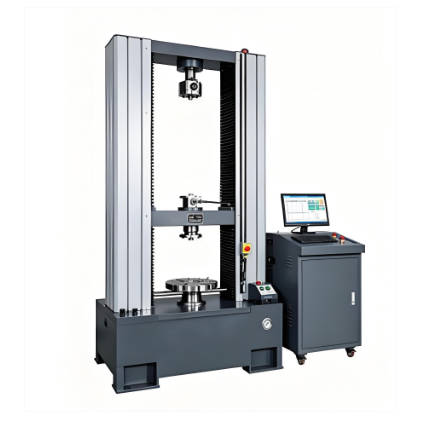
The hydraulic universal testing machines, servo‑electric actuators, multi‑axis loading frames and large‑scale reaction floors in our facility accommodate specimens from miniature tensile coupons to full‑scale bridge bearings. The following categories represent the most frequently tested items:
- Metallic and non‑metallic materials – steel, aluminium, concrete, timber, plastics, composites and ceramics in the form of bars, plates, pipes, wires and castings
- Fasteners, bolts and threaded connections – hexagon bolts, studs, nuts, washers, anchors and riveted joints tested in tension, shear and combined loading
- Lifting and rigging equipment – slings, shackles, eyebolts, turnbuckles, wire‑rope assemblies and chain hoists
- Structural sub‑assemblies and frames – welded and bolted steelwork connections, scaffolding components, formwork panels and prefabricated wall panels
- Packaging and transport units – corrugated boxes, wooden crates, plastic totes, pallets, intermediate bulk containers and entire palletised loads
- Geotechnical and civil‑engineering components – soil‑anchors, rock bolts, geogrids, gabions and retaining‑wall elements
- Automotive and mechanical assemblies – seat‑belt anchors, tow‑hitches, suspension arms, steering columns and pedal assemblies
- Consumer products and furniture – chairs, tables, shelving units, ladders, prams and playground equipment
Tensile, Compression and Bend Load Testing of Materials – ISO 6892‑1, ISO 7500‑1 and ASTM E8
- Uniaxial tensile load test on metallic materials according to ČSN EN ISO 6892‑1 and ASTM E8: a machined specimen is gripped in a calibrated testing machine and loaded at a constant strain rate. The yield strength, ultimate tensile strength, percentage elongation after fracture and reduction of area are measured, and the full stress‑strain curve is reported. This load testing service provides the fundamental mechanical‑property data required for material certification and for the design of safe, efficient structures.
- Compressive load test on concrete, masonry, timber and rigid foams according to EN 12390‑3, EN 772‑1, EN 408 and EN 826: a cube, cylinder or full‑size unit is compressed between two rigid platens until failure, and the compressive strength is calculated. The load‑deflection curve, the modulus of elasticity and the failure pattern are documented, supplying the mandatory data for the CE marking of construction products.
- Bend and flexural load test on plastics, composites, ceramics and metals according to ISO 178, ISO 7438 and ASTM D790: the specimen is supported on two rollers and loaded at mid‑span or at two points in a four‑point configuration. The flexural strength, the flexural modulus and the deflection at break are reported, and the presence or absence of cracks on the tension surface is verified.
- Shear and torsion load test on adhesives, soldered joints and shafts: a single‑lap shear specimen or a cylindrical torsion bar is subjected to a controlled shear or torsional load, and the maximum shear stress, the shear modulus and the failure mode are determined. This load test characterises the joint strength and the torque‑carrying capacity of drive shafts and couplings.
- Creep and stress‑rupture load test at elevated temperature: the specimen is subjected to a constant tensile or compressive load at a controlled high temperature for up to 10 000 hours. The creep strain versus time curve and the time to rupture are recorded, providing the long‑term design data for power‑plant, turbine and pressure‑vessel components.
Structural and Component Load Testing – Proof Load, Ultimate Capacity and Fatigue Evaluation
- Proof load test on lifting accessories, rigging hardware and load‑bearing components according to the EU Machinery Directive 2006/42/EC and the relevant EN standards: the item is subjected to a static load equal to a defined multiple of its safe working load – typically 1.5 times or 2 times – and held for a specified period. The absence of permanent deformation, cracking or functional impairment is verified, and the test certificate is issued for the user’s periodic inspection dossier.
- Ultimate‑capacity load test to failure of a complete assembly: the structure or the component is loaded incrementally until collapse, and the maximum load, the deformation at failure and the collapse mechanism are recorded. This load testing service validates the design assumptions, identifies the weakest link and determines the true safety margin of the structure.
- Cyclic fatigue load test of welded and bolted joints, springs and structural details: a sinusoidal or a random load spectrum is applied for a specified number of cycles, and the initiation and the propagation of fatigue cracks are monitored. The S‑N curve and the fatigue limit are reported, supporting the damage‑tolerant design of bridges, cranes and offshore platforms.
- Multi‑axial and combined load test of chassis components, suspension parts and aircraft sub‑structures: a simultaneous combination of tension, compression, bending and torsion is applied by a multi‑axis servo‑hydraulic system, replicating the complex service loads. The strain distribution, the hot‑spot stresses and the failure sequence are recorded, providing the data for the finite‑element model validation.
Packaging, Transport and Consumer‑Product Load Testing – Stacking, Clamping and Dynamic Loads
- Static stacking load test on complete packages according to ISO 2234 and ASTM D642: a dead weight equal to the mass of the packages that would be stacked on the test package during warehouse storage or container transport is applied for 24 hours or longer. The deformation, the loss of the stacking strength and any damage to the contents are assessed, providing the data that the packaging engineer needs to specify the corrugated‑board grade and the pallet pattern.
- Compression and top‑load test on plastic bottles, containers and closures: the empty or filled container is compressed between two platens, and the yield point and the buckling load are recorded. This load test verifies that the container will withstand the filling‑line forces, the capping torque and the stacking in the distribution chain without collapsing or leaking.
- Clamp‑force and dynamic‑load test on unitised pallet loads: the palletised load is subjected to a horizontal clamping force that simulates the squeeze of a fork‑lift truck, and to a vibration or an inclined‑impact test that simulates the road‑transport shocks. The load stability, the strap tension and the package integrity are evaluated, ensuring the safe arrival of the goods at the destination.
- Static‑load test on furniture, seating and playground equipment according to EN 1728, EN 581 and EN 1176: the product is loaded with a defined force on the seat, the backrest, the armrest or the handrail, and the deflection, the residual deformation and any cracking or structural failure are recorded, certifying the product for the European and global consumer‑safety standards.
- Wind‑load and snow‑load simulation on building‑envelope components: a uniform pressure or a suction is applied by an air‑bag system or a vacuum chamber to a full‑size window, a curtain‑wall panel or a roof‑light, and the deflection and the resistance to the design wind and snow pressures are verified according to EN 12179 and EN 1991.
Geotechnical, Civil‑Engineering and In‑Situ Load Testing – Anchors, Piles and Foundations
- Pull‑out load test on ground anchors, rock bolts and soil nails according to EN 1537 and the relevant national execution standards: a hydraulic jack applies a controlled tensile force to the anchor head, and the load‑displacement curve is recorded. The ultimate pull‑out resistance, the creep behaviour and the free‑length estimation are reported, verifying that the anchor will safely support the retaining wall, the slope or the excavation.
- Static load test on piles and deep foundations according to ASTM D1143 and the Eurocode 7 requirements: the pile is loaded in compression or tension by a hydraulic jack reacting against a kentledge or a reaction frame, and the settlement is measured by precision dial gauges and laser levels. The load‑settlement curve and the interpreted ultimate pile capacity are reported, providing the essential verification of the foundation design.
- Plate‑load test and in‑situ bearing‑capacity test on soil, subgrade and pavement layers according to ASTM D1195 and DIN 18134: a circular steel plate is loaded in steps by a hydraulic jack, and the resulting settlement is measured. The modulus of subgrade reaction and the allowable bearing pressure are calculated, directly informing the design of roads, airfields and floor slabs.
- Load‑deflection monitoring of bridges, crane‑rails and industrial structures under service loads: the structure is loaded with a known test vehicle or a water‑filled tank, and the deflection, the strain and the dynamic response are measured by a network of displacement transducers, strain gauges and accelerometers. This load testing service validates the structural model, detects any deterioration and certifies the safe load‑carrying capacity for the continued operation of the asset.
Report Acceptance and Global Regulatory Compliance
All measurements performed within our load testing service are executed under the fully accredited scope of our ISO/IEC 17025 quality management system. Each test report that carries the ILAC mark is therefore automatically recognised by regulatory authorities, notified bodies, customs offices and supply‑chain partners in all major economies. For steel producers, construction companies, packaging manufacturers, automotive suppliers and civil‑engineering contractors anywhere in the world, the report constitutes legally robust, internationally accepted evidence that the load‑bearing capacity, the deformation behaviour and the structural integrity of the tested article have been determined in accordance with the applicable ISO, ASTM, EN and customer‑specified methods. The documentation can be directly used to support CE marking, the issue of inspection certificates according to EN 10204 or equivalent national standards, the compilation of technical files for type‑examination, and the resolution of commercial and technical disputes concerning the strength and the stability of any material, component or structure.