Liquid Resistance Testing Service – Accredited Chemical Compatibility and Swelling Evaluation for Global Markets
Our internationally accredited laboratory delivers a specialist liquid resistance testing service that enables manufacturers of rubber goods, plastic components, coatings, sealants, adhesives, textiles and industrial materials worldwide to independently verify the chemical compatibility, swelling behaviour and property retention of their products when exposed to aggressive fluids. Every test is conducted under the strict framework of ISO/IEC 17025, and each report bearing the ILAC mark is unconditionally accepted by regulatory authorities, customs offices and notified bodies in all major economies. The liquid resistance testing service immerses specimens in a specified liquid – fuel, oil, solvent, acid, alkali, water, coolant or cleaning agent – at controlled temperatures for defined durations, and it quantifies the resulting changes in mass, volume, dimensions, hardness, tensile strength, elongation, appearance and, where applicable, electrical or optical properties. For a gasket manufacturer qualifying a material for an engine‑coolant circuit, a paint producer certifying a coating for chemical‑spill protection, or a plastic‑pipe exporter demonstrating resistance to aggressive soil leachates, our platform provides the legally robust, defensible data that underpin material selection, product certification and compliance with the relevant ISO, ASTM, EN and customer specifications.
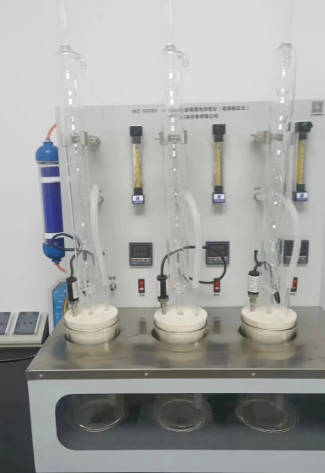
Product Samples We Regularly Subject to Liquid Resistance Testing
Our immersion baths, heating blocks and reflux systems accommodate specimens from small O‑rings to large coated panels. The following categories represent the materials and products most frequently tested through our liquid resistance testing service:
- Rubber and elastomer articles – O‑rings, gaskets, diaphragms, seals, hoses, engine mounts, expansion joints and rubber‑lined vessels
- Plastics and polymer components – injection‑moulded parts, extruded profiles, films, sheets, pipes, fittings, tanks and containers
- Coatings, paints and varnishes – anti‑corrosion primers, topcoats, powder coatings, floor coatings and coil‑coating finishes
- Adhesives, sealants and potting compounds – structural epoxy and polyurethane bonds, silicone sealants and electronic encapsulants
- Textiles, fibres and coated fabrics – chemical‑protective clothing, filter media, conveyor belts and technical textiles
- Metallic materials with surface treatments – anodised aluminium, conversion‑coated steel and electroplated components where the coating must resist chemical attack
- Composite materials and laminates – fibre‑reinforced plastic pipes, storage tanks and wind‑turbine blades exposed to hydraulic oils and cleaning agents
Rubber and Elastomer Products – Liquid Resistance Testing According to ISO 1817 and ASTM D471
- Determination of the effect of liquids on vulcanized and thermoplastic rubbers according to ISO 1817 and ASTM D471: standardised test specimens are fully immersed in the specified test liquid – such as ASTM reference fuels, mineral oils, hydraulic fluids, coolants, water or aqueous solutions – at a controlled temperature, typically +23 °C, +70 °C, +100 °C or +150 °C, for a duration of 24 h, 72 h or 168 h. After immersion, the specimens are rapidly removed, surface‑dried and weighed, and the percentage change in mass, the change in volume and the change in dimensions are measured and reported. This liquid resistance testing service provides the swelling and extraction data that seal and gasket manufacturers use to select the appropriate elastomer grade for the target fluid and to guarantee the dimensional stability of the component in service.
- Measurement of the change in hardness, tensile strength and elongation at break after liquid immersion: the conditioned and exposed specimens are tested in a tensile testing machine and a hardness durometer, and the changes in Shore A or IRHD hardness, tensile strength and elongation at break relative to the unexposed control are calculated. The results determine whether the elastomer retains its mechanical integrity after prolonged contact with the fluid, and they are compared with the acceptance limits of the relevant product standard or customer specification.
- Determination of the extractable matter and the effect of the liquid on the rubber compound: the immersion liquid is analysed for dissolved rubber constituents – plasticisers, antioxidants, curing‑system residues – and the mass loss after drying the specimen to constant weight is recorded. The data quantify the degree of cross‑linking or chain scission induced by the fluid and indicate the risk of contamination of the fluid by the rubber.
- Testing at elevated pressure and under dynamic conditions: the specimen is placed in a pressure vessel where the test liquid is maintained at a defined hydrostatic pressure, or it is subjected to simultaneous flexing while immersed, simulating the conditions in a high‑pressure hydraulic hose or a flexing fuel‑pump diaphragm. This liquid resistance testing service reproduces the real‑world service environment more closely than a simple static immersion.
- Compatibility with mixed‑fluid and sequential‑exposure protocols: the specimen is exposed alternately to two different liquids – for example, oil followed by coolant – or to a fluid that has been pre‑aged with metal catalyst coupons, replicating the complex chemical environment of an engine or a chemical reactor. The cumulative effect on the properties is reported, providing the evidence that the elastomer can withstand the full lifecycle of the application.
Plastics and Polymer Components – Chemical Resistance According to ISO 175 and ASTM D543
- Evaluation of the chemical resistance of plastics by immersion according to ISO 175 and ASTM D543: the plastic specimen is fully immersed in the test liquid – acid, alkali, solvent, oil, fuel, detergent solution or process chemical – at a specified temperature and for a defined duration. After the exposure, the specimen is examined for changes in appearance, mass, dimensions and, where applicable, mechanical or electrical properties. The test report classifies the material as “resistant”, “limited resistance” or “not resistant” for each fluid–temperature combination, providing the selection guide that designers and material engineers need to specify the correct plastic grade for chemical‑processing equipment, tanks and pipes.
- Determination of the stress‑cracking and craze formation under chemical exposure: a specimen under a defined tensile or flexural strain is brought into contact with the test liquid, and the time to the appearance of the first crack or craze is recorded. This liquid resistance testing service identifies the fluids that can cause environmental stress cracking of the plastic, and it is mandatory for the qualification of polyethylene and polypropylene pipes and containers for the transport and storage of aggressive liquids.
- Measurement of the weight and dimensional changes of thermoplastic films and sheets after immersion: the percentage mass gain due to liquid absorption and the percentage thickness swelling are measured, and the data are used to assess the barrier properties of packaging films, pond liners and protective clothing.
- Chemical resistance of plastic pipes and fittings to the conveyed fluid according to ISO 4433 and ISO 8580: the internal surface of the pipe is exposed to the chemical at the maximum service temperature and pressure, and the change in the ring stiffness, the burst strength and the appearance of the inner wall are evaluated. The test verifies that the pipe material can withstand the aggressive media encountered in industrial‑wastewater, chemical‑effluent and acid‑mine‑drainage applications.
- Resistance to disinfectants, cleaning agents and sterilisation fluids: the plastic component – such as a medical‑device housing, a food‑processing machine part or a pharmaceutical‑packaging material – is immersed in hydrogen peroxide, peracetic acid, sodium hypochlorite or quaternary‑ammonium solutions at the concentration and temperature used in the cleaning or sterilisation process. The change in the appearance, the impact strength and the molecular weight is measured, and the test supports the validation of the cleaning and sterilisation protocol.
Coatings, Paints and Surface Finishes – Liquid Resistance Testing According to ISO 2812 and ASTM D870
- Determination of the resistance of coatings to liquids according to ISO 2812 (Paints and varnishes – Determination of resistance to liquids) and ASTM D870: a coated panel is partially or fully immersed in the test liquid, or a cotton‑wool pad saturated with the liquid is placed on the coating surface. After the specified exposure period, the coating is inspected for blistering, softening, loss of gloss, discolouration, cracking and loss of adhesion. The test report grades the damage according to the ISO 4628 series, and the coating is classified for use in the chemical, marine or industrial environment. This liquid resistance testing service provides the qualification data that paint manufacturers and applicators need to certify their systems for immersion service, splash‑zone exposure or spill protection.
- Chemical‑spot test and gradient‑oven test for the rapid screening of coating resistance: drops of a range of test liquids are placed on the coating and covered with a watch glass, and the damage after a short contact time is evaluated. The gradient‑oven technique cures the coating on a heated bar, and the resistance to a solvent is tested along the temperature gradient, identifying the minimum cure temperature that provides adequate chemical resistance.
- Resistance to hydraulic fluids, lubricants, fuels and de‑icing fluids: the coated panel is immersed in the specified aviation, automotive or industrial fluid at the maximum operating temperature, and the change in the coating thickness, the cross‑cut adhesion and the flexibility are measured. This liquid resistance testing service is mandatory for the certification of coatings for aircraft, military vehicles, construction machinery and wind‑turbine towers.
- Resistance to water, humidity and salt‑water immersion: the coating is exposed to distilled water, synthetic seawater or a condensing‑humidity environment, and the water absorption, the blistering and the under‑film corrosion at a scribed line are evaluated. The data are used to specify the coating system for offshore platforms, ship hulls, bridges and coastal structures.
- Resistance to food simulants and beverages according to the EU Framework Regulation (EC) 1935/2004 and the specific migration test protocols: the coated surface of a food‑contact article – such as a can lining, a kitchen‑utensil coating or a storage‑tank lining – is exposed to the simulants (acetic acid, ethanol, vegetable oil) at the prescribed time–temperature conditions, and any change in the coating integrity, the migration of substances and the sensory effect on the simulant are assessed, supporting the declaration of compliance for the food‑contact material.
Report Acceptance and Global Regulatory Compliance
All measurements performed within our liquid resistance testing service are executed under the fully accredited scope of our ISO/IEC 17025 quality management system. Each test report that carries the ILAC mark is therefore automatically recognised by regulatory authorities, notified bodies, customs offices and supply‑chain partners in all major economies. For rubber compounders, plastic converters, paint and coating manufacturers, adhesive formulators and industrial‑component producers anywhere in the world, the report constitutes legally robust, internationally accepted evidence that the chemical compatibility, the swelling behaviour and the property retention after liquid exposure have been determined in accordance with the applicable ISO, ASTM, EN and customer‑specified methods. The documentation can be directly used to support CE marking, the issue of inspection certificates according to EN 10204 or equivalent national standards, the compilation of technical files for type‑examination, and the resolution of commercial and technical disputes concerning the resistance of materials and products to the liquids they encounter in manufacture, storage, transport and end use.