
Light Scattering Testing Service – Accredited Particle Size, Molecular Weight and Zeta Potential Analysis for Global Markets
Our internationally accredited laboratory delivers a comprehensive light scattering testing service that provides pharmaceutical developers, nanoparticle manufacturers, polymer scientists, protein chemists, cosmetic formulators and materials researchers worldwide with the independent, high‑resolution data they need to characterise particle size, molecular weight, zeta potential and aggregation behaviour. Every measurement is performed within the rigorous framework of ISO/IEC 17025, and each report bearing the ILAC mark is unconditionally accepted by regulatory authorities, notified bodies and supply‑chain partners in all major economies. The light scattering testing service employs dynamic light scattering, static light scattering, multi‑angle light scattering and laser diffraction to probe the size, shape, charge and interactions of macromolecules, nanoparticles and colloidal dispersions in their native state. For a biopharmaceutical company developing a vaccine nanoparticle, a polymer producer verifying the molecular weight distribution of a new grade, or a cosmetics manufacturer optimising the stability of an emulsion, our platform provides the legally robust, defensible data that underpin product registration, process control and international trade.
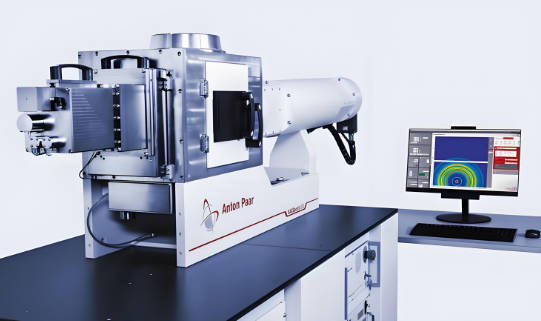
Product Samples We Regularly Subject to Light Scattering Testing
The non‑invasive, rapid nature of the light scattering testing service makes it suitable for an exceptionally wide range of liquid, solid and aerosol samples. The following categories represent the most frequently tested materials:
- Pharmaceutical and biopharmaceutical products – therapeutic proteins, monoclonal antibodies, vaccines, virus‑like particles, liposomes, lipid nanoparticles and ophthalmic suspensions
- Nanoparticles and advanced materials – quantum dots, gold and silver nanoparticles, carbon nanotubes, graphene oxide, nanocellulose and functionalised silica nanoparticles
- Polymers and colloids – synthetic polymer latexes, natural rubber latex, polyelectrolytes, starches, cellulose derivatives and associative thickeners
- Personal‑care and cosmetic formulations – emulsions, microemulsions, sunscreen dispersions, liposomal serums, shampoos and hair‑conditioning agents
- Food and beverage emulsions – milk, cream, plant‑based beverages, salad dressings, flavour emulsions and beer colloidal stability
- Pigments, inks and coatings – titanium dioxide dispersions, inkjet inks, carbon‑black dispersions, ceramic slips and electrophoretic‑deposition baths
- Environmental and geological samples – natural organic matter, clay colloids, frack‑flowback water, seawater nanoplankton and volcanic‑ash suspensions
- Metallic and ceramic powders for additive manufacturing – aluminium, titanium and tool‑steel powders, alumina and zirconia granules for binder‑jetting and powder‑bed fusion
Dynamic Light Scattering (DLS) – Light Scattering Testing Service for Particle Size, Polydispersity and Zeta Potential
- Determination of the hydrodynamic size and polydispersity index by DLS according to ISO 22412 (Particle size analysis – Dynamic light scattering) and ASTM E2490: the sample is illuminated by a monochromatic laser, and the intensity‑fluctuation autocorrelation function of the scattered light is recorded. The decay constant yields the translational diffusion coefficient, which is converted to the hydrodynamic diameter using the Stokes‑Einstein equation. The Z‑average diameter and the polydispersity index are reported. This light scattering testing service provides the rapid, non‑destructive size data required for the batch‑release of liposome, protein and nanoparticle formulations.
- Zeta‑potential measurement by electrophoretic light scattering according to ISO 13099‑2 (Colloidal systems – Methods for zeta‑potential determination): an electric field is applied to the sample, and the electrophoretic mobility of the particles is measured by the Doppler shift of the scattered light. The zeta potential is calculated using the Henry equation, and the result is reported in millivolts. The test quantifies the colloidal stability of the dispersion and is used to predict the shelf‑life of emulsions, suspensions and nanomedicine products.
- Temperature‑ramped DLS for thermal‑stability and aggregation‑temperature determination: the hydrodynamic size is measured as the sample is heated from 25 °C to 95 °C at a controlled rate. The onset temperature of aggregation Tonset and the melting temperature Tm of a protein are determined, providing the stability‑indicating data required for the formulation of biotherapeutic products and the selection of buffer conditions.
- Concentration‑dependent DLS for interaction‑parameter and second‑virial‑coefficient determination: the diffusion coefficient is measured at several dilutions, and the interaction parameter kD and the second virial coefficient B22 are derived from the slope of the diffusion‑coefficient versus concentration plot. These parameters predict the tendency of a protein to crystallise or to aggregate, directly supporting the purification and formulation development of therapeutic antibodies.
- High‑throughput DLS for plate‑based screening of colloidal stability: the sample is loaded into a 96‑well or 384‑well plate, and the size and polydispersity are measured automatically. This light scattering testing service enables the rapid screening of hundreds of formulation conditions for a new drug or a personal‑care product, accelerating the development timeline.
Static Light Scattering and Multi‑Angle Light Scattering (MALS) – Light Scattering Testing Service for Absolute Molecular Weight and Radius of Gyration
- Determination of the weight‑average molecular weight Mw and the second virial coefficient A2 by batch static light scattering according to ISO 16014‑1 and the Zimm‑plot method: the sample is measured in a cuvette at several concentrations and detection angles, and the intensity of the scattered light is recorded. A Zimm, Debye or Berry plot is constructed, and the absolute molecular weight and the radius of gyration Rg are reported without reliance on column‑calibration standards. This light scattering testing service provides the fundamental molecular‑weight data that polymer chemists and protein scientists use to characterise new macromolecules.
- Multi‑angle light scattering coupled to size‑exclusion chromatography (SEC‑MALS) for absolute molecular‑weight distribution according to ISO 16014‑2 and ASTM D4001: the polymer or protein is separated on a size‑exclusion column, and the eluent passes through a MALS detector and a differential refractive‑index detector. The molecular weight at each elution slice is calculated, and the complete molecular‑weight distribution, the number‑average, weight‑average and Z‑average molecular weights, and the polydispersity index are reported. The method is independent of the elution volume and is the definitive characterisation technique for synthetic polymers, polysaccharides and protein aggregates.
- MALS determination of the molar mass of biopharmaceuticals in their native oligomeric state: the protein is analysed in the buffer in which it is formulated, without any denaturation, and the molecular weight of the monomer, dimer and higher‑order oligomers is measured. The data are used to confirm the quaternary structure of the active pharmaceutical ingredient and to quantify the aggregate content for the batch‑release and stability testing of biosimilar products.
- Measurement of the radius of gyration and the branching ratio of star‑shaped and hyper‑branched polymers by MALS: the angular dependence of the scattered light is analysed, and the mean‑square radius of gyration is determined. The ratio of the Rg to the hydrodynamic radius, known as the shape factor ρ, is reported, and the degree of branching or the chain conformation is inferred from the value.
- Field‑flow fractionation coupled to MALS (FFF‑MALS) for the analysis of high‑molecular‑weight and particulate samples: the sample is separated in a channel by an asymmetric flow field, and the eluting fractions are analysed by MALS. The technique resolves nanometre‑sized particles, aggregates and ultra‑high‑molecular‑weight polymers that would be filtered or degraded on a chromatographic column, and it is increasingly used for the characterisation of vaccine adjuvants, viral vectors and protein‑polysaccharide conjugates.
Laser Diffraction – Light Scattering Testing Service for Particle Size Distribution of Dry Powders and Liquid Suspensions
- Determination of the particle‑size distribution by laser diffraction according to ISO 13320 (Particle size analysis – Laser diffraction methods) and ASTM B822: the dispersed sample is circulated through the measurement cell, and the angular scattering pattern of the ensemble of particles is measured by a multi‑element detector array. The particle‑size distribution is calculated from the scattering pattern using the Mie theory or the Fraunhofer approximation, and the volume‑based median diameter Dv50, the Dv10, Dv90, the span and the specific surface area are reported. This light scattering testing service provides the wide‑dynamic‑range particle‑size data that are mandatory for the quality control of cement, mineral fillers, metal powders and pharmaceutical granules.
- Wet‑dispersion and dry‑dispersion laser diffraction for the measurement of cohesive powders and fragile particles: the powder is dispersed in a liquid carrier or in a compressed‑air stream, and the optimal dispersion pressure or surfactant concentration is determined by a method‑development protocol. The test ensures that the measured size distribution represents the primary particles rather than agglomerates, and the procedure is validated for the specific product.
- Particle‑size analysis of emulsions, suspensions and creams by laser diffraction: the sample is diluted in a compatible dispersant, and the droplet or particle size is measured. The method monitors the homogenisation efficiency, the creaming or sedimentation stability and the effect of thickening agents on the size distribution, providing the process‑control data that formulators and production engineers use to adjust the mixing conditions.
- Rapid size‑screening of additive‑manufacturing metal and ceramic powders: the powder is measured in the dry‑dispersion mode, and the Dv10, Dv50, Dv90 and the percentage of fine particles below 10 µm are reported. The data are compared with the powder‑supplier specification and with the requirements of the laser‑powder‑bed‑fusion process, ensuring consistent melt‑pool behaviour and part density.
- Validation of the laser‑diffraction method with certified reference materials and round‑robin testing: the instrument is qualified with NIST‑traceable polydisperse or monodisperse standards, and the method is validated for precision, accuracy and robustness. The expanded measurement uncertainty is reported, giving the client confidence in the reliability of the data for arbitration and specification compliance.
Report Acceptance and Global Regulatory Compliance
All measurements performed within our light scattering testing service are executed under the fully accredited scope of our ISO/IEC 17025 quality management system. Each test report that carries the ILAC mark is therefore automatically recognised by regulatory authorities, notified bodies, customs offices and supply‑chain partners in all major economies. For pharmaceutical manufacturers, nanoparticle producers, polymer suppliers and personal‑care formulators anywhere in the world, the report constitutes legally robust, internationally accepted evidence that the particle size, molecular weight, zeta potential and aggregation profile have been determined in accordance with the applicable ISO, ASTM and customer‑specified methods. The documentation can be directly used for product registration, the issue of inspection certificates according to EN 10204 or equivalent national standards, the compilation of technical files for CE marking, and the resolution of commercial and technical disputes concerning the colloidal, macromolecular or particulate characteristics of any material.




