
LC-MS Testing Service – Accredited High‑Resolution Identification and Quantification of Trace Organic Compounds for Global Markets
Our internationally accredited laboratory delivers a comprehensive LC-MS testing service that provides pharmaceutical researchers, environmental agencies, food‑safety laboratories, clinical toxicologists, forensic investigators and chemical manufacturers worldwide with the highest sensitivity and specificity in the analysis of polar, non‑volatile and thermally labile compounds. Every measurement is performed within the rigorous framework of ISO/IEC 17025, and each report bearing the ILAC mark is unconditionally accepted by regulatory authorities, customs offices and notified bodies in all major economies. The LC-MS testing service combines the separation power of ultra‑high‑performance liquid chromatography with the structural elucidation capability of triple‑quadrupole, ion‑trap or high‑resolution accurate‑mass mass spectrometry, enabling the identification and quantification of target analytes at femtogram levels and the non‑targeted screening of unknown contaminants. For a drinking‑water utility monitoring per‑ and polyfluoroalkyl substances, a generic‑drug manufacturer proving bioequivalence, or a food exporter ensuring compliance with maximum residue limits, our platform provides the legally robust, defensible data that underpin product registration, environmental compliance and consumer safety on every continent.
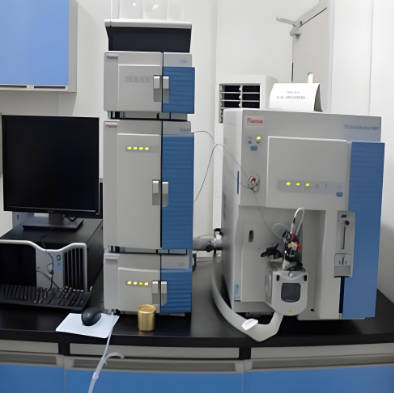
Product Samples We Regularly Subject to LC‑MS Testing
The versatile sample‑introduction systems, ionisation sources and column chemistries of our LC‑MS platform accept an extraordinarily wide variety of liquid, solid and biological matrices. The following categories represent the materials most frequently analysed through our LC-MS testing service:
- Environmental waters and wastewaters – drinking water, surface water, groundwater, seawater, industrial effluents, landfill leachates and stormwater runoff
- Soils, sediments and solid wastes – contaminated land samples, dredged sediments, sewage sludge, compost, fly ash and agricultural soils
- Food, beverages and agricultural commodities – fresh and processed fruits, vegetables, cereals, meat, fish, dairy products, edible oils, fruit juices, wine, infant formula and animal feeds
- Pharmaceutical preparations and biopharmaceuticals – active pharmaceutical ingredients, finished dosage forms, injectables, inhalers, creams, ointments and biological products
- Biological fluids and clinical specimens – whole blood, plasma, serum, urine, saliva, cerebrospinal fluid, tissue homogenates and dried blood spots
- Forensic and toxicological samples – post‑mortem tissues, hair, oral fluid, seized illicit drugs and adulterated consumer products
- Personal‑care and cosmetic products – creams, lotions, shampoos, hair dyes, sunscreens and fragrances
- Chemical and industrial intermediates – surfactants, plasticisers, flame retardants, polymer additives and reaction‑mixture monitoring
Environmental Water, Soil and Air Analysis – LC‑MS Testing Service for Emerging Contaminants, Pesticides and Pharmaceuticals
- Determination of per‑ and polyfluoroalkyl substances in drinking water, groundwater and surface water according to EPA Method 537.1, EPA Method 533 and ISO 21675: the sample is extracted by solid‑phase extraction, and the PFAS are separated on a C18 column and quantified by LC‑MS/MS using multiple reaction monitoring. Compounds including PFOA, PFOS, PFHxS, PFNA and emerging replacement ether acids are reported at detection limits below 1 ng/L, supporting compliance with the EU Drinking Water Directive, the US EPA Health Advisory levels and the Stockholm Convention.
- Determination of pesticides and their transformation products in water according to EPA Method 538 and the EU Watch List procedure: polar pesticides, neonicotinoids, glyphosate, AMPA and fipronil degradates are analysed by direct aqueous injection or after derivatisation, separated on a hydrophilic‑interaction or reversed‑phase column, and detected by LC‑MS/MS. The method achieves the 0.1 µg/L parametric value of the EU Drinking Water Directive.
- Analysis of pharmaceuticals and personal‑care‑product residues in surface water and wastewater effluent according to EPA Method 1694 and the NORMAN network protocols: antibiotics, non‑steroidal anti‑inflammatory drugs, beta‑blockers, carbamazepine, estrone, 17β‑estradiol and UV‑filter compounds are extracted by solid‑phase extraction and quantified by LC‑MS/MS. This LC-MS testing service supports the monitoring programmes mandated by the EU Water Framework Directive and the assessment of the ecological risk of micropollutants.
- Non‑targeted screening of emerging contaminants by high‑resolution LC‑QTOF‑MS: the sample is analysed in data‑dependent or data‑independent acquisition mode, and the accurate mass, isotopic pattern and fragmentation spectrum of every detected feature are searched against comprehensive databases. The molecular formula and the tentative structure of unknown environmental contaminants are reported, enabling the early warning of new pollution threats.
- Determination of cyanotoxins – microcystins, nodularin and cylindrospermopsin – in drinking and recreational water according to ISO 22104 and the WHO guidelines: the sample is filtered or extracted, and the toxins are separated on a C18 column and detected by LC‑MS/MS. The method achieves the 1 µg/L guideline value for microcystin‑LR, protecting public health during harmful algal blooms.
- Quantification of nitrosamines and nitrosamine‑drug‑substance‑related impurities in water and pharmaceutical process streams: N‑nitrosodimethylamine, N‑nitrosodiethylamine and other N‑nitrosamines are determined by LC‑MS/MS with atmospheric‑pressure chemical ionisation, achieving detection limits in the low nanogram‑per‑litre range.
Food and Feed Safety – LC‑MS Testing Service for Veterinary Drugs, Mycotoxins and Pesticide Residues
- Multi‑residue determination of veterinary drugs in meat, milk, eggs and seafood according to the EU Reference Laboratory methods and Commission Implementing Regulation (EU) 2021/808: the sample is extracted with acetonitrile and cleaned by dispersive solid‑phase extraction or immunoaffinity columns. Sulfonamides, tetracyclines, quinolones, macrolides, beta‑lactams, anthelmintics and coccidiostats are separated on a C18 column and detected by LC‑MS/MS in positive and negative ionisation modes. The method achieves the maximum residue limits set by Commission Regulation (EU) No 37/2010 and Codex Alimentarius.
- Determination of mycotoxins – aflatoxins, ochratoxin A, fumonisins, zearalenone, deoxynivalenol and T‑2/HT‑2 toxins – in cereals, spices, nuts and infant foods according to EN 14123, EN 14132 and CEN/TS 17251: the sample is extracted with an aqueous‑organic solvent and cleaned by immunoaffinity or multi‑functional columns. The mycotoxins are separated and detected by LC‑MS/MS, and the concentrations are reported against isotopically labelled internal standards, meeting the strict performance criteria of the EU Maximum Residue Limits.
- Screening of pesticide residues in food and feed by LC‑MS/MS according to the QuEChERS method (EN 15662): the homogenised sample is extracted with acetonitrile and purified by dispersive solid‑phase extraction. Over three hundred polar and medium‑polarity pesticides, including carbamates, triazoles, neonicotinoids and strobilurins, are monitored by scheduled multiple reaction monitoring, and the results are compared with the maximum residue limits of the EU, the United States and Codex Alimentarius.
- Determination of acrylamide, furan and other heat‑induced contaminants in processed foods according to the EU Commission Recommendation 2019/1888 and the applicable CEN standards: the analyte is extracted, derivatised if necessary, and quantified by LC‑MS/MS. The data support the food‑business operator's obligation to monitor and mitigate acrylamide levels in fried and baked products.
- Analysis of biogenic amines in fish, cheese and fermented products by LC‑MS/MS: histamine, tyramine, putrescine, cadaverine and tryptamine are quantified as indicators of spoilage and improper storage, providing the data that importers and retailers require to guarantee the freshness and safety of high‑protein foods.
- Quantification of vitamins and carotenoids in fortified foods, infant formula and dietary supplements according to EN 12823‑2 and AOAC Official Methods: fat‑soluble vitamins A, D, E and K, and water‑soluble B‑group vitamins, are determined by LC‑MS/MS or LC‑DAD, providing the data for nutrition‑fact panels and the verification of label claims.
Pharmaceutical, Biopharmaceutical and Medical‑Device Testing – LC‑MS Testing Service for Impurities, Bioequivalence and Cleaning Validation
- Determination of genotoxic impurities, nitrosamines and elemental impurities in active pharmaceutical ingredients and drug products according to the ICH M7, ICH Q3D and the FDA/EMA guidance: the sample is dissolved or extracted, and the target impurities – such as N‑nitrosodimethylamine, N‑nitrosodiethylamine, azido‑tetrazole and alkyl halides – are separated and quantified by LC‑MS/MS. This LC-MS testing service achieves the sub‑parts‑per‑million detection limits required for the control of cohort‑of‑concern impurities and supports the global recall and reformulation programmes triggered by the nitrosamine crisis.
- Bioequivalence and pharmacokinetic studies of generic and innovator drugs according to the ICH M10 guideline and the FDA/EMA bioanalytical method validation guidance: the drug and its metabolites are extracted from plasma, serum or urine by protein precipitation, liquid‑liquid extraction or solid‑phase extraction, and quantified by LC‑MS/MS using a stable‑isotope‑labelled internal standard. The concentration‑time profile, the area under the curve and the maximum concentration are reported, providing the pivotal data for the registration of generic medicines.
- Cleaning‑validation and cross‑contamination control in multi‑product manufacturing facilities: swab and rinse samples are collected from the production equipment and analysed by LC‑MS/MS for the active ingredient or the worst‑case cleaning marker. The method is validated to achieve detection limits well below the health‑based exposure limits, supporting the regulatory inspection of contract manufacturing organisations.
- Characterisation of therapeutic proteins, monoclonal antibodies and biosimilars by peptide mapping and intact‑mass analysis using LC‑MS: the protein is digested with trypsin, and the peptides are separated by nano‑LC and analysed by high‑resolution mass spectrometry. The amino‑acid sequence, the post‑translational modifications and the disulfide‑bridge pattern are determined, providing the detailed structural information required by the ICH Q6B guideline.
- Determination of extractables and leachables from pharmaceutical packaging, medical devices and single‑use systems: the material is extracted with a range of solvents, and the organic extractables are identified and quantified by LC‑MS. The data are used for the toxicological risk assessment of the packaging system and for the demonstration of compliance with USP ⟨1663⟩ and the ISO 10993 series.
- Quantification of therapeutic drugs and their metabolites in clinical specimens for therapeutic drug monitoring: immunosuppressants, antiepileptics, antidepressants and antibiotics are determined by LC‑MS/MS, providing the rapid, specific data that clinicians need to individualise dosage and to avoid toxicity.
Forensic Toxicology, Illicit Drugs and Workplace Testing – LC‑MS Testing Service for the Criminal Justice System
- Identification and quantification of drugs of abuse and new psychoactive substances in blood, urine and oral fluid by LC‑MS/MS and LC‑QTOF: the sample is prepared by dilution or extraction, and the analytes – including synthetic cannabinoids, cathinones, fentanyl analogues, benzodiazepines and opioids – are identified against spectral libraries and quantified. The method meets the analytical cut‑offs of the European Workplace Drug Testing Society and the US Substance Abuse and Mental Health Services Administration.
- Post‑mortem toxicology and death‑investigation analysis: a comprehensive panel of over three hundred drugs and poisons is screened in post‑mortem blood, vitreous humour and liver homogenate by LC‑MS/MS and LC‑QTOF. The presence, absence and concentration of each substance are reported, and the results are interpreted in the context of the fatal‑toxicity literature to assist the coroner or medical examiner.
- Detection of adulterants and contaminants in illicit drug seizures: the street drug is dissolved and analysed by LC‑MS. The active ingredient, the cutting agents and any unexpected toxic adulterants – such as fentanyl in heroin or phenacetin in cocaine – are identified and semi‑quantified, supporting the work of law‑enforcement agencies and the issuing of public‑health alerts.
- Analysis of chemical‑weapons agents, explosives and environmental‑crime residues: the sample is extracted and analysed by LC‑MS/MS in negative‑ion mode. Nerve‑agent degradation products, blister‑agent hydrolysis products and explosive residues are identified at trace levels, providing the forensic evidence required by international monitoring organisations.
Cosmetics, Personal‑Care Products and Consumer Safety – LC‑MS Testing Service for Prohibited and Restricted Substances
- Determination of preservatives, UV filters and fragrance allergens in cosmetic products according to the EU Cosmetics Regulation (EC) No 1223/2009 and the SCCS Notes of Guidance: the sample is dispersed or extracted, and the analytes – parabens, phenoxyethanol, benzophenones, octinoxate, avobenzone and the 24 volatile fragrance allergens – are separated on a C18 column and quantified by LC‑MS/MS. The results support the safety assessment of the cosmetic product and the correct labelling of allergens.
- Screening for prohibited skin‑lightening agents, corticosteroids and antibiotics in cosmetic creams and lotions: hydroquinone, clobetasol propionate, betamethasone, ketoconazole and other prohibited substances are quantified by LC‑MS/MS. The data are used by regulatory authorities to enforce the ban on these substances and to protect consumer health.
- Determination of monomers, plasticisers and photo‑initiators in food‑contact materials and printing inks: the specific migration of bisphenol A, bisphenol S, phthalates, primary aromatic amines and the photo‑initiators used in UV‑cured inks is measured into food simulants by LC‑MS/MS, and the results are compared with the specific migration limits of Commission Regulation (EU) No 10/2011.
- Quantification of residual solvents and process‑related impurities in cosmetic and personal‑care raw materials: the sample is dissolved and analysed by headspace‑GC‑MS or direct‑injection LC‑MS, providing the data that formulators require to verify the purity of the incoming ingredients.
Report Acceptance and Global Regulatory Compliance
All analyses performed within our LC-MS testing service are executed under the fully accredited scope of our ISO/IEC 17025 quality management system. Each test report that carries the ILAC mark is therefore automatically recognised by regulatory authorities, notified bodies, customs offices and supply‑chain partners in all major economies. For environmental agencies, food‑safety laboratories, pharmaceutical manufacturers, clinical‑research organisations and forensic investigators anywhere in the world, the report constitutes legally robust, internationally accepted evidence that the liquid‑chromatographic–mass‑spectrometric identification and quantification of the target analytes have been performed in accordance with the applicable EPA, ISO, ASTM, USP, Ph. Eur., EN and customer‑specified methods. The documentation can be directly used for drug‑registration submissions, environmental‑permit applications, food‑safety clearance, forensic‑evidence presentation, the issue of inspection certificates according to EN 10204 or equivalent national standards, and the resolution of commercial and technical disputes concerning the identity, purity and safety of any organic substance.




