Kevlar Aerogel Fiber Sheet Testing Service for Global Advanced Insulation and Protective Markets
As an ISO/IEC 17025 accredited laboratory, we provide a specialized Kevlar aerogel fiber sheet testing service that verifies the thermal insulation performance, mechanical toughness, fire resistance, chemical purity, and long-term environmental stability of aramid-fiber-reinforced aerogel composite sheets. Our Kevlar aerogel fiber sheet testing service supports manufacturers and exporters of high-performance insulation blankets, battery thermal barriers, aerospace thermal protection panels, and protective clothing materials who must demonstrate conformity to ASTM, ISO, EN, and regional advanced material standards across the European Union, North America, East Asia, and the Middle East. Every test is performed under our CNAS-accredited quality system, producing reports accepted by notified bodies, advanced material OEMs, and procurement teams worldwide.

Product Samples We Regularly Test in Our Kevlar Aerogel Fiber Sheet Testing Service
- Kevlar-reinforced silica aerogel insulation sheets — for electric vehicle battery packs, heat shields, and industrial pipe insulation
- Flexible aramid aerogel blankets with hydrophobic surface treatment — for aerospace thermal protection and cryogenic insulation
- Kevlar aerogel composite panels for ballistic and thermal dual protection — for military vehicle armor, personnel shields, and protective enclosures
- Thin Kevlar aerogel sheets for electronic device thermal management — for smartphones, wearables, and high-power semiconductor modules
- Multi-layer Kevlar aerogel laminates with metal foil or scrim facing — for reflective insulation and moisture barrier applications
- Kevlar aerogel fiber sheet cut parts and die-cut components — for custom gaskets, spacers, and thermal isolators
- Recycled and repurposed Kevlar aerogel sheet materials — for sustainable insulation and circular economy verification
Thermal Insulation and Heat Transfer Performance Testing for Kevlar Aerogel Fiber Sheets
- Thermal conductivity at multiple mean temperatures per ASTM C518 and ISO 8301 — using a heat flow meter apparatus, the thermal conductivity of the Kevlar aerogel fiber sheet is measured at mean temperatures from -50 °C to 200 °C to generate the temperature-dependent lambda curve, verifying the sheet's superior insulation performance for battery thermal runaway protection and building energy efficiency.
- Specific heat capacity and thermal diffusivity per ASTM E1461 and ISO 22007-4 — laser flash analysis measures the thermal diffusivity and calculates the specific heat, providing the data required for transient thermal modelling of the Kevlar aerogel sheet in dynamic heating and cooling applications.
- Thermal resistance and R-value calculation per ASTM C518 — the steady-state heat flow through the sheet is measured to determine the thermal resistance and the effective R-value, confirming the insulation meets the design thickness and performance requirements for the specific application.
- Thermal shrinkage and permanent linear change after heat exposure per ASTM C356 — the Kevlar aerogel fiber sheet is exposed to its maximum rated temperature for a defined period, and the percentage dimensional change is recorded to verify the material remains dimensionally stable and does not gap or shrink in high-temperature service.
- Thermal shock resistance and rapid temperature cycling per IEC 60068-2-14 — the sheet is rapidly cycled between hot and cold extremes, and the change in thermal conductivity, mechanical strength, and visual integrity is evaluated to ensure reliable performance under intermittent high-temperature operations and thermal gradients.
- Hot surface contact and heat flux attenuation measurement per internal and customer protocols — the Kevlar aerogel sheet is placed against a heated surface and the heat flux transmitted through the sheet is measured to quantify its ability to protect adjacent components from heat sources such as battery cells or exhaust systems.
Mechanical, Tensile, and Structural Integrity Testing of Kevlar Aerogel Fiber Sheets
- Tensile strength and elongation at break per ISO 527-4 and ASTM D3039 — specimens are cut from the Kevlar aerogel fiber sheet and pulled to failure in both warp and weft directions to measure the ultimate tensile strength and stretch, ensuring the aramid reinforcement provides the mechanical toughness required for handling, installation, and load-bearing applications.
- Flexural strength and flexural modulus per ISO 178 and ASTM D790 — three-point bending tests determine the sheet's resistance to bending and its stiffness, verifying the Kevlar aerogel composite can be formed and installed around curved surfaces without cracking or delamination.
- Tear resistance and puncture strength per ISO 6383-2 and ASTM D2582 — the force required to propagate a tear or to push a pointed probe through the sheet is measured, ensuring the aramid fiber reinforcement resists damage from sharp objects, fasteners, and mechanical impacts during service.
- Compression resistance and recovery behavior per ASTM D1621 and ISO 844 — the Kevlar aerogel fiber sheet is compressed to a defined percentage of its thickness and the recovery is measured, predicting the spring-back and the long-term retention of clamping force in gasket and thermal barrier applications.
- Interlaminar shear strength and delamination resistance per ASTM D2344 and ISO 14130 — the bond strength between the aerogel matrix and the Kevlar fiber reinforcement is measured to ensure the composite does not delaminate under thermal cycling, mechanical vibration, or bending stress.
- Impact resistance and energy absorption per ISO 6603-2 and ASTM D5420 — the sheet is subjected to controlled impacts to simulate accidental drops, tool strikes, and debris impacts, with post-test inspection for cracking, delamination, and loss of thermal performance.
Fire Resistance and Reaction-to-Fire Testing for Kevlar Aerogel Fiber Sheets
- Non-combustibility and limited combustibility classification per EN ISO 1182 and ISO 1716 — the Kevlar aerogel fiber sheet is exposed to a furnace at 750 °C to verify the inorganic aerogel matrix renders the composite non-combustible or limited combustible, meeting the highest reaction-to-fire class for construction and transport applications.
- Surface flame spread and smoke development per ASTM E84 — the Steiner tunnel test measures the flame spread index and smoke developed index for the Kevlar aerogel sheet, typically achieving Class A performance due to the flame-resistant nature of the aramid fiber reinforcement.
- Limited flame spread and vertical burning test per EN ISO 15025 and ASTM D6413 — the sheet is exposed to a defined gas flame and the afterflame time, afterglow time, and char length are recorded to verify the material does not propagate fire when used in protective clothing, battery enclosures, or building insulation.
- Smoke density and toxic gas emission per ISO 5659-2 — for Kevlar aerogel fiber sheets installed in enclosed public spaces, transportation, and battery compartments, the specific optical density of smoke and the concentration of toxic combustion gases are measured to satisfy life safety regulations.
- Glow-wire ignitability and hot-wire resistance per IEC 60695-2-11 — the sheet is subjected to a glow-wire at defined temperatures to simulate contact with an overheated electrical component, verifying the material does not ignite or sustain combustion.
Chemical Composition and Purity Analysis of Kevlar Aerogel Fiber Sheets
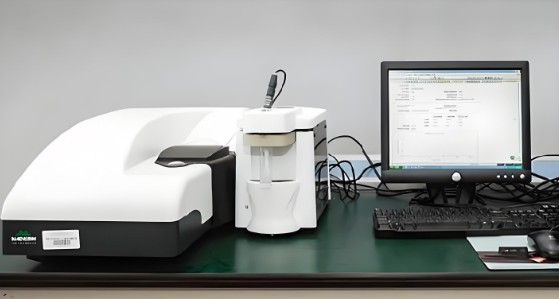
- Fourier transform infrared spectroscopy for polymer and aerogel identification per ASTM E1252 — the infrared absorption spectrum is acquired to confirm the presence of the aramid fiber, the silica or polymer aerogel matrix, and any surface treatments or binders, verifying the material composition matches the specification.
- Thermogravimetric analysis for composition and thermal stability per ASTM E1131 — the mass loss profile of the Kevlar aerogel fiber sheet is recorded up to 1000 °C under nitrogen and air, quantifying the aerogel content, aramid fiber fraction, and any residual solvents or organic binders.
- Elemental analysis and trace metal screening by ICP-OES per ASTM E3061 — the sheet is digested and analyzed for metal contaminants including iron, copper, nickel, and chromium that could catalyze degradation or impair the material's dielectric properties.
- X-ray diffraction phase analysis per ASTM D3720 — the crystalline or amorphous nature of the aerogel matrix and the aramid fiber is identified, providing data on the structural order and any contaminants present in the Kevlar aerogel fiber sheet.
- Scanning electron microscopy with energy dispersive X-ray spectroscopy per ASTM E1508 — the microstructure, fiber distribution, and aerogel-fiber adhesion are observed at high magnification to verify the uniformity and the reinforcement effectiveness of the composite sheet.
Environmental Durability and Aging Resistance Testing for Kevlar Aerogel Fiber Sheets
- Damp heat and humidity exposure per IEC 60068-2-78 — the Kevlar aerogel fiber sheet is stored at 85 °C and 85% relative humidity for extended periods, and the change in thermal conductivity, tensile strength, and hydrophobicity is measured to predict the material's performance in tropical and high-moisture environments.
- Thermal cycling and thermal shock per IEC 60068-2-14 — the sheet is cycled between -40 °C and +150 °C to simulate the temperature extremes of battery operation, aerospace flight, and outdoor insulation, with post-test inspection for cracking, delamination, and performance drift.
- UV and xenon-arc accelerated weathering per ASTM G155 and ISO 4892-2 — the Kevlar aerogel sheet is exposed to simulated sunlight and moisture cycles to evaluate yellowing, embrittlement, and loss of mechanical and thermal properties after prolonged outdoor exposure.
- Water immersion and hydrophobicity testing per ASTM D570 and ISO 15901-1 — the water absorption and the retention of hydrophobic surface properties are measured to confirm the Kevlar aerogel sheet resists moisture uptake and maintains its thermal performance in wet conditions.
- Resistance to oils, fuels, and cleaning agents per ISO 175 and ASTM D543 — the sheet is exposed to automotive fluids, industrial oils, and cleaning chemicals to verify no softening, swelling, or degradation occurs during service and maintenance.
- Accelerated aging for shelf-life determination per ASTM F1980 — the Kevlar aerogel fiber sheet is aged at elevated temperatures to predict the product shelf life and to verify the long-term stability of the aerogel structure and the aramid fiber reinforcement.
Chemical Safety and Restricted Substance Compliance for Kevlar Aerogel Fiber Sheets
- RoHS compliance per IEC 62321 and EU Directive 2011/65/EU — quantitative screening for lead, mercury, cadmium, hexavalent chromium, PBBs, and PBDEs in the aerogel matrix, aramid fiber, and any surface coatings to ensure the Kevlar aerogel fiber sheet meets global substance restrictions for the destination market.
- REACH Annex XVII and SVHC screening — targeted analysis of Substances of Very High Concern including specific phthalate plasticizers, organotin stabilizers, and residual solvents used in the aerogel synthesis or surface treatment.
- Formaldehyde and volatile organic compound emissions per ISO 16000-3 — chamber emission testing verifies that the Kevlar aerogel fiber sheet does not release harmful VOCs or formaldehyde into the indoor air, a requirement for building insulation and automotive interior applications.
- Heavy metals in packaging per EU Directive 94/62/EC — verification that the sum concentration of lead, cadmium, mercury, and hexavalent chromium in the protective packaging, labels, and interleaving materials is below the 100 ppm regulatory limit.
Report Recognition and ISO/IEC 17025 Compliance
Every method described in this Kevlar aerogel fiber sheet testing service is covered by our ISO/IEC 17025 scope of accreditation. Our technical reports are accepted by European notified bodies for advanced materials and construction products, by North American battery and aerospace OEMs referencing ASTM and ISO standards, and by customs and procurement authorities across Japan, Korea, and the Gulf region. Whether you require a complete qualification dossier for a new Kevlar aerogel fiber sheet product, a batch release inspection for an export shipment, or a root cause failure analysis of a thermal or mechanical performance issue, our laboratory provides the measurement accuracy and advanced material expertise that the global insulation and protective materials industry demands.