Intelligent Pressure Regulator Inspection Service for Global Process Automation
As an ISO/IEC 17025 accredited laboratory, we deliver a specialized intelligent pressure regulator inspection service that verifies control accuracy, communication integrity, mechanical durability, and functional safety. Our intelligent pressure regulator inspection service supports manufacturers and exporters of smart pressure regulators, digital control valves, and fieldbus-controlled pressure management devices who must demonstrate conformity to IEC, EN, ISA, and regional process safety standards across the European Union, North America, the Middle East, and Asia. Every test is performed under our CNAS-accredited quality system, producing reports accepted by notified bodies, plant operators, and procurement teams worldwide.

Product Samples We Regularly Test in Our Intelligent Pressure Regulator Inspection Service
- Smart electronic pressure regulators with embedded control algorithms — for precision process control in semiconductor, pharmaceutical, and gas distribution
- Fieldbus-connected intelligent pressure regulators — with HART, PROFIBUS, Foundation Fieldbus, or wireless communication interfaces
- Piezoelectric and servo-driven digital pressure regulators — for high-speed dynamic pressure control in test stands and calibration laboratories
- Explosion-proof and intrinsically safe intelligent pressure regulators — ATEX and IECEx certified for hazardous area process automation
- High-pressure and high-flow intelligent pressure regulators — for hydrogen refueling stations, CNG systems, and industrial gas supply
- Multi-channel and multi-gas intelligent pressure regulators — for gas mixing, blending, and analytical instrument gas supply
- Battery-powered and energy-harvesting intelligent pressure regulators — for remote pipeline monitoring and wellhead automation
Control Performance and Accuracy Verification in Our Intelligent Pressure Regulator Inspection Service
- Setpoint accuracy, hysteresis, and linearity per IEC 61514 and ISA-75.25.01 — the intelligent pressure regulator is commanded through a full range of pressure setpoints via its digital interface, and the actual downstream pressure is measured with a calibrated reference transducer to determine the deviation, hysteresis, and terminal-based linearity error, verifying the device meets its published accuracy specification.
- Response time and step response characterization per IEC 61514 and customer protocols — a step change in the digital setpoint is applied and the downstream pressure response is recorded at high sampling rate to measure the dead time, rise time, settling time, and overshoot, confirming the intelligent pressure regulator meets the dynamic performance required for fast-acting process loops.
- Closed-loop stability and disturbance rejection capability — the regulator is subjected to controlled upstream pressure fluctuations and downstream flow demand changes while the downstream pressure stability is monitored, verifying the embedded PID or model-based control algorithm maintains the setpoint within the specified deadband.
- Repeatability and reproducibility under varying environmental conditions per ISO 5725 — the setpoint accuracy and response time are measured at multiple temperature and humidity levels across the rated operating envelope to quantify the environmental influence and to verify the device's on-board compensation algorithms.
- Long-term drift and stability monitoring per IEC 60770 — the intelligent pressure regulator is operated continuously at a fixed setpoint for an extended period, and the output pressure drift is recorded to predict the calibration interval and to support safety instrumented system reliability calculations.
Communication Protocol and Digital Interface Testing for Intelligent Pressure Regulators
- HART, PROFIBUS, and Foundation Fieldbus communication conformance per IEC 61158 and IEC 61784 — the physical layer, data link layer, and application layer of the intelligent pressure regulator's fieldbus interface are tested with a certified protocol analyzer to verify full compliance with the communication standard and interoperability with host DCS and PLC systems.
- Wireless communication reliability and coexistence per IEC 62591 and IEEE 802.15.4 — the wireless intelligent pressure regulator is tested for radio frequency output power, spectrum mask, receiver sensitivity, and packet error rate in the presence of interfering signals, ensuring reliable data transmission in industrial plant environments.
- Device Description and Electronic Device Description file verification per IEC 61804 — the DD/EDD file supplied with the intelligent pressure regulator is validated against the device's actual behavior to ensure that all parameters, diagnostic functions, and alarm messages are correctly represented in the asset management software.
- Fail-safe and watchdog function testing per IEC 61508 and customer protocols — the intelligent pressure regulator is subjected to communication loss, power interruption, and internal fault conditions, and the output pressure response is recorded to verify the device transitions to the configured fail-safe state within the specified safety time.
- Cybersecurity vulnerability assessment per IEC 62443-4-2 — the intelligent pressure regulator's embedded web server, configuration interface, and firmware update mechanism are assessed for common vulnerabilities including weak authentication, unencrypted data transmission, and susceptibility to denial-of-service attacks.
Mechanical Integrity and Pressure Containment Testing Within Our Intelligent Pressure Regulator Inspection Service
- Hydrostatic pressure test and leak tightness per ISO 5208 and API 598 — the pressure-retaining envelope of the intelligent pressure regulator is pressurized to 1.5 times the maximum allowable working pressure, and all body joints, seals, and the actuator housing are inspected for visible leakage, pressure decay, and permanent deformation.
- Seat leakage and tight shut-off classification per IEC 60534-4 and ANSI/FCI 70-2 — the regulator is commanded to the fully closed position and the downstream pressure rise or volumetric leakage is measured using a precision flow meter to assign the seat leakage class from Class II to Class VI, verifying the shut-off performance for the process application.
- Burst pressure and ultimate strength verification per ISO 1402 and customer specifications — the pressure-containing components are pressurized hydraulically until rupture to determine the ultimate safety margin, which must exceed a specified factor above the maximum rated working pressure for pressure equipment directive compliance.
- Proof pressure and fatigue testing per ISO 10770-1 — the intelligent pressure regulator is subjected to cyclic pressure pulses to simulate the repetitive stress of process pressure fluctuations, with post-test leak and performance checks to confirm no fatigue damage or performance degradation.
Environmental Durability and Reliability Testing for Intelligent Pressure Regulators
- Temperature cycling and thermal shock per IEC 60068-2-14 — the intelligent pressure regulator is cycled between -40 °C and +85 °C while the output pressure, communication integrity, and display function are monitored to verify the device withstands diurnal temperature extremes and plant start-up and shutdown conditions.
- Damp heat and humidity resistance per IEC 60068-2-78 — the regulator is operated at 40 °C and 93 % relative humidity for extended periods, followed by insulation resistance, dielectric strength, and functional retesting to confirm no moisture ingress degrades the electronics or causes corrosion.
- Vibration and shock resistance per IEC 60068-2-6 and IEC 60068-2-27 — the intelligent pressure regulator is vibrated under sinusoidal and random profiles representative of pipeline and rotating machinery environments, and the output pressure stability and communication error rate are monitored to verify mechanical robustness.
- Neutral salt spray and cyclic corrosion resistance per ISO 9227 and ASTM B117 — the regulator housing, fasteners, and exposed metallic components are exposed to salt fog for up to 1000 hours to evaluate pitting, red rust, and coating degradation in coastal, offshore, and chemical plant environments.
- Ingress protection rating verification per IEC 60529 — the intelligent pressure regulator is subjected to dust chamber exposure and water jet or immersion tests to confirm the declared IP code, typically IP65, IP66, or IP67, ensuring reliable operation in outdoor, washdown, and buried installations.
Electrical Safety and Electromagnetic Compatibility Testing for Intelligent Pressure Regulators
- Dielectric strength and insulation resistance per IEC 61010-1 and IEC 60335-1 — a high voltage is applied between the power supply terminals, the communication lines, and the regulator housing to verify the electrical insulation withstands transient overvoltages without breakdown, the fundamental safety requirement for process control equipment.
- Protective earthing continuity and ground bond test per IEC 61010-1 — for intelligent pressure regulators with metallic housings, the resistance between the earth terminal and accessible metal parts is measured at a test current of at least 10 A to confirm a reliable fault current path below 0.1 ohm.
- Electromagnetic emissions and immunity per EN 61326-1 and IEC 61000-6 series — the regulator is tested for radiated and conducted electromagnetic emissions, and for immunity to electrostatic discharge, radiated RF fields, fast transient bursts, and surges to verify electromagnetic compatibility in industrial control panel and field-mounted installations.
- Power supply variation and brown-out immunity per IEC 61000-4-11 — the intelligent pressure regulator is subjected to voltage dips, short interruptions, and supply voltage variations, and the output pressure, communication, and data logging functions are monitored to verify uninterrupted operation during power quality events.
Material Verification and Chemical Safety Compliance for Intelligent Pressure Regulators
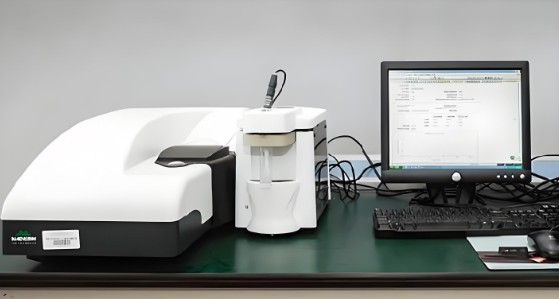
- Optical emission spectrometry for alloy verification of wetted components per ASTM E415 and ISO 14284 — the valve body, diaphragm, and sealing materials are analyzed to confirm they conform to the specified grades such as 316L stainless steel, Hastelloy C276, or PTFE, ensuring corrosion compatibility with the process fluid.
- RoHS compliance per IEC 62321 and EU Directive 2011/65/EU — quantitative screening for lead, mercury, cadmium, hexavalent chromium, PBBs, and PBDEs in the electronic components, display, wiring, and solder to ensure the intelligent pressure regulator meets substance restrictions for the destination market.
- REACH Annex XVII and SVHC screening — targeted analysis of Substances of Very High Concern including specific phthalate plasticizers, brominated flame retardants, and organotin stabilizers in polymeric seals, gaskets, and the electronic enclosure.
- Polycyclic aromatic hydrocarbons in rubber and plastic components per AfPS GS 2019:01 PAK — for dark-colored gaskets, cable glands, and soft-touch surfaces, the 15 restricted PAHs are extracted and quantified to confirm compliance with European product safety limits.
Report Recognition and ISO/IEC 17025 Compliance
All test methods described in this intelligent pressure regulator inspection service are included within our ISO/IEC 17025 scope of accreditation. Our test reports are accepted by European notified bodies for CE marking under the Pressure Equipment and EMC Directives, by North American process safety authorities and plant operators referencing ISA and IEC standards, and by regulatory and procurement agencies across the Middle East, Australia, and Asia. Whether you require a complete type approval for a new smart pressure regulator platform, a batch release inspection for an export shipment, or a root cause failure analysis of a field performance issue, our laboratory provides the measurement accuracy and process automation expertise that the global industrial control industry demands.