High-Temperature Resistant and Low-Noise Aviation Wire Inspection Service for Global Aerospace Compliance
As an ISO/IEC 17025 accredited laboratory, we deliver a specialized inspection service for high-temperature resistant and low-noise wires used in aviation that verifies electrical integrity, thermal endurance, mechanical robustness, chemical compatibility, and long-term reliability. Our inspection service for high-temperature resistant and low-noise wires used in aviation supports manufacturers and exporters who must demonstrate conformity to SAE AS22759, MIL-DTL-81381, EN 4608, EN 3475 series, and regional airworthiness regulations across the European Union, North America, the Middle East, and Asia. Every test is performed under our CNAS-accredited quality system, producing reports accepted by notified bodies, aircraft OEMs, and aviation authorities worldwide.

Product Samples We Regularly Test in Our Aviation Wire Inspection Service
- High-temperature resistant single-core and multi-core aviation wires — with PTFE, ETFE, FEP, polyimide, or composite insulation for engine compartments, landing gear, and APU zones operating up to 260 °C
- Low-noise coaxial and shielded twisted pair cables — with conductive coatings or semi-conductive layers to minimize triboelectric and microphonic noise in avionics and sensor circuits
- Lightweight composite-insulated airframe wires — for high-temperature zones where weight reduction and space savings are critical
- Fire-resistant and low-smoke zero-halogen aviation cables — for cabin, cargo, and emergency systems requiring strict flammability and toxicity compliance
- Data bus and Ethernet cables for aerospace applications — with high-temperature ratings and enhanced shielding for reliable high-speed data transmission
- Custom hybrid cables combining power and signal — with low-noise shielding and high-temperature insulation for integrated avionics packages
Electrical Performance and Low-Noise Characteristic Testing
- Conductor resistance and voltage drop per ASTM B193 and EN 3475-301 — the DC resistance of the conductor is measured to verify the specified conductivity and to ensure minimal voltage drop across the wire length under rated current.
- Dielectric strength and insulation resistance per EN 3475-302 and EN 3475-303 — high-voltage withstand and insulation resistance tests confirm the insulation system prevents leakage current and breakdown under the rated electrical stress, ensuring safe operation in high-voltage avionics circuits.
- Triboelectric noise measurement per internal validated protocol based on MIL-DTL-81381 — the wire is subjected to controlled vibration or flexing while connected to a charge amplifier, and the generated voltage spikes are quantified to verify low-noise performance critical for sensitive signal integrity in flight control and sensor systems.
- Shielding effectiveness and transfer impedance per EN 3475-308 and IEC 62153 — for shielded low-noise wires, the attenuation of external electromagnetic interference and the prevention of induced noise are measured to ensure reliable signal transmission in the dense electromagnetic environment of an aircraft.
- Surface resistance of semi-conductive layers per ASTM D257 — the low-noise semi-conductive coating is tested to confirm it effectively dissipates electrostatic charge and suppresses triboelectric effects between the insulation and shield.
- Capacitance and characteristic impedance for data cables per EN 3475-801 and IEC 61156 — the transmission line parameters are measured to guarantee signal integrity and compliance with the avionics data bus specifications.
- Low-frequency noise and microphonic screening for sensitive sensor wires — using a spectrum analyzer and low-noise amplifier, the cable is tested for unwanted low-frequency voltage fluctuations that could degrade analog sensor accuracy.
High-Temperature Resistance and Thermal Stability Testing
- Temperature rating verification per SAE AS22759 — the wire is tested at its declared continuous operating temperature class (150 °C, 200 °C, or 260 °C) to confirm the insulation and conductor plating maintain electrical and mechanical integrity.
- Long-term thermal aging per ASTM D3032 and EN 3475-401 — the aviation wire is aged in a ventilated oven at its rated temperature for a defined duration, followed by bend, voltage withstand, and insulation resistance tests to predict service life under continuous heat exposure.
- Thermal shock and rapid temperature cycling per EN 3475-403 and MIL-STD-810 Method 503 — the wire is rapidly transferred between hot and cold extremes to verify the insulation and shielding withstand thermal expansion and contraction without cracking or loss of performance.
- High-temperature dielectric strength and insulation resistance after aging — post-aging electrical tests confirm the wire retains its dielectric properties and insulation integrity at the maximum rated temperature.
- Thermal overload and current rating verification — the wire is energized at its rated current under maximum ambient temperature, and the conductor temperature rise is measured to ensure the insulation does not exceed its thermal class limits.
- Flammability and fire resistance per FAR 25.853 and EN 3475-407 — vertical flame, 60-second flame, and flammability propagation tests are performed to verify the wire meets the strict fire safety requirements for aircraft cabin and equipment installations.
- Smoke density and toxicity per BSS 7238 and BSS 7239 — for wires used in occupied aircraft compartments, the specific optical density of smoke and the concentration of toxic combustion gases are measured to support life safety and evacuation requirements.
Mechanical and Environmental Durability Testing
- Tensile strength and elongation of conductor and insulation per EN 3475-505 and ASTM D638 — the mechanical strength of the wire components is measured to ensure the wire withstands installation tension, bending, and routing without conductor breakage or insulation cracking.
- Flexure endurance and dynamic cut-through per EN 3475-407 and EN 3475-503 — the wire is repeatedly flexed and subjected to a sharp blade under controlled load to evaluate its resistance to fatigue and mechanical damage during installation and in-service vibration.
- Abrasion resistance per EN 3475-503 and SAE AS22759 — the wire insulation is rubbed against a standard abrasive to measure its resistance to surface wear from contact with airframe structure, clamps, and other wires.
- Notch propagation and scrape abrasion for thin-wall insulation — specialized tests assess the resistance of high-temperature thin-wall insulation to cut-through and tear propagation, critical for lightweight aerospace wiring.
- Cold bend and low-temperature flexibility per EN 3475-504 — the wire is conditioned at sub-zero temperatures and bent around a mandrel to verify it remains flexible and does not crack in high-altitude or cold-soak conditions.
- Resistance to aircraft fluids per EN 3475-408 and ASTM D471 — the wire is immersed in Skydrol, jet fuel, hydraulic oil, de-icing fluid, and cleaning agents to verify no swelling, softening, or degradation of the insulation or markings.
- Mold growth resistance per EN 3475-604 — the wire is inoculated with fungal spores and incubated to confirm it does not support biological growth in humid aircraft environments.
- Humidity and condensation resistance per EN 3475-502 — the wire is exposed to high humidity and condensation cycles, followed by electrical tests to ensure no moisture-induced insulation degradation.
- Vacuum and altitude simulation per MIL-STD-810 Method 500 — the wire is tested under low-pressure conditions to verify it withstands the reduced air density and potential partial discharge risks at high altitude.
- Vibration and mechanical shock per MIL-STD-810 Method 514 and 516 — the wire harness assembly is vibrated and subjected to shock pulses representative of aircraft operational and crash loads, with post-test electrical and mechanical verification.
Material Verification and Chemical Compliance Testing
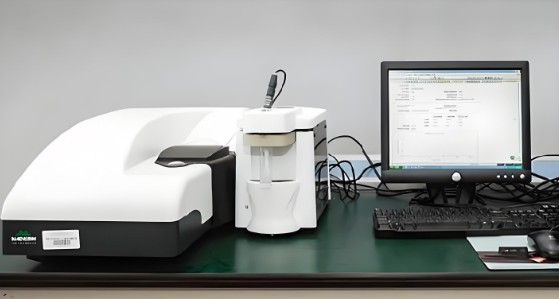
- FTIR and DSC for insulation material identification per ASTM E1252 and ISO 11357 — the polymer type of the insulation is confirmed to be PTFE, ETFE, FEP, polyimide, or the specified composite, verifying material authenticity and thermal class.
- XRF for conductor plating composition per ASTM B568 — the thickness and composition of silver, nickel, or tin plating on the copper or copper alloy conductor are measured to ensure specified conductivity and corrosion resistance at high temperature.
- RoHS and REACH restricted substance screening per IEC 62321 — quantitative analysis for lead, mercury, cadmium, hexavalent chromium, PBBs, and PBDEs in the wire materials and markings.
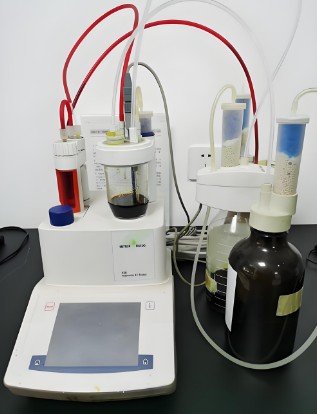
- Halogen content by combustion ion chromatography per EN 14582 — the total fluorine, chlorine, bromine, and iodine content is measured to support halogen-free declarations and to verify low-smoke toxicity performance.
- Outgassing and vacuum condensable materials per ASTM E595 — for wires used in spacecraft and sensitive optical compartments, the total mass loss and collected volatile condensable materials are measured to ensure low-outgassing characteristics.
- Heavy metals in packaging per EU Directive 94/62/EC — verification that lead, cadmium, mercury, and hexavalent chromium sum concentration in the spools, reels, and labels is below the 100 ppm regulatory limit.
Report Recognition and ISO/IEC 17025 Compliance
Every test method described in this inspection service for high-temperature resistant and low-noise wires used in aviation is covered by our ISO/IEC 17025 scope of accreditation. Our technical reports and certificates of analysis are accepted by European notified bodies for aerospace components, by North American FAA and aircraft OEMs referencing SAE and MIL standards, and by customs and procurement authorities across the Middle East, Australia, and Asia. Whether you require a complete qualification dossier for a new aviation wire design, a batch release inspection for an export shipment, or a root cause failure analysis of a field-returned cable, our laboratory provides the measurement accuracy and aerospace electrical expertise that the global aviation industry demands.