Infrared Spectrometer (IR) Testing Service – Accredited Molecular Fingerprinting and Chemical Analysis for Global Markets
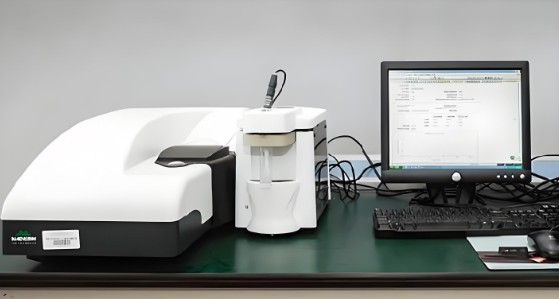
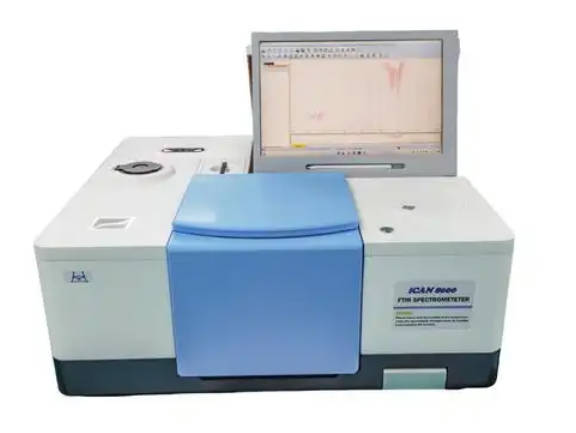
Our internationally accredited laboratory delivers a dedicated Infrared Spectrometer (IR) testing service that provides manufacturers, chemical producers, pharmaceutical companies, food processors, environmental consultants and materials researchers worldwide with the independent, high‑resolution molecular identification and quantification data required for quality control, contaminant investigation and regulatory compliance. All analyses are performed within the strict framework of ISO/IEC 17025, and each report bearing the ILAC mark is unconditionally accepted by regulatory authorities, customs offices and notified bodies in all major economies. The Infrared Spectrometer (IR) testing service utilises Fourier Transform Infrared (FTIR) spectroscopy to probe the characteristic vibrational modes of chemical bonds, generating a unique molecular fingerprint that can identify organic and inorganic substances, quantify functional groups, detect trace contaminants and verify the composition of complex mixtures in solids, liquids and gases. By employing transmission, attenuated total reflectance (ATR), diffuse reflectance and microscopy accessories, we provide our global clients with the legally robust, defensible data that support pharmacopoeial identity testing, polymer grade verification, environmental forensics and the authentication of raw materials in every industrial sector.
Product Samples We Regularly Subject to Infrared Spectrometer (IR) Testing
The IR spectrometer and its sampling interfaces accept an extraordinarily wide range of physical forms. The following categories represent the most frequently tested items submitted for our Infrared Spectrometer testing service:
- Polymers, plastics and elastomers – packaging films, injection‑moulded parts, pipes, O‑rings, gaskets, laminates, adhesives, paints and composite matrices
- Pharmaceutical ingredients and finished dosage forms – active pharmaceutical ingredients, excipients, tablets, capsules, creams, gels, powders and lyophilised products
- Food, beverages and agricultural commodities – edible oils, dairy products, cereals, spices, fruit powders, honey, wine and animal feeds
- Chemicals, solvents and industrial intermediates – monomers, plasticisers, surfactants, cleaning agents, catalysts, plating baths and process residues
- Environmental samples – airborne particles, waterborne residues, soil extracts, microplastics, unknown spills and waste‑container residues
- Petroleum and fuel products – gasoline, diesel, lubricating oils, greases, crude oil and biodiesel
- Cosmetics and personal‑care products – lipsticks, creams, lotions, hair dyes, sunscreens and raw botanicals
- Textiles, fibres and forensic samples – natural and synthetic fibres, fabric coatings, paint chips and questioned documents
Infrared Spectrometer (IR) Testing Service for Polymers, Plastics and Organic Materials
- Polymer and plastic identification by ATR‑FTIR according to ASTM E1252, ISO 4650 and internal spectral libraries: a minute sample of the material is pressed against the ATR crystal, and the infrared spectrum is recorded in seconds. The spectrum is compared against extensive commercial and custom databases containing the fingerprints of hundreds of polymers, copolymers and blends. The Infrared Spectrometer (IR) testing service reports the polymer type (e.g., polyethylene, polypropylene, polyamide, polycarbonate, ABS) and can often distinguish between homopolymer and copolymer variants, directly supporting incoming material verification and the identification of unknown plastic parts.
- Quantitative determination of additives, fillers and contaminants in plastics: the concentration of plasticisers, stabilisers, antioxidants, flame retardants and inorganic fillers such as talc or calcium carbonate is determined by measuring the absorbance of characteristic bands against calibration curves prepared with certified reference materials. The method follows the principles of ASTM D5594 and ISO 16560 and is essential for confirming that a plastic compound meets the formulation specified for food‑contact or medical‑device applications.
- Cure monitoring and degree of conversion in thermoset resins and adhesives: the disappearance of reactive functional groups – such as epoxy, isocyanate or acrylate bands – is monitored over time or after a thermal cycle. The degree of cure is reported as a percentage, providing the data that manufacturers of composite structures, electronic encapsulants and industrial coatings require to optimise their curing cycles and to verify the quality of bonded assemblies.
- Identification of rubbers and elastomers by pyrolysate‑FTIR or direct ATR: carbon‑black‑filled rubbers that absorb strongly in the mid‑infrared are analysed by pyrolysing a small sample and collecting the spectrum of the evolved gases, or by extracting the polymer and casting a film. The method identifies natural rubber, SBR, NBR, EPDM, silicone and fluoroelastomers, supporting the reverse‑engineering of seals and hoses and the investigation of O‑ring failures.
- Contaminant and residue analysis on metal, glass and electronic surfaces: a microscopic ATR objective or a specular reflectance accessory is used to analyse spots, stains, haze and organic residues directly on the surface. The technique identifies oils, greases, silicones, surfactants and corrosion products without damaging the substrate, providing the forensic evidence needed to trace the source of contamination in clean‑room manufacturing and precision‑engineering processes.
Infrared Spectrometer (IR) Testing Service for Pharmaceuticals, Excipients and Nutraceuticals
- Identity testing of pharmaceutical raw materials and finished products according to USP ⟨197⟩, Ph. Eur. 2.2.24 and the ICH Q6A guideline: the IR spectrum of the sample is compared with that of a certified reference standard or a pharmacopoeial reference spectrum. The positions and relative intensities of the major absorption bands must match within prescribed tolerances. This Infrared Spectrometer (IR) testing service provides the rapid, non‑destructive identity confirmation that is a mandatory release test for every batch of an active pharmaceutical ingredient or an excipient destined for a regulated market.
- Detection of counterfeit and substandard medicines by FTIR spectral fingerprinting: the IR spectra of suspect tablets, capsules or powders are compared with the genuine product, and any deviation in the characteristic bands of the active ingredient or the major excipients flags the sample for further investigation. The method can detect the complete absence of the active ingredient, the substitution of a different compound or the addition of undeclared bulking agents, directly supporting the work of national drug regulatory authorities and the WHO pre‑qualification programme.
- Quantification of polymorphic forms and crystallinity in solid‑state pharmaceuticals: specific absorption bands that are sensitive to the crystal lattice are measured, and the ratio of the polymorphic forms or the degree of crystallinity is determined. The data are critical for the development of a robust crystallisation process and for the demonstration of polymorphic stability during the shelf‑life of the drug product.
- Determination of residual solvents and volatile impurities in pharmaceutical excipients: the sample is heated, and the evolved gases are analysed by an FTIR spectrometer equipped with a gas cell. The identity and concentration of residual solvents such as methanol, acetone, dichloromethane and toluene are reported and compared with the limits of USP ⟨467⟩ and the ICH Q3C guideline, supporting the safety evaluation of the excipient.
- Analysis of herbal extracts, traditional medicines and nutraceuticals: the IR spectrum of the whole extract or the powdered plant material is recorded and compared with a reference database, enabling the rapid authentication of the botanical species and the detection of adulterants or misidentified raw materials. The service is frequently requested by importers of ginseng, turmeric, milk thistle and other high‑value botanicals.
Infrared Spectrometer (IR) Testing Service for Foods, Beverages and Agricultural Products
- Determination of fat, protein, moisture and carbohydrate content in food products by FTIR with partial‑least‑squares regression: the sample is homogenised and placed on an ATR crystal, and the spectrum is acquired. Chemometric models developed and validated against reference chemical methods are used to predict the nutritional composition. This Infrared Spectrometer (IR) testing service provides the rapid, multi‑parameter data that food manufacturers require for nutritional labelling, process control and the verification of raw‑material conformance.
- Authentication of edible oils, wines and spirits by spectral fingerprinting: the IR spectrum of the oil or the beverage is recorded, and the profile is compared with a database of authentic samples using principal‑component analysis. The test detects the adulteration of extra‑virgin olive oil with cheaper seed oils, the addition of sugar or water to wine, and the mislabelling of the grape variety or the geographical origin, protecting brand value and consumer confidence.
- Detection of melamine, urea and other nitrogenous adulterants in dairy products and animal feeds: characteristic absorption bands of the adulterant are identified in the IR spectrum, and the concentration is estimated. The method served as a rapid screening tool during the global melamine crisis and remains a key component of the food‑safety surveillance programmes implemented by importing countries.
- Measurement of trans‑fat and unsaturation levels in edible oils and margarines: the absorbance of the C‑H out‑of‑plane deformation band of trans‑alkenes is measured, and the trans‑fat content is reported as a percentage of total fat. The data support compliance with the mandatory trans‑fat labelling regulations and the WHO REPLACE initiative to eliminate industrially produced trans‑fats from the global food supply.
- Rapid screening for aflatoxins and mycotoxins in cereals and spices by IR‑based biomarker detection: while FTIR is not the primary confirmatory method, it is used to detect spectroscopic changes in the grain matrix associated with fungal infestation, providing a rapid, cost‑effective pre‑screen that reduces the number of samples requiring LC‑MS/MS confirmation.
Infrared Spectrometer (IR) Testing Service for Environmental Samples and Unknown Substances
- Identification of unknown chemical spills, waste residues and industrial deposits: the sample is extracted with a suitable solvent or analysed directly by ATR, and the IR spectrum is searched against spectral databases containing hundreds of thousands of compounds. The Infrared Spectrometer (IR) testing service rapidly identifies the major organic constituents, providing the first critical lead for environmental emergency‑response teams and industrial‑hygiene investigators.
- Microplastic identification and counting in water, sediment and biota samples: particles filtered from the sample are visually sorted under a microscope, and each particle is analysed by ATR‑FTIR or FTIR microscopy. The polymer type – polyethylene, polypropylene, polystyrene, PET, nylon or others – is determined, and the number of particles per cubic metre or per gram is reported. The method follows the guidance of the MSFD Technical Subgroup on Marine Litter and is increasingly required for the monitoring of plastic pollution in rivers, lakes and oceans.
- Characterisation of airborne particulate matter and workplace aerosols: filters from personal samplers or ambient‑air monitors are analysed by transmission FTIR to identify the organic and inorganic components of the dust. The data support compliance with occupational‑exposure limits, the identification of fugitive emission sources and the epidemiological investigation of respiratory diseases.
- Determination of soot, sulfate, nitrate and organic carbon in atmospheric aerosols: the IR spectrum of the filter deposit is analysed, and the mass concentrations of the major chemical components are quantified using reference spectra. The results contribute to the source‑apportionment studies that inform air‑quality management plans in megacities and industrial regions.
- Forensic comparison of paint chips, fibres and tape residues: the IR spectra of questioned and known samples are compared using library search algorithms and manual interpretation, and the degree of correspondence is reported. The technique is routinely applied in the investigation of hit‑and‑run accidents, burglaries and industrial‑sabotage incidents, and the report is admissible as evidence in courts of law.
Report Acceptance and Global Regulatory Compliance
All measurements performed within our Infrared Spectrometer (IR) testing service are executed under the fully accredited scope of our ISO/IEC 17025 quality management system. Each test report that carries the ILAC mark is therefore automatically recognised by regulatory authorities, notified bodies, customs offices and supply‑chain partners in all major economies. For polymer manufacturers, pharmaceutical producers, food‑safety agencies, environmental consultancies and forensic investigators anywhere in the world, the report constitutes legally robust, internationally accepted evidence that the molecular composition of the sample has been determined in accordance with the applicable ASTM, ISO, USP, Ph. Eur. and customer‑specified methods. The documentation can be directly used for raw‑material release, product registration, import‑export clearance, the issue of inspection certificates according to EN 10204 or equivalent national standards, and the resolution of commercial and technical disputes concerning the identity, purity and authenticity of any organic or inorganic substance.