
Hydrogen Induced Cracking (HIC) Testing Service – Accredited Sour‑Service Material Qualification for Global Markets
Our internationally accredited laboratory delivers a specialist hydrogen induced cracking test service that provides steel mills, pipeline operators, pressure‑vessel fabricators, valve and fitting manufacturers and oil‑and‑gas engineering contractors worldwide with the independent, traceable data they need to evaluate the resistance of carbon and low‑alloy steels to hydrogen‑induced cracking in sour‑service environments. Every test is conducted under the rigorous framework of ISO/IEC 17025, and each report bearing the ILAC mark is unconditionally accepted by regulatory authorities, notified bodies and supply‑chain partners in all major economies. The hydrogen induced cracking test exposes unstressed steel specimens to a hydrogen‑saturated acidic brine under tightly controlled conditions, and it quantifies the internal cracks that form when atomic hydrogen diffuses into the steel and recombines at non‑metallic inclusions, forming stepwise blisters and laminations. For a line‑pipe mill certifying an API 5L X65 grade for a sour‑gas transmission pipeline, a pressure‑vessel manufacturer qualifying a SA 516 Grade 70 plate for a gas‑processing plant, or a valve‑body foundry demonstrating the resistance of a cast‑steel grade to hydrogen damage, this service provides the legally robust, defensible data that underpin material selection, compliance with ISO 15156 / NACE MR0175 and the issue of inspection certificates according to EN 10204.
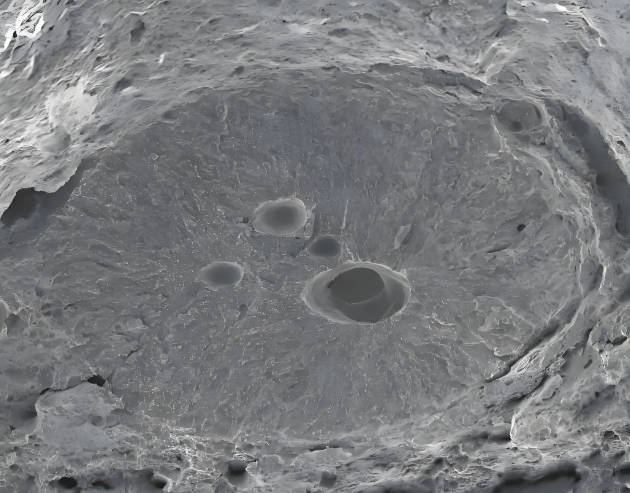
Product Samples We Regularly Subject to the Hydrogen Induced Cracking Test
Our hydrogen‑charging autoclaves, precision sectioning and ultrasonic‑imaging systems accommodate steel specimens from plates, pipes, forgings and welds. The following categories represent the materials most frequently evaluated through our hydrogen induced cracking test programme:
- Line‑pipe and pressure‑vessel steels – hot‑rolled plates and coils in grades such as API 5L X42 to X70, ASME SA 516, SA 285 and SA 537, and EN 10028‑3 grades destined for sour‑gas, crude‑oil and refinery service
- Seamless and welded pipes and tubes – longitudinal‑ and spiral‑welded pipes, seamless tubes and fittings for the upstream and the mid‑stream oil‑and‑gas applications
- Forgings, castings and valve‑body materials – forged flanges, cast valve bodies, wellhead components and Christmas‑tree parts that must resist hydrogen damage in the well‑fluid environment
- Welded joints and heat‑affected zones – cross‑weld and all‑weld‑metal specimens taken from the girth‑welds and the seam‑welds of line‑pipe and pressure‑vessel fabrications, where the welding consumables and the heat‑input must be qualified for the sour service
- Clad and lined steel products – metallurgically clad or mechanically lined pipes and plates where the corrosion‑resistant alloy layer provides the primary barrier but the backing‑steel must also resist the hydrogen that permeates through the clad
- Steels after a simulated post‑weld heat‑treatment or a service‑ageing cycle – materials that have been subjected to a laboratory heat‑treatment that reproduces the thermal history of the fabrication or the long‑term exposure to the service temperature, and for which the hydrogen‑induced cracking resistance must be re‑validated
Hydrogen Induced Cracking Test According to NACE TM0284 and ISO 15156‑2 Annex B
- Standard HIC test procedure in full compliance with NACE TM0284 (Standard Test Method – Evaluation of Pipeline and Pressure Vessel Steels for Resistance to Hydrogen‑Induced Cracking): a set of six rectangular specimens, each 100 mm × 20 mm × the full wall thickness, is machined from the steel product with the long axis oriented in the principal rolling or the welding direction. The specimens are immersed in a sealed vessel containing a precisely controlled synthetic seawater solution – Solution A (a sodium‑chloride–acetic‑acid brine saturated with hydrogen sulfide at 1 bar) or Solution B (a synthetic seawater saturated with hydrogen sulfide) – and the solution is continuously purged with hydrogen sulfide gas to maintain the saturation. The exposure lasts for 96 hours at a temperature of 25 °C ± 3 °C. After the test, each specimen is sectioned metallographically, and the internal cracks are examined under an optical microscope or by ultrasonic C‑scan. The hydrogen induced cracking test reports the crack‑sensitivity ratio, the crack‑length ratio and the crack‑thickness ratio for each specimen and for the set as a whole.
- Determination of the crack‑sensitivity ratio, the crack‑length ratio and the crack‑thickness ratio according to NACE TM0284: the total area of all the hydrogen‑induced cracks on the metallographic sections is measured and divided by the total area of the specimen to give the crack‑sensitivity ratio, which is the primary acceptance parameter. The sum of the lengths of all the cracks divided by the total length of the section is the crack‑length ratio, and the sum of the through‑thickness crack‑heights divided by the total thickness is the crack‑thickness ratio. The mean values and the maximum individual‑specimen values are reported, and the material is judged to have passed the hydrogen induced cracking test if the crack‑sensitivity ratio is below 2 %, the crack‑length ratio is below 15 % and the crack‑thickness ratio is below 5 %, or as otherwise agreed with the purchaser.
- Additional reporting of the crack‑morphology and the inclusion‑population characterisation: the shape, the orientation and the location of the cracks relative to the non‑metallic inclusions – elongated manganese sulfides, oxide stringers and clusters – are documented, and the inclusion‑cleanliness of the steel is rated according to ASTM E45 or ISO 4967. The data support the steelmaker in the optimisation of the calcium‑treatment and the desulfurisation practice for the sour‑service grades.
- Ultrasonic C‑scan and the phased‑array imaging for the rapid, non‑destructive screening of the HIC damage: the exposed specimens are scanned by a high‑resolution ultrasonic C‑scan system, and the size and the location of every internal crack are mapped. The technique quantifies the crack area without the need for the time‑consuming metallographic sectioning, and it is increasingly accepted as the primary detection method for the HIC evaluation, particularly for the thick‑wall line‑pipe.
- HIC testing at elevated temperatures, at higher hydrogen‑sulfide partial pressures and in the presence of a hydrocarbon phase: the test conditions are modified to reflect the specific field environment – for example, a test temperature of 60 °C, a hydrogen‑sulfide partial pressure of 5 bar or the addition of a toluene or a crude‑oil phase. The hydrogen induced cracking test maps the effect of the temperature and the pressure on the cracking severity and supports the material qualification for the high‑pressure, high‑temperature sour wells.
Hydrogen Induced Cracking Test for Welded Joints and Heat‑Affected Zones – Qualification of the Welding Procedure
- HIC testing of the cross‑weld specimens according to the principles of NACE TM0284 and the supplementary requirements of the major oil‑and‑gas operators: the specimen is machined such that the weld metal and the heat‑affected zone are located in the centre of the specimen, and the test is performed in the standard Solution A. The crack‑sensitivity ratio, the crack‑length ratio and the crack‑thickness ratio are determined separately for the parent metal, the heat‑affected zone and the weld metal, and the data are used to qualify the welding consumable, the heat‑input and the pre‑heat or the post‑weld heat‑treatment for the sour‑service application.
- HIC testing of the all‑weld‑metal specimens: the weld deposit is extracted and tested as an independent material, and the hydrogen‑induced cracking resistance of the weld metal alone is evaluated. The test identifies the welding consumables that are inherently susceptible to the HIC and must not be used for the sour‑service fabrication.
- Effect of the post‑weld heat‑treatment on the HIC resistance of the welded joint: the HIC test is performed on the as‑welded and the post‑weld‑heat‑treated specimens, and the reduction in the crack‑sensitivity ratio after the stress‑relieving is reported, providing the data that the fabrication‑engineer uses to decide on the mandatory post‑weld heat‑treatment of the vessel or the pipe.
- HIC testing under a simultaneous tensile stress – the stress‑oriented hydrogen‑induced cracking test according to ASTM G129 and the internal protocols: a tensile stress equal to a defined fraction of the yield strength is applied to the specimen during the exposure to the sour environment, and the combined effect of the stress and the hydrogen on the crack formation is evaluated. The test screens the steels that may be susceptible to the stress‑oriented hydrogen‑induced cracking, a failure mode that is distinct from both the classic HIC and the sulfide‑stress cracking.
Report Acceptance and Global Regulatory Compliance
All measurements performed within our hydrogen induced cracking test programme are executed under the fully accredited scope of our ISO/IEC 17025 quality management system. Each test report that carries the ILAC mark is therefore automatically recognised by regulatory authorities, notified bodies, customs offices and supply‑chain partners in all major economies. For steel producers, pipe mills, pressure‑vessel fabricators and oil‑and‑gas operating companies anywhere in the world, the report constitutes legally robust, internationally accepted evidence that the resistance of the steel to the hydrogen‑induced cracking has been determined in accordance with NACE TM0284, ISO 15156 and the customer‑specified methods. The documentation can be directly used to support the material certification for the sour service, the qualification of the welding procedure, the issue of inspection certificates according to EN 10204 or equivalent national standards, and the resolution of commercial and technical disputes concerning the hydrogen‑damage resistance of any steel product destined for the sour‑oil‑and‑gas environments.




