
Hydrogen Compatibility Experiment – Accredited Material Qualification for Hydrogen Service Across Global Markets
Our internationally accredited laboratory delivers a comprehensive hydrogen compatibility experiment service, providing the critical, independent data that global energy companies, pressure‑vessel fabricators, automotive suppliers, valve and seal manufacturers and pipeline operators require to verify the safe and reliable performance of materials in pressurized and liquid‑hydrogen environments. All investigations are conducted under the rigorous framework of ISO/IEC 17025, and every report carrying the ILAC mark is unconditionally accepted by regulatory authorities, notified bodies and supply‑chain partners across every major economy. Our hydrogen compatibility experiment programme is designed to address the two fundamental degradation phenomena that govern material selection for the hydrogen economy: the embrittlement of high‑strength steels and alloys by atomic hydrogen, and the blistering or explosive decompression failure of polymers and elastomers. By precisely controlling the gaseous hydrogen pressure, temperature and purity in autoclaves, and by applying slow‑strain‑rate tensile testing, constant‑load notched‑specimen exposure, fracture‑mechanics crack‑growth measurement and rapid‑gas‑decompression cycling, we generate the legally robust, defensible performance data required for the certification of hydrogen‑fuel‑system components, transport vessels and stationary storage infrastructure.
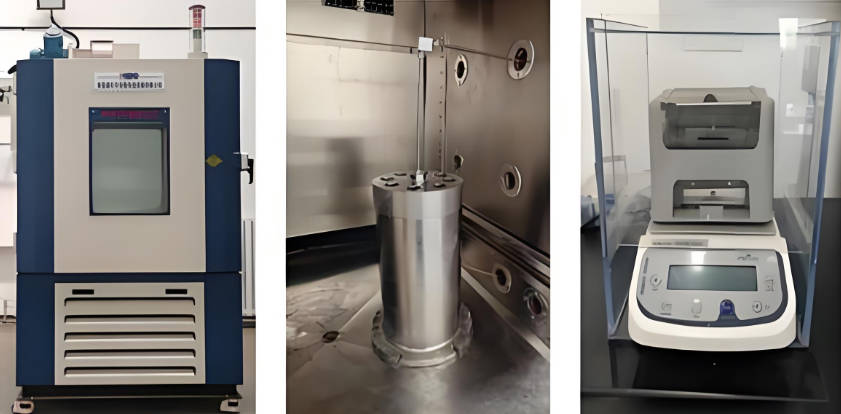
Product Samples We Regularly Subject to Hydrogen Compatibility Experiments
Our hydrogen autoclaves, high‑pressure permeation cells and servo‑hydraulic test frames are equipped to test a broad variety of materials and components. The following categories represent the most frequently evaluated items:
- High‑strength carbon and low‑alloy steels – quenched and tempered pipeline steels, pressure‑vessel plates, and forged flanges for hydrogen transport and storage
- Stainless steels and nickel‑based alloys – austenitic grades such as 316L and 304L, duplex stainless steels, and Inconel or Hastelloy alloys used in valves, regulators and heat exchangers
- Aluminium and titanium alloys – lightweight materials for compressed‑gas cylinders, fuel‑cell‑vehicle frames, and cryogenic pump impellers
- Polymeric and elastomeric seals, O‑rings and gaskets – nitrile, fluoroelastomer, ethylene‑propylene‑diene monomer and thermoplastic polyurethane components for fittings, cylinder‑valve stems and dispensers
- Composite overwrapped pressure vessels – carbon‑fibre and glass‑fibre reinforced cylinders with polymer liners for on‑board vehicle storage and stationary bulk storage
- Welded and brazed joints – girth‑weld and seam‑weld specimens from pipelines and pressure vessels, as well as brazed connections in heat exchangers
- Coatings and surface treatments – zinc‑based, phosphate and ceramic coatings applied to steel parts to evaluate their effect as hydrogen‑permeation barriers
- Hydrogen‑dispensing components – refuelling nozzles, breakaway couplings, hoses and flow‑control valves
Metallic Materials – Hydrogen Embrittlement Evaluation According to ASTM G142, ISO 11114‑4 and NACE TM0284
- Slow strain rate tensile testing in high‑pressure gaseous hydrogen according to ASTM G142 (Standard Test Method for Determination of Susceptibility of Metals to Hydrogen Embrittlement in Hydrogen‑Containing Environments at High Pressure and High Temperature) and the relevant sections of ISO 11114‑4: a tensile specimen is placed in an autoclave pressurized with ultra‑high‑purity hydrogen at pressures up to 100 MPa and temperatures up to 200 °C, and it is strained at a controlled, very low rate until fracture. The ductility metrics – reduction of area and elongation at break – are compared with those obtained in an inert reference environment, and the embrittlement index is reported. A material is deemed resistant if the relative reduction of area exceeds 90 %. This hydrogen compatibility experiment serves as the primary screening test for all metallic alloys proposed for hydrogen service.
- Constant‑load and fracture‑mechanics testing for hydrogen‑assisted cracking according to ASTM G168 (Standard Practice for Making and Using Precracked Double‑Beam Stress‑Corrosion Specimens, adapted for hydrogen) and the method of NACE TM0284: a pre‑cracked compact‑tension or a double‑cantilever‑beam specimen is exposed to hydrogen gas at a constant, high pressure, and the crack‑growth rate and the threshold stress‑intensity factor KIH are measured. The test determines the critical flaw size that will not grow in service and supports the fracture‑mechanics‑based design of pressure‑containing components.
- Fracture toughness and fatigue crack‑growth rate of pipeline and pressure‑vessel steels in hydrogen according to ASTM E1820 and the ASME B31.12 hydrogen‑piping code requirements: the J‑integral and the crack‑tip opening displacement are determined in hydrogen and in air, and the degradation factor is reported. The fatigue crack‑growth rate da/dN is measured as a function of the stress‑intensity range ΔK, and the Paris‑law constants are provided. These hydrogen compatibility experiment data are mandatory for the design and the periodic reassessment of hydrogen pipelines and storage bullets.
- Measurement of the hydrogen‑permeation rate and the diffusible‑hydrogen content in steels using the Devanathan‑Stachurski cell and the hot‑extraction method according to ISO 17081 (Method of measurement of hydrogen permeation and determination of hydrogen uptake and transport in metals by an electrochemical technique): the steady‑state permeation flux, the diffusion coefficient and the sub‑surface hydrogen concentration are reported, providing the data that the corrosion engineer uses to predict the hydrogen accumulation in a pressure‑vessel wall and to specify the correct bake‑out procedure after the fabrication.
- Hydrogen‑compatibility testing of additively manufactured alloys: laser‑powder‑bed‑fused and electron‑beam‑melted components are tested in the as‑built, stress‑relieved and hot‑isostatically‑pressed conditions, and the effect of the build orientation and the surface roughness on the hydrogen embrittlement susceptibility is mapped, supporting the qualification of printed parts for the hydrogen economy.
Non‑Metallic Materials – Permeation, Decompression Damage and Ageing in Hydrogen According to ISO 23936‑2 and NORSOK M‑710
- Rapid gas decompression resistance of elastomeric seals and O‑rings according to ISO 23936‑2 (Petroleum, petrochemical and natural gas industries – Non‑metallic materials in contact with media related to oil and gas production – Part 2: Elastomers) and NORSOK M‑710 Annex B: the seal specimen is saturated with hydrogen at a defined pressure and temperature, and the pressure is rapidly released. After repeated decompression cycles, the specimen is inspected for blistering, internal cracking and loss of sealing force, and the rating is reported. This hydrogen compatibility experiment is mandatory for the qualification of every elastomer used in a hydrogen valve, hose or dispenser.
- Hydrogen‑gas permeability of polymer liners, films and sealing materials according to ASTM F1459 (Standard Test Method for Determination of the Susceptibility of Metallic Materials to Hydrogen Gas Embrittlement, but adapted for permeability) and ISO 15105‑1 adapted for hydrogen: a flat specimen is clamped in a permeation cell, and the mass‑flow or the pressure‑rise method is used to quantify the hydrogen transmission rate and the permeability coefficient at pressures up to 100 MPa. The data are used to select the liner material with the lowest hydrogen‑loss rate for the composite‑overwrapped cylinders and the fuel‑cell‑vehicle hoses.
- Thermal and oxidative ageing stability of elastomers and thermoplastics in hydrogen: the polymer specimen is aged in a hydrogen atmosphere at the maximum service temperature for a defined period, and the change in the tensile properties, the hardness, the compression set and the permeation rate is measured. The hydrogen compatibility experiment determines the maximum operating temperature and the predicted service life of the polymeric component.
- Volume‑swell and extraction test for polymeric materials exposed to liquid hydrogen and cryogenic temperatures: the specimen is immersed in liquid hydrogen or a cryogenic surrogate, and the dimensional change and the mass of the extractable matter are measured. The test verifies that the polymer will not undergo an unacceptable shrinkage, which could cause a seal‑failure in a cryogenic valve or a pump.
- Assessment of the explosive decompression resistance of multi‑layer composite‑cylinder liners: a complete liner or a liner‑material coupon is subjected to a hydrogen‑saturation‑and‑rapid‑venting cycle that simulates a sudden emergency‑release scenario, and any cracking, delamination or blistering is documented by computed‑tomography scanning and a subsequent burst‑test.
Components and Assemblies – Pressure Cycle, Leak and Burst Testing of Hydrogen‑Service Articles According to ISO 19880‑3 and EC 79/2009
- Static pressure and extreme‑pressure‑cycle testing of hydrogen cylinders, valves and fittings according to ISO 19880‑3 (Gaseous hydrogen – Fuelling stations – Part 3: Valves) and the EU Regulation (EC) No 79/2009: the component is hydraulically pressure‑cycled between ambient pressure and the design service pressure for tens of thousands of cycles, followed by a burst test. The test verifies that the component will not leak, deform or fail during the repeated refuelling of a vehicle. This hydrogen compatibility experiment is the routine acceptance test for the production batches of the hydrogen‑dispensing components.
- External‑leakage and fugitive‑emission testing with a helium‑ or a hydrogen‑sniffer mass spectrometer: the assembled component is pressurised with hydrogen or a helium‑tracer gas, and the leak rate is measured at the stem seal, the seat and the body‑bonnet joint. The test certifies that the component meets the stringent fugitive‑emission requirements of the hydrogen‑fueling‑station standards.
- Bonfire and fire‑resistance testing of hydrogen storage cylinders: the fully charged cylinder is exposed to a liquid‑fuel fire, and the time to the activation of the thermally‑activated pressure‑relief device and the maximum pressure reached are recorded. The test verifies that the cylinder will vent safely in a fire scenario without a catastrophic burst.
- Hydrogen‑compatibility testing of pressure‑relief devices and burst discs: the set pressure, the flow capacity and the resealing performance of the relief device are verified in hydrogen gas, and the device is cycled a specified number of times to demonstrate the consistent operation. This hydrogen compatibility experiment ensures that the safety device will function correctly in the event of an over‑pressure in a hydrogen system.
- Testing of hydrogen refuelling nozzles, breakaway couplings and hoses: the assembly is subjected to a combination of pressure cycles, tensile‑pull and bending forces, and drop‑impact tests while pressurised with hydrogen, simulating the mechanical and the pressure stresses that occur during the daily refuelling of a vehicle.
Report Acceptance and Global Regulatory Compliance
All measurements performed within our hydrogen compatibility experiment programme are executed under the fully accredited scope of our ISO/IEC 17025 quality management system. Each test report that carries the ILAC mark is therefore automatically recognised by regulatory authorities, notified bodies, customs offices and supply‑chain partners in all major economies. For steel mills, alloy developers, valve and seal producers, composite‑cylinder manufacturers and hydrogen‑refuelling‑station builders anywhere in the world, the report constitutes legally robust, internationally accepted evidence that the material, the component or the assembly meets the hydrogen‑compatibility, the embrittlement‑resistance and the leak‑tightness requirements of the applicable ASTM, ISO, NACE, ASME and customer‑specified standards. The documentation can be directly used to support CE marking, the issue of inspection certificates according to EN 10204 or equivalent national standards, the compilation of technical files for type‑examination, and the resolution of commercial and technical disputes concerning the safety and the reliability of products in hydrogen service.




