Hydrofluoroether Detection Testing Service – Accredited Purity, Composition and Environmental Safety Evaluation for Global Markets
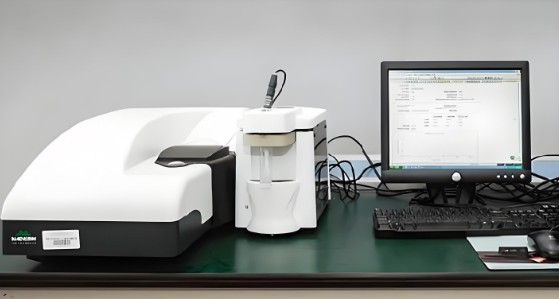
Our internationally accredited laboratory provides a specialist hydrofluoroether detection service that enables manufacturers of precision cleaning solvents, heat transfer fluids, coating formulators, fire suppression system producers and chemical distributors worldwide to independently verify the purity, composition, trace impurities and environmental compliance of their hydrofluoroether products. Every analysis is conducted under the rigorous framework of ISO/IEC 17025, and each report bearing the ILAC mark is unconditionally accepted by regulatory authorities, customs offices and notified bodies in all major economies. The hydrofluoroether detection programme employs gas chromatography with mass spectrometry and flame‑ionisation detection, Fourier‑transform infrared spectroscopy, Karl‑Fischer coulometric titration, and ion chromatography to quantify the major isomer distribution, the residual water content, the non‑volatile residue, the acidity, and the presence of any regulated impurities that would affect the product's performance, its occupational safety profile or its classification under the Montreal Protocol, the Kigali Amendment, the EU F‑Gas Regulation and the US EPA Significant New Alternatives Policy. For a solvent formulator shipping an HFE‑based vapour degreaser to the European Union, a heat‑transfer fluid supplier certifying the thermal stability of a new dielectric grade, or an importer demonstrating that a cleaning agent is free of the restricted perfluoroalkyl substances, this service delivers the legally robust, defensible data that underpin product registration, stewardship reporting and market access on every continent.
Product Samples We Regularly Subject to Hydrofluoroether Detection
Our chromatographic and spectroscopic instrument suites, clean‑room sample‑preparation facilities and precision‑density meters accommodate a broad variety of commercial hydrofluoroether fluids and their formulated blends. The following categories represent the most frequently tested items:
- Neat hydrofluoroether solvents and specialty fluids – methyl nonafluorobutyl ether, methyl nonafluoroisobutyl ether, ethyl nonafluorobutyl ether, and other segregated HFE isomers used in the vapour degreasing, the aerosol cleaning and the carrier‑solvent applications
- HFE‑based precision cleaning blends – azeotropic and co‑solvent mixtures of hydrofluoroethers with alcohols, hydrocarbons, chlorinated solvents and trans‑1,2‑dichloroethylene, evaluated for the blend ratio, the phase stability and the compliance with the local VOC regulations
- Hydrofluoroether heat‑transfer fluids – single‑component and multi‑component HFE formulations for the two‑phase cooling of the power electronics, the data‑centre servers, the semiconductor fabrication equipment and the medical imaging devices
- HFE‑containing aerosol and pressurised dispensing products – the electronics dusters, the contact cleaners and the freezer sprays that use a hydrofluoroether as the propellant or the active cleaning ingredient
- HFE‑based fire‑extinguishing agents and streaming agents – the total‑flooding and the portable‑extinguisher formulations that are evaluated for the discharge‑product purity, the atmospheric lifetime and the global‑warming potential
- Recycled and reclaimed hydrofluoroether fluids – the used solvent that has been recovered by the distillation or the filtration, tested for the residual contamination by the oils, the soldering fluxes and the heavy metals before the re‑use or the re‑sale
- Experimental and developmental HFE‑based formulations – new molecular structures and the next‑generation fluorinated ethers that are being screened for the physical properties, the toxicity and the environmental acceptability
Purity, Isomer Distribution and Physicochemical Characterisation – Hydrofluoroether Detection According to ASTM D3444, ISO 2718 and the Internal Protocols
- Determination of the purity and the isomer‑specific composition by the capillary gas chromatography according to ASTM D3444 (Standard Test Method for Total Acid Number of Trichlorotrifluoroethane, adapted for the HFE analysis) and the internal validated procedures: the neat HFE sample or the blended product is injected onto a high‑resolution capillary column, and the flame‑ionisation or the mass‑spectrometric detector records the peak profile. The mass percentage of each HFE isomer, the total HFE assay, and the concentration of any co‑solvent, the low‑boiling and the high‑boiling organic impurities are reported. This hydrofluoroether detection provides the fundamental purity data that the formulator uses to verify the incoming raw material, to control the blend ratio and to guarantee the batch‑to‑batch consistency of the finished product.
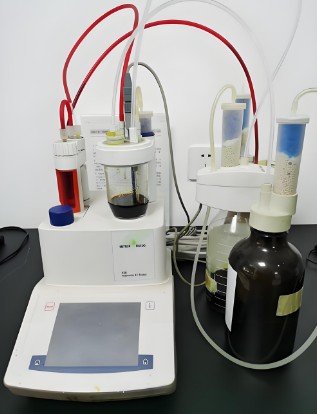
- Measurement of the water content by the coulometric Karl‑Fischer titration according to ASTM E1064 (Standard Test Method for Water in Organic Liquids by Coulometric Karl Fischer Titration) and ISO 760: a known mass of the hydrofluoroether is injected into the titration cell, and the water concentration in parts per million or in milligrams per kilogram is reported. A water content below 50 mg/kg is typically required for the electronics‑grade and the precision‑cleaning applications to prevent the corrosion and the spot‑formation on the cleaned surfaces.
- Determination of the non‑volatile residue and the particulate contamination according to ASTM D2109 (Standard Test Methods for Nonvolatile Matter in Halogenated Organic Solvents and Their Admixtures) and the internal filtration‑gravimetric methods: a known volume of the HFE is evaporated, and the mass of the residual non‑volatile matter is weighed on a microbalance, providing the NVR in milligrams per litre. The test is coupled with the optical or the scanning‑electron‑microscope examination of the retained particles, ensuring that the solvent meets the ultra‑clean specifications of the semiconductor‑wafer and the medical‑device cleaning processes.
- Acidity and the chloride‑ion content by the ion chromatography and the potentiometric titration according to the internal procedures: the HFE is extracted with water, and the aqueous extract is analysed for the chloride, the fluoride, the nitrate and the sulfate ions, and the total acid number is determined, verifying that the fluid will not corrode the aluminium, the copper or the titanium components during the prolonged contact.
- Measurement of the density, the refractive index, the viscosity and the boiling‑point range according to ASTM D4052 (Standard Test Method for Density, Relative Density, and API Gravity of Liquids by Digital Density Meter), ISO 5661 and the internal procedures: the physical‑property profile is measured and compared with the manufacturer's published specification, providing the rapid, non‑destructive verification of the product identity and the quality for the incoming‑goods inspection.
Environmental and Regulatory Compliance – Hydrofluoroether Detection According to ISO 14064, ASTM D8170 and the F‑Gas Regulation
- Determination of the global‑warming potential and the atmospheric lifetime of the hydrofluoroether fluid by the Fourier‑transform infrared spectroscopy and the relative‑rate kinetic modelling according to the principles of the Intergovernmental Panel on Climate Change guidelines and the internal validated methods: the infrared absorption cross‑section of the HFE is measured in the atmospheric‑window region, and the radiative efficiency and the GWP for the 20‑year, the 100‑year and the 500‑year time horizons are calculated and reported. This hydrofluoroether detection provides the mandatory data for the F‑Gas Regulation reporting, the Kigali Amendment compliance and the environmental product declaration.
- Screening for the per‑ and polyfluoroalkyl substances, the perfluorooctanoic acid and the perfluorooctanesulfonic acid according to ASTM D7968 (Standard Test Method for Determination of Polyfluorinated Alkyl Substances in Soil by Liquid Chromatography Tandem Mass Spectrometry, adapted for the liquid‑phase samples) and the EPA Method 537.1: the hydrofluoroether is extracted or directly injected, and the concentration of the PFAS compounds, including the PFOA, the PFOS and the hexafluoropropylene‑oxide‑dimer‑acid, is quantified by the liquid‑chromatography–tandem‑mass‑spectrometry, ensuring that the product does not contain the restricted, bio‑persistent fluorinated impurities above the regulatory threshold.
- Volatile organic compound content and the exempt‑solvent classification according to the EPA Method 24 and the California Air Resources Board Method 310: the total VOC and the exempt‑compound fraction are determined, and the product is certified as a low‑VOC or a VOC‑exempt formulation under the US Clean Air Act and the European Decopaint Directive, supporting the marketing of the HFE as an environmentally preferred solvent.
- Ozone‑depletion potential and the stratospheric‑chlorine‑content assessment: the HFE molecule is analysed for the absence of the chlorine and the bromine atoms, and the ODP is formally certified as zero, providing the documentation that the product complies with the Montreal Protocol and that it is not subject to the production‑or‑import phase‑out schedules.
Toxicological, Safety and Material‑Compatibility Screening – Hydrofluoroether Detection for the Product Stewardship and the Workplace Safety
- Determination of the acute inhalation and the dermal toxicity according to the OECD Test Guideline 403 (Acute Inhalation Toxicity) and OECD 402 (Acute Dermal Toxicity): the hydrofluoroether vapour or the liquid is tested on the laboratory animals or the in‑vitro reconstructed‑tissue models, and the median lethal concentration or the dose is reported, supporting the hazard classification and the safety‑data‑sheet authoring under the Globally Harmonized System.
- Measurement of the flammability limits, the flash point and the auto‑ignition temperature according to ASTM E681 (Standard Test Method for Concentration Limits of Flammability of Chemicals – Vapors and Gases) and ASTM E659: the HFE is tested in a closed vessel, and the lower and the upper flammability limits, the flash point and the auto‑ignition temperature are reported. Many hydrofluoroethers are non‑flammable or have a very narrow flammability range, and the test provides the objective data for the safe‑handling, the storage and the transport classification.
- Material‑compatibility and the corrosion testing on the metals, the plastics and the elastomers according to ASTM G31 (Standard Guide for Laboratory Immersion Corrosion Testing of Metals) and the internal procedures: coupons of the aluminium, the copper, the stainless steel, the polycarbonate, the polypropylene and the nitrile rubber are immersed in the HFE at the elevated temperature for a defined period, and the change in the mass, the dimensions, the tensile properties and the appearance is measured, providing the essential data for the engineering‑material selection in the vapour‑degreaser, the heat‑exchanger and the dispensing‑equipment design.
- Thermal stability and the decomposition‑product profiling by the differential scanning calorimetry and the GC‑MS analysis of the headspace: the HFE is heated to the maximum‑rated service temperature in a sealed vessel, and the evolved gases are analysed for the hydrogen fluoride, the carbonyl fluoride, the perfluorinated alkenes and the other toxic decomposition products, ensuring that the fluid can be used safely in the open‑top vapour degreasers and the high‑temperature heat‑transfer loops.
Report Acceptance and Global Regulatory Compliance
All analyses performed within our hydrofluoroether detection service are executed under the fully accredited scope of our ISO/IEC 17025 quality management system. Each test report that carries the ILAC mark is therefore automatically recognised by regulatory authorities, notified bodies, customs offices and supply‑chain partners in all major economies. For HFE manufacturers, precision‑cleaning formulators, heat‑transfer‑fluid suppliers and chemical‑distribution companies anywhere in the world, the report constitutes legally robust, internationally accepted evidence that the purity, the isomer composition, the trace impurities, the environmental impact and the safety profile of the hydrofluoroether have been determined in accordance with the applicable ASTM, ISO, OECD and customer‑specified methods. The documentation can be directly used to support the REACH registration, the F‑Gas Regulation reporting, the VOC‑exempt‑solvent certification, the issue of inspection certificates according to EN 10204 or equivalent national standards, and the resolution of commercial and technical disputes concerning the quality, the performance and the regulatory compliance of any hydrofluoroether‑based product.