Hot Dip Plastic Steel Pipe Testing Service – Accredited Performance and Durability Evaluation for Global Markets
Our internationally accredited laboratory provides a specialist hot dip plastic steel pipe testing service that enables manufacturers of protective‑coated pipes, municipal water and gas utilities, fire‑protection contractors, mining‑services companies and industrial piping importers worldwide to independently verify the coating integrity, corrosion resistance, mechanical strength and long‑term durability of their thermoplastic‑coated steel pipes. Every test is conducted under the rigorous framework of ISO/IEC 17025, and each report bearing the ILAC mark is unconditionally accepted by regulatory authorities, notified bodies and supply‑chain partners in all major economies. The hot dip plastic steel pipe testing programme subjects the complete pipe – the steel core, the hot‑dip‑applied thermoplastic coating and the pipe‑end preparation – to a comprehensive suite of physical, mechanical, thermal and chemical‑resistance evaluations, quantifying the coating thickness and adhesion, the impact and the indentation resistance, the dielectric strength and the holiday‑count, the hydrostatic burst and the bending strength, and the resistance to the salt‑spray, the chemical immersion and the accelerated weathering. For an exporter shipping hot‑dip polyethylene‑coated steel pipes for a Middle‑Eastern water‑transmission project, a manufacturer certifying the product to the EN 10288, ISO 21809‑1 or the AWWA C210 standard, or a contractor qualifying a new coating system for the directional‑drilling installation, this service delivers the legally robust, defensible data that underpin product certification, design validation and compliance with the relevant ASTM, ISO, EN and customer‑specified standards.
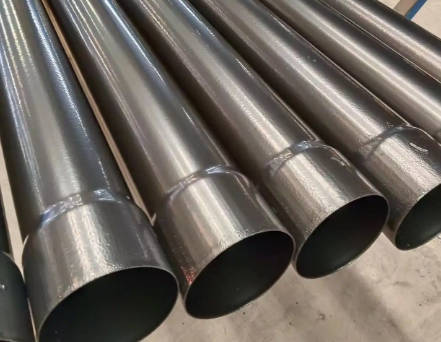
Product Samples We Regularly Subject to Hot Dip Plastic Steel Pipe Testing
The coating‑thickness gauges, holiday‑detectors, universal tensile and bend‑test machines, impact‑test rigs, salt‑spray chambers, differential‑scanning‑calorimeters and hydrostatic‑burst test benches in our facility accommodate a broad variety of hot‑dip‑coated steel pipes and their joint assemblies. The following categories represent the most frequently tested items:
- Hot‑dip polyethylene‑coated steel pipes – low‑density and linear‑low‑density polyethylene coatings applied by the fluidised‑bed or the electrostatic‑spray process onto pre‑heated steel pipes for the water, the gas and the slurry‑transport service
- Hot‑dip polypropylene‑coated steel pipes – pipes with a polypropylene coating, often reinforced with a glass‑fibre or a mineral filler, for the high‑temperature and the chemical‑resistant applications in the oil‑and‑gas, the mining and the industrial‑effluent sectors
- Hot‑dip epoxy‑coated steel pipes – fusion‑bonded epoxy and the liquid‑epoxy coatings applied by the hot‑dip or the spray‑and‑cure method, used for the corrosion protection of the reinforcing steel, the pipeline field‑joints and the small‑bore instrument tubing
- Multi‑layer and composite hot‑dip coatings – the systems that combine a hot‑dip thermoplastic top‑coat with a fusion‑bonded epoxy primer, a polyethylene‑polypropylene copolymer adhesive layer, or a thermally‑sprayed metallic under‑layer, designed for the extreme‑service conditions such as the offshore risers and the high‑temperature district‑heating pipes
- Field‑applied and factory‑applied joint‑coating systems – the heat‑shrinkable sleeves, the flame‑sprayed thermoplastic films and the liquid‑applied coatings that are used to protect the girth‑welds and the fittings, tested for the compatibility with the main‑line coating and for the long‑term cathodic‑disbondment resistance
- Aged and service‑exposed hot‑dip plastic steel pipes – the pipes that have been in the operation for several years or have been artificially aged in the laboratory, submitted for the residual coating‑adhesion, the embrittlement and the water‑absorption assessment
Coating Thickness, Uniformity and Defect Detection – Hot Dip Plastic Steel Pipe Testing According to ISO 2808, ASTM D4138 and NACE SP0188
- Measurement of the dry‑film coating thickness by the magnetic‑induction and the eddy‑current methods according to ISO 2808 (Paints and varnishes – Determination of film thickness) and ASTM D7091 (Standard Practice for Nondestructive Measurement of Dry Film Thickness of Nonmagnetic Coatings Applied to Ferrous Metals and Nonmagnetic, Nonconductive Coatings Applied to Non‑Ferrous Metals): the coating thickness is measured at multiple points along the pipe circumference and length, and the minimum, the maximum and the average values are reported in micrometres. This hot dip plastic steel pipe testing verifies that the coating thickness meets the declared specification – typically 1.5 mm to 4.0 mm for the heavy‑duty polyethylene coatings – and that it is uniform enough to provide the corrosion protection over the entire pipe surface.
- Holiday and pinhole detection by the high‑voltage spark test according to ASTM G62 (Standard Test Methods for Holiday Detection in Pipeline Coatings) and NACE SP0188 (Discontinuity – Holiday – Testing of New Protective Coatings on Conductive Substrates): the entire coated surface of the pipe is scanned with a high‑voltage electrode, and any electrical discharge that indicates a pinhole, a crack or a thin spot is recorded and mapped. The test voltage is set according to the coating thickness, and the pipe is accepted only if no holidays are detected over the entire length, certifying the continuity and the impermeability of the protective layer.
- Measurement of the coating‑thickness uniformity and the concentricity by the optical microscopy and the mechanical sectioning: a cross‑section of the pipe is polished, and the coating thickness is measured at eight equally spaced points around the circumference, providing the data that the process‑engineer uses to adjust the pre‑heating, the dipping‑time and the withdrawal‑speed of the hot‑dip bath.
- Wet‑sponge and the low‑voltage holiday detection for the thin‑film epoxy coatings according to ASTM D5162 (Standard Practice for Discontinuity – Holiday – Testing of Nonconductive Protective Coating on Metallic Substrates): a wetted sponge electrode is passed over the coating surface, and any audible or the visual alarm indicates the presence of a pore or a defect, providing the rapid, field‑portable inspection method for the factory‑production and the site‑installation quality control.
Mechanical Strength, Adhesion and Impact Resistance – Hot Dip Plastic Steel Pipe Testing According to ISO 4624, ASTM D4541 and ASTM G14
- Determination of the pull‑off adhesion strength of the coating to the steel substrate according to ISO 4624 (Paints and varnishes – Pull‑off test for adhesion) and ASTM D4541 (Standard Test Method for Pull‑Off Strength of Coatings Using Portable Adhesion Testers): a dolly is glued to the coating surface, and a portable or a bench‑top pull‑off tester applies a tensile force perpendicular to the surface until detachment occurs. The pull‑off strength in megapascals and the fracture‑surface analysis – the cohesive within the coating, the adhesive at the steel‑interface or the mixed‑mode – are reported. This hot dip plastic steel pipe testing provides the quantitative adhesion data that the specification‑engineer uses to guarantee the long‑term bond integrity under the soil‑stress, the thermal‑cycling and the cathodic‑disbondment conditions.
- Resistance to the impact and the mechanical damage by the falling‑weight and the pendulum‑impact methods according to ASTM G14 (Standard Test Method for Impact Resistance of Pipeline Coatings – Falling Weight Test) and EN 10288 (Steel tubes and fittings for onshore and offshore pipelines – External two‑layer extruded polyethylene and polypropylene based coatings): a weighted tup with a hemispherical or a chisel‑shaped tip is dropped from a specified height onto the coated pipe surface, and the energy that causes the first visible cracking or the coating‑delamination is reported, simulating the back‑fill and the rock‑impact damage that can occur during the pipe‑laying and the directional‑drilling operations.
- Bendability and the resistance to the coating‑cracking during the cold‑bending and the field‑bending according to ASTM D522 (Standard Test Methods for Mandrel Bend Test of Attached Organic Coatings) and the internal procedures: a coated pipe section is bent around a mandrel of a specified radius at the ambient and the sub‑zero temperatures, and the coating is inspected for the cracking, the disbondment or the loss of the adhesion, ensuring that the pipe can be cold‑bent to the required radius in the field without the damage to the corrosion protection.
- Indentation and the penetration resistance according to ASTM D2240 (Standard Test Method for Rubber Property – Durometer Hardness) and the internal procedures: the hardness of the thermoplastic coating is measured by a Shore‑D durometer, and the depth of the indentation produced by a loaded indentor is recorded, providing the rapid, comparative measure of the coating's resistance to the point‑loading and the embedment of the sharp back‑fill stones.
- Resistance to the abrasion and the wear according to ASTM D4060 (Standard Test Method for Abrasion Resistance of Organic Coatings by the Taber Abraser) and the internal procedures: the mass loss of the coating after a defined number of the abrasion cycles is measured, quantifying the durability of the hot‑dip plastic layer in the slurry‑transport and the river‑crossing applications where the external coating is exposed to the flowing water and the abrasive sediment.
Corrosion Resistance, Environmental Durability and Long‑Term Performance – Hot Dip Plastic Steel Pipe Testing According to ISO 9227, ASTM G8 and ISO 21809‑1
- Resistance to the neutral salt‑spray and the cyclic‑corrosion exposure according to ISO 9227 (Corrosion tests in artificial atmospheres – Salt spray tests) and the ASTM G85 (Standard Practice for Modified Salt Spray – Fog Testing): the coated pipe section is exposed to a continuous neutral‑salt fog or to a programmed cyclic‑corrosion test that simulates the marine, the industrial and the de‑icing‑salt environments, and the time to the first rust‑spot, the blistering and the under‑film corrosion creep from a scribed defect are reported. This hot dip plastic steel pipe testing provides the accelerated‑corrosion performance data that are used to classify the coating system and to predict its service life in the buried and the atmospheric applications.
- Cathodic‑disbondment resistance according to ASTM G8 (Standard Test Methods for Cathodic Disbonding of Pipeline Coatings) and ISO 21809‑1 (Petroleum and natural gas industries – External coatings for buried or submerged pipelines used in pipeline transportation systems – Part 1: Polyolefin coatings): a deliberate holiday is made in the coating, and the pipe is immersed in a conducting electrolyte and polarised to a defined cathodic potential for a specified period – typically 28 days. The radius of the coating‑disbondment around the holiday is measured, and the result must be below the maximum permitted value – e.g. 10 mm or 15 mm – to certify the coating for the use on the cathodically protected buried pipelines.
- Water‑absorption and the resistance to the hot‑water immersion according to ASTM D570 (Standard Test Method for Water Absorption of Plastics) and the internal procedures: the coating is immersed in the distilled water at the maximum service temperature for up to 1 000 hours, and the mass‑gain and the change in the adhesion and the dielectric strength are measured, ensuring the suitability of the coating for the water‑transmission and the district‑heating pipes.
- Resistance to the chemical reagents – the acid, the alkali, the hydrocarbon and the solvent immersion according to ISO 175 (Plastics – Methods of test for the determination of the effects of immersion in liquid chemicals) and the internal procedures: the coating is exposed to the representative process‑fluids and the soil‑contaminants, and the swelling, the softening and the loss of the adhesion are evaluated, providing the chemical‑compatibility data that the engineer uses to select the correct coating type for the aggressive‑service environments such as the acid‑mine‑drainage and the industrial‑effluent pipes.
- Resistance to the ultraviolet radiation and the accelerated weathering according to ASTM G154 (Standard Practice for Operating Fluorescent Ultraviolet Lamp Apparatus for Exposure of Non‑Metallic Materials) and ISO 4892‑2: the coating is exposed to a cycle of the UV‑A or the UV‑B radiation, the heat and the condensation, and the colour change, the chalking, the embrittlement and the loss of the adhesion are measured, predicting the outdoor‑storage life and the above‑ground‑service durability of the coated pipe.
Dielectric, Thermal and Fire Performance – Hot Dip Plastic Steel Pipe Testing According to ASTM D149, ISO 11357 and ASTM E84
- Determination of the dielectric strength and the insulation resistance of the coating according to ASTM D149 (Standard Test Method for Dielectric Breakdown Voltage and Dielectric Strength of Solid Electrical Insulating Materials at Commercial Power Frequencies) and IEC 60243‑1: the coating is placed between two electrodes in an oil bath, and an alternating voltage is applied at a controlled rate until the breakdown occurs. The dielectric strength in kilovolts per millimetre is reported, certifying the coating for the use as the electrical‑insulation layer on the pipes that carry the cathodic‑protection current or that are installed near the high‑voltage power‑lines.
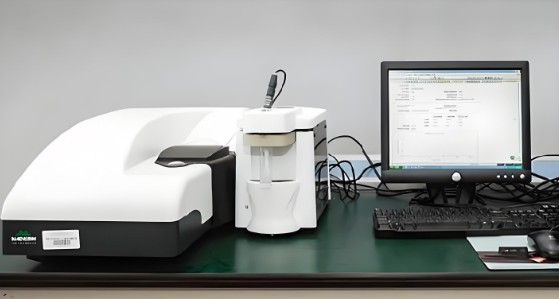
- Thermal analysis – the glass‑transition temperature, the melting point and the oxidative‑induction time by the differential scanning calorimetry according to ISO 11357‑2 (Plastics – Differential scanning calorimetry – Part 2: Determination of glass transition temperature and step height) and ASTM D3895 (Standard Test Method for Oxidative‑Induction Time of Polyolefins by Differential Scanning Calorimetry): the thermal transitions and the stability of the thermoplastic coating are measured, providing the data that the formulator uses to verify the polymer grade and the antioxidant package, and to define the maximum‑service and the minimum‑application temperatures of the hot‑dip coating.
- Flame‑retardancy and the limited‑oxygen‑index measurement according to ISO 4589‑2 (Plastics – Determination of burning behaviour by oxygen index – Part 2: Ambient‑temperature test) and the internal procedures: the coating is tested for the flammability, and the oxygen index and the flame‑spread rating are reported, supporting the certification of the coated pipe for the use in the underground‑mining, the tunnel and the building‑services installations where the fire‑safety regulations apply.
Joint Integrity, Hydrostatic Pressure and Dimensional Conformance – Hot Dip Plastic Steel Pipe Testing According to ISO 1167, ISO 3126 and the Internal Procedures
- Hydrostatic burst and the proof‑pressure testing of the coated pipe and the joint according to ISO 1167 (Thermoplastics pipes, fittings and assemblies for the conveyance of fluids – Determination of the resistance to internal pressure) and ASTM D1599: the pipe is sealed and pressurised with water, and the short‑term burst pressure and the failure mode are recorded, verifying that the hot‑dip coating process has not degraded the mechanical strength of the steel substrate.
- Dimensional conformance – the outer diameter, the wall thickness, the ovality and the straightness according to ISO 3126 (Plastics piping systems – Plastics components – Determination of dimensions) and the internal procedures: the pipe is measured, and the compliance with the declared nominal size and the tolerance class is verified, ensuring the compatibility with the standard couplings, the flange‑adaptors and the gaskets.
- Joint‑tightness and the long‑term leak‑resistance of the assembled pipeline under the internal pressure and the vacuum: a section of the pipeline that contains the field‑applied joint‑coatings is subjected to a sustained hydrostatic pressure and the vacuum cycle, and any leakage or the pressure‑decay is measured, providing the acceptance test for the installed system.
Report Acceptance and Global Regulatory Compliance
All measurements performed within our hot dip plastic steel pipe testing programme are executed under the fully accredited scope of our ISO/IEC 17025 quality management system. Each test report that carries the ILAC mark is therefore automatically recognised by regulatory authorities, notified bodies, customs offices and supply‑chain partners in all major economies. For hot‑dip‑coated steel pipe manufacturers, pipeline‑project specifiers, water‑and‑gas utility engineers and industrial‑piping contractors anywhere in the world, the report constitutes legally robust, internationally accepted evidence that the coating thickness and the adhesion, the impact and the abrasion resistance, the corrosion‑protection performance, the dielectric and the thermal properties, and the long‑term durability of the hot dip plastic steel pipe have been determined in accordance with the applicable ASTM, ISO, EN, NACE and customer‑specified methods. The documentation can be directly used to support CE marking under the Construction Products Regulation, the issue of inspection certificates according to EN 10204 or equivalent national standards, the compilation of the technical file for the type‑examination, and the resolution of commercial and technical disputes concerning the quality and the protective life of any hot‑dip‑plastic‑coated steel pipe.