High Temperature Working Test – Accredited Thermal Endurance and Operational Reliability Evaluation for the Czech Market
Our internationally accredited laboratory provides a dedicated high temperature working test service that gives Czech manufacturers, importers, automotive suppliers, power electronics producers and industrial equipment designers the independent, traceable data they need to verify that their products will start, operate and survive at the elevated temperatures encountered in engine compartments, industrial furnaces, desert environments or inside sealed enclosures under full sun. All tests are conducted within the strict framework of ISO/IEC 17025, and every report bearing the ILAC mark is unconditionally accepted by the Czech Trade Inspection Authority, customs offices and all notified bodies across the European Union. A correctly executed high temperature working test measures the maximum operating temperature, the drift of critical parameters, the softening or degradation of polymers, the breakdown of insulation, the evaporation of fluids and the thermal protection response of the product. For a Czech producer of engine control units, an importer of photovoltaic inverters or a manufacturer of industrial sensors, this service provides the legally robust proof that the product meets the essential health and safety requirements of the applicable EU directives and will perform reliably during the hottest Czech summer days or inside a continuously operated machine.
Product Samples We Regularly Subject to High Temperature Working Tests
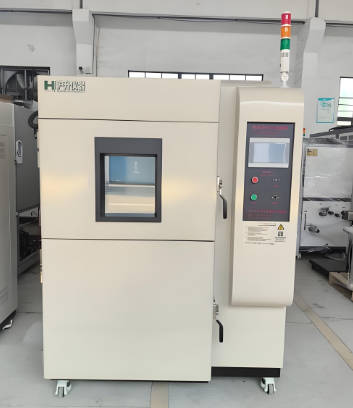
Our temperature‑controlled chambers and hot‑soak facilities accommodate complete assemblies, sub‑systems and individual components. The following categories represent the most frequently tested items:
- Electronic and electrical equipment – control units, power supplies, inverters, displays, sensors, printed circuit board assemblies and LED luminaires
- Automotive components and systems – engine control units, transmission controllers, turbo actuators, exhaust gas sensors, ignition coils and under‑hood connectors
- Batteries and energy storage devices – lithium‑ion and lead‑acid cells and packs for automotive, industrial and grid‑storage applications
- Mechanical assemblies and moving parts – bearings, gearboxes, chain drives, tensioners, actuators and electromechanical brakes
- Seals, gaskets and elastomeric components – O‑rings, lip seals, diaphragms, hoses and flexible connectors exposed to hot oil, coolant or exhaust gas
- Plastics, polymers and composite parts – enclosures, housings, clips, fasteners, intake manifolds and valve covers
- Industrial fluids and lubricants – engine oils, transmission fluids, hydraulic oils, greases and coolants
- Outdoor and solar equipment – photovoltaic inverters, solar charge controllers, telecommunication cabinets and electric vehicle charging stations
Electronic and Electrical Equipment – High Temperature Working Test According to IEC 60068 and Related Standards
- Dry heat operational test according to ČSN EN 60068‑2‑2 (IEC 60068‑2‑2) Test Bb and Bd: the equipment is placed in a chamber and heated to the specified temperature, typically +55 °C, +85 °C or +125 °C, and held until temperature stability is achieved. The device is then powered on, and its functional parameters – output voltage, signal frequency, display contrast, insulation resistance – are continuously monitored. The high temperature working test verifies that the equipment starts and operates within specification after a prolonged hot soak, simulating an inverter installed in a roof space or a control panel mounted in a boiler room during a Czech heatwave.
- Powered heat test with gradual temperature increase: the equipment is kept energised while the chamber temperature is ramped up at a rate of 3 °C per minute. The temperature at which the first malfunction occurs – the maximum operating temperature – is recorded, and the nature of the failure is documented. Czech manufacturers of industrial power supplies use this test to set the highest guaranteed operating temperature in the product datasheet.
- Combined high temperature and high‑voltage test: the supply voltage is increased to the maximum specified by the manufacturer while the equipment is at the high temperature limit. The test confirms that the device will operate reliably when the grid voltage rises during a hot summer day, a scenario regularly encountered by Czech solar inverters feeding into the distribution network.
- Functional test at maximum rated temperature for LED luminaires: the luminaire is conditioned at the maximum declared ambient temperature, typically +40 °C or +50 °C, and operated at full power. The junction temperature of the LEDs, the driver temperature and the light output are measured, and the luminaire must remain within the thermal limits that guarantee the declared lifetime. This high temperature working test is required by Czech municipal buyers to ensure that street lighting will not fail during prolonged summer heat.
Automotive Components and Systems – High Temperature Working Test for Powertrain and Under‑Hood Applications
- High‑temperature endurance test for engine‑mounted components according to ISO 16750‑4 and OEM specifications: the component – such as an engine control unit, a turbo actuator or an exhaust gas temperature sensor – is soaked at +125 °C or +150 °C for a minimum of 8 hours. The actuation force, the response time to a control signal and the current consumption are measured, and any drift beyond the tolerance is flagged. Czech tier‑1 suppliers use this data to validate that the component will not malfunction during a sustained Autobahn drive at full load in summer.
- High‑temperature operation of transmission and brake actuators: the actuator is placed in a chamber heated to +120 °C, and the electrical or mechanical actuation is performed repeatedly. The operating speed, the motor current draw and the number of successful cycles before overheating protection is triggered are recorded. This high temperature working test is essential for the homologation of dual‑clutch transmissions and electric parking brakes sold on the Czech market.
- Hot‑temperature durability cycling of fuel pumps and high‑pressure injection components: the fuel pump is primed with fuel conditioned to +60 °C, and the pump is cycled on and off at maximum delivery rate. The flow stability, the pressure ripple and the motor temperature are recorded, and any vapour locking or cavitation is noted. Czech importers of fuel system components rely on this test to guarantee reliable hot‑restart performance.
- High‑temperature testing of vehicle cameras, radar and lidar sensors: the sensor is mounted in a climatic chamber with a target pattern, and the detection range, the image quality and the data communication are evaluated at temperatures up to +85 °C. The test verifies that the advanced driver‑assistance systems function correctly when the vehicle is parked in direct sun on a Czech summer day.
Batteries and Energy Storage – High Temperature Working Test for Safety and Performance Retention
- High‑temperature discharge performance of lithium‑ion and lead‑acid batteries according to IEC 61960‑3, EN 50342‑1 and UN 38.3: the battery is soaked at +55 °C or +60 °C for a minimum of 6 hours, then discharged at the current specified by the manufacturer. The capacity delivered, the terminal voltage under load and the surface temperature rise are recorded and compared with the room‑temperature capacity. The test determines the thermal derating that must be applied to a battery pack operating in a Czech solar farm or an uninterruptible power supply in an un‑air‑conditioned room.
- High‑temperature charge acceptance and safety test: the battery is heated to +45 °C, and a maximum charging current is applied. The charge acceptance rate, the swelling of the casing and any activation of the safety vent are monitored. This high temperature working test is critical for the battery management system calibration of electric vehicles and energy storage systems operating in the Czech summer.
- Thermal runaway propagation test at elevated ambient temperature: a single cell in a module is forced into thermal runaway while the module is held at +55 °C. The propagation of the event to neighbouring cells, the peak temperature and the gas emission are recorded, providing the safety evidence required by Czech fire services for stationary battery installations.
- Cyclic ageing with periodic high‑temperature operation: the battery is repeatedly cycled at room temperature interspersed with discharge and charge events at +45 °C. The capacity fade curve is constructed, and the acceleration of ageing due to high‑temperature operation is quantified, providing the data needed by Czech fleet operators to predict the battery service life under realistic thermal conditions.
Seals, Plastics and Elastomers – High Temperature Working Test for Integrity and Ageing Resistance
- High‑temperature compression set and stress relaxation of seals and O‑rings according to ČSN EN ISO 815‑2 and ASTM D6147: the elastomeric specimen is compressed to a defined strain and held at +125 °C, +150 °C or +175 °C for 24 to 168 hours. After the load is removed, the degree of recovery and the residual sealing force are measured. A high compression set at elevated temperature indicates that the seal will leak after the joint has been hot for an extended period. Czech manufacturers of turbochargers and exhaust systems use this test to qualify their sealing materials.
- High‑temperature ageing and retention of tensile properties of plastics according to ČSN EN ISO 188 (for rubbers) and ČSN EN ISO 2578 (for plastics): specimens are exposed in a circulating‑air oven at a constant elevated temperature, and the change in tensile strength, elongation at break and impact resistance is measured at intervals. The test establishes the thermal endurance index of the material, a critical parameter for Czech injection moulders of under‑hood components.
- Heat deflection temperature and Vicat softening point according to ČSN EN ISO 75 and ČSN EN ISO 306: the temperature at which a loaded specimen deflects by a specified amount or is penetrated by a needle is measured. These values define the maximum service temperature for a plastic component that must retain its shape under load, such as a fan shroud or an intake manifold. This high temperature working test is part of the material qualification for every Czech automotive tier‑1 supplier.
- High‑temperature resistance of adhesive bonds and potting compounds: bonded lap‑shear or tensile specimens are conditioned at +100 °C, +150 °C or +200 °C and then tested while still hot. The reduction in bond strength and the change in failure mode from cohesive to adhesive are reported, providing the data needed to specify adhesives for hot‑end applications.
Industrial Fluids, Lubricants and Coolants – High Temperature Working Test for Thermal Stability and Oxidation Resistance
- Determination of the high‑temperature viscosity and oxidation stability according to ČSN EN ISO 3104 and ASTM D445: the kinematic viscosity of engine oils, hydraulic fluids and transmission oils is measured at +100 °C, and the change in viscosity after a standardised oxidation test is recorded. The results are compared with the requirements of the Czech equipment manufacturer, and the fluid's ability to maintain a protective lubricating film at high temperature is verified.
- Evaporation loss and deposit formation of lubricants and greases according to ASTM D5800 and DIN 51581: a thin film of oil or grease is exposed to +250 °C for a defined time, and the mass loss due to evaporation and the amount of carbonaceous residue are measured. This high temperature working test predicts the tendency of the lubricant to form harmful deposits on turbocharger bearings or chain tensioners.
- Hot‑soak and thermal stability of coolants and heat‑transfer fluids: the fluid is heated to its maximum service temperature in the presence of metal coupons, and the corrosion of the metals, the change in pH and the formation of sludge are evaluated according to ČSN EN ISO 2812 and ASTM D1384. Czech fleet operators use this test to confirm that the engine coolant will protect the cooling system during a fully loaded truck climbing a long grade in summer.
- High‑temperature pumpability and air release of hydraulic fluids: the fluid is conditioned at +80 °C or +100 °C, and the time for entrained air bubbles to rise to the surface is measured. Slow air release can cause spongy operation and cavitation damage in the hydraulic system of a Czech injection moulding machine or a construction excavator working in hot weather.
Report Acceptance and Regulatory Compliance for the Czech Republic
All measurements performed within our high temperature working test programme are executed under the fully accredited scope of our ISO/IEC 17025 quality management system. Each test report that carries the ILAC mark is therefore automatically recognised by the Czech Trade Inspection Authority, the Technical Inspection of the Czech Republic, customs offices and all notified bodies in the European Union. For Czech electronics producers, automotive component manufacturers, battery importers, seal and plastic suppliers and industrial fluid distributors, the report constitutes legally robust evidence that the product meets the hot‑operation requirements of the applicable harmonised standards and the essential health and safety requirements of the relevant EU directives. The documentation can be directly used to support CE marking, to issue inspection certificates according to ČSN EN 10204, to compile the technical file for type‑examination, and to resolve commercial and technical disputes concerning the high‑temperature performance and reliability of delivered products.