High Temperature Aging Testing Service – Accredited Thermal Endurance and Life Prediction for Global Markets
Our internationally accredited laboratory provides a specialist high temperature aging testing service that enables manufacturers, automotive suppliers, polymer producers, battery developers, lubricant formulators and industrial equipment designers worldwide to verify the long‑term thermal stability, material compatibility and performance retention of their products. Every test is conducted under the strict framework of ISO/IEC 17025, and each report bearing the ILAC mark is unconditionally accepted by regulatory authorities, customs offices and notified bodies in all major economies. The high temperature aging testing service exposes specimens to precisely controlled elevated temperatures in forced‑air ovens, inert‑atmosphere chambers, or fluidised sand baths for durations ranging from a few hours to many thousands of hours, simulating the cumulative effect of heat on mechanical, electrical, chemical and optical properties. By measuring the change in tensile strength, elongation, hardness, colour, dielectric strength, mass loss and functional performance before and after thermal exposure, we give our clients the legally robust, defensible data that underpin material selection, warranty validation and compliance with the relevant ISO, ASTM, IEC, and customer specifications.
Product Samples We Regularly Subject to High Temperature Aging Tests
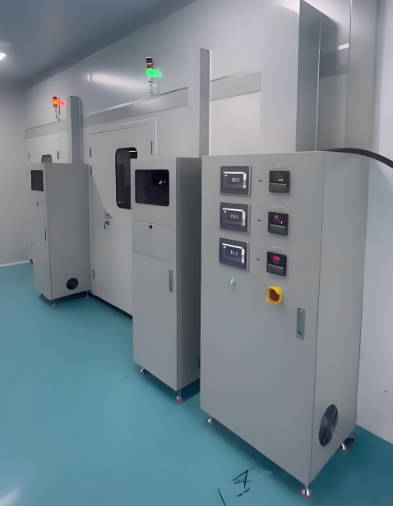
Our programmable ovens and environmental chambers accommodate components, sub‑assemblies, materials and finished products. The following categories represent the items most frequently tested through our high temperature aging testing service:
- Electronic and electrical equipment – printed circuit boards, integrated circuits, passive components, connectors, relays, insulating tapes, and complete control units
- Automotive components and under‑hood parts – engine control units, turbo actuators, exhaust sensors, ignition coils, hose assemblies, and fluid reservoirs
- Plastics, elastomers and composite materials – injection‑moulded parts, seals, gaskets, O‑rings, cable jackets, conveyor belts, and fibre‑reinforced laminates
- Batteries and energy storage devices – lithium‑ion cells and modules, lead‑acid batteries, supercapacitors, and solid‑state battery prototypes
- Lubricants, greases and industrial fluids – engine oils, hydraulic fluids, transmission oils, compressor lubricants, and metal‑working fluids
- Adhesives, sealants and coatings – structural epoxy and polyurethane bonds, silicone sealants, pressure‑sensitive tapes, and protective paints
- Textiles and personal protective equipment – aramid fabrics, fire‑resistant clothing, conveyor‑belt fabrics, and high‑temperature filtration media
Electronics and Electrical Assemblies – High Temperature Aging Testing According to IEC 60068‑2‑2 and JEDEC Standards
- Dry heat endurance test according to IEC 60068‑2‑2 (Test Bb/Bd): the component or assembly is placed in a chamber maintained at a constant elevated temperature, typically +85 °C, +125 °C, or +150 °C, for a prescribed duration – 100 h, 500 h, or 1 000 h. Functional parameters such as output voltage, frequency stability, insulation resistance, and leakage current are monitored throughout. This high temperature aging testing service verifies that the device will not suffer from thermal runaway, solder‑joint embrittlement, or parametric drift during its operational life, and it provides the evidence required for the qualification of components to the automotive AEC‑Q100/AEC‑Q200 series.
- High‑temperature storage life (HTSL) according to JEDEC JESD22‑A103: semiconductor devices are stored at an elevated temperature, often +150 °C, for up to 1 000 hours without bias. After exposure, wire‑bond pull strength, die‑shear strength, and electrical performance are evaluated. The test detects intermetallic‑compound growth, bond‑pad corrosion, and package‑material degradation.
- Biased high‑temperature aging for power modules and integrated circuits: the device is subjected to the maximum rated voltage and current while held at its upper operating temperature. The drift in threshold voltage, gain, and on‑resistance is measured, and the time to parametric failure is recorded, providing data for the Arrhenius‑based lifetime prediction of mission‑critical electronics.
Plastics, Elastomers and Polymeric Materials – High Temperature Aging Testing According to ISO 188 and ASTM D573
- Thermal aging in air ovens according to ISO 188 (Rubber, vulcanized or thermoplastic – Accelerated ageing and heat resistance tests) and ASTM D573: dumbbell or slab specimens are suspended in a forced‑circulation oven at temperatures typically ranging from +70 °C to +200 °C for 7, 14, 28, or 90 days. The tensile strength, elongation at break, hardness (Shore A or IRHD), and compression set are measured before and after aging, and the percentage retention of each property is reported. This high temperature aging testing service is the primary quality‑control tool for rubber goods, seals, and hose compounds, and it forms the basis for the Arrhenius extrapolation of service life at lower temperatures.
- Long‑term thermal endurance of plastics according to ISO 2578 and the relative thermal index (RTI) method of UL 746B: a series of properties (tensile, flexural, impact, dielectric) is monitored over extended aging at three or more temperatures. The time to reach a defined endpoint (e.g., 50 % retention of the original property) is determined, and the RTI or the temperature index is reported. The data are used to classify materials for continuous service in electrical and mechanical applications.
- Heat‑deflection temperature and Vicat softening point after aging: the HDT and Vicat temperatures are measured on aged and unaged specimens, and the shift in the softening point indicates the progression of cross‑linking, chain scission, or plasticiser loss during the high‑temperature exposure.
Automotive Components and Under‑Bonnet Materials – High Temperature Aging According to ISO 16750‑4 and OEM Specifications
- Thermal load testing of engine‑mounted and chassis‑mounted components according to ISO 16750‑4: the component is exposed to a temperature profile that replicates the vehicle’s thermal environment – up to +150 °C for engine‑compartment parts, +120 °C for chassis electronics, and +85 °C for passenger‑compartment modules. The aging is combined with humidity and vibration where required, and the functional performance and the mechanical integrity are verified at the end of the test.
- Heat‑soak and thermal‑cycle aging of fuel‑system and air‑intake elastomers: the specimen is aged in contact with fuel, oil, or coolant at +125 °C to +150 °C, and the change in volume, hardness, and tensile properties is measured. This high temperature aging testing service ensures that the hose or seal will resist the combined chemical and thermal attack that occurs in a modern engine.
- High‑temperature aging of automotive lubricants and coolants: the fluid is aged in the presence of metal catalyst coupons at +160 °C to +180 °C, and the increase in total acid number, viscosity, and the formation of sludge and deposits are measured. The test predicts the oil‑drain interval and the coolant‑change interval for the vehicle fleet.
Batteries and Energy Storage – High Temperature Aging Testing for Calendar Life and Safety
- Calendar‑life aging of lithium‑ion cells according to IEC 62660‑1 and the United States Advanced Battery Consortium (USABC) protocols: cells at a defined state of charge (typically 50 % or 80 %) are stored at +45 °C, +55 °C, or +60 °C for months. The capacity fade, the internal‑resistance increase, and the change in the open‑circuit voltage are measured at regular intervals, and the data are used to model the service life of the battery in electric‑vehicle and stationary‑storage applications.
- High‑temperature charge‑retention and safety test according to UN 38.3 (T2) and IEC 62133: the fully charged cell is heated to +75 °C or +130 °C and held until thermal runaway occurs or until the cell vent opens. The surface temperature, the gas release, and the integrity of the cell casing are recorded, providing the safety evidence required for transport and for the installation of battery packs in buildings.
- High‑temperature aging of supercapacitors and electrolytic capacitors: the capacitance, the equivalent series resistance, and the leakage current are tracked during storage at the rated upper‑category temperature. The data are used to predict the lifetime of the capacitor in power‑conversion and energy‑harvesting circuits.
Report Acceptance and Global Regulatory Compliance
All measurements performed within our high temperature aging testing service are executed under the fully accredited scope of our ISO/IEC 17025 quality management system. Each test report that carries the ILAC mark is therefore automatically recognised by regulatory authorities, notified bodies, customs offices and supply‑chain partners in all major economies. For electronics producers, automotive component suppliers, polymer manufacturers, battery developers and lubricant formulators anywhere in the world, the report constitutes legally robust, internationally accepted evidence that the thermal‑aging resistance and the predicted service life of the material or product have been determined in accordance with the applicable ISO, ASTM, IEC, EN and customer‑specified methods. The documentation can be directly used to support CE marking, to issue inspection certificates according to EN 10204 or equivalent national standards, to compile the technical file for type‑examination, and to resolve commercial and technical disputes concerning the long‑term thermal stability of any product.