Hemp Rope Inspection Service for Global Natural Fiber Compliance
As an ISO/IEC 17025 accredited laboratory, we deliver a specialized hemp rope inspection service that verifies the tensile strength, elongation, abrasion resistance, moisture behavior, chemical safety, and long-term durability of natural hemp fiber ropes used in maritime, industrial, agricultural, and decorative applications. Our hemp rope inspection service supports manufacturers and exporters who must demonstrate conformity to ISO 2307, ISO 9554, EN 1261, ASTM D4268, and regional natural fiber and safety standards across the European Union, North America, the Middle East, and Asia. Every test is performed under our CNAS-accredited quality system, producing reports accepted by notified bodies, maritime authorities, and procurement teams worldwide.

Product Samples We Regularly Test in Our Hemp Rope Inspection Service
- Three-strand twisted hemp ropes — for traditional rigging, mooring lines, and general industrial lifting
- Four-strand and multi-strand hemp ropes — for heavy-duty marine, agricultural, and construction applications
- Braided and plaited hemp ropes — for decorative, architectural, and specialty craft use
- Tarred and treated hemp ropes — with pine tar, bitumen, or synthetic coatings for enhanced weather resistance
- Hemp core-sheath ropes with synthetic outer jackets — for improved abrasion resistance while retaining natural fiber core properties
- Custom-spliced and terminated hemp rope assemblies — with thimbles, eyes, and end fittings for OEM integration
- Recycled and reclaimed hemp rope products — for sustainability verification and secondary use qualification
Mechanical and Tensile Property Testing for Hemp Ropes
- Breaking force and tensile strength per ISO 2307 and ASTM D4268 — the hemp rope is pulled to failure on a calibrated tensile testing machine to measure the ultimate breaking force, providing the primary load-bearing specification for the rope's intended application.
- Elongation at break and load-elongation curve per ISO 2307 — the percentage elongation and the complete load-elongation behavior are recorded to verify the rope's stretch characteristics and energy absorption, critical for applications where natural fiber elasticity is required.
- Knot strength and splice strength per ISO 2307 and customer protocols — the rope is tested with knots and splices to determine the strength reduction caused by these terminations, ensuring safe working loads are correctly specified for field use.
- Cyclic loading and fatigue resistance per ASTM D6775 — the hemp rope is subjected to repeated load cycles at defined stress levels to generate fatigue data and to predict the service life under dynamic loading conditions.
- Creep and stress relaxation under sustained load per ASTM D6992 — the time-dependent elongation and load retention of the hemp rope under constant tension are measured to ensure dimensional stability in long-term static applications.
- Residual strength after abrasion and mechanical damage per customer protocols — the rope is subjected to controlled abrasion and then re-tested to determine the retained breaking strength, simulating the effects of wear in service.
Physical and Dimensional Inspection for Hemp Ropes
- Rope diameter and circumference measurement per ISO 2307 — the diameter is measured under reference tension using calibrated callipers or optical micrometers, verifying conformance to the specified size and ensuring compatibility with fittings and hardware.
- Linear density and weight per unit length per ISO 2307 — the mass per meter is measured to verify the rope's construction and to calculate the strength-to-weight ratio for the natural fiber material.
- Lay length and twist consistency verification per internal protocols — the twist angle and the uniformity of the lay are inspected to confirm the rope construction matches the specification and to detect any manufacturing defects that would affect strength and durability.
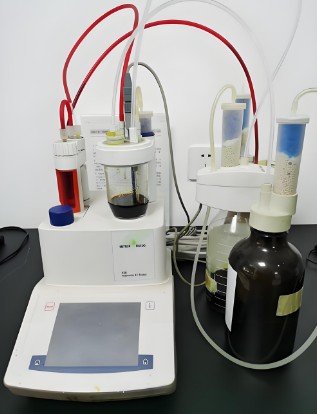
- Moisture content and conditioning state per ASTM D1907 — the moisture content of the hemp rope is measured to ensure testing is performed under the specified standard atmosphere and to verify the rope's condition upon delivery.
- Visual defect inspection under D65 illumination — systematic examination for broken fibers, loose strands, mold, discoloration, and surface contamination against agreed acceptance criteria and master reference samples.
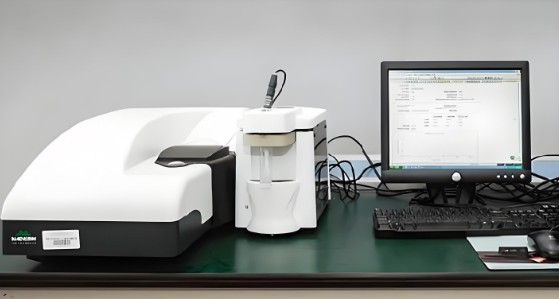
- Fiber identification and purity verification by FTIR per ASTM E1252 — the infrared spectrum of the rope fibers is acquired to confirm the material is genuine hemp and to detect any blending with synthetic or other natural fibers.
Moisture, Environmental, and Weathering Testing for Hemp Ropes
- Water absorption and moisture regain per ASTM D570 and ISO 6741-1 — the hemp rope is immersed in water and the mass gain is measured to quantify the natural fiber's hygroscopic behavior, which affects strength, elongation, and dimensional stability in wet service.
- Damp heat and humidity exposure per IEC 60068-2-78 — the rope is stored at high temperature and high relative humidity, followed by tensile and visual retests to confirm no mold growth, fiber degradation, or significant strength loss in tropical and humid environments.
- UV and xenon-arc accelerated weathering per ASTM G155 and ISO 4892-2 — the hemp rope is subjected to simulated sunlight and moisture cycles to evaluate color fading, surface degradation, and loss of tensile strength after prolonged outdoor exposure.
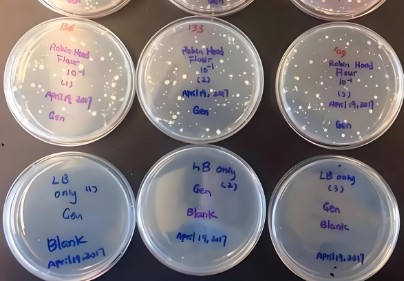
- Resistance to rot, mold, and fungal attack per ASTM G21 and ISO 846 — the rope is inoculated with fungal spores and incubated to confirm it does not support biological growth that would weaken the natural fibers in damp storage or service conditions.
- Low-temperature flexibility and impact resistance per ASTM D2137 — the hemp rope is conditioned at sub-zero temperatures and flexed or impacted to verify it remains pliable and does not become brittle in cold climates.
- Resistance to oils, greases, and common marine chemicals per ASTM D543 — the rope is exposed to representative fluids to verify no excessive swelling, softening, or chemical degradation occurs in industrial and marine environments.
Chemical Safety and Restricted Substance Compliance for Hemp Ropes
- Heavy metals and toxic element screening per EU RoHS and REACH Annex XVII — ICP-OES analysis quantifies lead, cadmium, mercury, and other regulated metals in the hemp fiber, any tar or bitumen treatment, and any dyes or coatings to ensure the rope meets global substance restrictions.
- Formaldehyde and volatile organic compound emission per ISO 16000-3 — chamber testing verifies that the hemp rope does not release harmful VOCs or formaldehyde into the indoor air, a requirement for ropes used in occupied spaces and public buildings.
- Pesticide and herbicide residue screening per internal validated protocols — for natural hemp fiber ropes, the presence of agricultural residues from cultivation is quantified to ensure the product is safe for handling and for use in food-related or sensitive environments.
- Polycyclic aromatic hydrocarbons per AfPS GS 2019:01 PAK — for tarred or bitumen-treated hemp ropes, the 15 restricted PAHs are extracted and quantified to confirm compliance with European product safety limits.
- Heavy metals in packaging per EU Directive 94/62/EC — verification that lead, cadmium, mercury, and hexavalent chromium sum concentration in the packaging and labels is below the 100 ppm regulatory limit.
Report Recognition and ISO/IEC 17025 Compliance
Every test method described in this hemp rope inspection service is covered by our ISO/IEC 17025 scope of accreditation. Our technical reports and certificates of analysis are accepted by European notified bodies for marine and industrial products, by North American safety authorities and rope OEMs referencing ASTM and ISO standards, and by customs and procurement agencies across the Middle East, Australia, and Asia. Whether you require a complete qualification dossier for a new hemp rope product, a batch release inspection for an export shipment, or a root cause failure analysis of a rope failure, our laboratory provides the measurement accuracy and natural fiber expertise that the global rope and cordage industry demands.