Heat Shrink Film Inspection Service for Global Packaging Supply Chains
As an ISO/IEC 17025 accredited laboratory, we deliver a comprehensive heat shrink film inspection service that verifies shrinkage performance, mechanical strength, optical clarity, barrier properties, and chemical compliance. Our heat shrink film inspection service supports manufacturers and exporters of polyolefin, PVC, and PE shrink films who must demonstrate conformity to ASTM, ISO, EN, and regional packaging regulations across the European Union, North America, the Middle East, and Asia. Every test is performed under our CNAS-accredited quality system, producing reports accepted by customs authorities, notified bodies, and major retail procurement teams worldwide.

Product Samples We Regularly Test in Our Heat Shrink Film Inspection Service
- Polyolefin shrink film — single-layer and multi-layer POF for retail, food, and printed packaging
- PVC shrink film — for tamper-evident bands, labels, and general-purpose wrapping
- Polyethylene shrink film — heavy-duty films for industrial bundling, beverage multipacks, and pallet wrapping
- Cross-linked polyolefin shrink film — high-strength and high-clarity films for premium packaging
- Barrier shrink film with EVOH or PVDC layers — for food products requiring oxygen and moisture protection
- Anti-fog and anti-static shrink film — for fresh produce, electronics, and specialty applications
Physical and Mechanical Property Testing for Heat Shrink Film
- Tensile strength and elongation at break per ISO 527-3 and ASTM D882 — measuring the force and stretch at failure in both machine and transverse directions to verify the film can withstand the mechanical stress of wrapping, conveying, and handling without tearing.
- Tear resistance by Elmendorf method per ISO 6383-2 and ASTM D1922 — determining the force required to propagate a tear from an initial slit, ensuring the film resists puncture propagation during the shrink tunnel and distribution.
- Dart drop impact resistance per ASTM D1709 and ISO 7765-1 — a weighted dart is dropped onto the film to measure the energy required to cause failure, simulating the impact from product corners during the packaging process and transport.
- Coefficient of friction per ISO 8295 and ASTM D1894 — measuring the static and dynamic friction of the film surface to ensure smooth feeding on automatic packaging lines and to control the slip properties for pallet stability.
- Stiffness and secant modulus per ISO 527-3 and ASTM D882 — determining the film's resistance to bending and stretching at low elongation to predict its behavior during unwinding, forming, and sealing operations.
Shrinkage Performance and Thermal Behavior Testing for Heat Shrink Film
- Free shrink percentage in hot oil and hot air per ASTM D2732 and ISO 14616 — the film specimen is immersed in a heated oil bath or exposed to hot air at defined temperatures, and the percentage shrinkage in the machine and transverse directions is measured to verify that the film meets the specified shrink ratio for the intended application.
- Shrink force and contraction stress per ASTM D2838 and ISO 14616 — the force exerted by the film as it shrinks is measured using a load cell in a heated chamber, providing the data required to predict whether the film will crush lightweight or fragile products or provide adequate holding force for heavy items.
- Shrink temperature range and initiation point by thermomechanical analysis — the film is heated at a controlled rate and the dimensional change is continuously recorded to determine the onset shrinkage temperature, the peak shrinkage rate temperature, and the temperature at which maximum shrinkage is achieved.
- Shrinkage uniformity and residual stress — the percentage difference in shrinkage between the center and edges of the film web is measured, and any warping, curling, or distortion after shrinking is evaluated to ensure the film produces flat, symmetrical packages without visual defects.
- Hot slip and anti-blocking performance — the film's surface behavior at elevated temperature is tested to simulate the conditions inside a shrink tunnel, ensuring that the film surfaces do not stick together or to the tunnel guides after shrinking.
Optical and Barrier Property Testing for Heat Shrink Film
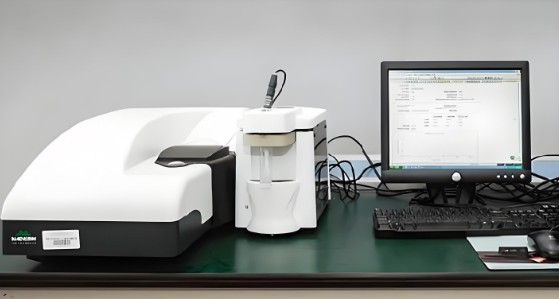
- Haze and clarity per ASTM D1003 and ISO 14782 — the percentage of transmitted light that is scattered by the film is measured using a spectrophotometer with an integrating sphere, ensuring the film provides the required transparency for product visibility and barcode scanning.
- Gloss at specified angles per ASTM D2457 and ISO 2813 — the specular reflectance of the film surface is measured at 20°, 60°, or 85° to quantify the visual brilliance and shelf appeal of the final packaged product.
- Oxygen transmission rate per ASTM D3985 and ISO 15105-2 — for barrier shrink films, the oxygen permeability is measured using a coulometric sensor to verify the oxygen barrier performance required for extended shelf life of oxygen-sensitive food products.
- Water vapor transmission rate per ASTM F1249 and ISO 15106-2 — the moisture vapor transmission rate is measured using a modulated infrared sensor to confirm the film provides the required moisture barrier for the intended product and shelf life.
- Print quality and surface treatment level per ASTM D2578 and ISO 8296 — the surface energy of the film is determined by contact angle or dyne test pen methods to verify that the corona or flame treatment is adequate for ink adhesion and that the printed text, barcodes, and graphics meet the required quality standards.
Sealing Performance and Integrity Testing for Heat Shrink Film
- Heat seal strength per ASTM F88 and ISO 527-3 — the force required to peel open a seal made under defined temperature, pressure, and dwell time is measured to verify that the film provides a hermetic closure and that the seal does not fail during shrinking, handling, and transport.
- Hot tack strength per ASTM F1921 — the strength of the seal is measured immediately after sealing while the film is still hot, simulating the force exerted by the product on the seal during the packaging cycle before the seal has fully cooled, critical for high-speed form-fill-seal operations.
- Leak and seal integrity by bubble emission and dye penetration per ASTM D3078 and ASTM F3039 — the sealed package is submerged in water under vacuum or filled with a colored dye solution to detect pinholes, channel leaks, and weak seals that would compromise product protection.
- Seal through contamination — the seal strength is measured after introducing controlled amounts of product, oil, or powder into the seal area to verify that the heat shrink film can form a reliable seal under realistic filling conditions.
Chemical Safety and Restricted Substance Compliance for Heat Shrink Film
- RoHS compliance per IEC 62321 and EU Directive 2011/65/EU — screening and quantitative analysis for lead, cadmium, mercury, hexavalent chromium, PBBs, and PBDEs in the film and any printed inks, ensuring the packaging meets the substance restrictions for the destination market.
- REACH Annex XVII and SVHC screening — targeted analysis of Substances of Very High Concern including phthalate plasticizers, short-chain chlorinated paraffins, and specific organotin stabilizers that may be present in flexible PVC and other shrink film formulations.
- Phthalates and plasticizers per CPSC-CH-C1001-09.4 and EN 14372 — GC-MS determination of the six restricted phthalates in plasticized films and any printed or coated shrink films intended for children's products or food contact.
- Polycyclic aromatic hydrocarbons per AfPS GS 2019:01 PAK — extraction and quantification of the 15 restricted PAHs in carbon-black-pigmented or dark-colored shrink films to ensure compliance with European consumer product safety limits.
- Overall migration and specific migration for food contact per EU Regulation 10/2011 and FDA 21 CFR — the shrink film is exposed to food simulants under time and temperature conditions representative of the intended use, and the total extractable mass and specific levels of any restricted monomers or additives are quantified.
- Heavy metals in packaging per EU Directive 94/62/EC — verification of the sum concentration of lead, cadmium, mercury, and hexavalent chromium in the packaging material to confirm it is below the 100 ppm limit for packaging and packaging waste.
Report Recognition and ISO/IEC 17025 Compliance
All methods described in this heat shrink film inspection service fall within our ISO/IEC 17025 scope of accreditation. Our test reports are accepted by European notified bodies for food contact materials and packaging waste compliance, by North American retailers and brand owners, and by customs and regulatory authorities across the Gulf, Australia, and Asia Pacific. Whether you require a full qualification dossier for a new shrink film formulation, a batch release inspection for an incoming shipment, or a failure analysis of a packaging defect, our laboratory provides the measurement accuracy and technical expertise that the global flexible packaging industry demands.