Glass Fiber Composite Board Testing Service – Accredited Mechanical, Thermal and Fire Performance Evaluation for Global Markets
Our internationally accredited laboratory provides a comprehensive glass fiber composite board testing service that supplies manufacturers of structural panels, electrical insulation components, automotive lightweight assemblies, construction formwork, marine hulls and wind‑turbine blade sections worldwide with the independent, traceable data they require to certify the strength, stiffness, fire resistance, weatherability and long‑term durability of their glass‑fiber‑reinforced polymer laminates. Every test is conducted under the rigorous framework of ISO/IEC 17025, and each report bearing the ILAC mark is unconditionally accepted by regulatory authorities, notified bodies and supply‑chain partners in all major economies. The glass fiber composite board testing programme subjects the flat or the corrugated panel to a complete suite of mechanical, thermal, electrical, environmental and flammability evaluations, quantifying the flexural and the tensile strength, the interlaminar shear resistance, the impact toughness, the heat‑deflection temperature, the dielectric breakdown voltage, the resistance to ultraviolet radiation and salt‑spray, and the surface‑burning characteristics according to the internationally recognised standards that govern the use of composite materials in the building, the transport, the electrical and the marine sectors.
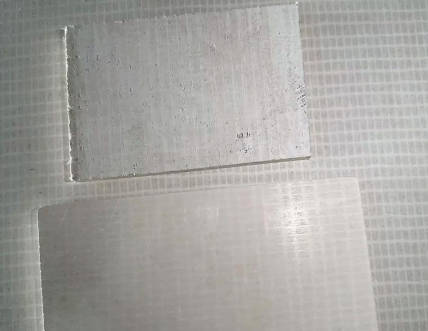
Product Samples We Regularly Subject to Glass Fiber Composite Board Testing
The universal test frames, impact towers, environmental‑ageing chambers, flammability‑test apparatus and electrical‑insulation testers in our facility accommodate a vast variety of glass‑fiber‑reinforced panels and their constituent materials. The following categories represent the most frequently tested items:
- Glass‑fiber‑reinforced polyester and vinyl‑ester laminates – hand‑laid, spray‑up and vacuum‑bagged panels for the boat‑hulls, the chemical‑storage tanks, the building‑cladding and the sanitary‑ware
- Glass‑fiber‑reinforced epoxy and phenolic boards – high‑performance flat sheets and the moulded parts for the aerospace interiors, the printed‑circuit‑board substrates, the cryogenic insulation and the fire‑resistant barriers
- Continuous‑fiber‑reinforced thermoplastic composite panels – glass‑mat‑reinforced polypropylene, polyamide and polycarbonate sheets for the automotive under‑body shields, the seat‑backs and the battery‑enclosure components
- Multi‑layer sandwich panels with a glass‑fiber face‑sheet and a foam or a honeycomb core – the panels for the truck‑body floors, the clean‑room partitions, the refrigerated‑container walls and the wind‑turbine nacelle covers
- Pultruded glass‑fiber profiles and grating panels – the flat and the corrugated sheets, the I‑beams, the channel‑sections and the moulded gratings for the industrial walkways, the cable‑tray supports and the cooling‑tower internals
- Glass‑fiber‑reinforced gypsum and cement boards – the building‑construction panels that combine the inorganic matrix with the alkali‑resistant glass‑fibre reinforcement for the fire‑rated walls, the ceilings and the exterior sheathing
Mechanical and Physical Properties – Glass Fiber Composite Board Testing According to ISO 14125, ASTM D790 and ISO 527‑4
- Determination of the flexural strength, the flexural modulus and the deflection at break by the three‑point or the four‑point bending method according to ISO 14125 (Fibre‑reinforced plastic composites – Determination of flexural properties) and ASTM D790: a rectangular specimen is supported on two rollers and loaded at mid‑span or at the third‑points until the outer‑fibre fracture, and the stress‑strain curve in the outer layer is recorded. The data are reported for the longitudinal and the transverse directions, and the panel is classified for its load‑bearing capacity and its stiffness. This glass fiber composite board testing provides the fundamental design parameters for the structural‑engineer who specifies the panel for the floor, the walkway or the cladding application.
- Tensile strength, the tensile modulus and the Poisson's ratio according to ISO 527‑4 (Plastics – Determination of tensile properties – Part 4: Test conditions for isotropic and orthotropic fibre‑reinforced plastic composites) and ASTM D3039: the specimen with the bonded end‑tabs is loaded in the axial tension, and the ultimate tensile strength, the strain at the failure and the modulus are reported, together with the failure‑mode description, providing the data that the finite‑element analyst uses to model the composite structure.
- Interlaminar shear strength by the short‑beam method according to ISO 14130 (Fibre‑reinforced plastic composites – Determination of apparent interlaminar shear strength by the short‑beam method) and ASTM D2344: a short, thick specimen is loaded in the three‑point bending, and the apparent shear strength at the neutral plane is calculated, quantifying the quality of the fibre‑matrix adhesion and the resistance to the delamination between the layers.
- Instrumented Charpy and Izod impact resistance according to ISO 179‑1 (Plastics – Determination of Charpy impact properties) and ASTM D256: the energy absorbed during the fracture of a notched or an un‑notched specimen is measured at the ambient and the sub‑zero temperatures, providing the toughness data that the designer uses to guarantee the damage‑tolerance of the panel under the accidental impact and the dropped‑tool conditions.
- Measurement of the density, the fibre‑volume fraction and the void content according to ISO 1183 (Plastics – Methods for determining the density of non‑cellular plastics) and ASTM D3171: the density is determined by the immersion method, and the mass fractions of the glass fibre and the resin are measured by the calcination or the acid‑digestion method, while the void content is calculated, providing the essential quality‑control parameters for the laminate fabrication process.
Thermal, Fire and Environmental Resistance – Glass Fiber Composite Board Testing According to ISO 5660, ASTM E84 and ISO 4892‑2
- Determination of the heat‑deflection temperature and the Vicat softening point according to ISO 75‑2 (Plastics – Determination of temperature of deflection under load – Part 2: Plastics and ebonite) and ISO 306: the specimen is loaded in the three‑point bending or is penetrated by a flat‑ended needle while the temperature is increased at a controlled rate, and the temperature at which a specified deflection is reached is reported, defining the maximum service temperature for the structural and the insulating applications.
- Measurement of the thermal conductivity and the coefficient of linear thermal expansion according to ASTM C177 (Standard Test Method for Steady‑State Heat Flux Measurements and Thermal Transmission Properties by Means of the Guarded‑Hot‑Plate Apparatus) and ISO 11359‑2: the steady‑state heat flow through the panel and the dimensional change with the temperature are recorded, providing the data that the building‑physicist uses to calculate the thermal‑transmittance of the wall or the roof assembly.
- Surface‑burning characteristics – the flame‑spread index and the smoke‑developed index according to ASTM E84 (Standard Test Method for Surface Burning Characteristics of Building Materials) and the equivalent ISO 9705 (Reaction to fire tests – Room corner test for wall and ceiling lining products): the panel is mounted in the Steiner‑tunnel apparatus, and the flame‑spread and the smoke‑production are measured, providing the classification data that are mandatory for the interior‑finish acceptance by the building codes in North America and the Middle East.
- Reaction‑to‑fire classification according to EN 13501‑1 (Fire classification of construction products and building elements) using the data from the single‑burning‑item test (EN 13823) and the small‑flame ignition test (EN ISO 11925‑2): the panel is evaluated for the fire‑growth rate, the lateral‑flame‑spread, the flaming‑droplet production and the smoke‑generation, and it is classified into the Euroclass B, C, D or E, as required for the CE marking of the construction product.
- Accelerated weathering and the resistance to the ultraviolet radiation according to ASTM G154 (Standard Practice for Operating Fluorescent Ultraviolet Lamp Apparatus for Exposure of Non‑Metallic Materials) and ISO 4892‑2: the panel is exposed to a cycle of the UV‑A or the UV‑B radiation, the heat and the condensation, and the retention of the flexural strength, the colour change and the surface‑fibre‑blooming are evaluated, predicting the outdoor durability of the composite board over the 10‑, 20‑ or 30‑year design life.
- Resistance to the salt‑spray, the chemical immersion and the water absorption according to ISO 9227 (Corrosion tests in artificial atmospheres – Salt spray tests), ISO 175 (Plastics – Methods of test for the determination of the effects of immersion in liquid chemicals) and ISO 62 (Plastics – Determination of water absorption): the panel is exposed to a neutral‑salt fog, to the dilute acids and alkalis, and to the boiling water, and the change in the mass, the dimensions and the mechanical properties is measured, ensuring the suitability of the glass‑fiber composite for the chemical‑plant, the marine‑environment and the outdoor‑electrical‑enclosure applications.
Electrical Insulation and Dielectric Properties – Glass Fiber Composite Board Testing According to IEC 60243 and ASTM D257
- Determination of the dielectric breakdown voltage and the dielectric strength according to IEC 60243‑1 (Electric strength of insulating materials – Test methods) and ASTM D149: the board specimen is placed between two electrodes in a transformer‑oil bath, and an alternating voltage is increased at a controlled rate until the electrical puncture occurs. The dielectric strength in kilovolts per millimetre is reported, certifying the panel for the use as the insulating barrier in the switchgear, the transformer and the motor‑control centre.
- Volume resistivity and the surface resistivity according to ASTM D257 (Standard Test Methods for DC Resistance or Conductance of Insulating Materials) and IEC 62631‑3‑1: a direct‑current voltage is applied to the specimen in a guarded‑electrode fixture, and the steady‑state current is measured, yielding the resistivity in ohm‑metres and the ohms per square, which verify the excellent electrical insulation characteristics of the glass‑fiber‑reinforced laminate.
- Comparative tracking index and the resistance to the high‑voltage, low‑current arc according to IEC 60112 (Method for the determination of the proof and the comparative tracking indices of solid insulating materials) and ASTM D495: the voltage at which the tracking failure occurs on the surface of the composite under the application of the electrolytic drops is determined, and the material is assigned a CTI value that governs the creepage‑distance design of the printed‑circuit‑board and the connector applications.
Durability, Creep and Long‑Term Performance – Glass Fiber Composite Board Testing According to ASTM D2990 and EN 705
- Creep‑rupture and the long‑term stress‑rupture behaviour under the static flexural or the tensile load according to ASTM D2990 (Standard Test Methods for Tensile, Compressive, and Flexural Creep and Creep‑Rupture of Plastics) and the principles of EN 705 (Plastics piping systems – Glass‑reinforced thermosetting plastics pipes – Determination of the long‑term specific ring creep stiffness): a constant load is applied to the specimen for up to 10 000 hours, and the time‑dependent deformation and the time to the rupture are recorded, providing the data that the engineer uses to set the allowable long‑term stress and the safety factor for the panel in the continuously loaded application.
- Fatigue resistance under the cyclic flexural or the tensile loading according to ISO 13003 (Fibre‑reinforced plastics – Determination of fatigue properties under cyclic loading conditions): the specimen is subjected to a sinusoidal load at a defined frequency and stress ratio, and the S‑N curve and the fatigue‑limit are determined, supporting the design of the dynamically loaded components such as the wind‑turbine blade sections and the bridge‑deck panels.
- Resistance to the stress‑corrosion cracking and the environmental‑stress‑cracking in the acidic and the alkaline environments: a specimen under a constant tensile strain is immersed in the corrosive medium, and the time to the first crack or the loss of the tensile strength is recorded, providing the qualification data for the composite board used in the chemical‑storage and the pollution‑control equipment.
Report Acceptance and Global Regulatory Compliance
All measurements performed within our glass fiber composite board testing programme are executed under the fully accredited scope of our ISO/IEC 17025 quality management system. Each test report that carries the ILAC mark is therefore automatically recognised by regulatory authorities, notified bodies, customs offices and supply‑chain partners in all major economies. For composite‑panel manufacturers, structural‑design engineers, electrical‑equipment producers and building‑construction contractors anywhere in the world, the report constitutes legally robust, internationally accepted evidence that the flexural and the tensile strength, the interlaminar shear resistance, the impact toughness, the fire performance, the weatherability and the electrical insulation properties of the glass‑fiber composite board have been determined in accordance with the applicable ISO, ASTM, IEC, EN and customer‑specified methods. The documentation can be directly used to support CE marking under the Construction Products Regulation, the issue of inspection certificates according to EN 10204 or equivalent national standards, the compilation of the technical file for the type‑examination, and the resolution of commercial and technical disputes concerning the quality, the safety and the long‑term performance of any glass‑fiber‑reinforced polymer panel.