
Gel Permeation Chromatograph (GPC) Testing Service – Accredited Molecular Weight and Size Distribution Analysis for Global Markets
Our internationally accredited laboratory provides a specialist Gel Permeation Chromatograph (GPC) testing service that supplies polymer producers, resin manufacturers, pharmaceutical developers, biopharmaceutical companies, coatings formulators and plastics engineers worldwide with the precise, traceable molecular‑weight distribution data they require for material characterisation, process control and regulatory compliance. Every analysis is performed within the rigorous framework of ISO/IEC 17025, and each report bearing the ILAC mark is unconditionally accepted by regulatory authorities, customs offices and notified bodies in all major economies. The GPC testing service – also known as size‑exclusion chromatography – separates macromolecules according to their hydrodynamic volume in solution, yielding the number‑average molecular weight Mn, the weight‑average molecular weight Mw, the size‑average molecular weight Mz, the polydispersity index, and the complete molecular‑weight distribution curve. For a polymer manufacturer optimising the mechanical properties of an injection‑moulding grade, a biopharmaceutical company verifying the aggregate profile of a monoclonal‑antibody product, or a resin supplier certifying the molecular weight of an epoxy prepreg, our Gel Permeation Chromatograph testing service delivers the legally robust, defensible data that underpin product specifications, pharmacopoeial conformity and international trade.
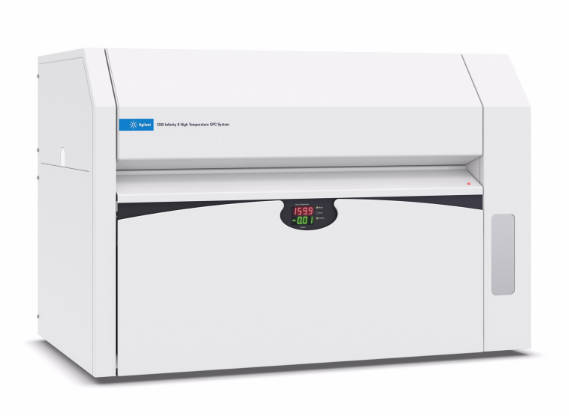
Product Samples We Regularly Test Using Our Gel Permeation Chromatograph (GPC) Testing Service
The sample‑preparation and dissolution capabilities of our GPC platform accommodate an exceptionally broad range of macromolecular materials. The following categories represent the substances most frequently analysed:
- Synthetic polymers and plastics – polyethylene, polypropylene, polystyrene, polyvinyl chloride, polycarbonate, polyamide, polyester, polyurethane and acrylic resins
- Elastomers and rubbers – natural rubber, styrene‑butadiene rubber, ethylene‑propylene‑diene monomer, silicone and fluoroelastomers
- Biodegradable and bio‑based polymers – polylactic acid, polyhydroxyalkanoates, cellulose acetate, starch‑based bioplastics and polybutylene succinate
- Pharmaceutical and biopharmaceutical products – monoclonal antibodies, therapeutic proteins, vaccines, polysaccharides, heparin, hyaluronic acid and excipients
- Coatings, paints and adhesives – alkyd, epoxy and polyester resins, acrylic latexes, polyurethane dispersions and hot‑melt adhesives
- Petroleum, petrochemical and process intermediates – asphaltenes, heavy oils, lignosulfonates, tannins and humic substances
- Water‑soluble polymers and polyelectrolytes – polyacrylamides, polyvinyl alcohol, polyethylene glycol, carboxymethylcellulose and chitosan
- Food and cosmetic ingredients – pectin, carrageenan, alginates, hyaluronic acid, collagen and hydrolysed proteins
Gel Permeation Chromatograph (GPC) Testing Service for Synthetic Polymers and Plastics – Molecular Weight and Branching
- Determination of the molecular‑weight distribution of organic‑soluble polymers according to ISO 16014‑1, ISO 16014‑2 and ASTM D3593: the polymer is dissolved in tetrahydrofuran, chloroform, dimethylformamide or 1,2,4‑trichlorobenzene, and the solution is injected onto a set of styrene‑divinylbenzene copolymer columns. The elution profile is recorded by a refractive‑index, ultraviolet or evaporative light‑scattering detector, and the calibration is performed with narrow‑dispersion polystyrene or polymethylmethacrylate standards. The number‑average, weight‑average and Z‑average molecular weights, the peak molecular weight Mp and the polydispersity index are reported. This Gel Permeation Chromatograph (GPC) testing service provides the fundamental molecular‑weight data that plastics processors and compounders use to predict melt flow, impact strength and long‑term durability.
- Universal calibration and triple‑detection GPC for absolute molecular weight and branching: the GPC system is equipped with a viscometer and a multi‑angle light‑scattering detector in addition to the concentration detector. The intrinsic viscosity and the absolute molecular weight at each elution slice are measured, and the Mark‑Houwink coefficients, the radius of gyration and the branching frequency are calculated. This approach is indispensable for the characterisation of polyolefins, fluoropolymers and other materials for which narrow standards are not available.
- Analysis of polyolefins – polyethylene and polypropylene – by high‑temperature GPC according to ASTM D6474 and ISO 16014‑3: the sample is dissolved in 1,2,4‑trichlorobenzene at 150 °C and analysed with a high‑temperature GPC system equipped with an infrared or viscometer detector. The molecular‑weight distribution, the comonomer‑incorporation profile and the short‑chain‑branching distribution are reported, supporting the development and quality control of bimodal‑ and metallocene‑catalysed polyolefins.
- Determination of the molecular‑weight distribution of water‑soluble polymers by aqueous GPC according to ASTM D7504 and ISO 13885: the sample is dissolved in a phosphate‑buffer or sodium‑nitrate eluent and separated on a hydroxylated polymethacrylate or silica column. Polyacrylamides, polyvinyl alcohol, polyethylene glycol, carboxymethylcellulose and polyacrylic acid are characterised, providing the data that paper‑making, water‑treatment and personal‑care formulators require to control product performance.
Gel Permeation Chromatograph (GPC) Testing Service for Biopharmaceuticals and Proteins – Aggregation, Fragmentation and Purity
- Determination of the size‑variant profile of therapeutic proteins and monoclonal antibodies according to USP ⟨129⟩, Ph. Eur. 2.2.46 and the ICH Q6B guideline: the sample is injected onto a silica‑ or polymer‑based size‑exclusion column with a phosphate‑buffer mobile phase, and the elution is monitored by UV absorbance at 214 nm or 280 nm. The percentages of the high‑molecular‑weight aggregates, the monomeric active species and the low‑molecular‑weight fragments are reported, providing the stability‑indicating data that are mandatory for the release and shelf‑life monitoring of biotechnology products.
- Quantification of sub‑visible particles and aggregates in biopharmaceutical formulations by GPC with static‑light‑scattering detection: the light‑scattering signal is used to detect trace levels of aggregates that are poorly resolved from the monomer peak. The method achieves a detection limit well below 0.1 % for dimeric and oligomeric species, directly supporting the regulatory requirements for the characterisation of biosimilars and the investigation of immunogenicity.
- Molecular‑weight characterisation of polysaccharides, heparin, hyaluronic acid and vaccine polysaccharide conjugates: the sample is separated on an aqueous GPC column with a multi‑angle light‑scattering or refractive‑index detector. The weight‑average molecular weight, the molecular‑weight distribution and the chain‑length statistics are determined, providing the essential physico‑chemical data required by the WHO pre‑qualification programme and the pharmacopoeial monographs for carbohydrate‑based drugs.
- Analysis of polyethylene glycol conjugates and PEGylated proteins: the molecular weight of the free and the conjugated polymer, the extent of PEGylation and the presence of unreacted protein are quantified by GPC with UV and refractive‑index detection, supporting the process development and the quality control of long‑acting therapeutic proteins.
Gel Permeation Chromatograph (GPC) Testing Service for Coatings, Resins and Adhesives – Molecular Weight and Viscosity Prediction
- Characterisation of alkyd, epoxy and polyester resins for coatings and composites according to ASTM D5296 and ISO 13885: the resin is dissolved in tetrahydrofuran and analysed by GPC with a refractive‑index detector. The molecular‑weight distribution, the oligomer content and the high‑molecular‑weight shoulder are correlated with the application viscosity, the curing speed and the final film properties, providing the data that formulators need to adjust the resin synthesis and to guarantee batch‑to‑batch consistency.
- Molecular‑weight determination of acrylic latexes and polyurethane dispersions by aqueous GPC: the water‑based dispersion is dissolved in a suitable buffer and analysed on a hydroxyl‑functionalised column. The molecular‑weight profile of the dispersed polymer directly influences the minimum film‑formation temperature, the coalescence behaviour and the mechanical properties of the coating.
- Hot‑melt adhesives, pressure‑sensitive adhesives and sealants: the molecular‑weight distribution of the base polymer – typically ethylene‑vinyl acetate, styrene‑isoprene‑styrene block copolymer or polyolefin – is determined by GPC. The data are used to predict the open time, the tack, the peel strength and the heat resistance of the adhesive, supporting the selection of the correct grade for packaging, labelling and automotive assembly.
- Monitoring of the cure and degradation of thermoset resins: the extent of reaction and the formation of high‑molecular‑weight cross‑linked fractions are tracked by GPC as a function of time or temperature, providing the kinetic data that process engineers need to optimise the curing cycle and to predict the shelf‑life of prepregs and adhesives.
Gel Permeation Chromatograph (GPC) Testing Service for Petroleum, Chemicals and Natural Products – Molecular Size Profiling
- Determination of the molecular‑weight distribution of asphaltenes and heavy oil fractions according to ASTM D7996 and internal protocols: the sample is dissolved in toluene or 1‑methylnaphthalene and analysed by GPC with a refractive‑index or evaporative light‑scattering detector. The proportion of high‑molecular‑weight aggregates, the average molecular weight and the polydispersity are reported, providing the data that refinery process engineers and crude‑oil assay laboratories use to predict fouling tendency, compatibility and processing behaviour.
- Characterisation of lignosulfonates, tannins and humic substances in aqueous systems: these natural polyelectrolytes are separated on an aqueous GPC column, and the molecular‑weight distribution is correlated with their dispersing, chelating and adsorption properties, which are critical for applications in agriculture, drilling fluids and leather tanning.
- Molecular‑weight analysis of food hydrocolloids – pectin, carrageenan, alginate and gelatin: the polysaccharide or protein is dissolved in a suitable buffer and analysed by aqueous GPC with a refractive‑index or light‑scattering detector. The molecular‑weight data are used by food manufacturers to standardise the gelling, thickening and stabilising properties of these ingredients and to verify their authenticity.
- Degradation and stability studies of polymers and biopolymers: the change in the molecular‑weight distribution after thermal, oxidative, hydrolytic or enzymatic exposure is measured, providing the kinetic data that product developers and regulators need to assess the lifetime of biodegradable plastics, the shelf‑life of polymer‑based excipients and the environmental fate of water‑soluble polymers.
Report Acceptance and Global Regulatory Compliance
All measurements performed within our Gel Permeation Chromatograph (GPC) testing service are executed under the fully accredited scope of our ISO/IEC 17025 quality management system. Each test report that carries the ILAC mark is therefore automatically recognised by regulatory authorities, notified bodies, customs offices and supply‑chain partners in all major economies. For polymer producers, biopharmaceutical manufacturers, coating formulators and chemical processors anywhere in the world, the report constitutes legally robust, internationally accepted evidence that the molecular‑weight distribution, the average molecular weights and the polydispersity of the sample have been determined in accordance with the applicable ISO, ASTM, USP, Ph. Eur. and customer‑specified methods. The documentation can be directly used for product certification, pharmacopoeial compliance, the issue of inspection certificates according to EN 10204 or equivalent national standards, and the resolution of commercial and technical disputes concerning the macromolecular composition and the physical properties of any polymeric substance.




