
Foaming Coefficient Testing Service – Accredited Foam Expansion, Foam Stability and Foaming Power Evaluation for Global Markets
Our internationally accredited laboratory provides a specialist foaming coefficient testing service that supplies surfactant producers, detergent manufacturers, fire‑fighting foam suppliers, polyurethane formulators, lubricant blenders and personal‑care companies around the world with the independent, traceable data they need to quantify and document the foam‑generation characteristics of their liquid products. Every measurement is performed within the rigorous framework of ISO/IEC 17025, and each report bearing the ILAC mark is unconditionally accepted by regulatory authorities, notified bodies and supply‑chain partners in all major economies. The foaming coefficient testing service determines the volume of foam produced from a given volume of liquid under controlled conditions, the expansion ratio, the foam density, the drainage time and the half‑life of the generated foam column. For an exporter of industrial cleaning concentrates, a manufacturer of AFFF fire‑fighting agents seeking IMO certification, or a cosmetics laboratory developing a new shampoo formulation, this service delivers the legally robust evidence that the product meets the foaming performance requirements declared on the technical data sheet and demanded by the relevant international standards.
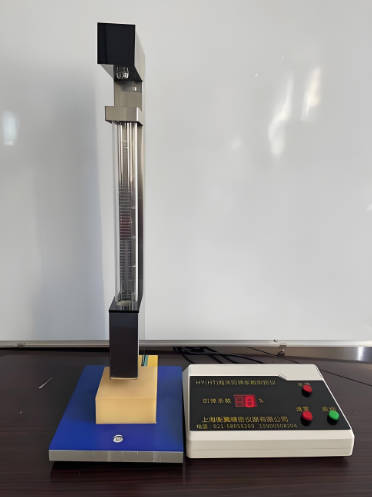
Product Samples We Regularly Subject to Foaming Coefficient Testing
The Ross‑Miles foam columns, dynamic foam generators, blender‑type foam testers and thermostatted baths in our facility accept a vast range of liquid formulations and a few powdered products. The following categories represent the most frequently tested items:
- Surfactant solutions and industrial cleaners – anionic, nonionic, cationic and amphoteric surfactants, alkaline degreasers, CIP cleaners and high‑pressure washer detergents
- Fire‑fighting foam concentrates – AFFF, AR‑AFFF, fluorine‑free foams, protein and fluoroprotein concentrates, wetting agents and Class A foam solutions
- Lubricating oils and hydraulic fluids – engine oils, turbine oils, gear oils, hydraulic oils and compressor fluids where air‑release and foaming tendency are critical for lubrication performance
- Polyurethane and cellular plastic components – polyol and isocyanate blends, silicone surfactants for rigid and flexible foams, and reactive mixtures for free‑rise density determination
- Personal‑care and cosmetic formulations – shampoos, body washes, bubble‑bath bases, shaving creams, toothpastes and facial cleansers
- Food and beverage ingredients – whipping agents, protein isolates, emulsifiers for dairy foams and beer‑foam stabilisers
- Construction and mining chemicals – foaming agents for cellular concrete, drilling‑foam additives, dust‑suppression foamers and tunnelling surfactants
Foaming Coefficient of Surfactants and Industrial Cleaners – Ross‑Miles Test According to ASTM D1173 and ISO 696
- Determination of the foaming coefficient by the Ross‑Miles pour‑test method according to ASTM D1173 and ISO 696: a defined volume of the test solution is allowed to fall from a standardised pipette into a column containing the same solution at a controlled temperature, typically 25 °C or 50 °C. The height of the foam column in millimetres is recorded immediately after the pouring ceases and again after a specified time, usually 5 minutes. The initial foam height represents the foaming power, while the ratio of the foam height after 5 minutes to the initial height – often expressed as a percentage – provides the foam‑stability coefficient. This foaming coefficient testing service yields the objective, repeatable data that surfactant manufacturers use to benchmark their products against competitors and to generate the foam‑performance graphs published in product data sheets.
- Blender‑foam test for dynamic foaming coefficient according to ASTM D3519 and internal procedures: the test liquid is agitated at a controlled speed in a baffled blender jar, and the foam is immediately transferred to a graduated cylinder. The foam volume and the drainage of liquid from the foam are measured over time. The dynamic foaming coefficient – the volume of foam produced per unit energy input – is calculated and is highly relevant for machine‑dishwashing detergents and high‑pressure spray cleaners.
- Influence of water hardness and electrolyte concentration on the foaming coefficient: the foaming coefficient is determined in deionised water and in water of standardised hardness, and the effect of added sodium chloride, sodium sulfate or calcium ions is measured. The test reveals whether a surfactant is hard‑water tolerant and whether the foaming performance will be maintained in the varied water qualities encountered across global markets.
- Foaming coefficient at elevated temperatures and in the presence of soil loads: the test is repeated at 60 °C, 80 °C and with the addition of standardised sebum, particulate carbon or food‑simulant soils. The data inform the formulator of a global cleaning brand whether the foam will persist or collapse during hot‑cycle industrial washing.
- Ross‑Miles foam‑height profiling for surfactant classification: a concentration series from 0.01 % to 1.0 % active matter is tested, and the foam height versus concentration curve is constructed. The critical micelle concentration for optimum foaming and the maximum achievable foam height are reported, directly supporting the selection of surfactants for specific market segments.
Foaming Coefficient and Foam Stability of Fire‑Fighting Foams – Testing According to ISO 7203, EN 1568 and NFPA 11
- Foam expansion ratio and 25 % drainage time of fire‑fighting foam concentrates according to ISO 7203 and EN 1568: the foam concentrate is proportioned with fresh water and seawater at the induction rates specified by the manufacturer, and the foam is generated through a standardised nozzle. The foam expansion ratio – the ratio of the foam volume to the volume of the foam solution – and the time for 25 % of the liquid to drain from the foam are measured. This foaming coefficient testing service provides the expansion‑ratio data that international fire‑equipment manufacturers need to certify their foam concentrates to the International Maritime Organization and to the approval bodies of major flag states.
- Low‑expansion, medium‑expansion and high‑expansion foam characterisation: the expansion ratio is measured for each foam type, and the foam is classified accordingly. The test includes the determination of the foam density and the bubble‑size distribution by optical imaging, which correlate with the burn‑back resistance and the flow characteristics of the finished foam.
- Film‑forming and sealing performance correlated with the foaming coefficient: the aqueous film‑forming property of an AFFF concentrate is assessed on a cyclohexane surface, and the seal‑ability test is performed. The foaming coefficient is reported together with the film‑formation speed, giving a complete picture of the foam's fire‑extinguishing capability.
- Foaming coefficient after accelerated ageing and freeze‑thaw cycling: the foam concentrate is subjected to a defined number of freeze‑thaw cycles or stored at elevated temperature, and the foaming coefficient is remeasured. The retention of the expansion ratio is a mandatory quality‑control requirement for foam concentrates stored in unheated warehouses in cold‑climate regions.
- Seawater and alcohol‑resistant foam testing: the foaming coefficient is determined with synthetic seawater and with the concentrate diluted in an alcohol‑water mixture to simulate the conditions found in polar‑solvent fires, providing the data that fuel‑terminal operators and airport fire services require for risk assessment.
Foaming Coefficient of Lubricants, Hydraulic Fluids and Oils – ASTM D892 and ISO 6247
- Foaming characteristics of lubricating oils according to ASTM D892 (Sequence I, II and III) and ISO 6247: oil is placed in a graduated cylinder, heated to 24 °C, 93.5 °C and then back to 24 °C after cooling, and air is blown through a diffuser at a constant rate for 5 minutes. The foam volume immediately after the air flow stops – the foaming tendency – and the foam volume after 10 minutes of settling – the foam stability – are recorded. This foaming coefficient testing service provides the critical data used by global lubricant blenders to ensure that their engine and turbine oils will not cause erratic oil‑pressure readings, overflow from reservoirs or insufficient lubrication in high‑speed machinery.
- Air‑release and foam‑collapse rate according to ASTM D3427 and ISO 9120: compressed air is entrained into the oil, and the time for the air content to reduce to 0.2 % by volume is measured. The air‑release value, in conjunction with the foaming coefficient, determines whether the oil is suitable for hydraulic systems with short residence times.
- Foaming coefficient of water‑glycol and synthetic fire‑resistant hydraulic fluids: the test is adapted for high‑viscosity and water‑containing fluids, and the foaming tendency is measured at the maximum operating temperature specified by the pump manufacturer. The result is used to specify the correct reservoir size and the need for anti‑foam additives.
- Anti‑foam additive depletion and long‑term foaming performance: the foaming tendency is measured on fresh oil and on oil that has been mechanically sheared or oxidised in a laboratory ageing test. The depletion rate of the silicone or non‑silicone anti‑foam additive is reported, guiding the oil‑drain interval recommendations for extended‑service engine oils.
Foaming Coefficient of Polyurethane Systems and Other Reactive Cellular Materials – Free‑Rise Density and Cream Time
- Free‑rise foaming coefficient of rigid and flexible polyurethane foam formulations according to internal procedures based on ASTM D7487: a known mass of the mixed polyol‑isocyanate system is poured into a container, and the foam is allowed to rise freely. The foam height, the cream time, the gel time and the rise time are recorded, and the free‑rise density is calculated. The foaming coefficient is expressed as the volume of foam produced per unit mass of the liquid mixture, providing the fundamental expansion data that polyurethane system houses use to calibrate their metering machines and to verify the reactivity of incoming raw materials.
- Foaming coefficient of silicone surfactants for rigid and flexible slabstock foams: a model formulation containing the surfactant is foamed, and the foam height in a graduated cup is measured. The relative foaming efficiency of different surfactant types and concentrations is ranked, and the surfactant that gives the highest expansion with the finest cell structure is identified.
- Effect of blowing‑agent type and water content on the foaming coefficient: the free‑rise density and the foam‑height profile are compared for formulations blown with cyclopentane, HFOs, methyl formate and water. The results guide the reformulation of foam systems to meet the evolving requirements of the Montreal Protocol and the Kigali Amendment on HFC phase‑down.
- Cellular concrete and mining‑foam characterisation: a pre‑formed foam is generated by passing a surfactant solution through a foam generator, and the foam density and the half‑life are measured. The data are used to select foaming agents for lightweight concrete blocks, for soil‑conditioning foams in tunnel‑boring machines and for dust‑control foams in open‑pit mines.
Foaming Coefficient for Personal‑Care, Cosmetic and Food‑Grade Products – Consumer‑Relevant Performance Metrics
- Foam volume and foam stability of shampoos and body washes by the cylinder‑shake method according to ASTM D1173 (modified) and internal protocols: a diluted solution of the product is shaken in a stoppered cylinder, and the foam volume is measured. The foam‑drainage time and the foam‑height after a defined rest period are reported, giving a rapid, comparative measure of the lathering performance expected by the consumer.
- Foaming coefficient of toothpastes and oral‑care formulations: a slurry of the toothpaste is mixed in a mechanical foaming device, and the foam volume and the bubble‑size uniformity are measured. The test supports claims of “rich lather” and “long‑lasting foam” for global oral‑care brands.
- Foaming and overrun of whipping agents, protein foams and dairy toppings: the liquid is whipped in a standardised mixer, and the overrun – the increase in volume relative to the initial liquid volume – is measured. The foam firmness and the syneresis over time are also reported, providing the functionality data needed for the formulation of instant desserts, mousses and coffee‑shop toppings.
- Sensory foam profiling for consumer preference: a trained panel evaluates the foam creaminess, the bubble density and the foam persistence of several prototype formulations, and the data are correlated with the instrumental foaming coefficient to guide product optimisation for different cultural preferences.
Report Acceptance and Global Regulatory Compliance
All measurements performed within our foaming coefficient testing service are executed under the fully accredited scope of our ISO/IEC 17025 quality management system. Each test report that carries the ILAC mark is therefore automatically recognised by regulatory authorities, notified bodies, customs offices and supply‑chain partners in all major economies. For surfactant producers, fire‑fighting foam manufacturers, lubricant blenders, polyurethane system houses and personal‑care formulators anywhere in the world, the report constitutes legally robust, internationally accepted evidence that the product meets the foaming‑performance requirements of the applicable ISO, ASTM, EN, NFPA and customer specifications. The documentation can be directly used to support CE marking, IMO type‑approval, FDA pre‑market notification, the issue of inspection certificates according to EN 10204 or equivalent national standards, and the resolution of commercial and technical disputes concerning the foam‑generation behaviour of liquid products.




