Fluorescence Kinetic Detection Using an Enzyme Analyzer – Accredited Real‑Time Enzyme Activity and Kinetic Profiling for Global Markets
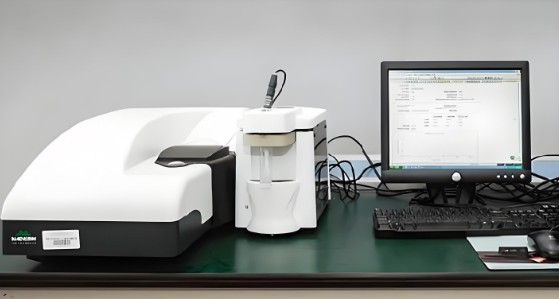
Our internationally accredited laboratory delivers a specialist fluorescence kinetic detection using an enzyme analyzer service that provides pharmaceutical developers, clinical diagnostics manufacturers, food‑safety testing laboratories, environmental monitoring agencies and academic research groups worldwide with the precise, real‑time enzymatic activity data they need to characterise enzyme kinetics, screen inhibitor libraries, quantify clinically relevant biomarkers and validate the performance of enzyme‑based analytical reagents. Every measurement is performed under the rigorous framework of ISO/IEC 17025, and each report bearing the ILAC mark is unconditionally accepted by regulatory authorities, notified bodies and supply‑chain partners in all major economies. The fluorescence kinetic detection using an enzyme analyzer platform exploits the inherent sensitivity and the wide dynamic range of fluorescence spectroscopy, employing monochromator‑ and filter‑based multimode microplate readers, controlled‑temperature incubation, and programmable reagent‑injection capabilities to continuously monitor the appearance or the disappearance of the fluorescent signal that is generated by the enzymatic conversion of a fluorogenic substrate, the reduction of the NAD(P)H cofactor or the modulation of a fluorescent sensor. By extracting the initial reaction velocity, the steady‑state kinetic parameters, the half‑maximal inhibitory concentration and the activation or the inhibition constants, we provide the legally robust, defensible enzymatic data that underpin drug‑discovery lead‑optimisation, clinical‑assay validation and the batch‑release certification of enzyme‑linked diagnostic products.

Product Samples We Regularly Subject to Fluorescence Kinetic Detection Using an Enzyme Analyzer
The liquid‑handling workstations, the fluorescence microplate readers equipped with the temperature control and the injector modules, the absorbance and the fluorescence‑polarisation accessories, and the kinetic‑data‑analysis software in our facility accommodate a broad variety of sample types and enzymatic systems. The following categories represent the most frequently tested items:
- Purified enzyme preparations and the recombinant protein batches – kinases, proteases, phosphatases, oxidoreductases, transferases, hydrolases, lyases, isomerases and ligases that are expressed in the bacterial, the yeast, the insect‑cell or the mammalian expression systems, submitted for the determination of the specific activity, the Michaelis–Menten constants and the turnover number
- Enzyme‑inhibitor and the enzyme‑activator compound libraries – the small‑molecule screening collections, the natural‑product extracts, the peptide libraries and the antibody‑derived fragments that are being evaluated for the lead‑discovery and the structure–activity‑relationship programmes
- Cell lysates, tissue homogenates and the sub‑cellular fractions – the crude or the partially purified extracts from the cultured cells, the animal tissues, the plant leaves and the microbial fermentations, where the activity of a target enzyme is measured as a biomarker of the metabolic state, the disease progression or the environmental stress
- Serum, plasma and the other clinical biofluids – the samples from the human and the veterinary clinical studies, analysed for the activity of the diagnostic marker enzymes such as the alanine aminotransferase, the aspartate aminotransferase, the creatine kinase, the lactate dehydrogenase and the matrix metalloproteinases
- Food, beverage and the agricultural commodity extracts – the samples prepared from the dairy products, the fruit juices, the cereals and the fermentation broths, tested for the activity of the endogenous enzymes that affect the product quality, the shelf‑life and the nutritional value
- Diagnostic‑enzyme reagents and the quality‑control materials – the commercial enzyme‑linked immunosorbent assay conjugates, the clinical‑chemistry enzyme reagents and the reference‑standard enzyme preparations, evaluated for the batch‑to‑batch consistency and the stability under the accelerated‑ageing conditions
Kinetic Enzyme Activity, Michaelis–Menten Analysis and Inhibitor Screening – Core Applications of the Fluorescence Kinetic Detection Using an Enzyme Analyzer
- Determination of the steady‑state kinetic parameters (Km, Vmax, kcat and kcat/Km) by the real‑time fluorescence monitoring according to the internal validated protocols and the principles of the IUPAC–IUBMB recommendations on enzyme kinetics: the enzyme is incubated with a concentration series of the fluorogenic substrate – such as the 7‑amino‑4‑methylcoumarin‑conjugated peptides for the proteases, the fluorescein‑labelled adenosine triphosphate analogues for the kinases, the resorufin‑β‑D‑galactopyranoside for the β‑galactosidases, or the Amplex Red reagent for the oxidases and the peroxidases – and the increase or the decrease in the fluorescence intensity is recorded at the appropriate excitation and the emission wavelengths at the defined time intervals. The initial velocity at each substrate concentration is calculated from the linear portion of the progress curve, and the Michaelis–Menten or the Hill equation is fitted to the velocity‑versus‑substrate‑concentration data, yielding the kinetic constants. This fluorescence kinetic detection using an enzyme analyzer provides the fundamental enzymology data that the protein engineer uses to benchmark the catalytic efficiency of the wild‑type and the mutant enzyme constructs.
- High‑throughput screening of the enzyme inhibitors and the determination of the IC50 and the inhibition mechanism: the enzyme is pre‑incubated with a concentration series of the test compound, and the reaction is initiated by the addition of the fluorogenic substrate at a concentration close to the Km value. The residual enzyme activity at each inhibitor concentration is calculated from the initial velocity, and the dose‑response curve is fitted to a four‑parameter logistic model to determine the IC50 value. For the detailed mechanistic characterisation, the full‑matrix kinetics – the initial velocity measured at several substrate and the inhibitor concentrations – is performed, and the data are globally fitted to the competitive, the uncompetitive, the non‑competitive and the mixed‑inhibition models, identifying the mode of the inhibition and the inhibition constant Ki. This fluorescence kinetic detection using an enzyme analyzer is the primary screening platform for the pharmaceutical lead‑discovery and the agrochemical‑development programmes.
- Determination of the enzyme activation and the effect of the allosteric modulators: the activity of the enzyme is measured in the presence of the putative activator or the allosteric effector, and the concentration‑dependent increase in the initial velocity, the shift in the Km or the Vmax, and the cooperativity coefficient are reported, providing the mechanistic data that support the development of the therapeutic enzyme‑replacement or the metabolic‑modulator strategies.
- Time‑dependent, slow‑binding and the irreversible inhibition kinetics: the enzyme is incubated with the inhibitor for a defined period, and the residual activity is measured at the intervals by the addition of the fluorogenic substrate. The progress curves are fitted to the single‑exponential decay model or the Morrison–Walsh equation, and the first‑order inactivation rate constant and the partition ratio are reported, quantifying the potency of the covalent and the mechanism‑based inhibitors that are increasingly pursued in the targeted‑cancer and the anti‑infective drug discovery.
Fluorescence Kinetic Detection Using an Enzyme Analyzer for the Clinical Chemistry, the Biomarker Assays and the Food‑Safety Testing
- Quantitative determination of the clinically relevant metabolites and the biomarkers by the coupled‑enzyme fluorescence assays: the target analyte – such as the glucose, the cholesterol, the uric acid, the lactate, the ammonia, the ethanol, the adenosine triphosphate or the glutamate – is linked to a specific oxidase, a dehydrogenase or a kinase that generates or consumes the NADH, the NADPH or the hydrogen peroxide, and the fluorescence of the reduced cofactor or the resorufin product is kinetically monitored. The concentration of the analyte is interpolated from a standard curve that is run under the identical conditions, and the assay sensitivity, the linearity and the precision are validated according to the FDA and the EMA bioanalytical‑method‑validation guidelines. This fluorescence kinetic detection using an enzyme analyzer is the basis of many clinical‑chemistry and the point‑of‑care diagnostic panels.
- Enzyme‑activity‑based biomarker assays for the disease diagnosis and the therapeutic monitoring: the activity of the diagnostic marker enzymes – the alanine aminotransferase, the aspartate aminotransferase, the alkaline phosphatase, the γ‑glutamyl transferase, the creatine kinase and the lactate dehydrogenase – is measured in the patient serum by the kinetic fluorescence or the coupled absorbance‑fluorescence method, and the results are reported in the international units per litre, supporting the clinical decision‑making in the hepatology, the cardiology and the oncology.
- Detection of the enzyme inhibitors and the toxins in the food and the environmental samples: the sample extract is incubated with a target enzyme – such as the acetylcholinesterase for the organophosphate and the carbamate pesticides, the β‑lactamase for the beta‑lactam antibiotics, or the protein‑phosphatase for the microcystin‑LR cyanotoxin – and the inhibition of the enzyme activity is measured by the fluorescence kinetic method, providing the rapid, cost‑effective screening data for the regulatory compliance and the food‑safety surveillance.
- Real‑time polymerase‑chain‑reaction and the loop‑mediated isothermal amplification detection using the fluorescent‑dye‑based enzyme analyzers: the nucleic‑acid amplification reaction is performed in the presence of a fluorescent intercalating dye or a sequence‑specific fluorescent probe, and the fluorescence signal is monitored at each amplification cycle or at the real‑time intervals on the microplate reader, enabling the quantitative pathogen detection and the gene‑expression analysis without the need for a dedicated real‑time PCR instrument.
Report Acceptance and Global Regulatory Compliance
All measurements performed within our fluorescence kinetic detection using an enzyme analyzer programme are executed under the fully accredited scope of our ISO/IEC 17025 quality management system. Each test report that carries the ILAC mark is therefore automatically recognised by regulatory authorities, notified bodies, customs offices and supply‑chain partners in all major economies. For pharmaceutical developers, clinical‑diagnostics manufacturers, food‑safety testing laboratories and academic research groups anywhere in the world, the report constitutes legally robust, internationally accepted evidence that the enzyme activity, the kinetic constants, the inhibitor potency, the metabolite concentration and the diagnostic‑enzyme parameters have been determined in accordance with the applicable ICH, FDA, EMA and customer‑specified methods. The documentation can be directly used to support the investigational‑new‑drug application, the CE marking of the in‑vitro diagnostic device, the product registration with the national competent authorities, the issue of inspection certificates according to EN 10204 or equivalent national standards, and the resolution of commercial and technical disputes concerning the enzymatic performance and the quantitative accuracy of any enzyme‑based analytical system.