
Fluid Loss Project Experiment – Accredited High-Temperature, High-Pressure Filtration Control Evaluation for Global Markets
Our internationally accredited laboratory delivers a specialist fluid loss project experiment service that provides oilfield service companies, drilling-fluid formulators, cementing contractors, well-construction engineers and research consortia worldwide with the independent, traceable data they need to quantify the filtration behaviour, wall-cake-building characteristics and fluid-loss-control performance of their drilling, completion, workover and cementing fluids under precisely simulated downhole conditions. Every test is conducted within the rigorous framework of ISO/IEC 17025, and each report bearing the ILAC mark is unconditionally accepted by regulatory authorities, notified bodies and supply-chain partners in all major economies. The fluid loss project experiment subjects a fluid sample to a defined differential pressure across a standardised filter medium at a controlled temperature, measuring the volume of filtrate expelled as a function of time, the thickness and the permeability of the deposited filter cake, and the ability of the fluid to maintain its rheological stability and its solids-suspension capacity after the thermal and hydraulic stress. By employing API-standard low-temperature low-pressure cells, high-temperature high-pressure static and dynamic filtration rigs, permeability-plugging testers and particle-plugging apparatus, our platform generates the legally robust, defensible fluid-loss data that underpin wellbore-stability assurance, reservoir-damage minimisation, regulatory-permit compliance and the global qualification of drilling-fluid additives and cement slurries.
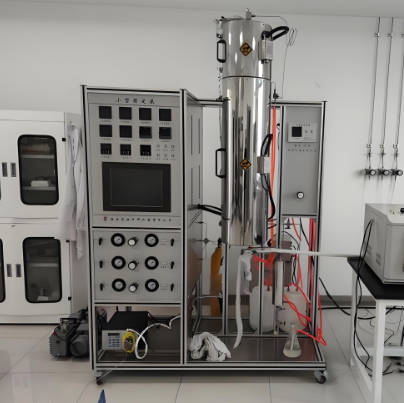
Product Samples We Regularly Subject to Fluid Loss Project Experiments
The filtration cells, heating jackets, differential-pressure transducers and precision balances in our facility accommodate a wide variety of oilfield fluids and their components. The following categories represent the materials most frequently evaluated through our fluid loss project experiment programme:
- Water-based drilling fluids – bentonite-polymer systems, KCl-polymer fluids, silicate-based muds, formate brines, and high-performance water-based fluids for reactive shale, deepwater and high-temperature wells
- Oil-based and synthetic-based drilling fluids – invert-emulsion fluids formulated with diesel, mineral oil, linear alpha-olefins, internal olefins and ester base fluids, including the emulsifier and organoclay packages
- Completion and workover fluids – clear brines, viscosified brines, solids-free and low-solids fluids designed to minimise formation damage during the completion and intervention operations
- Drill-in fluids and reservoir-drill-in fluids – specially formulated fluids that deposit an acid-soluble or enzyme-degradable filter cake over the productive zone, facilitating the subsequent clean-up and the achievement of the target production rate
- Cement slurries and spacer fluids – API Class G, H and specialty cement formulations with fluid-loss-control additives, latex modifiers and lightweight extenders for primary cementing and remedial squeeze operations
- Fracturing fluids and gravel-pack carrier fluids – cross-linked and linear guar and derivatised-polymer gels, viscoelastic surfactant fluids and slickwater systems where the fluid-loss behaviour governs the fracture geometry and the proppant placement
- Lost-circulation-material pills and bridging-agent suspensions – particulate, fibrous and flaked lost-circulation materials, alone or in combination, evaluated for their ability to seal a simulated fracture or a permeable formation face
- Laboratory-prepared model fluids and single-additive solutions – fluids formulated for research and development purposes to isolate the effect of a new polymer, a nanoparticle additive or a surfactant on the filtration performance
Static Fluid Loss Experiment – Low-Temperature Low-Pressure and High-Temperature High-Pressure Filtration According to API 13B-1, API 13B-2 and ISO 10416
- Low-temperature low-pressure fluid loss test according to API 13B-1 (Recommended Practice for Field Testing Water-Based Drilling Fluids) and API 13B-2 (Oil-Based Drilling Fluids): the fluid is placed in a standardised filtration cell, and a differential pressure of 0.69 MPa (100 psi) is applied across a hardened filter paper at room temperature. The volume of filtrate collected after 30 minutes is reported in millilitres, and the filter-cake thickness and the qualitative description – smooth, spongy, cracked, firm – are recorded. This fluid loss project experiment provides the routine quality-control metric for the drilling-fluid at the rig site, and it is the first indicator of the fluid's ability to deposit a low-permeability barrier on the wellbore wall.
- High-temperature high-pressure static fluid loss test according to API 13B-1 and ISO 10416 (Petroleum and natural gas industries – Drilling fluids – Laboratory testing): the fluid is heated to the specified test temperature – typically 100 °C, 150 °C or 200 °C – in a pressure-tight cell, and a differential pressure of 3.45 MPa (500 psi) is applied. The filtrate volume collected over 30 minutes is doubled to report the API HTHP fluid loss in millilitres, and the filter-cake quality and the thickness are assessed. The experiment simulates the downhole conditions in a deep, hot wellbore and is the definitive test for the thermal stability of the fluid-loss-control polymer or the emulsifier package.
- Spurt-loss and the wall-cake-permeability calculation from the static filtration curve: the filtrate volume is recorded at short time intervals from the moment the pressure is applied, and the V-versus-√t plot is constructed. The spurt-loss volume – the instantaneous filtrate expelled before the cake begins to form – and the cake-permeability coefficient are calculated from the slope of the linear portion of the curve, providing the quantitative parameters that the reservoir-drill-in-fluid designer uses to predict the depth of the filtrate invasion into the productive zone.
- Static ageing and fluid-loss retention at the bottomhole temperature: the fluid is aged in a stainless‑steel ageing cell at the target temperature for 16 hours or 48 hours under a modest pressure to prevent boiling, and the HTHP fluid loss and the rheological properties are remeasured. This fluid loss project experiment reveals the thermal degradation of the fluid-loss additive, the deactivation of the clay-dispersion inhibitor or the hydrolysis of the ester base oil, and it determines the maximum usable temperature of the fluid formulation.
- Permeability-plugging test and particle‑plugging apparatus experiment for bridging-agent optimisation according to the methods of the drilling‑fluids industry and the API recommended practices: a ceramic disc or a slotted‑metal disc of a known pore‑size or slot‑width is used as the filter medium, and the ability of the sized calcium‑carbonate, salt or fibre particles to form a seal and to reduce the fluid loss to near‑zero is evaluated. The spurt loss, the total fluid loss after 30 minutes and the filtrate‑turbidity are reported, providing the data that the drilling‑fluids engineer uses to design the bridging‑agent blend for the specific reservoir pore‑throat size distribution.
Dynamic Fluid Loss and Shear‑History‑Dependent Filtration Experiments – Simulating the Circulating and the Drill‑String Environment
- Dynamic high‑temperature high‑pressure fluid loss test with a rotating‑shaft or a magnetic‑stirrer attachment: the filter medium is subjected to a controlled shear stress or a defined rotation speed during the filtration, simulating the erosion of the filter cake by the flowing drilling fluid in the annulus. The dynamic fluid loss rate, the equilibrium cake thickness and the time to reach the steady‑state filtration are reported. This fluid loss project experiment provides the critical data that the hydraulics engineer uses to predict the equivalent circulating density and the risk of differential sticking in a highly permeable or a depleted zone.
- Filtration after controlled shear history in a bob‑and‑cup or a concentric‑cylinder rheometer: the fluid is sheared at a defined rate and temperature for a period that simulates the transit time from the mud‑pit to the bottom of the hole and back, and the static HTHP fluid loss is then measured. The experiment identifies the shear‑degradation of the fluid‑loss‑control polymer and the change in the particle‑size distribution of the solids, which directly affect the cake‑building efficiency.
- Core‑flood and formation‑damage fluid‑loss experiment on a natural or a synthetic reservoir‑rock core: the drilling or the completion fluid is circulated across the face of a brine‑saturated core plug at a representative overbalance pressure and shear rate, and the filtrate volume and the return‑permeability after the mud‑off and the clean‑up are measured. This fluid loss project experiment quantifies the reduction in the oil or the gas permeability caused by the filtrate invasion, the solids entrainment and the emulsion blocking, and it directly supports the selection of the least‑damaging reservoir‑drill‑in fluid for the development well.
- Slot‑sealing and fracture‑sealing fluid‑loss experiment with a tapered‑slot or a fracture‑simulation cell: the lost‑circulation‑material pill or the cement‑slurry is injected into a cell that contains a simulated fracture of a known width and length, and the pressure at which a seal is formed, the total fluid loss before the seal, and the maximum‑pressure that the seal can withstand before failing are reported. This fluid loss project experiment provides the design basis for the lost‑circulation treatment of a naturally fractured carbonate reservoir or an induced‑fracture zone in a tight‑gas sand.
Report Acceptance and Global Regulatory Compliance
All measurements performed within our fluid loss project experiment programme are executed under the fully accredited scope of our ISO/IEC 17025 quality management system. Each test report that carries the ILAC mark is therefore automatically recognised by regulatory authorities, notified bodies, customs offices and supply‑chain partners in all major economies. For drilling‑fluid manufacturers, oilfield‑chemical suppliers, cementing‑service companies and well‑construction operators anywhere in the world, the report constitutes legally robust, internationally accepted evidence that the filtration behaviour, the wall‑cake characteristics and the fluid‑loss‑control performance of the fluid have been determined in accordance with the applicable API, ISO and customer‑specified methods. The documentation can be directly used to support well‑construction permits, the qualification of new fluid formulations for a tender, the issue of inspection certificates according to EN 10204 or equivalent national standards, and the resolution of commercial and technical disputes concerning the filtration properties and the formation‑damage potential of any oilfield fluid.




