
Flat Compression Strength Testing Service – Accredited Compressive Resistance Evaluation for Global Markets
Our internationally accredited laboratory delivers a dedicated flat compression strength test service that provides packaging manufacturers, insulation producers, composite panel fabricators, furniture builders and construction‑product suppliers worldwide with the independent, traceable data they need to verify the load‑bearing capacity and structural integrity of their materials under perpendicular compressive forces. Every measurement is performed within the rigorous framework of ISO/IEC 17025, and each report bearing the ILAC mark is unconditionally accepted by regulatory authorities, notified bodies and supply‑chain partners in all major economies. The flat compression strength test quantifies the maximum compressive stress a specimen can withstand before crushing, the deformation behaviour under a defined load, and the collapse mechanism, providing the critical design parameters that engineers use to specify the correct material grade for stacking strength, load distribution and long‑term dimensional stability.
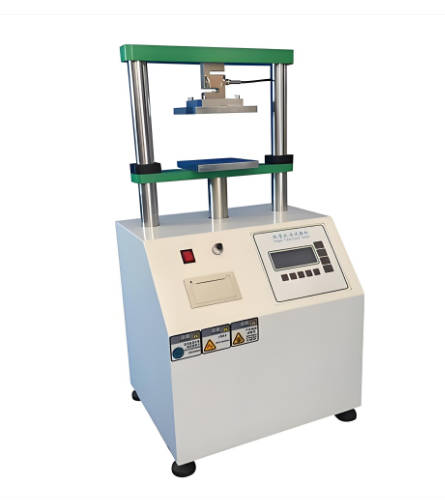
Product Samples We Regularly Subject to Flat Compression Strength Tests
The compression platens, extensometers and environmental chambers in our facility accommodate flat sheet materials, core samples and complete sandwich panels. The following categories represent the items most frequently evaluated through our flat compression strength test programme:
- Corrugated board, solid fibreboard and paperboard – single‑wall, double‑wall and triple‑wall corrugated sheets, solid bleached and unbleached board, and laminated paperboard used in transport packaging and displays
- Plastic films, sheets and rigid cellular plastics – polyethylene, polypropylene, polycarbonate and acrylic sheets, expanded polystyrene, extruded polystyrene and rigid polyurethane foam boards for thermal insulation and cushioning
- Thermal insulation products – mineral wool, cellular glass, phenolic foam and wood‑wool panels for building envelopes, pipe insulation and cold‑storage applications
- Wood‑based panels and laminate flooring – particleboard, oriented strand board, medium‑density fibreboard, plywood and high‑pressure laminate sheets where the surface compressive strength determines the resistance to imprint and point loads
- Metallic and composite sandwich structures – aluminium and steel honeycomb cores, polymeric foam cores and balsa‑wood cores bonded to metallic or composite face sheets for aerospace, marine and transportation panels
- Rigid plastic and composite laminates – glass‑fibre‑reinforced polyester, epoxy and phenolic panels used in electrical insulation, chemical‑resistant linings and structural enclosures
Flat Compression Strength of Corrugated Board and Paperboard – TAPPI T 825, ISO 3035 and Related Standards
- Determination of the flat crush resistance of corrugated fibreboard according to ISO 3035 and TAPPI T 825: a circular specimen of the board is placed between two rigid, parallel platens and compressed at a constant speed until the flutes collapse. The maximum force sustained is divided by the specimen area to give the flat crush resistance in kilopascals. This flat compression strength test measures the ability of the corrugated medium to support the liner facings and is the primary quality‑control parameter for ensuring the stacking strength of finished boxes.
- Flat compression of solid fibreboard and paperboard according to ISO 13820 and internal procedures: a rectangular specimen is compressed perpendicular to its plane, and the compressive strength, the modulus of elasticity and the deformation at the yield point are reported. The test evaluates the contribution of the board structure to the top‑load resistance of rigid cartons and the edge‑crush performance.
- Influence of humidity and temperature on the flat compression strength of paper‑based materials: the specimen is conditioned at a defined relative humidity – typically 50 %, 65 % or 90 % – and tested immediately, or the test is performed at an elevated temperature to simulate the warehouse environment. The reduction in the flat crush resistance relative to the standard‑condition value is reported, providing the data that the packaging engineer uses to adjust the safety factor for tropical or cold‑chain supply chains.
- Flat crush after repeated compression cycling for returnable packaging: the specimen is subjected to a number of loading and unloading cycles up to a defined percentage of its initial flat crush resistance, and the loss of the strength and the permanent deformation are measured, quantifying the fatigue life of the reusable container.
Flat Compression Strength of Plastic Foams, Insulation Boards and Cellular Materials – ISO 844, ASTM D1621 and EN 826
- Determination of the compressive stress at a defined deformation and the compressive strength of rigid cellular plastics according to ISO 844 and ASTM D1621: a square or circular specimen is compressed between two parallel platens at a constant crosshead speed. The compressive stress at 10 % relative deformation and the maximum compressive strength before the cell collapse are reported in megapascals. This flat compression strength test is the industry‑standard method for classifying rigid polyurethane, expanded polystyrene and extruded polystyrene foam boards used in load‑bearing thermal insulation.
- Compressive behaviour of thermal insulation products for building applications according to EN 826: the specimen is compressed at a constant speed, and the compressive stress at 10 % strain and the compressive modulus are determined. The test provides the declared values for the CE marking of insulation boards under the Construction Products Regulation and supports the specification of the material for floors, flat roofs and foundation protection.
- Flat compression of cellular glass and mineral wool panels: the specimen is compressed to failure, and the stress‑strain curve, the plateau stress and the densification strain are reported. The experiment characterises the energy‑absorption capacity and the load‑distributing function of the insulation layer in a single‑ply roofing system or an industrial tank base.
- Effect of moisture, freeze‑thaw cycling and thermal ageing on the flat compression strength of foam materials: the specimen is conditioned in water, subjected to repeated freeze‑thaw cycles or aged at an elevated temperature, and the residual compressive strength is measured and compared with the initial value. This flat compression strength test verifies the long‑term durability of the insulation and the cushioning material in the service environment.
Flat Compression Strength of Wood‑Based Panels and Laminate Flooring – EN 319 and ASTM D3501
- Determination of the flat compression strength of particleboard, oriented strand board and fibreboard according to the principles of EN 319 and ASTM D3501: a small specimen is compressed perpendicular to the board surface, and the maximum compressive stress and the deformation behaviour are measured. The test evaluates the resistance of the panel to the indentation and the crushing under concentrated loads, such as the legs of furniture or the heels of footwear.
- Flat compression of high‑pressure laminate and compact laminate sheets: the compressive yield strength and the ultimate compressive strength are reported, providing the data that the interior‑designer and the furniture‑manufacturer use to specify the correct grade for worktops, laboratory benches and partition panels.
- Compressive strength of wood‑plastic composites and fibre‑reinforced cement boards: the specimen is compressed in the plane and perpendicular to the plane, and the directional strength ratio is calculated. This flat compression strength test supports the structural design of cladding, decking and sub‑floor panels.
Flat Compression Strength of Metallic and Composite Sandwich Cores – ASTM C365 and ISO 844‑Based Adaptations
- Flatwise compressive properties of sandwich core materials according to ASTM C365/C365M: a core specimen is bonded between two loading blocks or tested directly between platens, and the compressive strength, the compressive modulus and the stress‑strain curve are reported. This flat compression strength test is the definitive method for the qualification of aluminium honeycomb, aramid‑fibre honeycomb and polymeric foam cores for aircraft floor panels, train‑carriage walls and marine bulkheads.
- Compressive characterisation of the full sandwich panel including the face sheets: the complete panel is compressed flatwise, and the failure mode – core crushing, face‑sheet wrinkling or debonding – is identified. The test validates the structural design of the lightweight panel and the adequacy of the adhesive bond between the core and the faces.
- Flat compression after impact damage and environmental exposure: the sandwich specimen is subjected to a controlled impact or to a hot‑wet conditioning cycle, and the residual flatwise compressive strength is measured. This flat compression strength test quantifies the damage tolerance and the durability of the sandwich structure for the aerospace and the marine certification.
Report Acceptance and Global Regulatory Compliance
All measurements performed within our flat compression strength test service are executed under the fully accredited scope of our ISO/IEC 17025 quality management system. Each test report that carries the ILAC mark is therefore automatically recognised by regulatory authorities, notified bodies, customs offices and supply‑chain partners in all major economies. For packaging manufacturers, insulation‑board producers, composite‑panel fabricators and furniture‑component suppliers anywhere in the world, the report constitutes legally robust, internationally accepted evidence that the flat compression resistance and the compressive load‑bearing capacity of the material have been determined in accordance with the applicable ISO, ASTM, EN, TAPPI and customer‑specified methods. The documentation can be directly used to support CE marking, the issue of inspection certificates according to EN 10204 or equivalent national standards, the compilation of technical files for type‑examination, and the resolution of commercial and technical disputes concerning the compressive performance of any flat sheet or panel product.




