
Fire Resistance Test of Safe Box – Accredited Fire Endurance and Impact Evaluation for Global Markets
Our internationally accredited laboratory delivers a specialist fire resistance test of safe box service that enables manufacturers of security storage products, data‑protection cabinets, gun safes and fire‑rated document containers worldwide to independently verify the thermal insulation, structural integrity and post‑fire accessibility of their products under fully controlled furnace conditions. Every test is conducted within the rigorous framework of ISO/IEC 17025, and each report bearing the ILAC mark is unconditionally accepted by regulatory authorities, notified bodies and supply‑chain partners in all major economies. The fire resistance test of safe box subjects the complete unit to a standardized time–temperature curve, replicating the thermal assault of a fully developed building or paper‑record fire, and it measures the internal temperature rise, the humidity ingress, the mechanical deformation and the ability of the safe to survive a subsequent drop or impact without permitting the contents to be damaged or accessed by unauthorized persons. For an exporter of hotel safes seeking the European EN 1047 classification, a manufacturer of data‑protection cabinets certifying to the American UL 72 standard, or a gunsafe producer demonstrating compliance with the stringent requirements of the Swedish NT Fire 017, this service provides the legally robust, defensible data that underpin product certification, insurance approval and global market access.
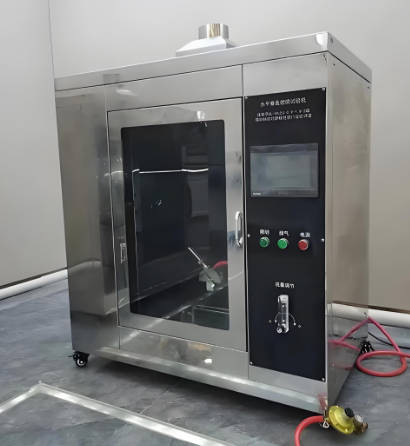
Product Samples We Regularly Subject to Fire Resistance Testing
Our full‑scale furnace and impact‑test rig accommodate safes and cabinets of all sizes and intended uses. The following categories represent the most frequently tested items:
- Fire‑resistant document cabinets and filing cabinets – single‑drawer, multi‑drawer and lateral‑filing cabinets designed to protect paper records from charring and to maintain an internal temperature below the 177 °C paper‑ignition threshold
- Data‑protection safes and media vaults – cabinets specifically engineered for the storage of magnetic tapes, optical discs, hard‑disk drives and solid‑state memory, where the internal temperature must remain below 52 °C and the relative humidity below 85 % during the fire
- Gun safes and residential security containers – cabinets intended for the storage of firearms and ammunition, which must demonstrate a defined fire‑resistance rating and retain their locking function after the exposure
- Hotel and commercial deposit safes – wall‑mounted and floor‑anchored safes that must protect cash, passports and jewellery from both burglary and fire
- Explosives and hazardous‑material storage magazines – reinforced cabinets that must withstand a fire without an internal detonation or a release of the hazardous contents, often tested to the explosive‑chamber requirements in addition to the fire‑resistance test
- Fire‑rated insulated containers and portable boxes – small, carry‑case‑type fire safes for the home‑office and the automotive use
Fire Endurance and Heat Insulation Testing of Safe Boxes According to EN 1047‑1 and UL 72
- Full‑scale furnace test under the standard time–temperature curve according to EN 1047‑1 (Secure storage units – Classification and methods of test for resistance to fire – Part 1: Data cabinets and diskette inserts) and the analogous clauses of UL 72 (Standard for Tests for Fire Resistance of Record Protection Equipment): the complete safe, with its drawers and internal fittings in place, is installed inside a natural‑gas or an oil‑fired furnace, and the temperature of the furnace atmosphere is raised according to the ISO 834 cellulosic‑fire curve, reaching 945 °C at 60 minutes and 1049 °C at 90 minutes. An array of calibrated thermocouples and humidity sensors is placed at the critical locations inside the safe – the centre of the storage volume, the drawer‑interface gaps and the door‑seal region – and the temperature and the relative humidity are continuously recorded. The fire resistance test of safe box verifies that, after the prescribed fire‑exposure duration of 60 minutes, 90 minutes or 120 minutes, the internal temperature at every measurement point remains below the limit value for the claimed class – for example, 52 °C for data‑protection class S 120 DIS according to EN 1047‑1, and below 85 % relative humidity. The test also records any opening of the door, any escape of flames or hot gases, and any structural collapse of the cabinet during the heating and the cooling phases.
- Paper‑char‑resistance and heat‑insulation rating according to the UL 72 Class 350 and Class 150 requirements: paper‑pad sensors are placed inside the safe, and after the fire and the cool‑down, the pads are examined for any charring, browning or embrittlement. The safe earns a Class 350 rating if the internal temperature remains below 177 °C and the paper shows no char, and a Class 150 rating if the temperature remains below 66 °C and the contents are protected against the damage to the magnetic and the optical media.
- Measurement of the door‑seal expansion, the gap‑formation and the hot‑gas bypass during the fire: the relative displacement of the door and the body is monitored by external linear‑variable‑differential transformers, and any transient leakage of the hot combustion gases is captured by an array of external thermocouples and by the video imaging. The test identifies the weak‑seal regions that must be reinforced with the intumescent‑strip or the multi‑rebate geometry.
- Residual mechanical‑function test after the fire exposure: after the safe has cooled to the ambient temperature, the locking mechanism, the bolt‑work, the hinges and the handle are operated, and the force required to open the door is measured. The safe must open smoothly and without any binding or permanent deformation, and the contents must be accessible without the use of a tool. This fire resistance test of safe box confirms that the safe can be opened by the authorized user immediately after the fire, a critical requirement for the emergency retrieval of the essential documents.
Fire Impact and Explosion Hazard Resistance Testing of Safe Boxes According to EN 1047‑2 and NT Fire 017
- Fire‑drop and impact‑survivability test according to EN 1047‑2 (Secure storage units – Classification and methods of test for resistance to fire – Part 2: Data rooms and data container) and the principles of the Scandinavian NT Fire 017 standard: immediately after the completion of the fire‑endurance phase, the safe is hoisted to a height of 9.1 metres (30 feet) and dropped onto a bed of rubble or a reinforced‑concrete impact pad, simulating the collapse of the building structure onto the cabinet. The safe must remain intact, the door must not open, and the internal temperature‑rise limit must not be exceeded during the subsequent post‑drop furnace re‑exposure. This fire resistance test of safe box is the most severe assessment of the mechanical robustness of the cabinet and is a mandatory requirement for the EN 1047‑2 data‑room classification.
- Explosion‑hazard and rapid‑pressure‑rise simulation: the safe is placed in a chamber where a sudden increase in the external pressure, or the ignition of a gas‑air mixture adjacent to the cabinet, simulates the overpressure that can occur in a burning room when the aerosol cans or the ammunition detonate. The door‑bolt integrity, the seal‑function and the internal contamination by the soot are evaluated, and the safe is certified for the storage of the potentially explosive contents.
- Water‑hose‑stream and the sprinkler‑exposure test after the fire: while the safe is still hot from the furnace, it is subjected to a high‑pressure water‑jet from a fire‑hose, simulating the fire‑brigade intervention. The subsequent moisture ingress and the corrosion of the internal fittings are measured, and the safe is classified for the water‑resistance after the fire.
Post‑Fire Inspection, Data‑Retrievability and Forensic Analysis – Validating the Protective Function
- Readability and functionality verification of the stored media after the fire test: paper documents, magnetic tapes, optical discs and solid‑state drives are placed inside the safe before the test, and after the complete fire‑and‑drop sequence, their condition is assessed. The paper must be legible and un‑charred, the magnetic media must be readable without an increased error rate, and the electronic memory must be fully functional. This fire resistance test of safe box provides the direct, end‑user‑relevant evidence that the cabinet protects its contents.
- Dimensional survey and the door‑seal‑gap measurement after the fire and the drop: the overall height, the width, the diagonal dimensions and the door‑gap width are measured and compared with the pre‑test values. Any permanent deformation that exceeds the manufacturer's tolerance is reported, and the safe is either accepted or de‑rated for the lower fire class.
- Cross‑sectional metallography of the door‑bolt and the hinge components after the fire: the steel microstructure is examined for the grain‑growth, the decarburisation and the loss of the mechanical strength, and the residual hardness is measured. The analysis confirms that the steel has retained sufficient strength to resist a burglary attack after the fire, which is a dual‑performance requirement for the modern safe.
- Insulation‑material integrity and the mass‑loss measurement: the gypsum, the calcium‑silicate or the composite‑insulation boards are removed and weighed, and the mass of the water‑of‑crystallisation that has been driven off is calculated. The test verifies that the insulation has retained enough of its hydrated water to provide the latent‑heat absorption for the full fire‑duration.
Report Acceptance and Global Regulatory Compliance
All tests performed within our fire resistance test of safe box service are executed under the fully accredited scope of our ISO/IEC 17025 quality management system. Each test report that carries the ILAC mark is therefore automatically recognised by regulatory authorities, notified bodies, insurance companies and supply‑chain partners in all major economies. For safe and cabinet manufacturers, security‑product importers and institutional purchasers anywhere in the world, the report constitutes legally robust, internationally accepted evidence that the product meets the fire‑endurance, the impact‑survival and the post‑fire accessibility requirements of the applicable EN, UL, NT Fire and customer‑specified standards. The documentation can be directly used to support the CE marking, the certification of the fire resistance class by the accredited certification body, the qualification for the insurance‑premium reduction and the resolution of commercial and technical disputes concerning the performance and the protective capability of any fire‑resistant storage product.




