Filter Cotton Testing Service – Accredited Performance and Safety Evaluation for Global Markets
Our internationally accredited laboratory delivers a specialist filter cotton testing service that provides manufacturers of HVAC filters, face masks, medical respirators, automotive cabin filters, industrial air‑purification systems and consumer appliances worldwide with the independent, traceable data they need to verify the filtration efficiency, airflow resistance, mechanical integrity and chemical safety of their fibrous filter media. Every test is conducted under the rigorous framework of ISO/IEC 17025, and each report bearing the ILAC mark is unconditionally accepted by regulatory authorities, notified bodies and supply‑chain partners in all major economies. The filter cotton detection programme subjects the material to a comprehensive suite of physical, chemical and performance evaluations, quantifying the particle‑capture efficiency, the pressure drop, the bacterial and viral filtration efficiency, the tensile strength, the formaldehyde content and the flame retardancy. For a meltblown nonwoven producer certifying a high‑efficiency particulate air grade, a respirator manufacturer validating the biocompatibility of a new nose‑foam laminate, or an importer demonstrating compliance with the EU PPE Regulation or the US NIOSH requirements, this service delivers the legally robust, defensible data that underpin product certification, supply‑chain qualification and the protection of the end‑user's health.
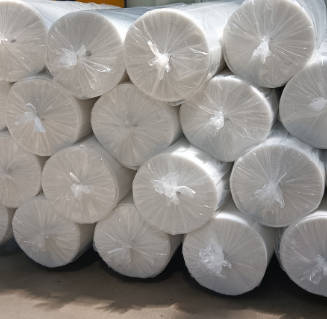
Product Samples We Regularly Subject to Filter Cotton Testing
Our filter‑testing rigs, tensile testers, spectrophotometers, gas‑chromatography systems and microbiological laboratories accommodate a wide variety of nonwoven, woven and composite filter materials. The following categories represent the most frequently tested items:
- Meltblown polypropylene filter media – the electret‑treated, high‑filtration‑efficiency layer used in the construction of N95, FFP2 and surgical masks
- Spunbond and spunlace nonwoven filter fabrics – support layers, pre‑filtration layers and the outer coverings of the face masks and the respirators
- Activated‑carbon‑impregnated filter cotton – composite media that combine the particulate filtration with the adsorption of odours, volatile organic compounds and acid gases
- Glass‑fibre and synthetic‑fibre filter paper – high‑efficiency particulate air and ultra‑low penetration air filter media for cleanrooms, pharmaceutical isolators and nuclear‑containment systems
- Needle‑punched and thermal‑bonded filter felts – heavy‑duty filter bags and cartridges for the industrial dust‑collection, the cement‑kiln and the power‑plant flue‑gas applications
- Automotive cabin‑air filter media – multi‑layer composites that combine the particulate filtration, the activated‑carbon layer and the anti‑microbial treatment
- Electrospun nanofibre filter layers – the ultra‑fine fibre coatings applied to a macro‑porous substrate to achieve the high‑efficiency, low‑pressure‑drop performance
Filtration Efficiency and Airflow Resistance – Filter Cotton Testing According to ISO 16890, EN 1822 and ASTM F2299
- Determination of the fractional filtration efficiency and the pressure drop of the general‑ventilation filter media according to ISO 16890‑2 (Air filters for general ventilation – Part 2: Measurement of fractional efficiency and air flow resistance): the flat‑sheet specimen is challenged with a DEHS or a KCl aerosol in a test duct, and the particle‑number concentration is measured upstream and downstream by an optical particle counter in the size range 0.3 µm to 10 µm. The filtration efficiency for the ePM1, ePM2.5 and ePM10 fractions and the initial pressure drop in pascals are reported, and the media is classified according to the ISO 16890‑1 scheme. This filter cotton testing provides the fundamental performance data that the air‑handling‑unit designer uses to select the correct filter grade for the building's indoor air quality and energy efficiency.
- High‑efficiency particulate air and ultra‑low penetration air filter media testing according to EN 1822‑1 (High efficiency air filters – Part 1: Classification, performance testing, marking) and ISO 29463: the media is scanned with a monodisperse aerosol of the most penetrating particle size, and the minimum filtration efficiency and the MPPS are determined. The material is classified as H13, H14, U15, U16 or U17, providing the certification data that is mandatory for the terminal filters in the pharmaceutical cleanrooms and the nuclear facilities.
- Bacterial and viral filtration efficiency of the medical‑face‑mask and the respirator filter media according to ASTM F2101 (Standard Test Method for Evaluating the Bacterial Filtration Efficiency of Medical Face Mask Materials, Using a Biological Aerosol of Staphylococcus aureus) and ASTM F2100: the media is challenged with a Staphylococcus aureus aerosol, and the number of the colony‑forming units that penetrate the material is counted. The BFE in percent is reported, and a minimum of 95 % or 98 % is required for the medical‑mask grades.
- Particulate filtration efficiency and the breathing resistance of the respirator filter media according to the 42 CFR Part 84 (NIOSH) and the EN 149 (FFP) standards: the media is tested with a sodium‑chloride or a dioctyl‑phthalate aerosol at the flow rates and the particle‑size distributions specified by the standard, and the maximum penetration and the inhalation and the exhalation resistance are reported, supporting the CE marking of the filtering facepiece respirators.
- Dust‑loading and the clogging behaviour of the industrial filter felts according to ISO 11057 (Air quality – Test method for the filtration characterization of cleanable filter media): the media is subjected to a controlled dust‑loading cycle, and the residual pressure drop, the cleaning efficiency and the dust‑release characteristics are measured, providing the data that the baghouse designer uses to specify the pulse‑jet cleaning interval and the expected bag life.
Mechanical, Physical and Chemical Safety – Filter Cotton Testing According to ASTM D5034, ISO 9073‑18 and EN 14683
- Determination of the tensile strength and the elongation at break of the nonwoven filter media according to ASTM D5034 (Standard Test Method for Breaking Strength and Elongation of Textile Fabrics – Grab Test) and ISO 9073‑18 (Textiles – Test methods for nonwovens – Part 18: Determination of breaking strength and elongation): strip specimens are cut from the machine direction and the cross direction and loaded to failure, and the breaking force in newtons and the percentage elongation are reported, verifying that the media has sufficient mechanical integrity to withstand the pleating, the handling and the differential‑pressure stresses.
- Measurement of the basis weight, the thickness and the density of the filter cotton according to ISO 9073‑1 (Nonwovens – Determination of mass per unit area) and ISO 9073‑2 (Determination of thickness): the grammage in grams per square metre and the thickness in millimetres are measured, providing the fundamental process‑control parameters for the nonwoven production line.
- Determination of the formaldehyde content according to EN ISO 14184‑1 (Textiles – Determination of formaldehyde – Part 1: Free and hydrolysed formaldehyde – Water extraction method) and the Japanese Law 112: the filter cotton is extracted with water, and the formaldehyde is derivatised and measured spectrophotometrically. The result in milligrams per kilogram must be below the limit – typically 16 mg/kg for the baby‑product class – to ensure that the wearer of the mask is not exposed to the carcinogenic formaldehyde vapour.
- pH of the aqueous extract and the determination of the heavy metals and the dye‑derived amines according to the Oeko‑Tex Standard 100 and the REACH Annex XVII: the media is extracted with water and with an artificial sweat solution, and the pH, the lead, the cadmium, the mercury and the banned azo‑amines are quantified, providing the human‑ecological safety data that are required for the CE marking of the personal protective equipment.
- Flame retardancy and the flammability classification according to the 16 CFR Part 1610 (Standard for the Flammability of Clothing Textiles) and the EN 13274‑4 (Respiratory protective devices – Methods of test – Part 4: Flame test): the filter cotton is exposed to a defined gas‑flame, and the after‑flame time, the after‑glow time and the char‑length are measured, ensuring that the material meets the fire‑safety requirements for the consumer and the industrial respiratory protection.
Microbiological Cleanliness, Biocompatibility and Shelf‑Life – Filter Cotton Testing According to EN 14683, ISO 10993 and ASTM F1980
- Determination of the microbial cleanliness and the bioburden of the medical‑face‑mask filter media according to EN 14683 (Medical face masks – Requirements and test methods) and the ISO 11737‑1 (Sterilization of medical devices – Microbiological methods – Part 1: Determination of a population of microorganisms on products): the total aerobic bacterial count and the total yeast and mould count per gram of the filter cotton are measured, and the material is classified as clean or ultra‑clean for the medical‑device assembly.
- Cytotoxicity, the skin‑irritation and the skin‑sensitisation testing according to the ISO 10993 series (Biological evaluation of medical devices): the filter cotton is extracted with a cell‑culture medium, and the extract is applied to the L‑929 murine fibroblasts, the reconstructed human epidermis and the in‑vitro sensitisation assays, providing the biocompatibility data that are required for the CE marking of the medical masks and the respiratory protective devices.
- Accelerated shelf‑life and the stability testing according to ASTM F1980 (Standard Guide for Accelerated Aging of Sterile Barrier Systems for Medical Devices): the filter media is aged at the elevated temperature, and the retention of the filtration efficiency, the pressure drop and the tensile strength is measured, predicting the usable life of the stored mask or the filter cartridge in the warehouse and the distribution chain.
- Resistance to the cleaning and the disinfection agents: the filter cotton is repeatedly wiped or sprayed with the hospital‑grade disinfectants – the alcohol, the hydrogen peroxide and the quaternary ammonium compounds – and the degradation of the filtration performance and the physical integrity is monitored, supporting the claims of the reusability and the extended service life of the industrial and the healthcare‑sector filters.
Report Acceptance and Global Regulatory Compliance
All measurements performed within our filter cotton detection programme are executed under the fully accredited scope of our ISO/IEC 17025 quality management system. Each test report that carries the ILAC mark is therefore automatically recognised by regulatory authorities, notified bodies, customs offices and supply‑chain partners in all major economies. For meltblown‑nonwoven producers, respirator and face‑mask manufacturers, HVAC‑filter converters and industrial‑filtration companies anywhere in the world, the report constitutes legally robust, internationally accepted evidence that the filtration efficiency, the airflow resistance, the mechanical strength, the chemical safety and the biocompatibility of the filter cotton have been determined in accordance with the applicable ISO, ASTM, EN, NIOSH and customer‑specified methods. The documentation can be directly used to support CE marking under the Medical Device Regulation or the Personal Protective Equipment Regulation, the NIOSH approval, the issue of inspection certificates according to EN 10204 or equivalent national standards, the compilation of the technical file for the type‑examination, and the resolution of commercial and technical disputes concerning the performance and the safety of any fibrous filter medium.