Film-Coated Board Inspection Service for Global Packaging and Building Envelope Compliance
As an ISO/IEC 17025 accredited laboratory, we deliver a rigorous film-coated board inspection service that verifies lamination integrity, barrier performance, mechanical strength, visual aesthetics, and regulatory compliance. Our film-coated board inspection service supports manufacturers, exporters, and brand owners of poly-coated, metallized, and laminated paperboard, plastic panels, and composite boards who must demonstrate conformity to ASTM, ISO, EN, and regional packaging and construction standards across the European Union, North America, and Asia. Every test is conducted under our CNAS-accredited quality system, generating reports that are globally accepted by notified bodies, building authorities, and major retail procurement teams.

Product Samples We Regularly Test in Our Film-Coated Board Inspection Service
- Poly-coated paperboard and carton board — PE and PET laminated folding cartons for food, beverage, and detergent packaging
- Aluminum-metallized film-coated boards — for high-barrier aroma and light-sensitive pharmaceutical blister packs
- PVC and vinyl-laminated decorative boards — for wall panels, furniture surfacing, and interior cladding
- Acrylic and polycarbonate film-coated composite panels — for signage, displays, and protective glazing
- Foil-laminated insulation boards — radiant barriers and vapor retarders for building construction
- Wood-grain and decorative print film-coated MDF and particle boards — for ready-to-assemble furniture and interior joinery
- Anti-static and conductive film-laminated boards — for electronic component packaging and ESD-safe worksurfaces
Film-Coated Board Lamination Integrity and Adhesion Testing
- Bond strength and peel adhesion per ASTM D1876 and ISO 4578 — the force required to separate the film layer from the substrate board is measured using a T-peel or 180° peel test, ensuring the lamination can withstand converting, scoring, and end-use mechanical stresses without delamination.
- Heat seal strength and hot-tack performance per ASTM F88 and ASTM F1921 — for poly-coated boards used in form-fill-seal packaging, the seal strength is measured immediately after sealing and after cooling to verify the film surface provides a hermetic closure at production speeds.
- Interlayer bond integrity and cohesion failure analysis — cross-sectional microscopy and tensile pull tests distinguish between adhesive failure at the interface and cohesive failure within the film or board substrate, guiding root cause investigation of lamination defects.
- Blocking resistance and anti-stick performance per ASTM D3354 and internal protocols — the film-coated board is subjected to pressure and elevated temperature to verify that the film surface does not adhere to itself or to other surfaces during storage, transport, or thermoforming.
Barrier and Permeation Testing for Film-Coated Packaging and Insulation Boards
- Water vapor transmission rate per ASTM F1249 and ISO 15106-2 — the moisture vapor permeability of the film-coated board is measured using a modulated infrared sensor to confirm the barrier provided by the film lamination for moisture-sensitive products or building envelope applications.
- Oxygen and gas transmission rate per ASTM D3985 and ISO 15105-2 — the oxygen permeability of the film-coated board is determined using a coulometric detector to verify the gas barrier properties required for modified atmosphere packaging and pharmaceutical blister packs.
- Grease and oil resistance per ASTM F119 and TAPPI T559 — the film-coated surface is challenged with colored oil or grease simulants to confirm that the lamination provides a pin-hole-free barrier that prevents staining and structural weakening of the board substrate.
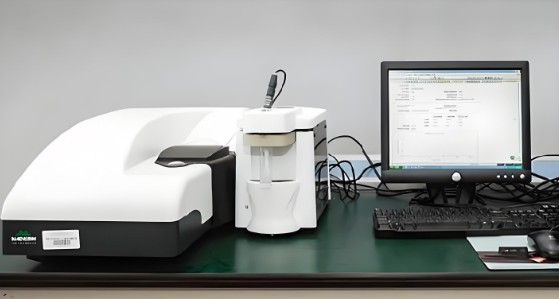
- Light and UV transmission through the film layer per ASTM E1348 and ISO 13468 — for photosensitive products, the spectral transmittance of the film-coated board is measured to verify the film provides the specified opacity and UV blocking function.
Mechanical and Physical Strength Testing of Film-Coated Boards
- Bending stiffness and flexural modulus per ISO 5628 and ASTM D790 — the resistance of the film-coated board to bending is measured in machine and cross directions, ensuring the laminated material performs correctly on automatic carton erecting and filling lines.
- Tensile strength and elongation at break per ISO 527-3 and ASTM D638 — the combined film and substrate are pulled to failure to measure the ultimate strength, verifying the film-coated board can withstand the tension applied during printing, laminating, and converting.
- Puncture and probe resistance per ASTM D5748 and internal protocols — a probe is driven through the film-coated board at a controlled rate to determine the resistance to sharp objects, protecting the packaged product or maintaining the building envelope integrity.
- Impact resistance by falling dart and pendulum methods per ASTM D1709 and ISO 7765-1 — the film-coated board is struck by a weighted impactor to simulate accidental drops and handling shocks, ensuring the lamination does not crack or separate under impact.
- Score and crease folding endurance per TAPPI T511 and internal protocols — the film-coated board is repeatedly folded along a crease line to verify the film does not crack or delaminate during carton forming and consumer opening.
Surface Quality, Printability, and Aesthetic Inspection for Film-Coated Boards
- Gloss and surface reflectance per ASTM D2457 and ISO 2813 — specular gloss at 20°, 60°, and 85° is measured to verify the film-coated board meets the required aesthetic finish for premium packaging and decorative laminates.
- Color measurement and color difference per ISO 7724 and ASTM E308 — CIE L*a*b* coordinates and delta E values are determined to ensure the film color and any printed graphics match brand specifications across production batches.
- Surface energy and wetting tension per ASTM D2578 and ISO 8296 — dyne pen or contact angle measurement confirms that corona, plasma, or chemical treatment of the film surface has achieved the required surface energy for ink adhesion and over-lamination bonding.
- Visual defect inspection under D65 illumination — systematic examination for pinholes, bubbles, gels, streaks, and lamination voids against agreed limit samples and acceptance criteria.
Durability, Weathering, and Environmental Resistance Testing for Film-Coated Boards
- Accelerated weathering by xenon-arc exposure per ASTM G155 and ISO 4892-2 — the film-coated board is subjected to simulated sunlight, heat, and moisture cycles, then evaluated for color change, gloss loss, film cracking, and delamination to predict outdoor service life for signage and building panels.
- Heat aging and thermal stability per ASTM D3045 and ISO 188 — the film-coated board is aged at elevated temperatures and the retained adhesion, flexibility, and barrier properties are measured to predict long-term stability in hot climates and during heat-sealing operations.
- Resistance to humidity and water immersion per ASTM D870 and ISO 9142 — the film-coated board is immersed in water or exposed to high humidity, and the adhesion, dimensional stability, and barrier properties are retested to confirm no moisture-induced delamination or swelling occurs.
- Chemical and stain resistance per ASTM D543 and ISO 175 — the film surface is exposed to common household cleaners, food acids, and industrial fluids to verify no staining, softening, or chemical attack of the film layer.
- Low-temperature flexibility and cold crack resistance per ASTM D1790 — the film-coated board is conditioned at sub-zero temperatures and bent to verify the film remains flexible and does not crack during cold-chain distribution or winter construction.
Fire Performance and Flammability Testing for Film-Coated Boards
- Euroclass reaction-to-fire classification per EN 13501-1 — the film-coated board assembly is tested for ignitability and contribution to fire growth using the single burning item test and small flame test, generating the classification required for CE marking of construction products.
- Surface flame spread and smoke developed index per ASTM E84 — the Steiner tunnel test measures the flame spread and smoke generation of the film-coated board, verifying Class A or Class B performance for North American building code compliance.
- UL 94 horizontal and vertical flame classification per ASTM D3801 and IEC 60695-11-10 — the film-coated material is exposed to a defined flame and the afterflame time, afterglow, and burning rate are recorded to classify the material as V-0, V-1, V-2, or HB for electrical and electronic equipment applications.
- Limiting oxygen index per ISO 4589-2 — the minimum oxygen concentration supporting combustion is measured to rank the intrinsic fire resistance of different film and board combinations.
Chemical Safety and Regulatory Compliance for Film-Coated Boards
- Heavy metals in packaging per EU Directive 94/62/EC and CONEG model legislation — ICP-OES analysis quantifies the sum concentration of lead, cadmium, mercury, and hexavalent chromium in the film, board, and printing inks to confirm the material is below the 100 ppm regulatory limit.
- RoHS compliance per IEC 62321 and EU Directive 2011/65/EU — quantitative screening for lead, mercury, cadmium, hexavalent chromium, PBBs, and PBDEs in any electronic components, conductive coatings, or plastic layers associated with the film-coated board.
- Phthalates and plasticizers per CPSC-CH-C1001-09.4 and EN 14372 — GC-MS determination of the six restricted phthalates in flexible film layers and adhesives used to laminate the film-coated board, ensuring compliance with children's product safety regulations.
- Overall migration and specific migration for food contact per EU Regulation 10/2011 and FDA 21 CFR — the film-coated board is extracted with food simulants under the intended use conditions, and the total extractable mass and specific levels of restricted monomers or additives are quantified to confirm the material is safe for direct food contact.
- Formaldehyde and volatile organic compound emissions per ISO 16000-3 and EN 16516 — chamber emission testing verifies that the film-coated board does not release harmful levels of formaldehyde or VOCs into indoor air when used as furniture, wall paneling, or retail display material.
- Polycyclic aromatic hydrocarbons per AfPS GS 2019:01 PAK — for dark-colored or recycled-content board substrates, the 15 restricted PAHs are extracted and quantified to confirm compliance with European product safety limits.
Report Recognition and ISO/IEC 17025 Compliance
All test methods described in this film-coated board inspection service are covered by our ISO/IEC 17025 scope of accreditation. Our reports are accepted by European notified bodies for packaging and construction products, by North American retailers and building officials, and by customs and regulatory authorities across the Middle East, Australia, and Asia. Whether you require a complete qualification dossier for a new film-coated board structure, a batch release inspection for an import shipment, or a root cause failure analysis of a delamination claim, our laboratory provides the measurement accuracy and technical depth that the global laminated board industry demands.