
Fabric Shrinkage Rate Testing Service – Accredited Dimensional Stability Evaluation for Global Markets
Our internationally accredited laboratory provides a specialist fabric shrinkage rate testing service that enables textile mills, garment manufacturers, home‑textile producers, technical‑fabric weavers and retail‑brand quality‑assurance teams worldwide to independently verify the dimensional stability of their woven, knitted and nonwoven fabrics after laundering, dry‑cleaning, wetting or heat exposure. Every test is conducted under the rigorous framework of ISO/IEC 17025, and each report bearing the ILAC mark is unconditionally accepted by regulatory authorities, customs offices and notified bodies in all major economies. The fabric shrinkage rate testing service precisely measures the percentage change in the length and width of a fabric specimen after a specified conditioning treatment, providing the fundamental data that pattern makers, quality engineers and product developers use to set the correct garment tolerances, to specify the care label, and to guarantee that the finished product will retain its shape and fit after repeated consumer use. By employing calibrated washing machines, tumble dryers, flatbed presses, steam tables and precision measurement templates, we deliver the legally robust, defensible dimensional‑stability data that underpin product certification, customer satisfaction and compliance with the relevant ISO, AATCC, ASTM, EN and brand‑specific standards.
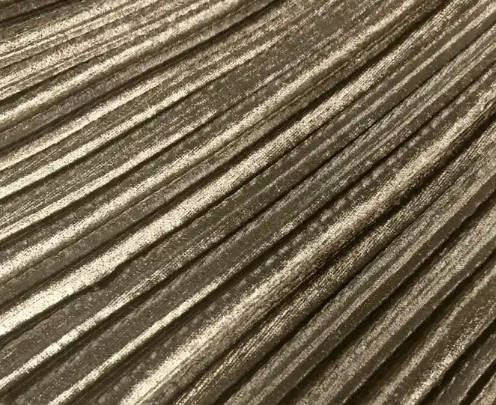
Product Samples We Regularly Subject to Fabric Shrinkage Rate Testing
The conditioning equipment and measurement tables in our facility accommodate fabric swatches, full‑width rolls and finished garments. The following categories represent the items most frequently evaluated through our fabric shrinkage rate testing service:
- Woven fabrics – cotton, linen, wool, silk, polyester, nylon and blended shirting, suiting, sheeting, denim, upholstery and curtain materials
- Knitted fabrics – single‑jersey, interlock, rib, fleece, piqué and warp‑knitted constructions for T‑shirts, underwear, sportswear, swimwear and sweater applications
- Nonwoven fabrics – spunbond, meltblown, needle‑punched and hydroentangled webs for hygiene, filtration, medical and geotextile end‑uses
- Finished garments and textile products – shirts, trousers, jackets, dresses, bedsheets, towels, table linen, socks and industrial workwear
- Home‑textile and furnishing fabrics – curtain panels, upholstery covers, mattress ticking and cushion fabrics
- Technical and coated textiles – awning and outdoor‑furniture fabrics, automotive‑interior textiles, composite reinforcement fabrics and protective‑clothing materials
- Wool and cashmere knitwear – garments and panels that may undergo felting and relaxation shrinkage during washing
Laundering and Domestic‑Washing Shrinkage – Fabric Shrinkage Rate Testing According to ISO 6330 and AATCC 135
- Determination of the dimensional change of fabrics after domestic washing and drying according to ISO 6330 (Textiles – Domestic washing and drying procedures for textile testing) and ISO 5077 (Textiles – Determination of dimensional change in washing and drying): a conditioned fabric specimen is marked with benchmark pairs at a defined gauge length in the warp and the weft direction. The specimen is washed in a standardised washing machine using the prescribed detergent, wash temperature – typically 30 °C, 40 °C, 60 °C or 95 °C – and agitation programme selected to match the care‑label recommendation. After washing, the specimen is dried according to the specified procedure – line dry, flat dry, tumble dry or drip dry – and reconditioned. The distances between the benchmarks are remeasured, and the percentage dimensional change (shrinkage or growth) is calculated and reported separately for the length and the width. This fabric shrinkage rate testing service provides the fundamental data that garment manufacturers use to engineer the correct pre‑shrinkage of the fabric, to set the garment‑measurement tolerances and to verify the accuracy of the care instructions printed on the label.
- Shrinkage after repeated wash‑and‑wear cycles: the fabric or the garment is subjected to three, five or ten complete wash‑dry cycles, and the cumulative shrinkage is measured after each cycle. The progressive shrinkage curve is plotted, and the maximum number of cycles after which the dimensional change stabilises is reported, providing the data that brands need to guarantee the long‑term fit and appearance of the product over its expected lifetime.
- Tumble‑dry shrinkage and heat‑sensitivity evaluation: the specimen is washed and then tumble‑dried at the maximum temperature indicated on the care label, or at a series of temperatures, and the shrinkage is measured. The test identifies the fabrics that are thermally unstable and that require a cool‑dry or a line‑dry recommendation to prevent excessive shrinkage, a critical aspect of the care‑label development.
- Wet‑laying and dry‑laying shrinkage of wool and wool‑blend fabrics according to the principles of ISO 3759 and IWTO test methods: the specimen is soaked in water and laid flat to dry without any mechanical agitation, and the relaxation shrinkage and the hygral expansion are measured. The data are used by the wool‑textile industry to predict the fabric behaviour during garment pressing and to set the correct pre‑shrinkage finishing.
Dry‑Cleaning and Professional‑Care Shrinkage – Fabric Shrinkage Rate Testing According to ISO 3175 and AATCC 132
- Determination of the dimensional change after dry‑cleaning according to ISO 3175‑2 (Textiles – Professional care, dry‑cleaning and wet‑cleaning of fabrics and garments – Procedure for testing when cleaning with perchloroethylene) and ISO 3175‑3 (hydrocarbon solvents): the specimen is dry‑cleaned in a commercial‑type machine with the appropriate solvent and a defined mechanical action, then dried and reconditioned. The percentage shrinkage in the length and the width is reported, providing the data that the garment manufacturer uses to decide whether a “dry‑clean only” or a “dry‑clean recommended” care label is appropriate.
- Shrinkage after professional wet‑cleaning according to ISO 3175‑4: the fabric is processed in a wet‑cleaning machine that uses water and a specialised detergent with a gentle mechanical action, and the dimensional change is measured. This fabric shrinkage rate testing service supports the growing use of professional wet‑cleaning as an environmentally preferred alternative to solvent‑based dry‑cleaning, and it verifies that the fabric will not shrink excessively during this process.
- Comparative shrinkage between perchloroethylene, hydrocarbon and silicone‑based dry‑cleaning solvents: the same fabric is tested in three different solvent systems, and the differential shrinkage is reported. The data allow the garment care‑label to specify the most compatible solvent and to alert the consumer to any limitation.
Steam‑Pressing, Ironing and Finishing Shrinkage – Fabric Shrinkage Rate Testing for Post‑Press and Industrial Finishing
- Determination of the shrinkage after steam pressing and ironing according to the principles of ISO 9866 (Textiles – Effect of dry heat on fabrics under low pressure) and the garment‑finishing standards: the fabric is subjected to a controlled steam‑pressing cycle on a flatbed press or to a hand‑ironing operation at the cotton, wool or synthetic setting, and the dimensional change is measured. The test predicts the behaviour of the fabric during the final‑pressing stage of the garment‑manufacturing process and during the consumer’s home ironing.
- Shrinkage after industrial laundering and tunnel‑finishing for workwear and corporate‑uniform fabrics: the fabric is washed and dried in an industrial washer‑extractor and a tunnel finisher, and the shrinkage is measured. This fabric shrinkage rate testing service is essential for the qualification of fabrics that will be supplied to rental‑laundry and uniform‑service companies, where the garments must withstand hundreds of industrial wash‑and‑finish cycles without exceeding the size‑tolerance limits.
- Heat‑setting and pre‑shrinkage efficiency evaluation: the fabric is tested for shrinkage after the mill’s pre‑shrinkage treatment – such as compressive shrinkage, sanforising or heat‑setting – and the residual shrinkage is compared with the untreated fabric. The efficiency of the pre‑shrinkage process is reported, enabling the textile finisher to adjust the machine parameters and to achieve the targeted residual‑shrinkage specification of the garment maker.
Specialised and Accelerated Shrinkage Experiments – Research on Fabric Dimensional Stability
- Wet‑expansion and relaxation‑shrinkage analysis of knitted and elasticated fabrics: the fabric is immersed in water at a controlled temperature, and the change in the dimensions is measured without any mechanical agitation. The test reveals the intrinsic relaxation behaviour of the knit structure, which must be taken into account when the garment‑block pattern is drafted.
- Shrinkage after simulated consumer use – a combined wash‑and‑wear protocol with mechanical abrasion and stretching: the garment is worn on a mannequin or a robotic arm that simulates the body movements during walking, sitting and reaching, and it is then washed and dried. The cumulative shrinkage and the shape‑distortion are measured, providing the most realistic prediction of the consumer‑experienced dimensional change.
- Shrinkage‑rate mapping of multi‑layer and laminated fabrics: the differential shrinkage of the individual layers in a bonded or laminated fabric – such as a waterproof‑breathable garment shell – is measured by separating the layers after the wash and measuring each layer independently. The data are used to identify the cause of the delamination, the curling or the seam‑puckering that can occur when the face fabric and the lining shrink at different rates.
- Statistical process‑control and multi‑batch shrinkage trending: the shrinkage is measured on a regular sampling basis from the production batches, and the data are plotted on a control chart. This fabric shrinkage rate testing service alerts the mill and the garment factory to any drift in the shrinkage that could lead to a size‑consistency complaint, enabling the corrective action to be taken before the defective fabric is cut.
Report Acceptance and Global Regulatory Compliance
All measurements performed within our fabric shrinkage rate testing service are executed under the fully accredited scope of our ISO/IEC 17025 quality management system. Each test report that carries the ILAC mark is therefore automatically recognised by regulatory authorities, notified bodies, customs offices and supply‑chain partners in all major economies. For textile mills, garment manufacturers, home‑textile producers and retail‑brand quality‑assurance teams anywhere in the world, the report constitutes legally robust, internationally accepted evidence that the dimensional stability and the shrinkage behaviour of the fabric have been determined in accordance with the applicable ISO, AATCC, ASTM, EN and customer‑specified methods. The documentation can be directly used to support CE marking under the applicable EU textile regulations, to issue inspection certificates according to EN 10204 or equivalent national standards, to compile the technical file for the care‑label validation, and to resolve commercial and technical disputes concerning the shrinkage and the dimensional performance of any textile material.




