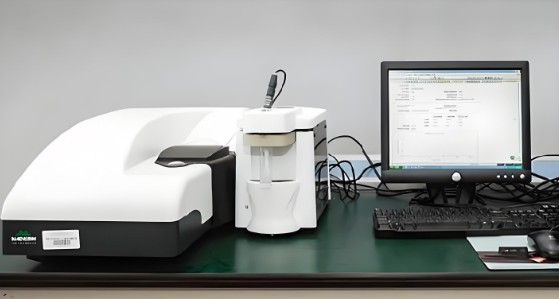
FT-Raman Spectrometer (FTIR Raman Testing Service) – Accredited Molecular Structure and Complementary Vibrational Analysis for Global Markets
Our internationally accredited laboratory delivers a specialist FT-Raman Spectrometer (FTIR Raman testing service) that provides polymer scientists, pharmaceutical developers, forensic investigators, art conservators, chemical producers and materials researchers worldwide with the powerful, non‑destructive molecular fingerprinting data they need to complement and extend the information obtained from conventional infrared spectroscopy. All analyses are performed within the rigorous framework of ISO/IEC 17025, and each report bearing the ILAC mark is unconditionally accepted by regulatory authorities, customs offices and notified bodies in all major economies. The FTIR Raman testing service uses a near‑infrared laser – typically at 1064 nm – to excite the sample, completely eliminating the troublesome fluorescence that often obscures the Raman spectrum when visible lasers are used. By measuring the inelastic scattering of light, this FT-Raman Spectrometer testing service reveals the same fundamental vibrational information as FTIR but with a different selection rule: symmetric vibrations, homonuclear bonds (such as C=C, S-S, N=N) and back‑bone modes that are weak or silent in the infrared often dominate the Raman spectrum. Because water is a weak Raman scatterer, aqueous solutions, biological tissues and hydrated samples can be analysed directly without the interference that plagues mid‑infrared measurements. This dual capability, often packaged as an integrated FTIR-Raman system, provides our global clients with the complete vibrational characterisation required to identify unknown materials, quantify polymorphic phases, verify polymer tacticity, authenticate gemstones and investigate the chemical composition of priceless works of art.
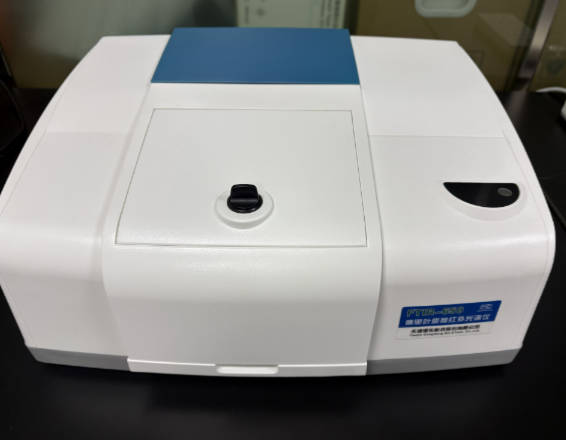
Product Samples We Regularly Test Using Our FT-Raman Spectrometer (FTIR Raman Testing Service)
The non‑destructive nature of Raman spectroscopy and its ability to analyse samples through glass and plastic containers make the technique extraordinarily versatile. The following categories represent the most frequently tested items submitted for our FT-Raman Spectrometer (FTIR Raman testing service):
- Polymers, plastics and elastomers – polyolefins, polystyrenes, polyesters, polyamides, acrylics, fluoropolymers, rubbers, copolymers and polymer blends
- Pharmaceutical ingredients and formulated drug products – active pharmaceutical ingredients, excipients, tablets, capsules, lyophilised cakes, sterile injectables and transdermal patches
- Inorganic materials, minerals and gemstones – carbon allotropes (graphite, diamond, graphene, carbon nanotubes), oxides, sulfates, carbonates, silicates, natural and synthetic gems
- Forensic evidence and trace materials – paint chips, fibres, explosives, gunshot residue, illicit drugs and questioned documents
- Food, beverages and agricultural products – edible oils, honey, wines, fruit juices, spices, grains and animal feeds
- Cosmetics and personal‑care products – creams, lotions, lipsticks, powders, sunscreens and toothpaste formulations
- Art and archaeological materials – pigments, binders, varnishes, ceramics, corrosion products, textiles and manuscripts
- Electronic and semiconductor materials – silicon wafers, photoresists, epitaxial layers, solders and contaminants on printed circuit boards
FTIR Raman Testing Service for Polymers, Plastics and Organic Materials – Structural Elucidation and Quality Control
- Identification of polymer type, crystallinity and tacticity by FT-Raman spectroscopy: the Raman spectrum of a polymer exhibits intense bands from the carbon‑carbon backbone, which are frequently absent or weak in the infrared. This FT-Raman Spectrometer testing service distinguishes between polyethylene, polypropylene, polystyrene, polyethylene terephthalate, polycarbonate, nylon and many other polymers, and it can identify copolymers and blends. The degree of crystallinity is estimated from the ratio of characteristic crystalline and amorphous bands, while the tacticity of polypropylene – isotactic, syndiotactic or atactic – is clearly revealed by the Raman fingerprint, providing information that is difficult to obtain by FTIR alone.
- Detection and quantification of fillers, pigments and carbon‑black‑loaded rubbers: carbon black, which absorbs mid‑infrared radiation strongly, is a weak Raman scatterer under near‑infrared excitation. This makes FT-Raman the method of choice for the direct analysis of black rubber formulations, automotive hoses, O‑rings and tyres without the need for solvent extraction or pyrolysis. Inorganic fillers such as titanium dioxide, calcium carbonate, silica and talc are identified by their characteristic Raman bands, and their concentration can be estimated from the band intensities.
- Monitoring of cross‑linking, cure reactions and polymer degradation: the formation of new bonds – such as disulfide cross‑links in vulcanised rubber or the disappearance of reactive acrylate or vinyl groups – is monitored by the change in the Raman spectrum over time or after thermal cycling. The technique is used to optimise the curing of thermosets, to verify the extent of reaction in photo‑cured coatings and to investigate the oxidative degradation of polyethylene pipes and geomembranes.
- Analysis of multi‑layer packaging and composite materials: a confocal Raman microscope coupled to the FT-Raman spectrometer allows the acquisition of spectra from individual layers within a laminate or from specific points within a fibre‑reinforced composite without any mechanical separation. The chemical composition of the adhesive tie layers, the barrier coatings and the surface treatments is determined, supporting the failure analysis of delaminated films and the development of recyclable packaging structures.
FTIR Raman Testing Service for Pharmaceuticals and Nutraceuticals – Polymorph Identification and Non‑Destructive Verification
- Polymorph and solvate screening according to the principles of USP ⟨858⟩, Ph. Eur. 2.2.48 and the ICH Q6A guideline: different crystalline forms of a drug substance exhibit distinct Raman spectra because the vibrational modes are sensitive to the arrangement of molecules in the crystal lattice. This FT-Raman Spectrometer (FTIR Raman testing service) identifies the polymorphic form present in a raw material or a finished tablet and can quantify the ratio of forms when a mixture is suspected. The data are critical for demonstrating that the correct polymorph is maintained throughout the manufacturing process and the shelf‑life of the product.
- Rapid, non‑destructive identity verification of pharmaceutical ingredients through amber glass bottles and blister packs: the near‑infrared laser penetrates common packaging materials with minimal interference, allowing the Raman spectrum of the contents to be acquired without opening the container. This capability is particularly valuable for the incoming inspection of expensive active pharmaceutical ingredients, for the verification of clinical‑trial supplies and for the authentication of medicines in the field by regulatory inspectors.
- Spatially resolved chemical imaging of tablets and granules: a Raman mapping stage scans the surface or a cross‑section of a tablet, and the distribution of the active ingredient, the major excipients and any agglomerates or contaminants is plotted. The technique identifies drug‑excipient incompatibilities, detects low‑level crystalline impurities in an amorphous dispersion and supports the development of robust solid‑dosage forms.
- Characterisation of lyophilised products and biopharmaceuticals: because water is a very weak Raman scatterer, freeze‑dried cakes and aqueous protein solutions can be analysed directly without the spectral subtraction that is required in FTIR. The conformation of proteins – alpha‑helix, beta‑sheet and random coil – is estimated from the amide I and amide III bands, providing the stability‑indicating data required for the development of biosimilars and the formulation of monoclonal‑antibody products.
FT-Raman Spectrometer Testing Service for Inorganic Materials, Minerals and Gemstones – Lattice Vibrations and Phase Identification
- Determination of carbon allotropes – diamond, graphite, graphene and carbon nanotubes: the Raman spectrum of carbon materials is uniquely diagnostic. The sharp first‑order diamond band at 1332 cm⁻¹, the G and D bands of graphite and graphene, and the radial‑breathing modes of single‑walled carbon nanotubes are all measured with high precision. This FT-Raman Spectrometer testing service provides the quality‑control data required by manufacturers of synthetic diamond, graphene platelets and carbon‑fibre composites.
- Identification of minerals, corrosion products and inorganic pigments: metal oxides, sulfates, carbonates and silicates produce strong, sharp Raman bands that serve as a definitive fingerprint of the mineral phase. The technique distinguishes between anatase and rutile titanium dioxide, identifies the corrosion products on a metal surface – such as hematite, magnetite, goethite and lepidocrocite – and authenticates the inorganic pigments used in historic paintings, ceramics and frescos.
- Gemstone identification and the detection of treatments and synthetics: the FT-Raman spectrum distinguishes natural diamond from moissanite, cubic zirconia and other simulants, and it detects the characteristic bands of high‑pressure high‑temperature treatments or the presence of lead‑glass fillings in rubies and sapphires. Because the measurement is completely non‑destructive, it is widely used by gemmological laboratories and auction houses to certify the authenticity and quality of precious stones.
- Characterisation of glass, glazes and ceramic bodies: the silicate network structure – the degree of polymerisation of the silica tetrahedra – is reflected in the Raman spectrum, allowing the identification of the glass type (soda‑lime, borosilicate, lead crystal) and the detection of chemical strengthening or ion‑exchange treatments. The data support the conservation of stained‑glass windows, the authentication of antique ceramics and the quality control of industrial enamel coatings.
FTIR Raman Testing Service for Forensic, Environmental and Archaeological Applications
- Analysis of paint chips, fibres and automotive coatings in forensic casework: the Raman spectrum of a minute paint fragment, a single textile fibre or a smeared coating is acquired without any sample preparation. The combined use of FTIR and Raman provides two independent, complementary datasets that dramatically increase the evidential value of the comparison. This FTIR Raman testing service is accredited for forensic applications, and the report is admissible as expert evidence in courts of law.
- Identification of explosives, propellants and chemical warfare agents: the characteristic Raman bands of nitro‑, nitrate‑ and peroxide‑based explosives, as well as those of nerve and blister agents, are measured on surfaces, in wipe extracts and through sealed containers. The near‑infrared excitation minimises the risk of initiating the explosive, and the data support the work of bomb‑disposal teams, forensic laboratories and international monitoring organisations.
- Authenticity testing of foods, beverages and natural products: the Raman spectrum of edible oils, honey, wine and fruit juices contains bands from carotenoids, flavonoids and other bioactive compounds. The spectral profile is compared with a database of authentic samples to detect adulteration – for example, the addition of high‑fructose corn syrup to honey or the dilution of extra‑virgin olive oil with cheap seed oils.
- Non‑destructive analysis of archaeological artefacts and artworks: the FT-Raman probe is placed directly on the surface of a painting, a manuscript or a ceramic shard, and the pigments, binders and corrosion products are identified in situ. The data inform conservation strategies, authenticate the date and provenance of the object and contribute to the historical record without any risk of damage to the priceless original.
Report Acceptance and Global Regulatory Compliance
All analyses performed within our FT-Raman Spectrometer (FTIR Raman testing service) are executed under the fully accredited scope of our ISO/IEC 17025 quality management system. Each test report that carries the ILAC mark is therefore automatically recognised by regulatory authorities, notified bodies, customs offices and supply‑chain partners in all major economies. For polymer manufacturers, pharmaceutical developers, forensic investigators, gemmological institutes and art conservators anywhere in the world, the report constitutes legally robust, internationally accepted evidence that the molecular composition and the vibrational spectroscopic characteristics of the sample have been determined in accordance with the applicable ASTM, USP, Ph. Eur. and customer‑specified methods. The documentation can be directly used for raw‑material release, product registration, import‑export clearance, the issue of inspection certificates according to EN 10204 or equivalent national standards, and the resolution of commercial and technical disputes concerning the identity, purity, polymorphic form and authenticity of any substance.