
FT-IR Spectrometer (FTIR Testing Service) – Accredited Molecular Analysis and Chemical Identification for Global Markets
Our internationally accredited laboratory provides a specialist FT-IR Spectrometer (FTIR testing service) that delivers rapid, high‑resolution molecular fingerprinting for manufacturers, chemical producers, pharmaceutical companies, forensic investigators, polymer processors and environmental agencies worldwide. Every analysis is performed within the rigorous framework of ISO/IEC 17025, and each report bearing the ILAC mark is unconditionally accepted by regulatory authorities, customs offices and notified bodies in all major economies. A Fourier Transform Infrared FTIR testing service exploits the principles of interferometry to collect a complete infrared spectrum in seconds, offering superior signal‑to‑noise ratio, wavelength accuracy and spectral throughput compared with traditional dispersive instruments. By coupling the spectrometer with attenuated total reflectance, transmission, diffuse reflectance and microscopy accessories, we identify organic functional groups, quantify additives, monitor cure reactions, detect trace contaminants and verify the authenticity of raw materials across an extraordinarily diverse range of sample types. The result is legally robust, defensible data that directly support pharmacopoeial identity testing, polymer grade verification, food‑safety screening and the investigation of unknown chemical residues.
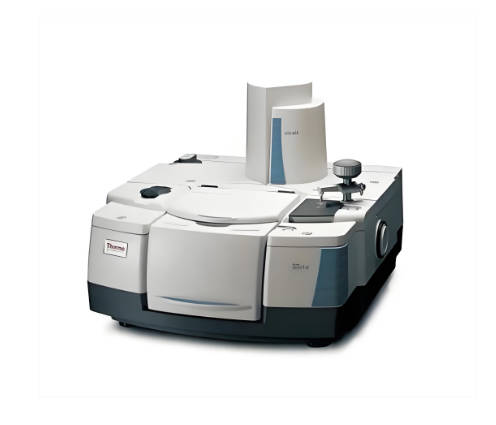
Product Samples We Regularly Test Using Our FT-IR Spectrometer (FTIR Testing Service)
The FTIR spectrometer and its versatile sampling modules accept solids, liquids, powders, pastes, films and gases without the need for elaborate preparation. The following categories represent the most frequently analysed items:
- Polymers, plastics and elastomers – packaging films, moulded components, O‑rings, seals, laminates, adhesives, paints, coatings and fibre‑reinforced composites
- Pharmaceutical ingredients and dosage forms – active pharmaceutical ingredients, excipients, tablets, capsules, creams, ointments, gels and lyophilised powders
- Foods, beverages and nutraceuticals – edible oils, dairy products, spices, fruit powders, protein concentrates, wine, honey and dietary supplements
- Chemicals and industrial raw materials – monomers, plasticisers, surfactants, cleaning agents, solvents, catalysts, plating baths and process residues
- Environmental and forensic samples – microplastics, airborne particulates, unknown spills, paint chips, fibres, questioned documents and fire debris
- Petroleum and fuel products – crude oil, gasoline, diesel, lubricating oils, greases, biodiesel and fuel ethanol
- Cosmetics and personal‑care products – lipsticks, creams, lotions, hair dyes, sunscreens and botanical extracts
- Electronic and semiconductor materials – solder flux residues, conformal coatings, cleaning residues and epoxy encapsulants
FTIR Testing Service for Polymers, Plastics and Organic Materials – Identification and Quality Verification
- Rapid polymer identification by ATR‑FTIR according to ASTM E1252 and ISO 4650: a small fragment of the plastic part or film is pressed against the diamond ATR crystal, and the infrared spectrum is acquired within seconds. The resulting absorption pattern – the molecular fingerprint – is searched against extensive commercial and in‑house spectral libraries to identify the base polymer, common copolymers and blends. This FT-IR Spectrometer (FTIR testing service) provides an immediate, non‑destructive confirmation of the material type, supporting incoming inspection, failure analysis and the reverse‑engineering of plastic components.
- Quantification of plasticisers, stabilisers and flame retardants in polymer compounds: the absorbance of characteristic bands associated with phthalate esters, organophosphate flame retardants or hindered‑amine light stabilisers is measured and compared with calibration curves prepared from certified reference standards. The method follows the principles of ASTM D2124 and ISO 16560 and is used to verify that the additive package in a plastic formulation meets the regulatory limits for food‑contact materials, toys and electrical enclosures.
- Cure monitoring and degree of conversion in epoxies, polyurethanes and acrylate systems: the intensity of the reactive functional group band – such as the epoxy ring at 915 cm⁻¹ or the isocyanate group at 2270 cm⁻¹ – is monitored as a function of time or thermal treatment. The degree of cure is reported as a percentage, providing the process‑control data required for composite curing, electronic encapsulation and industrial bonding.
- Identification of multi‑layer packaging films by micro‑FTIR: a cross‑section of the laminate is prepared, and the individual layers are analysed under an FTIR microscope. Each layer is identified – polyethylene, polypropylene, polyamide, ethylene‑vinyl alcohol, polyethylene terephthalate or tie‑layer adhesive – and the layer sequence and thickness are reported. The data are critical for the packaging industry to verify the barrier structure and to qualify alternative suppliers.
FTIR Testing Service for Pharmaceuticals, Excipients and Nutraceuticals – Identity, Purity and Counterfeit Detection
- Pharmacopoeial identity testing according to USP ⟨197⟩, Ph. Eur. 2.2.24 and JP 2.25: the infrared spectrum of the sample is recorded and compared with that of a certified reference standard or a pharmacopoeial reference spectrum. The positions and relative intensities of the principal absorption bands must correspond within the specified tolerances. This FTIR testing service is a mandatory release test for active pharmaceutical ingredients and excipients, and our report provides the documented evidence of identity required by the FDA, EMA and other global health authorities.
- Screening for counterfeit and substandard medicines by spectral comparison: the FTIR spectra of suspect tablets or capsules are overlaid with the spectrum of the authentic product, and any deviation in the fingerprint region flags the sample for further investigation. The method can detect the complete absence of the declared active ingredient, the substitution of a different compound or the addition of undeclared fillers, directly supporting the enforcement activities of national drug regulators and the WHO pre‑qualification programme.
- Polymorph and crystallinity determination in solid‑state pharmaceuticals: the FTIR spectrum of a crystalline drug substance contains bands that are uniquely sensitive to the molecular packing in the crystal lattice. The relative intensity of these bands is used to quantify the ratio of polymorphic forms or to estimate the degree of crystallinity, guiding formulation development and ensuring that the correct polymorph is maintained throughout the product shelf‑life.
- Analysis of herbal extracts and traditional medicines: the FTIR spectrum of the powdered plant material or the extract is compared with a reference database of authenticated botanicals. The test provides a rapid, non‑destructive confirmation of the species and can detect the presence of undeclared adulterants, supporting the quality control of ginseng, turmeric, echinacea and other high‑value nutraceuticals.
FTIR Testing Service for Foods, Beverages and Agricultural Products – Composition and Authenticity
- Determination of fat, protein, moisture and carbohydrate by FTIR with chemometric modelling: the sample is homogenised and placed on a temperature‑controlled ATR crystal. The spectrum is acquired and processed using partial‑least‑squares regression models that have been validated against primary reference methods. The nutritional composition is reported in grams per 100 g, providing the multi‑parameter data that food manufacturers require for labelling, process control and the verification of raw‑material conformity.
- Authentication of edible oils and detection of adulteration: the FTIR spectrum of the oil is recorded, and the profile of the fingerprint region is compared with a database of authentic extra‑virgin olive oils, avocado oils and other high‑value oils. The test detects the adulteration of olive oil with cheaper seed oils, and it identifies the presence of refined or deodorised oils in products labelled as “virgin”, protecting both brand integrity and consumer health.
- Measurement of trans‑fat content in oils and margarines: the absorbance of the trans‑alkene C‑H out‑of‑plane deformation band at 966 cm⁻¹ is measured, and the trans‑fat content is quantified against a calibration curve prepared with trielaidin standards. The data support compliance with the WHO recommendation to eliminate industrially produced trans‑fats and with the mandatory trans‑fat labelling regulations of the United States, Canada and the European Union.
- Screening for melamine, urea and other nitrogenous adulterants in dairy products: characteristic bands of the adulterant are identified in the FTIR spectrum of the milk powder or the protein concentrate, and the concentration is estimated against a spiked calibration set. This FT-IR Spectrometer (FTIR testing service) provides a rapid, cost‑effective pre‑screen that reduces the number of samples requiring confirmatory LC‑MS/MS analysis.
FTIR Testing Service for Environmental, Forensic and Industrial Problem‑Solving
- Identification of unknown chemical residues, spills and contaminants: a small amount of the unknown material is analysed by ATR‑FTIR, and the resulting spectrum is searched against comprehensive spectral libraries. The major organic constituents are identified, providing the first critical lead for environmental emergency‑response teams, industrial‑hygiene investigators and waste‑management facilities.
- Microplastic identification and classification according to the MSFD monitoring guidelines: particles filtered from water or sediment are individually analysed by FTIR microscopy or ATR‑FTIR. The polymer type – polyethylene, polypropylene, polystyrene, PET, nylon or polyvinyl chloride – is identified, and the particle count per unit volume or mass is reported. The method supports compliance with the Marine Strategy Framework Directive and the emerging global regulations on microplastic pollution.
- Analysis of fire debris for ignitable liquid residues according to ASTM E1618: activated charcoal strips are used to adsorb volatile residues from the debris, and the extract is analysed by FTIR or GC‑FTIR. The presence of gasoline, diesel, kerosene or other ignitable liquids is identified, and the report provides the objective evidence required by fire investigators and the courts.
- Forensic comparison of paint chips, fibres and tapes: the FTIR spectra of the questioned and known samples are acquired under identical conditions and compared. The degree of spectral correspondence is reported, and the findings are used to link a suspect to a crime scene or to identify the vehicle involved in a hit‑and‑run accident. Our FTIR testing service is accredited for forensic applications, and the report is admissible as evidence in legal proceedings.
- Contamination analysis on electronic assemblies and precision surfaces: a microscopic ATR objective is used to analyse organic residues, flux splatter and corrosion products directly on printed circuit boards, connector pins and optical surfaces. The technique identifies silicones, rosin residues, plasticiser migration and fingerprint oils, providing the root‑cause data that electronics manufacturers need to eliminate defects and improve reliability.
Quality Assurance, Spectral Libraries and Data Integrity
- Instrument performance verification using certified reference materials traceable to NIST and NPL: the wavelength accuracy, resolution and photometric linearity of the FTIR spectrometer are verified daily using polystyrene film, a NIST‑traceable holmium oxide filter and a set of neutral‑density screens. The instrument performance data are recorded and reviewed before any client sample is analysed.
- Extensive spectral libraries and custom reference databases: our FT-IR Spectrometer (FTIR testing service) searches against libraries containing hundreds of thousands of spectra, including commercial collections, pharmacopoeial reference spectra and proprietary databases developed from our own certified reference materials. For regulated industries, only validated library matches that meet the predefined hit‑quality criteria are reported.
- Method validation and measurement uncertainty according to the EURACHEM/CITAC guide and ISO 21748: for quantitative applications, the method is validated for specificity, linearity, precision, accuracy and limit of quantification. The expanded measurement uncertainty is stated on the report, providing clients with the transparent information they need for risk‑based decision‑making.
Report Acceptance and Global Regulatory Compliance
All analyses performed within our FT-IR Spectrometer (FTIR testing service) are executed under the fully accredited scope of our ISO/IEC 17025 quality management system. Each test report that carries the ILAC mark is therefore automatically recognised by regulatory authorities, notified bodies, customs offices and supply‑chain partners in all major economies. For polymer manufacturers, pharmaceutical producers, food‑safety agencies, environmental consultancies and forensic laboratories anywhere in the world, the report constitutes legally robust, internationally accepted evidence that the molecular composition of the sample has been determined in accordance with the applicable ASTM, ISO, USP, Ph. Eur. and customer‑specified methods. The documentation can be directly used for raw‑material release, product registration, import‑export clearance, the issue of inspection certificates according to EN 10204 or equivalent national standards, and the resolution of commercial and technical disputes concerning the identity, purity and authenticity of any organic or inorganic substance.




