Arc Extinguisher Failure Analysis Experimental Service – Accredited Root‑Cause Investigation and Performance Validation for Global Markets
Our internationally accredited laboratory delivers a specialist experimental service for failure analysis of arc extinguishers that provides electrical equipment manufacturers, switchgear operators, power‑generation utilities, railway infrastructure managers and industrial safety‑system integrators worldwide with the independent, traceable data they need to identify the root causes of arc‑chute malfunction, to verify material degradation and to validate corrective design modifications. Every investigation is conducted under the rigorous framework of ISO/IEC 17025, and each report bearing the ILAC mark is unconditionally accepted by regulatory authorities, notified bodies and supply‑chain partners in all major economies. The failure analysis of arc extinguishers encompasses a systematic, multi‑disciplinary examination of the complete arc‑control system – the splitter plates, the arc runners, the insulating side‑walls, the de‑ion chamber and the venting passages – combining high‑resolution imaging, electrical‑endurance profiling, material‑phase identification and thermal‑response simulation. For a circuit‑breaker manufacturer investigating a field‑return failure, a mining‑switchgear operator analysing a short‑circuit interruption defect, or a rolling‑stock maintainer evaluating a DC‑arc‑chute life‑expiry, our platform provides the legally robust, defensible evidence that supports product recall decisions, retro‑fit programmes and compliance with the relevant IEC, IEEE, ASTM and customer‑specified standards.
Product Samples We Regularly Subject to Arc Extinguisher Failure Analysis
Our high‑current test cells, X‑ray computed‑tomography systems, metallographic preparation suites and environmental chambers accommodate complete arc‑chute assemblies and individual components from every category of switching device. The following are the most frequently investigated items:
- Low‑voltage moulded‑case circuit‑breaker arc chutes – assemblies containing steel‑grid splitter plates, ceramic or glass‑filled‑polyester side‑walls, and fibre‑reinforced back‑plates removed from breakers that have failed to clear a short‑circuit or have exhibited excessive arc‑gas venting
- High‑voltage SF₆‑blast arc‑extinguishing chambers – the nozzle, the moving and the fixed‑contact assemblies, and the insulating‑nozzle material from live‑tank and dead‑tank circuit breakers that have suffered a thermal‑interruption failure or a dielectric‑breakdown during a switching operation
- Vacuum‑interrupter arc‑control shields – the stainless‑steel or copper‑chromium shields and the end‑flanges of vacuum bottles that have experienced a loss‑of‑vacuum, a contact‑welding or a reignition failure
- DC‑arc chutes for rail‑vehicle and industrial contactors – permanent‑magnet‑assisted and air‑cooled arc‑chute modules that have exhibited a progressive loss of the arc‑quenching capability or a thermal‑runaway during the interruption of a DC traction‑power circuit
- Arc‑fault and arc‑flash mitigation devices – the splitter‑plate stacks and the pressure‑relief membranes of active arc‑fault‑containment systems that have operated during a real arc‑flash event and must be examined for the post‑event integrity
- Prototype and development arc‑extinguisher components – new splitter‑plate geometries, insulating‑wall materials and magnetic‑blow‑out coil configurations that are being benchmarked against the existing designs during the type‑test preparation
Visual, Dimensional and Non‑Destructive Examination – First‑Stage Failure Analysis of Arc Extinguishers
- High‑resolution optical and digital‑microscopy inspection according to the internal protocols based on IEC 60947‑1: the complete arc chute is documented as‑received, and every splitter plate, insulating wall and arc‑runner is individually examined for the characteristic failure signatures – erosion pits, melt‑beads, inter‑plate tracking, carbonised‑crack patterns and vapour‑deposited metallic layers. The location and the morphology of each defect are mapped, and the findings are correlated with the reported failure mode – whether a failure to interrupt, a restrike after the current zero, or a phase‑to‑phase flash‑over outside the chute.
- X‑ray computed‑tomography and radiography for the internal integrity assessment: the arc‑chute assembly is scanned by a micro‑focus or a nano‑focus CT system to reveal the hidden defects that cannot be seen from the exterior – the internal delamination of the insulating walls, the cracking of the splitter‑plate mounting‑grooves, the erosion of the arc‑runner joints and the accumulation of the metallic debris in the vent‑passages. The three‑dimensional reconstruction is sliced and measured, and the void volume and the crack‑length are reported, providing the non‑destructive, volumetric evidence that guides the subsequent destructive sectioning. This experimental service for failure analysis of arc extinguishers often identifies the root cause – for example, a manufacturing porosity that initiated the tracking – without any disassembly that could disturb the fragile evidence.
- Contact‑resistance and insulation‑resistance mapping on the arc‑exposed surfaces: a four‑wire micro‑ohmmeter is used to measure the resistance across the splitter‑plate‑to‑runner joints and the inter‑plate gaps, and a megohmmeter or a high‑potential tester is used to measure the insulation resistance between the adjacent plates and between the plates and the arc‑chute frame. The location of any abnormally low resistance or dielectric breakdown is identified, and the degraded area is targeted for the subsequent material analysis.
Electrical Endurance and Dielectric‑Strength Evaluation – Performance‑Based Failure Analysis of Arc Extinguishers
- Residual dielectric‑withstand and impulse‑voltage testing according to the principles of IEC 60947‑2 and IEC 62271‑100: the arc chute that has been removed from the failed device is subjected to a controlled power‑frequency or a lightning‑impulse voltage test, and the breakdown voltage and the partial‑discharge inception and extinction voltages are measured. The data are compared with the performance of a new, un‑aged arc chute of the same design, and the percentage of the dielectric degradation is reported. This failure analysis of arc extinguishers experiment reveals whether the failure was caused by a gradual loss of the insulating capability or by a sudden, event‑driven puncture.
- Arc‑re‑ignition and current‑interruption‑limit testing on the damaged arc‑chute assembly: the arc chute is installed in a calibrated high‑current test circuit, and a series of interruption tests is performed at a reduced current level to safely map the residual interruption capability. The critical current that can no longer be cleared, the arc‑voltage‑versus‑time trace, and the post‑test plate condition are recorded, and the interruption‑capability de‑rating factor is established, supporting the end‑user's decision on whether the remaining population of the same breaker type can continue in service.
- Thermal‑imaging and arc‑gas‑venting analysis during a controlled re‑enactment test: a high‑speed infrared camera and a pressure‑transducer array are used to capture the arc‑gas flow and the hot‑spot distribution during a single interruption shot, and the data are compared with the simulation of a healthy arc chute. The experiment identifies any flow‑blockage, the asymmetric heating and the plasma‑jet impingement that led to the side‑wall failure, providing the diagnostic data that the design engineer needs to modify the vent‑passage geometry.
Material Degradation and Microscopic Analysis – Physical Failure Analysis of Arc‑Extinguisher Components
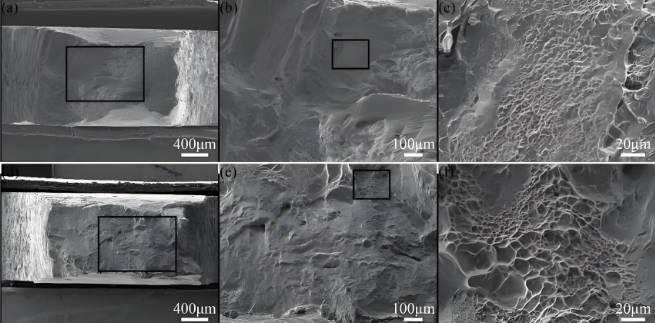
- Scanning electron microscopy and energy‑dispersive X‑ray spectroscopy of the eroded and the vapour‑deposited surfaces: the splitter‑plate surfaces, the arc‑runner edges and the insulating‑wall deposits are examined at high magnification, and the elemental composition of the arc‑erosion products, the transferred material and the foreign contaminants is determined. The analysis distinguishes between the normal, uniform erosion of the plate and the abnormal localised melting, the copper‑chromium inter‑diffusion or the deposition of the zinc‑oxide from the wall‑filler that altered the arc‑voltage characteristic.
- Metallographic sectioning and micro‑hardness testing of the splitter plates and the arc runners: a cross‑section through the eroded region is prepared, and the grain‑structure, the heat‑affected zone and the hardness profile are determined. The depth of the recrystallisation and the softening of the steel plate are correlated with the number of the interruption operations, and the remaining mechanical strength of the plate is estimated, providing the data that the design engineer uses to set the safe‑life limit of the arc chute.
- Differential scanning calorimetry, thermogravimetric analysis and Fourier‑transform infrared spectroscopy of the insulating materials: the organic and the inorganic insulating components – the melamine‑glass, the polyester‑glass, the ceramic‑filled‑polyamide and the PTFE‑based vent‑liners – are analysed for the thermal degradation, the loss of the flame‑retardant additive and the formation of the conductive carbonaceous char. The experimental service for failure analysis of arc extinguishers identifies the chemical‑ageing mechanism that reduced the tracking resistance and the dielectric strength of the wall, and it guides the selection of the improved material for the next‑generation arc chute.
- X‑ray diffraction and Raman spectroscopy for the phase identification of the arc‑deposited layers: the crystalline and the amorphous phases of the metallic‑vapour‑deposited films on the insulating walls are identified, and the presence of the conductive phases – such as the metallic copper, the graphite or the magnetite – is correlated with the formation of the unwanted conductive paths that bypassed the splitter‑plate stack.
Report Acceptance and Global Regulatory Compliance
All investigations performed within our experimental service for failure analysis of arc extinguishers are executed under the fully accredited scope of our ISO/IEC 17025 quality management system. Each test report that carries the ILAC mark is therefore automatically recognised by regulatory authorities, notified bodies, customs offices and supply‑chain partners in all major economies. For circuit‑breaker and switchgear manufacturers, electrical‑network operators, railway‑infrastructure maintainers and industrial‑safety‑system integrators anywhere in the world, the report constitutes legally robust, internationally accepted evidence that the root cause of the arc‑extinguisher failure, the extent of the material degradation and the residual performance of the device have been determined in accordance with the applicable IEC, IEEE, ASTM and customer‑specified methods. The documentation can be directly used to support the product‑improvement programme, the safety‑recall notification, the insurance‑claim submission and the resolution of commercial and technical disputes concerning the interruption‑performance and the reliability of any arc‑extinguishing system.