Edible Fungi Resistance Identification Experiment – Accredited Stress Tolerance and Sensitivity Evaluation for Global Markets
Our internationally accredited laboratory provides a specialist edible fungi resistance identification experiment service that supplies mushroom spawn producers, commercial growers, fungicide manufacturers, food‑safety agencies and agricultural research institutes worldwide with the independent, traceable data they need to evaluate the tolerance, susceptibility and adaptive capacity of their cultivated strains to a wide range of environmental, chemical and biological stressors. Every test is conducted under the rigorous framework of ISO/IEC 17025, and each report bearing the ILAC mark is unconditionally accepted by regulatory authorities, notified bodies and supply‑chain partners in all major economies. The experiment on resistance identification of edible fungi precisely quantifies the ability of the mycelium, the spores and the fruiting bodies to withstand elevated temperatures, fungicidal active ingredients, heavy‑metal contaminants, osmotic pressure, pH extremes and competing microbial pathogens. For a spawn laboratory selecting a heat‑tolerant Pleurotus ostreatus strain for the summer production, an agrochemical company validating the selectivity of a novel fungicide towards Agaricus bisporus, or an exporter demonstrating that the dried mushrooms comply with the maximum residue limits of the destination country, this service delivers the legally robust, defensible data that underpin strain certification, pesticide registration and global food‑safety compliance.

Product Samples We Regularly Subject to Edible Fungi Resistance Identification
The inoculation and incubation chambers, the temperature‑gradient incubators, the laminar‑flow benches, the high‑performance‑liquid‑chromatography systems and the colony‑counting stations in our facility accommodate a broad variety of fungal materials and their substrates. The following categories represent the most frequently tested items:
- Pure‑culture mycelial plugs and spawn grains – the actively growing vegetative cultures of Agaricus bisporus, Lentinula edodes, Pleurotus spp., Flammulina velutipes, Auricularia auricula, Volvariella volvacea and Hericium erinaceus, maintained on the potato‑dextrose‑agar or the grain‑based substrates
- Basidiospore suspensions and the germinating spore populations – the harvested and the washed spores of the edible basidiomycetes, used for the determination of the fungicide sensitivity at the earliest developmental stage
- Fruiting‑body primordia and the harvested mushroom caps and stems – the fresh, intact sporophores, tested for the post‑harvest browning, the bacterial‑blotch resistance and the transpiration‑induced weight loss under the controlled storage conditions
- Spent mushroom substrate and the casing‑soil samples – the compost and the casing materials that are naturally infested with the competitor moulds, the nematodes and the bacterial pathogens, submitted for the resistance screening of the resident mycelium
- Liquid‑culture and the submerged‑fermentation biomass – the mycelial pellets produced in the bioreactors for the nutraceutical and the enzyme‑extraction purposes, evaluated for the tolerance to the shear stress and the dissolved‑oxygen fluctuation
- Commercial fungicide and the disinfectant formulations – the prochloraz, the thiabendazole, the metrafenone, the chlorine‑dioxide and the peracetic‑acid products that are used in the mushroom farms, tested against a panel of the edible fungi to generate the baseline sensitivity data
Fungicide and Biocide Resistance Identification – Experiment on Resistance Identification of Edible Fungi According to the FAO/WHO Pesticide Specifications and the Fungicide Resistance Action Committee Guidelines
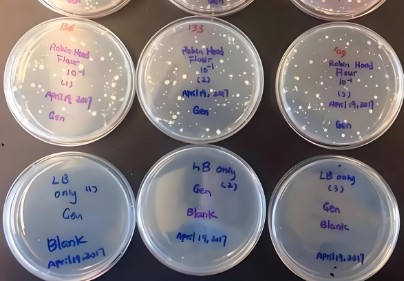
- Determination of the median effective concentration (EC₅₀) and the minimum inhibitory concentration by the mycelial‑growth‑rate assay on the fungicide‑amended agar: the selected fungicide active ingredient is incorporated into the molten potato‑dextrose‑agar at a logarithmic concentration series, and a standardised mycelial plug of the test strain is inoculated at the centre of each plate. The radial colony diameter is measured daily, and the percentage inhibition relative to the un‑amended control is plotted against the log₁₀ fungicide concentration. The EC₅₀ value in the milligrams per litre is calculated from the four‑parameter logistic regression, and the minimum inhibitory concentration that completely suppresses the mycelial growth is reported. This experiment on resistance identification of edible fungi provides the fundamental sensitivity baseline for the target pathogen and the non‑target edible species, and it is used by the fungicide registrants to demonstrate the selectivity and by the growers to select the appropriate product and the dose.
- Spore‑germination inhibition test for the determination of the protective and the eradicant activity: a known concentration of the basidiospores or the conidia is spread onto the water‑agar plates that contain the graded concentrations of the fungicide, and the percentage of the germinated spores after a defined incubation period is counted under the microscope. The concentration that inhibits 50 % of the spore germination is reported, providing the data that are particularly relevant for the protective fungicide applications at the casing and the pinning stages.
- Assessment of the resistance risk and the induction of the fungicide resistance by the repeated sub‑lethal exposure: the mycelium is serially transferred onto the agar plates containing a sub‑inhibitory concentration of the fungicide for ten or more generations, and the shift in the EC₅₀ is measured after each transfer. The resistance factor – the ratio of the EC₅₀ of the final generation to the EC₅₀ of the initial, un‑exposed generation – is calculated, and the strain is classified as having a low, a medium or a high resistance risk, supporting the design of the anti‑resistance management strategies and the rotation of the fungicide modes of action.
- Cross‑resistance profiling against the multiple fungicide classes: the strain that exhibits the reduced sensitivity to one fungicide is tested against a panel of the structurally and the mechanistically distinct fungicides, and the pattern of the cross‑resistance is reported, providing the essential information for the selection of the effective tank‑mix partners and the alternation programmes.
- In‑vivo efficacy and the residue‑depletion correlation: the selected fungicide is applied to the fruiting‑body or the casing at the recommended and the exaggerated doses, and the residue concentration in the harvested mushroom is measured by the liquid‑chromatography–tandem‑mass‑spectrometry at the defined pre‑harvest intervals, ensuring that the effective disease‑control dose does not result in the residue levels that exceed the maximum residue limit of the importing market. This experiment on resistance identification of edible fungi directly links the in‑vitro sensitivity data to the regulatory compliance of the finished food product.
Thermal, Osmotic and pH Stress Resistance – Experiment on Resistance Identification of Edible Fungi for the Industrial and the Environmental Selection
- Determination of the cardinal temperatures and the thermal‑death point by the temperature‑gradient incubator: the mycelial plugs are incubated at a series of the precisely controlled temperatures – typically from 5 °C to 40 °C – and the radial growth rate in the millimetres per day is plotted against the temperature, yielding the minimum, the optimum and the maximum growth temperatures for each strain. The thermal‑death point – the temperature and the exposure time that result in the irreversible loss of the mycelial viability – is determined by the transfer of the heat‑exposed plugs to the fresh medium, providing the essential data for the pasteurisation and the sterilisation protocols of the substrate and for the selection of the strains that can be cultivated in the tropical or the high‑altitude climates.
- Osmotic‑stress tolerance and the water‑activity limits by the glycerol‑ or the sodium‑chloride‑adjusted media: the mycelial growth is measured on the agar plates that are adjusted to the water‑activity values from 0.99 to 0.85 by the addition of the glycerol, the sodium chloride or the sucrose, and the minimum water activity that supports the growth is reported, which is critical for the development of the shelf‑stable, the dried‑mushroom products and the low‑moisture spawn formulations.
- pH‑stress resistance and the acid‑or‑alkali‑tolerance profiling: the potato‑dextrose‑agar is buffered to the pH values from 3.0 to 9.0, and the mycelial growth and the biomass yield are measured, identifying the strains that can thrive in the acidic, the neutral or the alkaline substrates, which is relevant for the compatibility of the edible fungus with the different agricultural and the industrial by‑products that are used as the growth media.
- Heavy‑metal and the trace‑element toxicity screening by the agar‑dilution and the liquid‑culture methods: the mycelium is exposed to the graded concentrations of the cadmium, the lead, the mercury, the arsenic and the copper, and the IC₅₀ (the concentration that inhibits 50 % of the growth) is determined, providing the data for the food‑safety risk assessment of the mushrooms that are cultivated on the metal‑contaminated substrates or the industrial wastes.
- Ultraviolet‑C and the ionising‑radiation resistance for the post‑harvest preservation: the harvested mushrooms or the spawn grains are exposed to the defined doses of the UV‑C or the gamma radiation, and the extension of the shelf‑life, the reduction of the microbial load and the retention of the nutritional quality are evaluated, supporting the validation of the radiation‑based preservation treatments for the fresh and the dried edible fungi.
Report Acceptance and Global Regulatory Compliance
All measurements performed within our experiment on resistance identification of edible fungi are executed under the fully accredited scope of our ISO/IEC 17025 quality management system. Each test report that carries the ILAC mark is therefore automatically recognised by regulatory authorities, notified bodies, customs offices and supply‑chain partners in all major economies. For mushroom‑spawn laboratories, commercial‑scale growers, fungicide manufacturers and food‑safety agencies anywhere in the world, the report constitutes legally robust, internationally accepted evidence that the fungicide sensitivity, the thermal tolerance, the osmotic and the pH resistance, the heavy‑metal toxicity threshold and the post‑harvest preservation characteristics of the edible fungi have been determined in accordance with the applicable FAO/WHO, FRAC, ISO and customer‑specified methods. The documentation can be directly used to support the strain registration, the pesticide‑product registration, the organic‑certification compliance, the issue of inspection certificates according to EN 10204 or equivalent national standards, and the resolution of commercial and technical disputes concerning the resistance profile and the cultivation performance of any edible mushroom strain.