Electron Paramagnetic Resonance (EPR) Spectroscopy Testing Service – Accredited Free Radical, Defect and Transition Metal Analysis for Global Markets
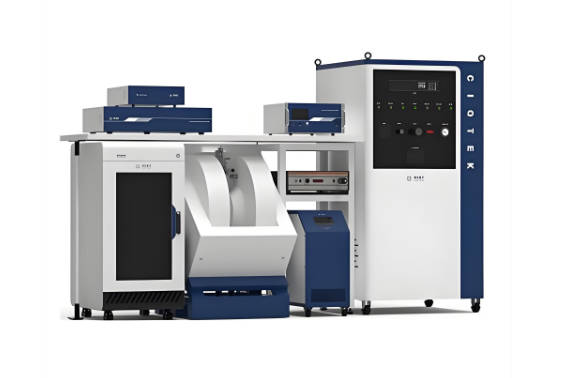
Our internationally accredited laboratory delivers a specialist electron paramagnetic resonance experiment service that provides pharmaceutical researchers, polymer chemists, food‑irradiation processors, semiconductor manufacturers, catalyst developers and geochronologists worldwide with the independent, traceable data they need to identify, quantify and structurally characterise paramagnetic centres in solid, liquid and gaseous samples. Every measurement is performed under the rigorous framework of ISO/IEC 17025, and each report bearing the ILAC mark is unconditionally accepted by regulatory authorities, notified bodies and supply‑chain partners in all major economies. The electron paramagnetic resonance experiment – also known as electron spin resonance – directly detects the resonant absorption of microwave radiation by unpaired electrons in a magnetic field, making it uniquely sensitive to free radicals, crystalline defects, radiation‑induced centres, transition‑metal ions and triplet‑state molecules that are invisible to most other analytical techniques. By employing continuous‑wave and pulsed EPR spectrometers operating at X‑band, Q‑band and W‑band frequencies, along with cryogenic temperature control and in‑situ irradiation capabilities, we provide the legally robust, defensible data that underpin product stability studies, radiation‑dose validation, oxidative‑degradation mechanism elucidation and the certification of materials to the relevant ASTM, ISO, EN and customer‑specified standards.
Product Samples We Regularly Subject to Electron Paramagnetic Resonance Experiments
The cavity resonators, cryostats, goniometers and liquid‑flow cells of our EPR spectrometers accommodate an exceptionally diverse range of sample types and physical forms. The following categories represent the most frequently tested items:
- Pharmaceutical and biopharmaceutical products – active pharmaceutical ingredients, excipients, lyophilised powders, tablet cores, creams and ophthalmic suspensions evaluated for the presence of process‑induced or storage‑generated free radicals that can lead to the degradation of the active molecule
- Polymers, plastics and elastomers – polyethylene, polypropylene, polyvinyl chloride, polyurethane, silicone and rubber specimens, analysed for the identification of the radical species that initiate the thermo‑oxidative or the photo‑oxidative chain‑scission and the cross‑linking reactions
- Food, beverages and nutraceuticals – spices, dried herbs, meat, seafood, fruit powders, dietary supplements and food‑packaging materials, tested to verify the irradiation status, to quantify the absorbed radiation dose and to authenticate the non‑irradiated label claim
- Semiconductor and optical materials – silicon wafers, silicon‑carbide, gallium‑nitride, zinc‑oxide and titanium‑dioxide single crystals, thin films and powders, characterised for the intrinsic and the dopant‑induced paramagnetic defects that govern the electrical and the optical performance
- Geological and archaeological specimens – tooth enamel, quartz grains, carbonate fossils, flint and ceramics, measured for the radiation‑induced paramagnetic centres that are used to determine the age of the sample by the electron‑spin‑resonance dating method
- Catalysts, zeolites and metal‑organic frameworks – transition‑metal‑containing solid catalysts, including the iron, the copper, the vanadium and the chromium species, characterised for the oxidation state, the coordination geometry and the spin state that dictate the catalytic activity and the selectivity
- Cosmetics, personal‑care and household products – creams, lotions, shampoos, soaps and detergents, evaluated for the free‑radical generation induced by the exposure to the ultraviolet radiation or the chemical stress, which can affect the product stability and the consumer safety
Pharmaceutical and Biopharmaceutical Products – Electron Paramagnetic Resonance Experiment for Free Radical Detection and Quantification
- Identification and quantification of the process‑induced and the storage‑generated free radicals according to the internal validated protocols and the principles of ASTM E2329 (Standard Practice for Identification and Quantitation of Free Radicals in Polymeric and Pharmaceutical Materials by Electron Spin Resonance): a known mass of the solid or the liquid sample is placed in a quartz EPR tube, and the first‑derivative absorption spectrum is recorded at the X‑band frequency at room temperature or at the liquid‑nitrogen temperature. The g‑factor, the hyperfine‑coupling pattern and the line‑shape of each radical species are determined, and the radical concentration in the spins per gram is calculated from the double integration of the spectrum relative to a calibrated reference standard. This electron paramagnetic resonance experiment provides the direct, non‑destructive evidence of the free‑radical formation in the drug substance or the excipient, and it supports the root‑cause investigation of the impurity‑formation and the discolouration during the formulation, the sterilisation and the shelf‑life.
- Monitoring of the radical decay kinetics and the oxidation‑induction period: the sample is heated in the EPR cavity to the accelerated‑ageing temperature, and the intensity of the radical signal is recorded as a function of the time. The decay rate constant and the half‑life of the radical population are reported, and the oxidation‑induction period – the time at which the radical concentration begins to increase rapidly – is identified, providing the quantitative stability data that the formulator uses to select the correct antioxidant and the packaging for the target shelf‑life.
- Irradiation‑sterilisation dose‑mapping and the validation of the terminal sterilisation: the pharmaceutical or the medical‑device material is exposed to the gamma or the electron‑beam irradiation at the graded doses, and the intensity of the irradiation‑specific radical signal (e.g., the cellulose‑derived or the polymer‑derived radical) is measured, providing the dose‑response curve that is used to verify the uniformity and the adequacy of the sterilisation dose. The test is repeated after the post‑irradiation annealing to confirm that the radicals have decayed to the safe level before the product release.
- Detection of the transition‑metal‑ion contaminants in the pharmaceutical excipients and the water‑for‑injection: the EPR spectrum is recorded at the low temperature, and the characteristic signals of the iron(III), the copper(II), the manganese(II) and the chromium(III) are identified and quantified at the parts‑per‑million or the sub‑parts‑per‑million level, supporting the compliance with the ICH Q3D elemental‑impurity guidelines.
Polymers, Plastics and Elastomers – Electron Paramagnetic Resonance Experiment for Degradation and Ageing Studies
- Determination of the radical‑formation mechanism during the thermo‑oxidative and the photo‑oxidative degradation of the polymers according to the internal procedures and the principles of ASTM E2329: the polymer specimen is heated or irradiated with the UV‑A or the UV‑B light inside the EPR cavity, and the time‑resolved EPR spectra are recorded. The peroxyl, the alkoxyl, the alkyl and the acyl‑radical intermediates are identified by their g‑factors and the hyperfine‑coupling constants, and the formation‑and‑decay kinetics of each species are quantified, providing the mechanistic‑pathway data that the polymer‑additive chemist uses to design a more effective antioxidant or light‑stabiliser package. This electron paramagnetic resonance experiment is capable of detecting the transient radicals at the concentrations as low as 10⁻⁹ mol/L, enabling the early detection of the degradation initiation long before the macroscopic property loss is observed.
- Oxidative‑induction‑time measurement by the spin‑probe and the spin‑trap methods: a stable nitroxide‑radical probe or a spin‑trap compound is incorporated into the polymer, and the decrease in the probe signal or the build‑up of the trapped‑radical adduct is monitored as a function of the temperature and the time, providing the accelerated‑ageing prediction of the polymer service life that is faster and more sensitive than the conventional differential‑scanning‑calorimetry method.
- Characterisation of the cross‑linking and the chain‑scission radicals in the elastomers and the thermosets: the radical intermediates that are formed during the vulcanisation, the peroxide‑curing or the radiation‑cross‑linking of the rubber and the epoxy resin are trapped and identified, and the concentration of the cross‑link‑mediating radicals is correlated with the cross‑link density and the final mechanical properties, guiding the optimisation of the curing cycle and the radiation dose.
- Radical‑migration and the blooming‑effect studies in the multi‑layer packaging: the EPR imaging or the spatially resolved EPR is used to map the distribution of the antioxidant‑derived nitroxide radicals across the cross‑section of the laminated film, quantifying the rate of the antioxidant migration from the food‑contact layer into the adhesive tie‑layer, which can compromise the long‑term barrier performance.
Food Irradiation, Dosimetry and Authenticity – Electron Paramagnetic Resonance Experiment According to EN 1787, EN 13708 and ASTM E1607
- Detection of the irradiated food by the EPR spectroscopy of the bone, the cellulose and the crystalline sugar according to EN 1787 (Foodstuffs – Detection of irradiated food containing cellulose by ESR spectroscopy), EN 13708 (Foodstuffs – Detection of irradiated food containing crystalline sugar by ESR spectroscopy) and EN 1786 (Foodstuffs – Detection of irradiated food containing bone by ESR spectroscopy): the bone fragment, the cellulose fibre or the crystalline sugar isolated from the food sample is placed in the EPR tube, and the spectrum is recorded. The presence of the radiation‑induced, long‑lived radical signals – the hydroxyapatite‑derived signal in the bone, the cellulose‑derived signal in the spice and the fruit, and the sugar‑derived signal in the dried fruit – is assessed, and the sample is classified as “irradiated” or “non‑irradiated”. This electron paramagnetic resonance experiment is the reference method prescribed by the European Committee for Standardization for the enforcement of the food‑irradiation labelling regulations, and it is accepted as the legal evidence by the national food‑control authorities.
- Determination of the absorbed radiation dose by the EPR dosimetry according to ASTM E1607 (Standard Practice for Use of the Alanine‑EPR Dosimetry System) and ISO/ASTM 51607: the alanine‑pellet dosimeter or the tooth‑enamel sample that has been exposed to the unknown radiation dose is measured, and the intensity of the radiation‑induced alanine‑radical or the carbonate‑radical signal is compared with that of the calibration dosimeters that were irradiated to the known doses. The absorbed dose in the gray is reported, providing the dose‑verification data that are required for the quality assurance of the industrial‑irradiation processes, the food‑irradiation facility audits and the retrospective accident‑dosimetry.
- Authentication of the non‑irradiated and the organic‑label food products: a batch of the spice, the herb or the dried fruit is screened for the radiation‑induced radical signals, and the absence of any such signal is used to support the “non‑irradiated” or the “organic” label claim, providing the independent, third‑party evidence that the importer and the retailer can present to the regulatory authority and the consumer.
- Evaluation of the oxidative stability and the rancidity of the edible oils and the fats: the spin‑trap reagent is added to the oil sample, and the concentration of the trapped‑lipid‑alkyl and the peroxyl radicals is measured over the time under the accelerated‑oxidation conditions, providing the direct, molecular‑level measurement of the oil’s resistance to the oxidation and the rancidification.
Semiconductor, Optical and Advanced Materials – Electron Paramagnetic Resonance Experiment for Defect and Dopant Analysis
- Identification and the quantification of the paramagnetic point defects in the semiconductor single crystals and the thin films according to the internal protocols and the semiconductor‑industry standards: the sample is oriented in the magnetic field using a goniometer, and the angular‑dependent EPR spectra are recorded. The g‑tensor, the hyperfine‑coupling tensor and the zero‑field‑splitting parameters of the vacancy‑related defects, the interstitials, the dopant‑ions and the interface‑traps are determined, and the defect concentration in the spins per cubic centimetre is reported. This electron paramagnetic resonance experiment provides the essential structure‑property‑relationship data that the crystal‑growth engineer uses to optimise the growth atmosphere, the dopant concentration and the post‑growth annealing to minimise the electrically active defects that degrade the device performance.
- Characterisation of the transition‑metal and the rare‑earth dopants in the optical and the laser materials: the oxidation state, the local‑site symmetry and the ligand‑field parameters of the optically active ions – such as the chromium(III) in the ruby, the neodymium(III) in the YAG and the ytterbium(III) in the laser glasses – are measured by the EPR, and the data are correlated with the optical‑absorption and the emission spectra, providing the complete energy‑level diagram that is needed to model the laser‑pumping efficiency and the gain bandwidth.
- Defect‑analysis and the failure investigation of the gate‑dielectric stacks in the metal‑oxide‑semiconductor devices: the EPR spectrum of the silicon‑dioxide layer on the silicon wafer reveals the presence of the E′‑centre, the Pb‑centre and the other paramagnetic interface‑traps that are responsible for the threshold‑voltage shift and the increased gate‑leakage, supporting the failure‑analysis and the process‑optimisation of the complementary‑metal‑oxide‑semiconductor technology.
- Oxygen‑vacancy and the conduction‑electron characterisation in the transparent conductive oxides and the perovskite solar‑cell materials: the EPR signal of the conduction electrons and the oxygen‑vacancy‑associated defects in the indium‑tin‑oxide, the zinc‑oxide and the titanium‑dioxide thin films is measured, and the carrier concentration and the defect‑density are quantified, providing the rapid, non‑contact electrical characterisation that guides the deposition‑parameter optimisation.
Geochronology, Dosimetry and Forensic Applications – Electron Paramagnetic Resonance Experiment for Dating and Source Attribution
- Electron‑spin‑resonance dating of the tooth enamel, the quartz and the carbonate fossils according to the internal validated protocols and the principles of the International Union of Geological Sciences recommendations: the sample is prepared by the gentle grinding and the etching, and the EPR intensity of the radiation‑induced paramagnetic centre – the hydroxyapatite‑derived CO₂⁻ radical in the enamel, the Al‑centre or the Ti‑centre in the quartz – is measured. The accumulated radiation dose since the deposition or the last heating event is calculated from the calibration curve, and the age of the sample in the years is reported, providing the chronological data that are used by the archaeologists, the palaeontologists and the Quaternary‑geology researchers to reconstruct the human‑evolution timeline and the past‑climate changes.
- Retrospective accident‑dosimetry using the EPR of the tooth enamel or the fingernail clipping: the radiation‑induced radical concentration in the biological hydroxyapatite or the keratin is measured, and the absorbed dose is estimated by the additive‑dose or the calibration‑curve method, providing the individual‑dose assessment that is used in the radiological‑emergency triage and the epidemiological cohort studies.
- Source‑attribution of the environmental particulate matter and the airborne dust by the EPR fingerprinting: the transition‑metal‑ion and the free‑radical signature of the fly‑ash, the diesel‑soot and the road‑dust samples is recorded, and the multi‑variate statistical analysis of the EPR spectra is used to identify the contributing pollution sources, supporting the air‑quality management and the regulatory enforcement actions.
Report Acceptance and Global Regulatory Compliance
All measurements performed within our electron paramagnetic resonance experiment programme are executed under the fully accredited scope of our ISO/IEC 17025 quality management system. Each test report that carries the ILAC mark is therefore automatically recognised by regulatory authorities, notified bodies, customs offices and supply‑chain partners in all major economies. For pharmaceutical manufacturers, polymer producers, food‑irradiation facility operators, semiconductor foundries and geochronology researchers anywhere in the world, the report constitutes legally robust, internationally accepted evidence that the free‑radical concentration, the radiation dose, the paramagnetic defect density, the transition‑metal oxidation state and the related EPR parameters have been determined in accordance with the applicable ASTM, ISO, EN and customer‑specified methods. The documentation can be directly used to support the product registration, the irradiation‑process validation, the food‑authenticity certification, the semiconductor‑process qualification, the issue of inspection certificates according to EN 10204 or equivalent national standards, and the resolution of commercial and technical disputes concerning the paramagnetic properties and the oxidative stability of any material.