Electrical Resistivity Experiment of Coal Slag After Combustion – Accredited Resistivity and Conductivity Characterization for Global Markets
Our internationally accredited laboratory provides a specialist electrical resistivity experiment of coal slag after combustion service that enables power‑plant operators, coal‑gasification technology developers, metallurgical process engineers, cement and construction‑material producers, and environmental research institutes worldwide to independently measure the electrical conductivity, the resistivity–temperature profile and the phase‑composition effects on the electrical behaviour of their coal‑combustion residues. Every measurement is conducted within the rigorous framework of ISO/IEC 17025, and each report bearing the ILAC mark is unconditionally accepted by regulatory authorities, notified bodies and supply‑chain partners in all major economies. The electrical resistivity experiment of coal slag after combustion determines the direct‑current or alternating‑current volume resistivity of the solidified slag as a function of the temperature, the cooling history and the chemical composition, providing the fundamental data that engineers and scientists use to predict the slag‑flow behaviour in an entrained‑flow gasifier, to assess the fouling and the corrosion of the electrostatic‑precipitator electrodes, to evaluate the suitability of the slag as a raw material for the cement or the ceramic industries, and to model the electromagnetic‑heating response of the slag during a plasma‑vitrification or a microwave‑remediation process. By employing four‑point‑probe resistivity cells, high‑temperature tube furnaces with a controlled atmosphere, impedance analysers and precision‑current‑voltage source‑meters, our platform delivers the legally robust, traceable electrical data that underpin process optimisation, equipment design and compliance with the relevant ASTM, ISO and customer‑specified standards.
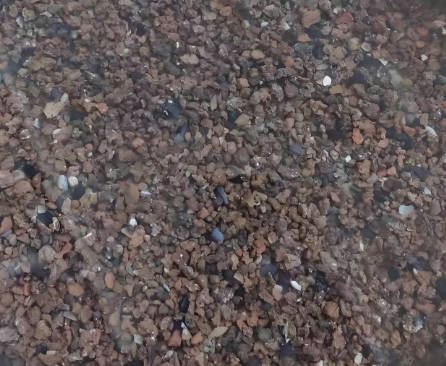
Product Samples We Regularly Subject to the Electrical Resistivity Experiment of Coal Slag After Combustion
The sample‑preparation laboratory adjoining our high‑temperature electrical‑measurement suite is equipped with jaw crushers, ring mills, fusion furnaces and controlled‑atmosphere re‑melting stations that convert the raw slag into the standardised test specimens. The following categories represent the materials most frequently evaluated through our electrical resistivity experiment of coal slag after combustion programme:
- Pulverised‑coal boiler bottom ash and fly ash – the fused or sintered residues collected from the hopper of a dry‑bottom or a wet‑bottom boiler, including the economiser and the air‑heater ash fractions
- Entrained‑flow gasifier slag – the quenched, glassy slag discharged from the bottom of an oxygen‑blown or an air‑blown gasifier, with a silica‑alumina‑iron‑calcium composition that reflects the coal rank and the flux addition
- Cyclone‑boiler and slag‑tap furnace slag – the dense, crystalline or partly devitrified slag that forms on the walls of a high‑intensity cyclone furnace or a slag‑tap boiler and is periodically tapped
- Laboratory‑produced synthetic slags and doped slags – samples prepared by melting a blend of reagent‑grade oxides, carbonates and sulfates, optionally doped with controlled amounts of alkali, alkaline‑earth or transition‑metal oxides to investigate the effect of a specific element on the electrical resistivity
- Vitrified and plasma‑treated slag granules – the glass‑ceramic product obtained by the plasma‑torch or the electric‑arc vitrification of a coal‑combustion residue, often mixed with a glass‑forming additive
- Slag‑based cement clinkers and geopolymer precursors – the ground slag blended with limestone, clay or an alkali activator, for which the electrical resistivity is a sensitive indicator of the degree of hydration or the geopolymerisation
Direct‑Current Volume Resistivity of Coal Slag – Four‑Point‑Probe and Guarded‑Electrode Methods According to ASTM D257 and ISO 13931
- Determination of the DC volume resistivity of a disk‑shaped slag specimen by the three‑terminal guarded‑electrode method according to ASTM D257 (Standard Test Methods for DC Resistance or Conductance of Insulating Materials) and ISO 13931 (Carbon fibre – Determination of volume resistivity): a polished slag disk is placed between a guarded main electrode and an unguarded counter‑electrode inside a temperature‑controlled furnace. A known DC voltage is applied, and the steady‑state current is measured with a pico‑ammeter or an electrometer. The volume resistivity ρv in ohm‑metres is calculated from the specimen geometry and the measured resistance, and the result is reported as a function of the temperature. This electrical resistivity experiment of coal slag after combustion provides the fundamental data that the gasifier designer uses to predict the electrical‑heating behaviour of the slag layer and to set the operating temperature of the slag‑tap system.
- Four‑point‑probe resistivity measurement on a bar‑shaped slag specimen: four equally spaced spring‑loaded platinum or tungsten electrodes are pressed against the polished surface of the slag bar, and a constant current is passed through the outer electrodes while the voltage drop is measured across the inner electrodes. The method eliminates the contact‑resistance error, and the bulk resistivity is calculated. The specimen is heated in a tube furnace at a controlled rate, and the resistivity–temperature curve from 100 °C to 1 200 °C is recorded, revealing the glass‑transition‑related resistivity decrease, the onset of the ionic conduction and the phase‑transition discontinuities.
- Influence of the slag chemical composition and the iron‑oxide redox state on the DC resistivity: a series of slag specimens with varying Fe₂O₃/FeO ratios, achieved by melting the slag in an oxidising, a neutral or a reducing atmosphere, are tested. The shift in the resistivity and the activation energy for the electrical conduction are correlated with the Mössbauer‑spectroscopy‑determined Fe²⁺/Fe³⁺ ratio, providing the mechanistic understanding that the slag‑chemistry modeller needs to predict the resistivity of a coal‑ash slag from its bulk chemistry.
- Resistivity of the partly crystallised and the fully devitrified slag after controlled cooling: the slag is cooled at a defined rate through the crystallisation‑temperature window, and the volume fraction and the morphology of the crystalline phases – anorthite, gehlenite, mullite or magnetite – are determined by X‑ray diffraction and scanning electron microscopy. The electrical resistivity of the partly crystallised slag is measured and compared with that of the quenched glass, and the effect of the crystal‑network connectivity on the conduction path is analysed. This electrical resistivity experiment of coal slag after combustion quantifies the change in the resistivity that occurs when the slag lining of a gasifier slowly devitrifies during the extended campaign.
- Determination of the surface resistivity and the effect of the humidity on the slag‑ash specimen: the surface resistivity of the compacted fly‑ash or the slag powder is measured in a humidity‑controlled chamber, and the data are used to assess the performance of the electrostatic‑precipitator collection, which depends sensitively on the surface‑conductivity of the ash particles at the cold‑side temperature and the flue‑gas moisture content.
Alternating‑Current Impedance Spectroscopy and Dielectric Characterisation of Coal Slag After Combustion
- Measurement of the complex impedance and the frequency‑dependent conductivity of the slag by AC impedance spectroscopy according to the principles of ASTM E2874 and the electrochemical‑impedance‑spectroscopy standards: the slag specimen is contacted by two platinum electrodes, and a small‑amplitude sinusoidal voltage is applied over a frequency range from 10 mHz to 10 MHz. The Nyquist and the Bode plots are recorded at each temperature, and the bulk resistance, the grain‑boundary resistance and the electrode‑polarisation impedance are resolved by equivalent‑circuit fitting. This electrical resistivity experiment of coal slag after combustion separates the true bulk‑conductivity from the interfacial‑polarisation effects and reveals the presence of any poorly conducting crystalline phase that forms a barrier layer at the grain boundary.
- Determination of the dielectric constant and the loss tangent of the slag as a function of the temperature and the frequency: the real part of the permittivity ε′ and the dissipation factor tan δ are calculated from the impedance data, and the data are used to predict the microwave‑absorption efficiency and the penetration depth of the electromagnetic radiation during a microwave‑assisted slag‑heating or a plasma‑vitrification process.
- In‑situ impedance monitoring during the melting and the solidification of the slag: the slag powder is heated in a crucible equipped with two embedded electrodes, and the impedance is continuously recorded as the powder sinters, melts, flows and solidifies. The sudden changes in the resistivity and the capacitance mark the solidus and the liquidus temperatures, providing the real‑time, in‑situ determination of the melting range of the slag without the need for a separate differential‑thermal‑analysis or a hot‑stage‑microscopy experiment.
- Correlation of the AC conductivity with the slag‑viscosity and the slag‑structure models: the electrical conductivity derived from the impedance spectrum is compared with the rotating‑bob viscometry data and with the Raman‑spectroscopy‑determined degree of polymerisation of the silicate network. The Nernst‑Einstein and the Weibull‑type conductivity–viscosity relationships are tested, and the parameters of the best‑fit model are reported, providing the predictive tool that the process‑simulation engineer uses to calculate the slag electrical behaviour from the routinely measured viscosity or the chemical composition.
Report Acceptance and Global Regulatory Compliance
All measurements performed within our electrical resistivity experiment of coal slag after combustion programme are executed under the fully accredited scope of our ISO/IEC 17025 quality management system. Each test report that carries the ILAC mark is therefore automatically recognised by regulatory authorities, notified bodies, customs offices and supply‑chain partners in all major economies. For power‑utility companies, coal‑gasification plant operators, slag‑processing enterprises, cement and construction‑material manufacturers and environmental‑technology developers anywhere in the world, the report constitutes legally robust, internationally accepted evidence that the electrical resistivity, the impedance‑spectroscopic parameters and the conductivity–temperature profile of the coal‑combustion slag have been determined in accordance with the applicable ASTM, ISO and customer‑specified methods. The documentation can be directly used to support the design and the permitting of a slag‑handling and a gas‑cleaning system, to qualify the slag as a raw material for a cement or a ceramic process, to issue inspection certificates according to EN 10204 or equivalent national standards, and to resolve commercial and technical disputes concerning the electrical behaviour and the processability of any coal‑combustion residue.