Electrical Conductivity Oxidized Yellow Detection Service for Global Surface Engineering
As an ISO/IEC 17025 accredited laboratory, we deliver a specialized Electrical Conductivity Oxidized Yellow Detection Service that verifies the electrical performance, oxide layer quality, yellowing behavior, and long-term durability of conductive oxide films and yellow conversion coatings. Our Electrical Conductivity Oxidized Yellow Detection Service supports manufacturers and exporters of anodized aluminum parts, chromate conversion coatings, conductive oxide electrodes, and decorative yellow metal finishes who must demonstrate conformity to ASTM, ISO, EN, and regional surface treatment standards across the European Union, North America, East Asia, and the Middle East. Every test is performed under our CNAS-accredited quality system, producing reports accepted by notified bodies, electronics OEMs, and procurement teams worldwide.

Product Samples We Regularly Test in Our Electrical Conductivity Oxidized Yellow Detection Service
- Conductive anodized aluminum components with yellow oxide films — for electronics housings, heat sinks, and architectural trims
- Yellow chromate conversion coatings on aluminum and zinc — for corrosion protection and electrical grounding
- Transparent conductive oxide films with oxidized yellow tint — ITO, FTO, and AZO films on glass and polymer substrates
- Yellow zinc plating and passivation layers — on fasteners, brackets, and automotive hardware
- Titanium anodized yellow components — for medical implants, aerospace fasteners, and jewelry
- Conductive yellow polymer-oxide composite films — for antistatic packaging and flexible electronics
- Oxidized yellow copper and brass surfaces — for electrical contacts, busbars, and decorative panels
Electrical Conductivity and Surface Resistance Testing
- Eddy current conductivity measurement per ASTM E1004 and ISO 2360 — the electrical conductivity of the oxidized yellow film and the base metal is measured in % IACS using a calibrated eddy current instrument, verifying that the conductive oxide layer meets the specified conductivity class for grounding, shielding, or current-carrying applications.
- Surface resistivity and volume resistivity per ASTM D257 and IEC 60093 — a guarded electrode system or four-point probe measures the electrical resistance across and through the oxidized yellow coating, classifying the surface as conductive, static dissipative, or insulative according to the required electrostatic discharge control specification.
- Four-point probe sheet resistance measurement per ASTM F390 — for transparent conductive yellow oxide films, the sheet resistance in ohms per square is mapped across the substrate to detect local thickness or composition variations that would cause non-uniform electrical performance.
- Contact resistance and grounding continuity test per ASTM B667 and customer protocols — the resistance between the oxidized yellow surface and a standard probe or grounding point is measured to ensure reliable electrical connection in assembled products.
- Resistance stability after environmental exposure — the electrical properties of the oxidized yellow film are remeasured after thermal cycling, humidity, and salt spray exposure to confirm the conductive function is maintained over the product lifetime.
Oxidation and Yellowing Analysis in Our Electrical Conductivity Oxidized Yellow Detection Service
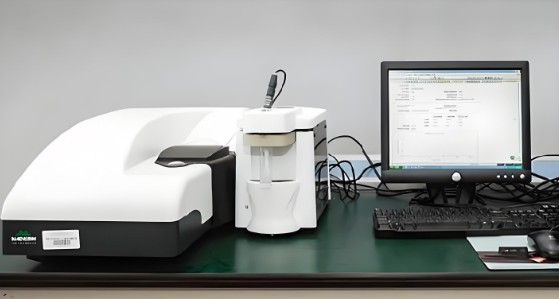
- Color measurement and yellowness index per ASTM E313, ISO 7724, and CIE L*a*b* — spectrophotometric analysis quantifies the yellow chroma, lightness, and color difference of the oxidized surface, verifying the yellow tone matches the specification and remains consistent across production batches.
- Oxide layer thickness measurement by eddy current, X-ray fluorescence, and microscopic cross-section per ISO 1463 and ASTM B244 — the thickness of the yellow oxide or conversion coating is determined to confirm it meets the minimum requirement for corrosion protection and electrical conductivity.
- Fourier transform infrared spectroscopy for oxide composition and chemical state per ASTM E1252 — the chemical bonding of the oxidized yellow layer is analyzed to identify the oxide phase, chromate conversion components, or conductive dopants responsible for both the yellow color and the electrical performance.
- X-ray photoelectron spectroscopy for surface chemistry and oxidation state per ASTM E1078 — the elemental composition and valence states at the oxidized yellow surface are determined, providing critical data on film stoichiometry, contamination, and the presence of any residual surface treatment chemicals.
- Visual inspection under D65 illumination — systematic examination for color streaks, staining, uneven oxidation, and surface defects against agreed acceptance criteria and master reference samples.
Corrosion Resistance and Environmental Durability Testing
- Neutral salt spray and cyclic corrosion testing per ISO 9227 and ASTM B117 — the oxidized yellow component is exposed to continuous salt fog for defined durations, and the development of white rust, red corrosion, and under-film attack is evaluated to validate the protective function of the yellow oxide coating in marine and industrial environments.
- Humidity and condensation resistance per ASTM D2247 and ISO 6270-2 — the oxidized yellow surface is subjected to high-humidity condensation cycles to verify no blistering, staining, or loss of adhesion occurs in tropical and high-moisture service conditions.
- Thermal cycling and heat resistance per IEC 60068-2-14 — the component is cycled between hot and cold extremes to confirm the yellow oxide layer does not crack, delaminate, or change color under thermal expansion and contraction stresses.
- UV and xenon-arc accelerated weathering per ASTM G155 and ISO 4892-2 — the oxidized yellow surface is exposed to simulated sunlight to evaluate color fading, chalking, and retention of electrical conductivity after prolonged outdoor exposure.
- Chemical resistance to cleaning agents and process fluids per ISO 175 and ASTM D543 — the yellow oxide coating is spotted or immersed in common cleaners and industrial fluids to verify no staining, softening, or loss of electrical function occurs during routine maintenance.
Coating Adhesion and Mechanical Durability Testing
- Cross-cut and pull-off adhesion testing per ISO 2409 and ISO 4624 — the bond strength between the oxidized yellow layer and the metal or polymer substrate is quantified to ensure the coating remains firmly attached during forming, assembly, and service.
- Bend and impact resistance per ASTM D522 and ASTM D2794 — the coated specimen is bent or impacted to evaluate the flexibility and resistance to cracking or detachment of the oxidized yellow film under mechanical stress.
- Scratch and abrasion resistance per ISO 15184 and ASTM D4060 — the surface hardness and wear resistance of the oxidized yellow coating are measured to predict its durability in high-contact and sliding applications.
Chemical Safety and Regulatory Compliance for Electrical Conductivity Oxidized Yellow Coatings
- RoHS compliance per IEC 62321 and EU Directive 2011/65/EU — quantitative screening for lead, mercury, cadmium, hexavalent chromium, PBBs, and PBDEs, with particular attention to hexavalent chromium in yellow chromate conversion coatings and the applicable exemptions.
- REACH Annex XVII and SVHC screening — targeted analysis of Substances of Very High Concern including chromate compounds, phthalates, and organotin stabilizers used in the yellow oxide or conversion coating formulation.
- Heavy metals in packaging per EU Directive 94/62/EC — verification that the sum concentration of lead, cadmium, mercury, and hexavalent chromium in the protective packaging and labels is below the 100 ppm regulatory limit.
- Volatile organic compound emissions from the coated surface per ISO 16000-3 — chamber testing confirms the oxidized yellow component does not release harmful VOCs into the indoor environment after installation.
Report Recognition and ISO/IEC 17025 Compliance
Every method described in this Electrical Conductivity Oxidized Yellow Detection Service is included within our ISO/IEC 17025 scope of accreditation. Our technical reports are accepted by European notified bodies for surface treatment and electronic components, by North American OEMs and regulatory agencies referencing ASTM and ISO standards, and by customs and procurement authorities across Japan, Korea, and the Gulf region. Whether you require a complete qualification dossier for a new conductive yellow oxide process, a batch release inspection for an export shipment, or a root cause failure analysis of a discoloration or conductivity issue, our laboratory provides the measurement accuracy and surface engineering expertise that the global electronics and metal finishing industries demand.