
Electric Air Valve Leakage Testing Service – Accredited Seal Integrity and Leak Rate Evaluation for Global Markets
Our internationally accredited laboratory provides a specialist electric air valve leakage test service that enables manufacturers of electromechanical actuators, solenoid valves, motorised air control valves, pneumatic system components and automotive airflow management devices worldwide to independently verify the seat tightness, external seal integrity and internal cross‑port leakage of their products. Every test is conducted within the rigorous framework of ISO/IEC 17025, and each report bearing the ILAC mark is unconditionally accepted by regulatory authorities, notified bodies and supply‑chain partners in all major economies. The electric air valve leakage test subjects the valve to precisely controlled air or tracer‑gas pressures at various temperatures and operating positions, and it quantifies the leakage rate using mass‑flow, pressure‑decay, bubble‑emission or helium‑mass‑spectrometer methods. For a producer of electronic throttle bodies, a manufacturer of exhaust‑gas‑recirculation valves, or a supplier of HVAC damper actuators, this service delivers the legally robust, defensible data that underpin product certification, emission‑compliance and the guarantee of reliable, energy‑efficient operation.
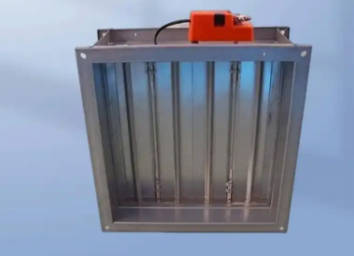
Product Samples We Regularly Subject to the Electric Air Valve Leakage Test
The test benches, pressure controllers and leak‑detection instruments in our facility accommodate a wide variety of electrically actuated air‑control devices. The following categories represent the most frequently tested items:
- Electronic throttle bodies and intake‑air control valves – motorised butterfly and rotary valves for the precise metering of the combustion air in spark‑ignited and diesel engines
- Exhaust‑gas‑recirculation valves and cooler‑bypass valves – electrically actuated poppet and flap valves that must seal hot, soot‑laden exhaust gas against a high‑pressure differential
- Turbocharger waste‑gate and variable‑nozzle actuators – the pneumatic or the electro‑pneumatic actuators that position the turbine‑bypass or the variable‑geometry vanes, where the internal leakage affects the boost control
- Canister‑purge and evaporative‑emission control valves – solenoid valves and stepper‑motor‑driven valves that control the flow of the fuel vapour from the carbon canister to the engine intake
- HVAC damper actuators and zone‑control valves – motorised flap and ball valves that regulate the airflow in the building ventilation, the cleanroom pressurisation and the automotive cabin‑comfort systems
- Industrial pneumatic directional‑control and proportional valves – solenoid‑operated spool valves, poppet valves and piezoelectric valves for the factory‑automation and the process‑control applications
- Medical‑device proportional valves and ventilator‑control valves – miniature electrically actuated air and oxygen valves where the leakage must be below the specified threshold for the patient safety
Helium Mass Spectrometer and Tracer‑Gas Leak Detection – Electric Air Valve Leakage Test According to ISO 15848 and ASTM E499
- Determination of the external and the seat leakage rate by the helium‑mass‑spectrometer method according to the principles of ISO 15848 (Industrial valves – Measurement, test and qualification procedures for fugitive emissions) and ASTM E499 (Standard Practice for Leaks Using the Mass Spectrometer Leak Detector): the valve is evacuated or pressurised with a helium‑air mixture, and a sniffer probe or a vacuum chamber is used to detect the helium escaping from the stem seal, the body‑bonnet joint and the seat. The leakage rate is reported in mbar·L/s or sccm, and the method achieves a detection limit as low as 10⁻⁷ mbar·L/s. This electric air valve leakage test is mandatory for the qualification of the valves that must meet the stringent fugitive‑emission or the hermeticity requirements.
- Accumulation and the hood‑method tracer‑gas testing for the complete valve assembly: the valve is enclosed in a hood or a bag, and the concentration of the helium or the sulphur‑hexafluoride that accumulates over a defined time is measured, providing a single‑figure total‑leakage rate that includes all the potential leak paths.
- Localisation of the leak by the helium‑sniffing probe scan: the pressurised valve is scanned point‑by‑point with a sniffer probe, and the location of every leak is mapped and quantified, enabling the manufacturer to identify the weak seal, the casting porosity or the assembly defect.
- Seat‑leakage test after the mechanical and the thermal endurance cycling: the valve is subjected to a defined number of open‑close cycles and to the temperature cycles between -40 °C and +150 °C, and the seat and the stem leakage are remeasured, providing the data that the design engineer uses to set the maintenance interval and to predict the long‑term sealing performance.
Pressure‑Decay and Differential‑Pressure Leakage Testing – Electric Air Valve Leakage Test According to ISO 9972 and the Automotive OEM Standards
- Pressure‑decay (pressure‑drop) test for the internal and the external leakage according to the principles of ISO 9972 (Thermal performance of buildings – Determination of air permeability of buildings – Fan pressurization method, adapted for the component testing) and the internal procedures: the valve is pressurised with the clean, dry compressed air to a specified test pressure, and the pressure drop over a defined hold‑time is measured by a high‑precision pressure transducer. The leakage rate in sccm or Pa·m³/s is calculated from the pressure‑decay curve, and the test provides a rapid, quantitative go‑no‑go decision for the production‑line quality control. This electric air valve leakage test is widely used for the intake‑manifold flaps, the purge valves and the pneumatic actuators where the helium testing is not economical for the 100 % inspection.
- Differential‑pressure (ΔP) leakage test for the seat and the cross‑port leakage of the multi‑port valves: the upstream side of the closed valve is pressurised, and the pressure rise in the downstream volume, or the flow rate through a calibrated laminar‑flow element, is measured, enabling the simultaneous monitoring of the seat‑leakage of several ports.
- Influence of the valve position, the actuator force and the supply voltage on the seat‑leakage rate: the leakage is measured at several partially open positions and at the minimum and the maximum actuator‑supply voltages, and the data are used to define the safe operating envelope that guarantees the acceptable leakage under all the nominal and the off‑nominal conditions.
- Low‑temperature leakage test at the cold‑start condition: the valve and the compressed‑air supply are cooled to -30 °C, and the pressure‑decay or the flow‑rate is measured, simulating the winter‑morning start‑up of the vehicle or the outdoor pneumatic system, where the elastomeric seals may stiffen and lose the conformity to the seat.
Bubble‑Emission, Water‑Immersion and Flow‑Visualisation Leakage Tests – Electric Air Valve Leakage Test According to ISO 10648 and ASTM F2094
- Bubble‑emission (bubble‑leak) test according to ISO 10648‑2 (Containment enclosures – Part 2: Classification according to leak tightness and associated checking methods) and ASTM F2094 (Standard Test Method for Leakage Testing of Valves by the Bubble Emission Method): the pressurised valve is submerged in a water bath, and the escaping air bubbles are observed and counted. The method provides a simple, visual pass‑fail criterion – typically “no continuous stream of bubbles” – and is the most common production‑line acceptance test for the HVAC dampers, the pneumatic fittings and the low‑pressure control valves.
- Flow‑visualisation and the soap‑solution leak‑detection for the external joints and the castings: a soap‑solution film is applied to the external surfaces of the pressurised valve, and the formation of the soap bubbles is inspected under the good lighting, providing the immediate visual indication of the leak location.
- Under‑water leakage test at the elevated and the cycled temperature for the engine‑compartment valves: the valve is submerged in a temperature‑controlled water bath, and the leakage is measured at the constant elevated temperature and during the rapid temperature cycling, reproducing the thermal‑shock condition that occurs when a hot engine is splashed with the cold water.
- High‑pressure bubble‑point and the pore‑size‑correlated leakage of the porous valve components: the sintered‑metal or the plastic‑porous filter elements that are integrated into the valve are tested for the first‑bubble‑point pressure, and the maximum pore‑size is calculated, ensuring that the porosity does not contribute to the unacceptable leakage path.
Report Acceptance and Global Regulatory Compliance
All measurements performed within our electric air valve leakage test programme are executed under the fully accredited scope of our ISO/IEC 17025 quality management system. Each test report that carries the ILAC mark is therefore automatically recognised by regulatory authorities, notified bodies, customs offices and supply‑chain partners in all major economies. For manufacturers of electronic throttle bodies, EGR valves, turbocharger actuators, HVAC dampers and industrial pneumatic valves anywhere in the world, the report constitutes legally robust, internationally accepted evidence that the seat tightness, the external seal integrity and the leakage rate of the electric air valve have been determined in accordance with the applicable ISO, ASTM, EN and customer‑specified methods. The documentation can be directly used to support CE marking, the issue of inspection certificates according to EN 10204 or equivalent national standards, the compilation of the technical file for the type‑examination, and the resolution of commercial and technical disputes concerning the air‑leakage performance and the long‑term reliability of any electrically actuated air valve.




