
Elastic Modulus Testing Service for Sheet Metal – Accredited Determination of Young's Modulus for Czech Manufacturers and Importers
Our internationally accredited laboratory delivers a specialist elastic modulus testing service for sheet metal that provides Czech stamping plants, automotive body‑panel suppliers, steel stockholders, fastener manufacturers and precision engineering firms with the independent, traceable stiffness data they require for material selection, finite‑element simulation and quality assurance. Every test is performed within the strict framework of ISO/IEC 17025, and all reports bearing the ILAC mark are unconditionally accepted by the Czech Trade Inspection Authority, customs offices and all notified bodies across the European Union. The elastic modulus – Young's modulus – is not a simple number printed on a mill certificate; it can vary with rolling direction, cold working, heat treatment and test method. Our elastic modulus testing service for sheet metal therefore employs both static tensile techniques according to ČSN EN ISO 6892‑1 and dynamic impulse‑excitation methods according to ČSN EN ISO 12680‑1, enabling us to detect anisotropy, to verify the consistency of a coil, and to supply the precise E‑values that Czech tool designers and crash‑simulation engineers need to build accurate material cards. The result is a legally robust report that directly supports CE marking, the issue of inspection certificates according to ČSN EN 10204, and the first‑article approval of sheet‑metal components destined for the Czech automotive, construction and consumer‑goods sectors.
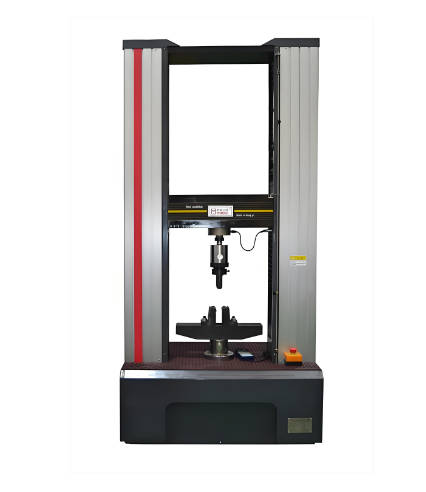
Product Samples We Regularly Subject to Elastic Modulus Testing Service for Sheet Metal
Our electromechanical and resonant‑frequency test rigs handle specimens from a few tenths of a millimetre to several millimetres thick. The following categories represent the most frequently tested items:
- Cold‑rolled and hot‑rolled steel sheet – low‑carbon drawing grades, high‑strength low‑alloy grades, dual‑phase and complex‑phase steels for automotive body‑in‑white and structural parts
- Galvanised and coated steel sheet – hot‑dip galvanised, electro‑galvanised, Galvalume and organic‑coated coil for building envelopes, domestic appliances and ductwork
- Stainless steel sheet and strip – austenitic, ferritic and martensitic grades in 2B, 2D and bright‑annealed finishes for catering equipment, medical devices and architectural panels
- Aluminium sheet and plate – 5000‑series and 6000‑series alloys for automotive hang‑on parts, packaging, heat exchangers and marine structures
- Copper, brass and bronze sheet – electrical‑grade copper, cartridge brass, phosphor bronze and nickel‑silver for connectors, springs, terminals and decorative trim
- Titanium and special‑alloy sheet – commercially pure titanium and Ti‑6Al‑4V for aerospace brackets, medical implants and chemical‑plant components
- Clad and laminated sheet metals – aluminium‑clad steel, copper‑clad aluminium and vibration‑damping sandwich sheets for automotive heat shields and electronic enclosures
Static Elastic Modulus by Tensile Testing – Sheet Metal Testing According to ČSN EN ISO 6892‑1 and ASTM E111
- Determination of Young's modulus from the stress‑strain curve according to ČSN EN ISO 6892‑1 Annex C and ASTM E111: a flat tensile specimen is machined with a gauge length of 50 mm or 80 mm and loaded in a calibrated tensile testing machine at a constant strain rate. A class 0.5 extensometer or a non‑contact video‑extensometer records the elongation, and the modulus is calculated from the slope of the initial linear portion of the curve. For a given sheet‑metal coil, the modulus is measured in the rolling direction, the transverse direction and at 45° to quantify the in‑plane anisotropy. This elastic modulus testing service for sheet metal provides the E‑values that Czech stamping engineers use to predict springback in deep‑drawn panels and to set the correct blankholder force.
- Double‑extensometer method for Poisson's ratio and shear modulus: a biaxial extensometer simultaneously records the axial and transverse strain during the tensile test. Poisson's ratio ν is calculated from the ratio of the strains, and the shear modulus G is derived from the relationship G = E / [2(1+ν)]. The complete set of elastic constants is supplied to the finite‑element analyst, who needs accurate ν and G values to model the forming and crash behaviour of the sheet.
- Chord modulus and tangent modulus at specified strain levels: for certain high‑strength steels that exhibit a non‑linear elastic response, the chord modulus between two defined strain points and the tangent modulus at a given stress are calculated. The result is compared with the minimum modulus specified in the material standard, and any deviation is discussed with the customer.
- Influence of cold work and temper on the elastic modulus: specimens cut from cold‑rolled tempers (quarter‑hard, half‑hard, full‑hard) are tested alongside the annealed condition, and the change in modulus due to the increased dislocation density and texture is documented. Czech spring‑steel and connector manufacturers rely on these data to understand why the stiffness of a formed part can differ from the handbook value.
Dynamic Elastic Modulus by Impulse Excitation – Sheet Metal Stiffness According to ČSN EN ISO 12680‑1 and ASTM E1876
- Determination of the dynamic Young's modulus by the impulse‑excitation technique according to ČSN EN ISO 12680‑1: a rectangular bar or a disc cut from the sheet is supported at its nodal points and struck with a small hammer. The resulting acoustic vibration is detected by a microphone or a laser vibrometer, and the resonant frequencies of the flexural and torsional modes are analysed. The dynamic Young's modulus, shear modulus and Poisson's ratio are calculated from the frequencies, the specimen dimensions and the mass. Because the strain amplitude is extremely small, the dynamic modulus is the true elastic modulus free from any micro‑plasticity, and it is the preferred reference value for the calibration of ultrasonic thickness gauges and for the verification of the static test results.
- Modulus at elevated temperatures up to 600 °C: the specimen is heated in a furnace while the impulse‑excitation measurement is performed. The drop in Young's modulus with temperature is plotted, and the curve is used by Czech designers of exhaust systems, oven components and fire‑resistant structures to predict the loss of stiffness at the service temperature.
- Modulus after thermal ageing and corrosion exposure: sheet‑metal specimens that have been aged at a defined temperature for a specified time, or exposed to a salt‑spray or condensing‑humidity environment, are tested by the impulse‑excitation method. Any change in the dynamic modulus indicates microstructural degradation, such as sensitisation of stainless steel or precipitation in aluminium alloys, before it becomes visible in a tensile test.
- Resonant ultrasound spectroscopy for small and irregularly shaped coupons: for sheet‑metal samples that are too small to machine into a standard bar, the resonant frequencies of a cube or a disc are measured and inverted to obtain the full elastic tensor. This technique is applied to additively manufactured sheet‑metal preforms and to witness coupons taken from a welded assembly.
Elastic Modulus of Thin Foils, Coated Sheets and Special‑Purpose Sheet Metals
- Tensile modulus of thin foils and strips down to 20 µm according to ASTM E345 and internal procedures: the foil is gripped with pneumatic flat‑face jaws or capstan grips, and the strain is measured by a non‑contact video extensometer to avoid any knife‑edge damage. The modulus is calculated from the initial slope of the stress‑strain curve, and the result is reported for battery electrode foils, flexible printed circuits and packaging laminates.
- Effective modulus of organic‑coated and painted sheet metal: the composite strip consisting of the steel substrate and the paint or polymer film is tested in tension, and the effective modulus is calculated. By testing the bare substrate in parallel and applying the rule of mixtures, the contribution of the coating to the overall stiffness is evaluated. This elastic modulus testing service for sheet metal assists Czech domestic‑appliance manufacturers in predicting the stiffness of finished panels and in selecting coatings that do not embrittle the assembly.
- Modulus of perforated and expanded sheet metals: sheets with a regular pattern of holes or slits are tested in tension, and the apparent modulus is compared with the modulus of the unperforated material. The ratio is used to derive the effective stiffness for use in the design of architectural mesh, acoustic panels and filter supports.
- Shear modulus and in‑plane rigidity of sheet‑metal laminates and sandwich panels: a picture‑frame shear test or a torsion test is performed on the laminate, and the shear modulus of the core and the facing are extracted. The data are required by Czech panel manufacturers to verify that the laminate meets the stiffness requirements for truck bodies, clean‑room partitions and railway interior panels.
Report Acceptance and Regulatory Compliance for the Czech Republic
All measurements performed within our elastic modulus testing service for sheet metal are executed under the fully accredited scope of our ISO/IEC 17025 quality management system. Each test report that carries the ILAC mark is therefore automatically recognised by the Czech Trade Inspection Authority, the Technical Inspection of the Czech Republic, customs offices and all notified bodies in the European Union. For Czech steel service centres, stamping houses, automotive tier‑1 suppliers and metal‑component importers, the report constitutes legally robust evidence that the sheet material possesses the elastic stiffness declared in the purchase specification and required by the applicable harmonised product standards. The documentation can be directly used to issue inspection certificates according to ČSN EN 10204, to support CE marking on fabricated components, to feed accurate E‑modulus values into forming and crash simulations, and to resolve commercial or technical disputes concerning the stiffness and springback behaviour of delivered sheet metal.




