Dust Collector Bag Detection Service – Accredited Filtration Efficiency, Mechanical Integrity and Durability Evaluation for Global Markets
Our internationally accredited laboratory delivers a specialist dust collector bag detection service that supplies manufacturers of industrial fabric filters, cement and steel plant operators, waste‑to‑energy facilities, mining ventilation engineers and air‑pollution‑control equipment exporters worldwide with the independent, traceable data they need to verify the filtration efficiency, mechanical strength, thermal stability and chemical resistance of their filter bags. Every test is conducted under the rigorous framework of ISO/IEC 17025, and each report bearing the ILAC mark is unconditionally accepted by regulatory authorities, notified bodies and supply‑chain partners in all major economies. The dust collector bag detection programme subjects the filter medium and the complete bag to a comprehensive suite of physical, aerodynamic, thermal and chemical evaluations, quantifying the particle capture efficiency, the residual pressure drop, the cleanability and the dust‑release characteristics, the tensile and the burst strength, the resistance to the acidic and the alkaline gas condensation, and the long‑term oxidative degradation. For a bag‑house operator qualifying a new needle‑felt for a coal‑fired boiler, a filter‑media converter exporting to the European market, or a plant engineer troubleshooting an unexpected pressure‑drop increase, this service delivers the legally robust, defensible data that underpin product certification, process optimisation and compliance with the relevant ASTM, ISO, EN and customer‑specified standards.
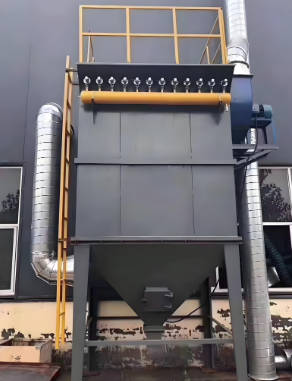
Product Samples We Regularly Subject to Dust Collector Bag Detection
Our filter‑test rigs, universal tensile machines, environmental‑exposure chambers, thermogravimetric analysers and scanning‑electron‑microscope systems accommodate a broad variety of filter bags and their constituent materials. The following categories represent the most frequently tested items:
- Pulse‑jet and reverse‑air filter bags – cylindrical, sewn or welded bags with a snap‑band, a flange or a rope‑and‑cuff top, used in the pulse‑jet, the reverse‑air and the shaker‑type dust collectors for the bulk‑solids handling, the cement‑kiln, the steel‑melting and the power‑generation industries
- Needle‑punched nonwoven filter felts – polyester, polypropylene, polyphenylene‑sulfide, aramid, polyimide and polytetrafluoroethylene needle‑felts, with or without a scrim reinforcement, evaluated for the basis weight, the thickness, the air permeability and the pore‑size distribution
- Woven and mesh‑fabric filter bags – monofilament and multifilament woven fabrics made of the polyester, the nylon or the specialty fibres, used in the liquid‑filtration and the coarse‑dust applications where the cake‑release and the mechanical durability are critical
- High‑temperature and chemical‑resistant filter bags – bags fabricated from the meta‑aramid, the polyimide, the polytetrafluoroethylene, the glass‑fibre or the ceramic‑fibre materials, intended for the flue‑gas temperatures up to 260 °C and the aggressive‑gas environments such as the incinerators, the foundry‑cupolas and the chemical‑process dryers
- Membrane‑laminated and surface‑treated filter bags – needle‑felt or woven bags that are laminated with a micro‑porous polytetrafluoroethylene or an expanded‑polytetrafluoroethylene membrane, or that are treated with a water‑and‑oil‑repellent finish, tested for the surface‑filtration efficiency and the resistance to the membrane‑delamination
- Filter bags with an integrated support‑cage and a venturi – the complete assembly that includes the fabric bag, the steel or the stainless‑steel support‑cage, the venturi nozzle and the snap‑ring, evaluated for the fit, the abrasion between the bag and the cage, and the pressure‑drop across the venturi
- Aged and field‑retrieved filter bag samples – bags that have been in service for a defined number of the operating hours or that have been exposed to an upset‑condition, submitted for the residual‑strength evaluation, the pore‑blinding analysis and the failure‑mode diagnosis
Filtration Efficiency, Pressure Drop and Cleanability – Dust Collector Bag Detection According to ISO 11057, ASTM D6830 and VDI 3926
- Determination of the dust‑filtration performance and the cleanability by the cyclic‑loading test according to ISO 11057 (Air quality – Test method for the filtration characterization of cleanable filter media) and VDI 3926 (Testing of cleanable filter media – Standard test for the evaluation of cleanable filter media): the filter medium is installed in a flat‑sheet or a cylindrical test rig, and it is subjected to a repeated cycle of dust‑loading, pulse‑jet or reverse‑air cleaning and filtration. The residual pressure drop after the cleaning, the dust‑release efficiency, the cleaning‑cycle interval and the evolution of the pressure drop over the test duration are recorded. This dust collector bag detection provides the fundamental performance data that the bag‑house designer uses to size the filter area, to specify the cleaning‑air pressure and the pulse‑valve frequency, and to predict the energy consumption of the induced‑draft fan.
- Measurement of the fractional and the gravimetric filtration efficiency according to ASTM D6830 (Standard Test Method for Characterizing the Pressure Drop and Filtration Performance of Cleanable Filter Media) and the internal procedures: a standardised test dust – such as the ISO 12103‑1 Arizona dust or the limestone dust – is injected into the air stream, and the particle‑size distribution and the mass concentration upstream and downstream of the filter are measured by the optical particle counter and the gravimetric sampling. The fractional efficiency for the PM2.5, the PM10 and the total suspended particulate fractions, and the emission concentration in milligrams per cubic metre, are reported, certifying that the filter bag will meet the local air‑pollution‑control permit limit.
- Determination of the clean‑gas dust concentration and the outlet emission after the conditioning and the ageing cycles: the filter bag is subjected to a series of the dust‑loading and the cleaning cycles under the elevated temperature and the humidity that simulate the start‑up and the shutdown of the process, and the final emission concentration is compared with the regulatory limit – typically below 5 mg/Nm³ for the pulse‑jet bag‑houses on the coal‑fired boilers – providing the compliance data for the environmental‑permitting process.
- Surface‑filtration and the membrane‑integrity testing of the laminated filter bags: the membrane‑laminated medium is challenged with a fine‑particle aerosol, and the penetration and the downstream‑particle count are measured, verifying that the membrane provides the true surface‑filtration and that no pinholes or the de‑lamination defects are present after the repeated pulse‑cleaning.
- In‑situ permeability and the airflow‑distribution measurement of the complete filter bag: the bag is mounted on a test manifold, and the airflow rate through the fabric is measured at several positions along the length, providing the data that the process‑engineer uses to detect the uneven dust‑cake build‑up, the localised blinding or the abrasion‑thinning of the fabric.
Mechanical Strength, Dimensional Stability and Abrasion Resistance – Dust Collector Bag Detection According to ISO 13934‑1, ISO 9073‑4 and ASTM D573
- Determination of the tensile strength and the elongation at break of the filter fabric according to ISO 13934‑1 (Textiles – Tensile properties of fabrics – Determination of maximum force and elongation at maximum force using the strip method) and ASTM D5034: a strip specimen is cut from the machine direction and the cross direction of the filter bag and pulled at a constant crosshead speed, and the breaking force in newtons and the percentage elongation are reported. This dust collector bag detection verifies that the fabric can withstand the mechanical stress imposed by the pulse‑cleaning, the bag‑cage abrasion and the dust‑cake weight without the tearing or the excessive stretching.
- Mullen burst and the puncture resistance of the filter medium according to ASTM D3786 (Standard Test Method for Bursting Strength of Textile Fabrics – Diaphragm Bursting Strength Tester Method) and the internal procedures: a circular specimen is clamped and inflated until the rupture, and the burst pressure in kilopascals is reported, providing the data that the engineer uses to guarantee that the bag will not rupture under the maximum pressure‑drop or the sudden pressure‑surge condition.
- Measurement of the thickness, the basis weight and the air permeability of the filter felt according to ISO 9073‑2 (Textiles – Test methods for nonwovens – Part 2: Determination of thickness) and ASTM D737 (Standard Test Method for Air Permeability of Textile Fabrics): the thickness, the grammage and the air permeability are measured, and the results are compared with the manufacturer's specification, providing the routine quality‑assurance data for the incoming‑goods inspection.
- Resistance to the abrasion and the wear by the Martindale or the Taber method according to ASTM D4966 (Standard Test Method for Abrasion Resistance of Textile Fabrics – Martindale Abrasion Tester Method) and the internal procedures: the filter fabric is rubbed against a standardised abradant for a defined number of the cycles, and the mass loss and the visual degradation are reported, quantifying the resistance to the bag‑to‑cage and the bag‑to‑bag abrasion that can cause the premature failure in the pulse‑jet collectors.
- Dimensional stability and the thermal shrinkage of the filter fabric according to ASTM D2259 (Standard Test Method for Shrinkage of Yarns) and the internal procedures: a marked specimen is exposed to the hot‑air oven at a specified temperature – typically the maximum continuous‑operating temperature of the fibre – and the percentage change in the length and the width is reported, ensuring that the bag will not pull away from the tube‑sheet seal or the snap‑band due to the thermal relaxation.
Thermal, Oxidative and Chemical Resistance – Dust Collector Bag Detection According to ASTM D3895, ISO 11357‑6 and ISO 175
- Determination of the oxidative‑induction time and the thermal stability by the differential scanning calorimetry according to ASTM D3895 (Standard Test Method for Oxidative‑Induction Time of Polyolefins by Differential Scanning Calorimetry, adapted for the high‑temperature filter media) and ISO 11357‑6: a small specimen of the filter fibre is heated in an oxygen atmosphere, and the time to the onset of the exothermic oxidation reaction is recorded, providing the data that the user employs to assess the residual antioxidant protection and the remaining service life of the polyester and the polyphenylene‑sulfide bags.
- Resistance to the acid‑gas and the alkaline‑gas condensation according to ISO 175 (Plastics – Methods of test for the determination of the effects of immersion in liquid chemicals, adapted for the filter fabrics) and the internal procedures: the filter fabric is exposed to the sulfuric‑acid, the hydrochloric‑acid or the sodium‑hydroxide solution at the elevated temperature for a defined period, and the change in the tensile strength, the elongation and the weight is reported, certifying the suitability of the bag for the coal‑fired boiler, the medical‑waste incinerator and the cement‑kiln gas streams.
- Resistance to the hydrolysis and the wet‑heat degradation of the polyester and the aramid filter media: the fabric is conditioned in the saturated steam at the elevated temperature and the pressure for up to 1 000 hours, and the loss of the tensile strength and the intrinsic‑viscosity reduction are measured, providing the data that the plant‑operator uses to select the correct fibre grade for the high‑moisture, the low‑sulfur‑coal and the spray‑dryer applications.
- Long‑term thermal‑ageing and the residual‑strength prediction: the filter fabric is aged in the forced‑air oven at the several temperatures for the extended periods, and the time to reach the 50 % loss of the tensile strength is determined, enabling the Arrhenius extrapolation of the service life at the actual operating temperature. This dust collector bag detection directly supports the maintenance‑planning and the bag‑replacement budgeting of the bag‑house operator.
Surface Characterisation, Pore‑Size Analysis and Microscopic Examination – Dust Collector Bag Detection According to ASTM F316 and the Internal Procedures
- Pore‑size distribution of the filter medium by the capillary‑flow porometry according to ASTM F316 (Standard Test Methods for Pore Size Characteristics of Membrane Filters by Bubble Point and Mean Flow Pore Test) and the internal procedures: the mean‑flow pore diameter, the smallest and the largest pore sizes are measured, and the distribution curve is reported, providing the insight into the filtration‑mechanism transition from the depth‑filtration to the surface‑filtration as the dust‑cake builds up.
- Scanning‑electron‑microscopy and the energy‑dispersive‑X‑ray‑spectroscopy analysis of the dust‑cake and the fabric cross‑section: the exposed filter specimen is examined under the high‑magnification, and the morphology of the dust particles, the degree of the pore‑blinding, the penetration depth of the fine particulates and the elemental composition of the blinding‑cake are documented, supporting the root‑cause investigation of the high‑pressure‑drop or the emission‑excursion events.
- Water‑repellency and the oil‑repellency rating of the filter fabric according to the AATCC TM22 (Water Repellency: Spray Test) and the internal procedures: the surface‑treatment effectiveness of the anti‑stick, the moisture‑resistant and the oleophobic finishes is assessed, ensuring that the bag will release the dust‑cake easily and will resist the blinding by the hygroscopic or the oily particulate.
Report Acceptance and Global Regulatory Compliance
All measurements performed within our dust collector bag detection programme are executed under the fully accredited scope of our ISO/IEC 17025 quality management system. Each test report that carries the ILAC mark is therefore automatically recognised by regulatory authorities, notified bodies, customs offices and supply‑chain partners in all major economies. For filter‑media manufacturers, bag‑house operators, air‑pollution‑control equipment exporters and industrial‑ventilation engineers anywhere in the world, the report constitutes legally robust, internationally accepted evidence that the filtration efficiency, the pressure‑drop and the cleanability, the mechanical strength and the abrasion resistance, the thermal and the chemical durability, and the pore‑structure and the surface characteristics of the dust collector bag have been determined in accordance with the applicable ISO, ASTM, VDI, EN and customer‑specified methods. The documentation can be directly used to support CE marking under the applicable EU directives, the environmental‑permit compliance, the issue of inspection certificates according to EN 10204 or equivalent national standards, and the resolution of commercial and technical disputes concerning the performance and the service life of any industrial filter bag.