Diaphragm Detection Scheme for Critical Sealing and Process Components
As an ISO/IEC 17025 accredited testing laboratory, we deliver a complete diaphragm detection scheme engineered to verify material integrity, mechanical resilience, leak-tight performance, and long-term durability of industrial diaphragms. Our diaphragm detection scheme supports manufacturers, distributors, and end users in the pump, valve, actuator, pressure switch, and filtration sectors who must demonstrate conformity to global regulations for the European Union, North America, the Middle East, and Asia Pacific. All tests are conducted within our CNAS-accredited scope, producing technical reports accepted by notified bodies, plant inspectors, and major procurement authorities worldwide.

Product Samples We Regularly Test Under Our Diaphragm Detection Scheme
- Rubber and elastomeric diaphragms — molded NBR, EPDM, silicone, FKM, and neoprene components for valves, pumps, and regulators
- PTFE and modified PTFE diaphragms — with or without fabric reinforcement, used in chemical dosing, sanitary, and high-temperature applications
- Composite and fabric-reinforced diaphragms — elastomer-coated nylon, polyester, or aramid fabrics for high-pressure and high-cycle duties
- Metallic diaphragms and capsules — stainless steel, beryllium copper, and nickel alloy welded or formed components for precision instruments and pressure switches
- Microporous filtration membranes and diaphragms — PTFE, PVDF, and nylon membranes in syringe filters, venting, and sterile filtration assemblies
- Acoustic and speaker diaphragms — mylar, paper composite, and metallic dome diaphragms for audio transducers
Core Diaphragm Detection Scheme: Material Composition and Hardness Verification
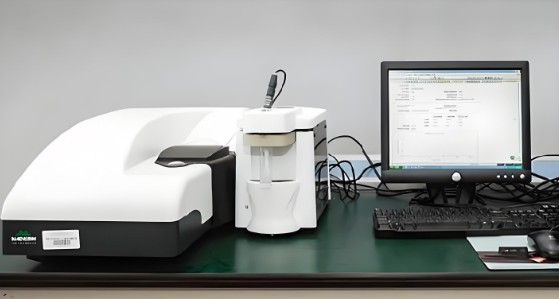
- Polymer and elastomer identification by FTIR and DSC — Fourier transform infrared spectroscopy per ISO 4650 and differential scanning calorimetry to confirm base polymer type, detect blends, and identify contaminants or unexpected fillers in rubber and plastic diaphragms.
- Filler content and ash determination — thermogravimetric analysis (TGA) and muffle furnace ashing according to ISO 247-1 and ISO 3451-1 to quantify carbon black, silica, calcium carbonate, and inorganic residue, which directly influence mechanical and chemical resistance.
- Crosslink density and cure state evaluation — swelling tests in toluene or MEK per ISO 1817 and moving die rheometer (MDR) curves to verify that the elastomeric diaphragm has reached optimal vulcanization, avoiding premature failure from under-cure or over-cure.
- Hardness testing (Shore A, D, and IRHD) — durometer measurements according to ISO 48-4 and ASTM D2240 on finished diaphragm surfaces and cross-sections, ensuring the specified hardness range is met for proper sealing and flex performance.
- Metallic diaphragm alloy verification — optical emission spectrometry (OES) per ASTM E415 to validate stainless steel grades (304, 316L, 17-7 PH) and nickel alloys used in formed and welded metal diaphragms.
Core Diaphragm Detection Scheme: Mechanical and Tensile Properties
- Tensile strength and elongation at break for elastomeric diaphragms — testing dumbbell specimens cut from the diaphragm per ISO 37 and ASTM D412, measuring maximum tensile stress and ultimate elongation to guarantee that the membrane can withstand pressure-induced stretching without rupture.
- Tensile properties of PTFE and reinforced composite diaphragms — determination of tensile strength and elongation using ISO 527-3 or ASTM D4894 for skived and molded PTFE, and ASTM D751 for fabric-reinforced laminates, with attention to warp and weft directionality.
- Tear strength and puncture resistance — trouser tear (ISO 34-1), crescent tear (ASTM D624), and slow-rate puncture tests to evaluate resistance to crack propagation from cuts, perforations, or trapped debris during service.
- Adhesion between elastomer and fabric reinforcement — peel adhesion testing using ISO 36 or ASTM D413 to measure the bond strength between the rubber layer and the textile carcass, critical for preventing delamination under flex fatigue.
- Stress relaxation and compression set — compression set under constant strain at ambient and elevated temperatures per ISO 815-1 and stress relaxation in compression per ISO 3384, predicting how well the diaphragm maintains sealing force over extended periods.
Core Diaphragm Detection Scheme: Leak Tightness, Burst, and Fatigue Testing
- Burst pressure determination — hydraulic or pneumatic pressurization until rupture per customer protocols and referenced to ISO 1402 for hose-like elements or EN 12266-1 for valve diaphragms, establishing the ultimate safety margin above rated working pressure.
- Leak tightness and gas permeability testing — pressure decay method or helium mass spectrometer leak detection (ISO 20485) on assembled diaphragm devices to detect micro-leaks that could compromise hazardous fluid containment or sterile barriers.
- Cyclic flex fatigue and stroke endurance — applying defined pressure pulses or mechanical stroke cycles at controlled frequency and temperature to simulate millions of operating cycles, monitoring for stiffness changes, surface cracks, pinhole formation, and loss of sealing using customized test rigs informed by the performance requirements of the specific pump or valve design.
- Reverse pressure and vacuum resistance — subjecting the diaphragm to negative differential pressure or full vacuum to verify that it does not invert, collapse, or detach from its clamping zone under abnormal process conditions.
- Sealing lip and bead integrity check — microscopic and low-pressure air-under-water testing of the sealing bead area to confirm freedom from porosity, flash, and irregularities that would form leak paths in the housing.
Core Diaphragm Detection Scheme: Chemical Compatibility and Ageing Resistance
- Immersion testing in process fluids — exposure of diaphragm specimens to specified chemicals, oils, acids, alkalis, or solvents at controlled temperatures for defined durations per ISO 1817 and ASTM D471, followed by measurement of changes in mass, volume, hardness, and tensile properties.
- Accelerated thermal ageing in air — ageing in circulating air ovens at elevated temperatures according to ISO 188 and ASTM D573 to predict the long-term thermal stability of the elastomer and the retention of physical properties over the expected service life.
- Ozone resistance testing — static and dynamic ozone exposure under strain per ISO 1431-1 and ASTM D1149 to detect surface cracking in rubber diaphragms stored or operated in environments with atmospheric ozone.
- Low-temperature flexibility and brittleness — determination of the glass transition and stiffening behavior using Gehman torsional test (ISO 1432) or TR test (ISO 2921), ensuring the diaphragm remains flexible at the minimum operating temperature without cracking.
- Steam, hot water, and CIP/SIP resistance — repeated autoclave or steam-in-place cycles for pharmaceutical and food-grade diaphragms, verifying that no degradation, dimensional distortion, or extractables increase occurs after multiple sterilization exposures.
Dimensional, Surface, and Cleanliness Inspection in the Diaphragm Detection Scheme
- Thickness, diameter, and profile measurement — laser micrometer, digital calliper, and optical comparator verification of critical dimensions against CAD drawings, including bead height, convolution depth, and flange thickness.
- Surface defect and visual quality inspection — systematic examination under standardized lighting for pits, blisters, flow marks, inclusions, and mold flash, with acceptance criteria aligned to ISO 3601-3 or customer-defined limit samples.
- Surface roughness and coating uniformity — contact stylus profilometry on metallic diaphragm surfaces, and gloss/color measurement on coated elastomers to verify consistent aesthetic and functional properties.
- Cleanliness and particulate assessment — gravimetric determination of extractable residue, fiber counting, and particle analysis of rinse fluids per ISO 16232 or pharmaceutical monographs for diaphragms used in pure water, WFI, or sterile filtration.
- Plating and passivation layer inspection on metal diaphragms — X-ray fluorescence thickness measurement and salt spray testing (ISO 9227) to verify corrosion protection of electroplated or electropolished stainless steel diaphragms.
Report Recognition and ISO/IEC 17025 Compliance
Every test method within this diaphragm detection scheme is included in our ISO/IEC 17025 scope of accreditation. Our reports are recognized by European notified bodies under the Pressure Equipment Directive (PED), by FDA for food contact and medical device components, and by engineering procurement teams across the pharmaceutical, chemical, and water treatment industries. Whether you require a full qualification package for a new diaphragm supplier, batch release testing of incoming shipments, or a root cause failure analysis, our laboratory provides the technical precision and regulatory expertise that global supply chains demand.