Detection of Plastic Coating with Water-Soluble Pearlescent Chrome for Global Quality Assurance
As an ISO/IEC 17025 accredited laboratory, we provide an advanced detection of plastic coating with water-soluble pearlescent chrome service that verifies decorative performance, mechanical durability, chemical resistance, and regulatory compliance. Our detection of plastic coating with water-soluble pearlescent chrome supports manufacturers and exporters of automotive interior trims, cosmetic packaging, consumer electronics, and household appliances who must meet stringent EU REACH, US CPSIA, and international automotive specifications. Every test is conducted under our CNAS-accredited scope, producing reports accepted by notified bodies, brand owners, and customs authorities across Europe, North America, Asia, and the Middle East.

Product Samples We Regularly Test for Water-Soluble Pearlescent Chrome Coating
- ABS and PC/ABS automotive interior parts — with water-soluble pearlescent chrome finish on dashboard trims, door handles, and center consoles
- Cosmetic packaging and fragrance caps — plastic bottles, jars, and closures with high-gloss pearlescent chrome effect
- Consumer electronics housings and bezels — smartphone cases, laptop covers, and headphone shells with mirror-like chrome appearance
- Household appliance decorative panels — refrigerator fronts, washing machine panels, and air conditioner trims
- Plastic toys and games with chrome-look coatings — action figures, model cars, and board game pieces
- Point-of-sale displays and retail fixtures — acrylic and injection-molded shelves with water-based chrome finish
- Sanitary ware accessories and bathroom fittings — toilet seat hinges, shower caddies, and cosmetic organizer trays
Advanced Methods for the Detection of Plastic Coating with Water-Soluble Pearlescent Chrome
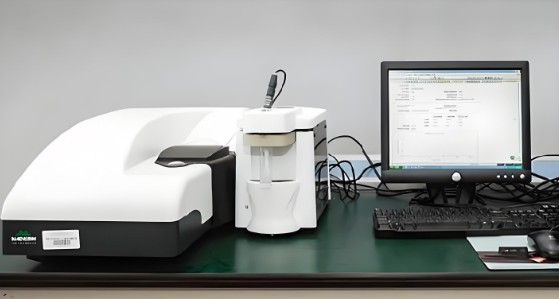
- Coating system identification by Fourier transform infrared spectroscopy — the binder resin and polymer type of the water-soluble pearlescent chrome coating are identified per ISO 11357 and ASTM E1252, confirming whether the coating is acrylic, polyurethane, or polyester-based and verifying that the water-soluble formulation is free from restricted organic solvents.
- Pigment and metal oxide analysis by X-ray fluorescence and ICP-OES — the elemental composition of the pearlescent chrome layer is determined according to ASTM E1621, quantifying the levels of chromium, aluminum, silicon, titanium, and mica to characterize the pearlescent pigment type and ensure that the chrome effect is achieved using permitted mica-metal oxide combinations rather than prohibited hexavalent chromium compounds.
- Hexavalent chromium and trivalent chromium speciation — water-soluble extracts and alkaline digestion are analyzed by UV-Vis spectrophotometry and ion chromatography per ISO 17075 and IEC 62321-7-2, detecting any Cr(VI) at sub-ppm levels to verify compliance with the EU End-of-Life Vehicles Directive, REACH Annex XVII, and global automotive OEM prohibited substance lists.
- Cross-sectional microscopy and coating thickness measurement — the plastic substrate with pearlescent chrome coating is microtomed and examined by optical or scanning electron microscopy, measuring the thickness of the base coat, the chrome-effect layer, and the top clear coat in accordance with ISO 2808 and ASTM B487, ensuring uniform coverage and correct particle orientation.
- Multi-angle spectrophotometric color and effect evaluation — the pearlescent chrome coating is measured at 15°, 45°, and 110° from the specular reflection using a goniospectrophotometer per ASTM E2194, calculating L*a*b*, flop index, and sparkling intensity to quantify the perceived chrome appearance and batch-to-batch consistency.
Physical and Mechanical Performance Testing for Water-Soluble Pearlescent Chrome Coatings
- Coating adhesion by cross-cut and pull-off methods — the cross-cut test per ISO 2409 and the dolly pull-off test per ISO 4624 measure the adhesion strength between the water-soluble pearlescent chrome coating and the plastic substrate, with acceptance criteria typically requiring a rating of 0 or 1 and a pull-off strength above 5 MPa.
- Pencil hardness and scratch resistance — the coating hardness is determined according to ISO 15184 and ASTM D3363 by applying pencils of increasing hardness, and the scratch resistance is assessed using a progressive load scratch tester to verify that the decorative surface withstands handling and cleaning without marring.
- Abrasion resistance by Taber and falling sand methods — Taber abrasion per ASTM D4060 with CS-10 or CS-17 wheels quantifies the wear resistance of the chrome coating, while the falling sand test simulates the erosion effect of dust and small particles in service.
- Impact resistance and flexibility of the coated plastic — a falling dart test per ASTM D2794 and a cylindrical bend test per ISO 1519 evaluate the coating's ability to resist cracking and delamination under impact and bending forces, ensuring the chrome finish survives assembly and end-use stresses.
- Resistance to rubbing and polishing — a Sutherland rub test or an automated polishing cycle test determines whether the pearlescent chrome effect dulls, hazes, or loses gloss after repeated cleaning with dry and damp cloths.
Environmental Resistance and Aging in the Detection of Plastic Coating with Water-Soluble Pearlescent Chrome
- Accelerated weathering by xenon-arc exposure — coated plastic panels are exposed to simulated sunlight and rain cycles per ISO 4892-2 and ASTM G155 for up to 3000 hours, then evaluated for color shift, gloss loss, blistering, and adhesion reduction to predict the long-term outdoor performance of the water-soluble chrome finish.
- Thermal cycling and heat aging resistance — specimens are subjected to repeated cycles from -30 °C to +80 °C per ISO 20340 and then aged at 80 °C for 500 hours, checking for cracking, delamination, and yellowing of the pearlescent chrome coating.
- Resistance to moisture and condensation — continuous humidity exposure at 40 °C and 95% relative humidity per ISO 6270-2 and ASTM D4585, with periodic inspection for blistering, whitening, and adhesion loss caused by water penetration into the water-soluble base coat layer.
- Neutral salt spray and cyclic corrosion resistance — testing per ISO 9227 and ASTM B117 for 240 to 1000 hours to assess the chrome coating's ability to protect the plastic substrate from corrosion-like degradation and to prevent pitting of the metallic-effect layer.
- Chemical resistance to consumer products and industrial fluids — spot testing with sun cream, hand lotion, gasoline, ethanol, coffee, and alkaline cleaners per ISO 2812-1 and automotive OEM standards, assessing staining, softening, and loss of chrome effect after contact.
Chemical Safety and Restricted Substance Compliance
- Heavy metals and toxic elements in the coating — microwave-assisted acid digestion and ICP-OES analysis for lead, cadmium, mercury, and total chromium according to EU RoHS Directive 2011/65/EU and CPSIA Section 101, verifying that the sum concentration of the four regulated metals does not exceed 100 mg/kg.
- Hexavalent chromium specific detection for pearlescent chrome — quantitative boiling water extraction and diphenylcarbazide colorimetric analysis per ISO 3856-5 and IEC 62321, with a detection limit of 0.02 mg/kg, ensuring the water-soluble pearlescent chrome coating is free from Cr(VI) and meets the requirements of the EU Toy Safety Directive 2009/48/EC for toys with accessible coatings.
- Phthalates and plasticizers in the plastic substrate and coating — GC-MS determination of restricted phthalates such as DEHP, DBP, BBP, DINP, DIDP, and DnOP per CPSC-CH-C1001-09.4 and EN 14372, confirming that flexible plastics and soft-touch coatings comply with the 0.1% limit.
- Volatile organic compound emissions from the water-soluble coating — headspace GC-MS analysis per ISO 16000-6 and VDA 277 determines the residual solvent and VOC content, demonstrating that the water-based chrome coating system achieves low emission levels for interior air quality requirements.
- Primary aromatic amines from azo colorants in tinted base coats — reductive cleavage and GC-MS per EN 14362-1 to verify that no restricted amines above 30 mg/kg are released from any color-tinted undercoat applied beneath the pearlescent chrome layer.
- Bisphenol A and endocrine disruptor screening — LC-MS/MS analysis for BPA and its analogs in the plastic substrate and any epoxy-based primers, addressing food contact and consumer safety concerns for reusable packaging and appliance applications.
Report Recognition and ISO/IEC 17025 Compliance
Every method detailed in this detection of plastic coating with water-soluble pearlescent chrome falls within our ISO/IEC 17025 scope of accreditation. Our test reports are accepted by European notified bodies for CE marking, by North American automotive manufacturers and consumer product safety regulators, and by customs and inspection authorities across Japan, Korea, and the Gulf region. Whether you require a full qualification dossier for a new water-based chrome effect, a batch release verification of incoming coated parts, or a root cause failure analysis of a peeling or yellowing coating, our laboratory provides the measurement accuracy and regulatory knowledge that global plastic decoration supply chains demand.