
Household Gas Rapid Water Heater Testing Service – Accredited Safety and Performance Evaluation for Global Markets
Our internationally accredited laboratory provides a comprehensive household gas rapid water heater testing service that enables manufacturers, importers, plumbing contractors and regulatory authorities worldwide to independently verify the combustion efficiency, safety‑device functionality, electrical integrity and long‑term durability of their instantaneous gas‑fired water heaters. Every test is conducted under the rigorous framework of ISO/IEC 17025, and each report bearing the ILAC mark is unconditionally accepted by notified bodies, customs offices and supply‑chain partners in all major economies. The detection of household gas rapid water heater performance is essential to demonstrate compliance with the EU Gas Appliances Regulation (EU) 2016/426, the relevant EN standards, and the equivalent national codes that govern the sale and installation of these appliances in every corner of the world. By employing calibrated gas‑flow benches, flue‑gas analysers, climatic chambers, electrical‑safety testers and endurance‑cycling rigs, we deliver the legally robust, defensible data that underpin CE marking, type‑examination certification and the confidence of the end user.
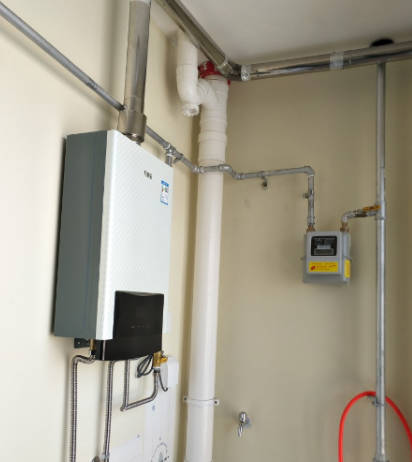
Product Samples We Regularly Subject to Household Gas Rapid Water Heater Testing
Our test bays accommodate the full range of domestic instantaneous water heaters and their key sub‑assemblies. The following categories represent the most frequently evaluated items:
- Room‑sealed (balanced‑flue) and open‑flued gas rapid water heaters – wall‑hung and free‑standing units for bathroom, kitchen and outdoor installation, operating on natural gas, liquefied petroleum gas and biogas
- Forced‑draught and condensing gas rapid water heaters – high‑efficiency models with a modulating burner, a variable‑speed fan and a secondary heat exchanger that recovers the latent heat from the flue gas
- Multi‑point and single‑point instantaneous water heaters – appliances designed to serve one or several draw‑off points in a dwelling, including the compact under‑sink and over‑sink types
- Gas rapid water heaters integrated into central‑heating combi‑boilers – the domestic‑hot‑water section of a combination boiler, evaluated for the fast‑start performance and the temperature stability
- Key functional components – gas control valves, thermocouple‑type flame‑supervision devices, electronic ignition modules, water‑flow sensors, plate‑type heat exchangers and flue‑gas non‑return devices
- Prototype and pre‑production samples – developmental units submitted for the pre‑compliance screening and the design‑verification testing before the formal type‑examination
Combustion Performance and Energy Efficiency Testing – Detection of Household Gas Rapid Water Heater According to EN 26, EN 13203‑1 and AS 4552
- Determination of the nominal heat input and the gas rate according to EN 26 (Gas‑fired instantaneous water heaters for the production of domestic hot water) and the national test codes: the appliance is connected to a calibrated gas meter and a pressure‑regulated supply, and the volumetric flow rate of the gas is measured while the water is drawn at the maximum rated flow. The heat input, calculated from the gas rate and the calorific value, is compared with the declared nominal value, and the allowable tolerance is verified.
- Measurement of the thermal efficiency and the hot‑water output according to EN 13203‑1 (Domestic hot water appliances – Assessment of performance – Part 1: General requirements) and the applicable energy‑labelling regulations: the inlet and the outlet water temperatures and the mass flow rate are recorded under the steady‑state conditions, and the useful heat output is calculated from the enthalpy rise. The thermal efficiency is expressed as a percentage of the gross or the net calorific input, and the result is used to assign the energy‑efficiency class according to the EU Delegated Regulation (EU) No 812/2013 or the Australian and the New‑Zealand energy‑rating schemes.
- Flue‑gas analysis – measurement of the carbon monoxide, the carbon dioxide, the nitrogen oxides and the oxygen concentration: a sample of the flue gas is extracted from the draught‑diverter or the concentric‑flue terminal and analysed by a non‑dispersive infrared or an electrochemical‑cell analyser. The CO concentration, normalised to the dry, air‑free condition, must not exceed the limit of 0.10 % (1 000 ppm) under the normal operation, as required by EN 26 and the Gas Appliance Regulation. The NOx emission is reported in milligrams per kilowatt‑hour for the environmental compliance.
- Ignition, cross‑lighting and flame‑stability tests: the burner is operated at the minimum and the maximum gas‑pressure limits, and the ignition time, the flame‑propagation across the burner ports, the resistance to the lifting, the flash‑back and the yellow‑tipping are observed. The appliance must ignite reliably and burn cleanly over the entire range of the declared supply pressures.
- Resistance to the wind and the down‑draught for the room‑sealed and the outdoor‑installation appliances: the appliance is mounted in a wind tunnel, and the combustion quality and the flame stability are evaluated under the simulated gusty‑wind conditions according to EN 26 Annex D or the relevant national wind‑test procedures.
Safety Device and Control System Verification – Detection of Household Gas Rapid Water Heater According to EN 60335‑2‑35 and IEC 60730
- Flame‑supervision device – response time and the fail‑safe behaviour: the appliance is operated at the nominal heat input, and the gas supply to the burner is suddenly interrupted while the flame‑sensor signal is monitored. The time to the closure of the main gas valve is measured, and it must not exceed the maximum permitted delay specified in EN 60335‑2‑35. The test is repeated after the contamination of the flame electrode with a defined layer of soot or the combustion deposits.
- Over‑heat protection – the temperature‑limiting device and the thermal cut‑out: the water flow is progressively reduced while the burner is firing, and the temperature of the heat‑exchanger outlet is monitored. The temperature‑limiting thermostat must interrupt the gas supply before the water reaches the unsafe temperature, and the manual‑reset thermal cut‑out must operate if the primary control fails.
- Flue‑gas spillage and the combustion‑product discharge safety device for the open‑flued appliances: the draught‑diverter or the flue‑gas outlet is progressively blocked, and the function of the spillage‑sensing thermocouple or the oxygen‑depletion sensor is verified, ensuring that the gas supply is shut off before the carbon monoxide concentration in the room exceeds the permissible limit.
- Water‑flow sensing and the gas‑water interlock: the minimum flow rate and the pressure at which the gas valve opens, and the flow rate at which it closes, are measured, and the delay between the water‑flow start and the ignition, and between the flow stop and the flame extinction, is reported, confirming that the burner cannot operate without the adequate water circulation.
- Pressure‑relief and the expansion‑vessel performance for the sealed‑system and the condensing appliances: the water‑side pressure is raised, and the opening pressure of the safety valve and the integrity of the expansion vessel are verified, ensuring the protection against the over‑pressure and the thermal expansion.
Electrical Safety and Electromagnetic Compatibility – Detection of Household Gas Rapid Water Heater According to IEC 60335‑1, EN 55014 and IEC 61000
- Insulation resistance and the electric strength test according to IEC 60335‑1 (Household and similar electrical appliances – Safety – Part 1: General requirements): the appliance is conditioned in a humidity chamber, and the insulation resistance between the live parts and the accessible metal is measured with a mega‑ohmmeter. A high‑voltage test at the prescribed test voltage – typically 1 250 V or 1 500 V AC – is then applied, and the absence of the breakdown or the flashover is confirmed.
- Leakage current and the protective‑conductor current measurement: the appliance is energised at the rated voltage, and the leakage current to the earth is measured under the normal and the single‑fault conditions, ensuring that it remains below the safety limits defined by the IEC standard.
- Electromagnetic compatibility – emission and immunity testing according to EN 55014‑1 (Electromagnetic compatibility – Requirements for household appliances, electric tools and similar apparatus – Part 1: Emission) and EN 55014‑2 (Immunity): the conducted and the radiated electromagnetic disturbances from the electronic ignition and the modulating‑gas‑valve control are measured, and the resistance of the control circuit to the electrostatic discharge, the electrical‑fast‑transient bursts and the radio‑frequency interference is evaluated.
- Functional safety of the electronic control system according to IEC 60730‑2‑9 (Automatic electrical controls – Part 2‑9: Particular requirements for temperature sensing controls) and the relevant gas‑appliance clauses: the software and the hardware of the electronic control unit are assessed for the fault‑tolerance, the self‑diagnostic capability and the safe‑state behaviour under the defined fault conditions.
Durability, Water Resistance and Environmental Endurance – Detection of Household Gas Rapid Water Heater According to EN 26 and the Internal Protocols
- Accelerated life‑cycle test – the repeated ignition and the water‑flow cycling: the appliance is subjected to a programmed sequence of tens of thousands of start‑stop cycles, and the function of the ignition electrode, the flame‑supervision device, the gas valve and the water‑flow sensor is monitored throughout. The wear and the degradation of the components are assessed, and the service‑life prediction is reported.
- Thermal‑cycling endurance of the heat exchanger: the water temperature is cycled between the cold‑inlet and the maximum‑outlet values at a controlled rate, and the pressure‑tightness and the absence of the cracks or the deformation are verified after the test.
- Water‑side pressure and the pulsation test: the appliance is pressurised to 1.5 times the maximum rated water pressure, and the pressure‑pulsation cycles are applied to simulate the water‑hammer and the supply‑pressure fluctuations, ensuring the structural integrity of the heat exchanger and the pipe connections.
- Corrosion resistance – salt‑spray and the damp‑heat exposure for the outdoor‑installation and the coastal‑climate appliances: the external casing and the critical metallic parts are exposed to a neutral salt‑spray according to ISO 9227 and to a condensing‑humidity atmosphere, and the formation of the rust, the blistering and the functional impairment are evaluated.
- Low‑temperature and the freeze‑protection testing: the appliance is cooled to -20 °C, and the function of the anti‑freeze heater or the automatic drain‑valve is verified, ensuring that the water heater can survive the winter transport and the installation in the unheated spaces without the damage.
Report Acceptance and Global Regulatory Compliance
All investigations performed within our household gas rapid water heater testing programme are executed under the fully accredited scope of our ISO/IEC 17025 quality management system. Each test report that carries the ILAC mark is therefore automatically recognised by notified bodies, customs offices and supply‑chain partners in all major economies. For water‑heater manufacturers, importers and plumbing‑system specifiers anywhere in the world, the report constitutes legally robust, internationally accepted evidence that the combustion performance, the safety‑device reliability, the electrical insulation and the long‑term durability of the appliance have been determined in accordance with the applicable EN, IEC, ISO and customer‑specified methods. The documentation can be directly used to support CE marking under the Gas Appliances Regulation, the issue of inspection certificates according to EN 10204 or equivalent national standards, the compilation of the technical file for the type‑examination, and the resolution of commercial and technical disputes concerning the safety and the performance of any gas‑fired instantaneous water heater.




