Detection of Aging and Service Life of Building Metal Sandwich Insulation Materials
As an ISO/IEC 17025 accredited laboratory, we provide a specialized detection of aging and service life of building metal sandwich insulation materials that helps manufacturers, exporters, and procurement managers validate the long-term durability and performance of insulated panels. Our detection of aging and service life of building metal sandwich insulation materials covers accelerated weathering, thermal retention, mechanical integrity, and corrosion resistance in strict alignment with EN 14509, the EU Construction Products Regulation, FM approvals, and major international building codes. Every test is performed under our CNAS-accredited quality system, producing reports accepted by notified bodies, building authorities, and insurers across Europe, North America, the Middle East, and Asia Pacific.

Product Samples We Regularly Test
- PIR and PUR cored sandwich panels — with steel or aluminum facings for roofing, cold storage, and industrial cladding
- Mineral wool cored sandwich panels — fire-rated wall and ceiling panels with stone wool insulation
- EPS and XPS cored sandwich panels — for cold storage, food processing, and low-temperature logistics
- Architectural façade sandwich panels — with textured, coated, or anodized metal skins for curtain wall systems
- Cleanroom and controlled-environment insulated metal panels — with hygienic coatings and sealed joint designs
- Standing seam and trapezoidal roofing sandwich panels — with integrated waterproofing membranes and vapor barriers
Core Testing for the Detection of Aging and Service Life of Building Metal Sandwich Insulation Materials
- Accelerated weathering and heat-rain cycling per EN 14509 Annex A — panels are subjected to repeated cycles of heating at 80 °C and water spray cooling to simulate decades of solar radiation and rain exposure, with periodic measurement of deflection, core cohesion, and facing adhesion loss.
- Condensation and internal moisture accumulation simulation — exposure to sustained temperature and humidity differentials per ISO 20340 and ETAG 004 to evaluate water vapor diffusion, dew point formation inside the panel core, and the risk of internal corrosion or insulation degradation.
- Thermal cycling and freeze-thaw endurance — cycling between -20 °C and +80 °C under controlled humidity to accelerate micro-cracking at the metal-to-foam interface and detect delamination or blistering of facings.
- UV and xenon-arc radiation exposure of coatings — aging of the external facing according to ISO 16474-2 and ASTM G155, monitoring color change, gloss loss, chalking, and coating adhesion over a defined radiant exposure to predict facade service life.
- Long-term thermal resistance and R-value aging — accelerated aging of the insulation core at elevated temperatures per EN 13166 and ISO 11561, followed by thermal conductivity measurement to determine the aged lambda value and the 25-year design R-value required by building codes.
- Creep and sustained load behavior under service conditions — long-duration compressive and flexural creep tests at varying temperatures and humidity levels to predict panel deflection, core crushing, and fastener tear-out over the design life of the structure.
Thermal Performance and Insulation Integrity After Aging
- Declared thermal conductivity of the aged core — heat flow meter measurement according to EN 12667 and ISO 8301 on specimens extracted from panels after accelerated aging, verifying that the aged lambda meets the declared value for CE marking and energy code compliance.
- Thermal transmittance of complete sandwich panel assemblies — hot box testing per ISO 8990 and EN 1946-4 on full-scale panels before and after aging to validate the U-value claimed by the manufacturer under the EU Energy Performance of Buildings Directive.
- Thermal bridge evaluation at panel joints — infrared thermography and guarded hot box investigation of longitudinal and transverse joints after thermal cycling, ensuring that joint design and gaskets maintain continuity of insulation over time.
- Vacuum insulation panel (VIP) core integrity and aging — where applicable, measurement of internal pressure increase and thermal conductivity drift per ASTM C1667 after accelerated aging cycles to predict service life of VIP-hybrid sandwich elements.
Mechanical and Adhesion Integrity After Service Simulation
- Tensile adhesion of facing to core before and after aging — pull-off test per EN 14509 Annex C, using bonded dollies to measure the bond strength between the metal skin and the insulation core after accelerated aging cycles, ensuring that delamination does not occur under wind suction.
- Flexural strength and panel stiffness after hygrothermal cycling — four-point bending test according to EN 14509 Annex A and ASTM D7249 on panels subjected to aging, recording the load-deflection curve and calculating the bending moment capacity to verify structural integrity over the design life.
- Shear strength and modulus of the insulation core after aging — determination of shear properties per EN 14509 Annex B using short beam or full-panel shear tests, correlating loss of shear capacity with core degradation from moisture or temperature cycles.
- Fastener pull-out and tear-out resistance after aging — mechanical extraction tests of panel fasteners and seam screws after corrosion cycling and moisture exposure, ensuring that the aged panel retains the required wind uplift resistance.
- Impact resistance retention after service simulation — soft body and hard body impact tests per ISO 7892 and ETAG 016 on aged panels to verify that the external facing remains intact under maintenance and hail conditions throughout the building life.
Corrosion, Moisture, and Environmental Durability Detection
- Neutral salt spray and cyclic corrosion testing on metal facings — ASTM B117 and ISO 9227 exposure of cut edges, fastener penetrations, and factory-applied coatings to assess red rust and white corrosion progression as a function of aging time.
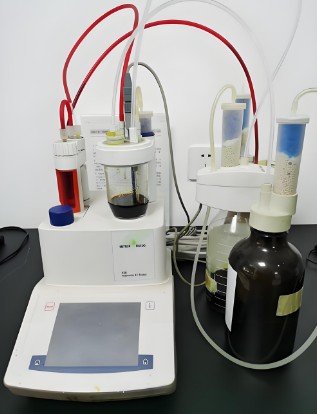
- Water absorption and core moisture content after immersion and humidity aging — gravimetric determination of water uptake per EN 12087 and ASTM C272 on the exposed core, with moisture profiling by Karl Fischer titration across the panel thickness to identify condensation planes.
- Edge seal and joint sealant integrity after aging — evaluation of sealant adhesion, cracking, and water penetration at panel side joints and end laps using dynamic movement and water spray per ASTM C1601 and internal protocols simulating differential thermal movement.
- Resistance to pollutants and industrial atmospheres — exposure to SO2, NOx, and salt-laden atmospheres in controlled environmental chambers to measure the rate of facing degradation and core acidification under realistic urban and marine conditions.
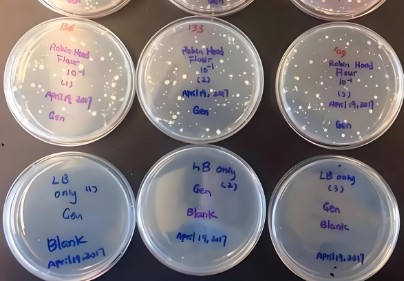
- Biological resistance and mold growth assessment on aged panels — inoculation and incubation of panel core and facing materials per ASTM G21 and EN ISO 846 after hygrothermal aging, verifying that no fungal growth develops over the expected service life in humid climates.
Reaction-to-Fire Performance of Aged Sandwich Panels
- Euroclass classification after aging — single burning item test (EN 13823), small flame test (EN ISO 11925-2), and bomb calorimetry (EN ISO 1716) on panels that have been subjected to hygrothermal cycling, confirming that the fire classification remains valid after aging.
- Large-scale fire testing per EN 13501-1 and FM 4880/4881 — room corner test and insurance-related full-scale fire propagation tests on aged panels to demonstrate that core and facing degradation does not increase flame spread or smoke production over the building life.
- Smoke density and toxicity after aging — ISO 5659-2 and FTIR toxic gas analysis on aged specimens to confirm that decomposition products and smoke density remain within acceptable limits for evacuation safety.
Report Recognition and ISO/IEC 17025 Compliance
All methods described in this detection of aging and service life of building metal sandwich insulation materials are covered by our ISO/IEC 17025 accreditation scope. Our reports are accepted by European notified bodies for CE marking under the Construction Products Regulation, by North American building officials and insurance laboratories, and by regulatory authorities in the Gulf, Southeast Asia, and Australia. Whether you need an initial type test for a new sandwich panel system, a life cycle assessment input, or an independent verification of aged performance claims, we provide the technical depth and documentation integrity that global construction supply chains demand.