
Cylinder Compression Strength Testing Service – Accredited Uniaxial Compressive Strength Evaluation for Global Markets
Our internationally accredited laboratory delivers a specialist cylinder compression strength test service that provides construction companies, concrete producers, geotechnical engineers, metallurgical processors, plastics manufacturers and materials researchers worldwide with the independent, traceable data they need to verify the load‑bearing capacity, the failure behaviour and the structural integrity of cylindrical specimens under precisely controlled axial compression. Every test is conducted under the rigorous framework of ISO/IEC 17025, and each report bearing the ILAC mark is unconditionally accepted by regulatory authorities, notified bodies and supply‑chain partners in all major economies. The cylinder compression strength test is the most fundamental mechanical evaluation for a wide variety of materials – from hardened concrete and natural stone to ductile metals and brittle ceramics – and it quantifies the maximum compressive stress that a specimen can withstand before crushing, the modulus of elasticity and the deformation at failure. For a ready‑mix plant certifying a concrete pour to a structural engineer, a quarry operator classifying a dimension‑stone deposit, or a medical‑device developer verifying the strength of a bone‑cement cylinder, this service provides the legally robust, defensible data that underpin material certification, design validation and compliance with the relevant ASTM, ISO, EN and customer‑specified standards.
Product Samples We Regularly Subject to Cylinder Compression Strength Tests
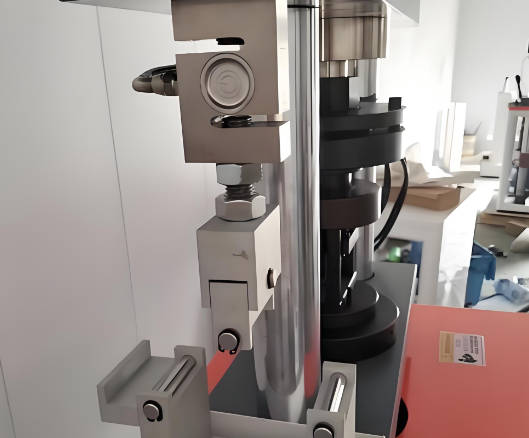
Our servo‑hydraulic and electromechanical compression testing machines with capacities from 10 kN to 3 000 kN accommodate cylindrical specimens of various sizes and material classes. The following categories represent the items most frequently evaluated through our cylinder compression strength test programme:
- Concrete cylinders and drilled cores – 150 mm × 300 mm and 100 mm × 200 mm cast cylinders, and diamond‑drilled cores extracted from existing structures for conformity assessment and structural health monitoring
- Mortar, grout and cementitious repair materials – cylindrical specimens of repair mortars, self‑levelling compounds, grouts and fibre‑reinforced cementitious composites
- Natural stone and dimension‑stone cylinders – granite, limestone, marble, sandstone and basalt core specimens for the determination of the uniaxial compressive strength used in the design of foundations, cladding and monuments
- Metallic materials and alloys – solid and hollow cylindrical specimens of steel, aluminium, copper, titanium and nickel‑base alloys, including the additively manufactured and the powder‑metallurgy test bars
- Plastics and polymer composites – injection‑moulded or machined cylinders of thermoplastics, thermosets, glass‑fibre and carbon‑fibre reinforced laminates, and rigid foam cores
- Wood, bamboo and engineered timber products – cylindrical dowels, turned‑wood specimens and densified‑wood cylinders for the characterisation of the compressive behaviour parallel and perpendicular to the grain
- Ceramics, glass and advanced technical materials – sintered alumina, zirconia, silicon carbide, porcelain, glass‑ceramics and hardmetal cylinders for the electronic, the medical‑device and the wear‑part industries
- Biomedical cements and bone‑analogue materials – polymethyl‑methacrylate bone‑cement cylinders, calcium‑phosphate and calcium‑sulfate cylinders, and synthetic bone‑scaffold specimens
Concrete, Mortar and Cementitious Cylinders – Cylinder Compression Strength Test According to ASTM C39, EN 12390‑3 and ISO 7500‑1
- Determination of the compressive strength of cylindrical concrete specimens according to ASTM C39/C39M (Standard Test Method for Compressive Strength of Cylindrical Concrete Specimens) and EN 12390‑3 (Testing hardened concrete – Compressive strength of test specimens): a 150 mm‑diameter × 300 mm‑long cylinder, or a 100 mm‑diameter × 200 mm‑long cylinder, is placed between two hardened‑steel platens and loaded at a constant stress rate of 0.6 ± 0.2 MPa/s until failure. The maximum load sustained is recorded, and the compressive strength in megapascals is reported to the nearest 0.1 MPa. The test includes the measurement of the cylinder density and the visual assessment of the fracture pattern. This cylinder compression strength test is the mandatory acceptance criterion for the structural concrete delivered to every major construction site, and it directly supports the conformity assessment according to EN 206‑1 and the ACI 318 building code.
- Compressive strength of drilled cores extracted from existing structures according to ASTM C42/C42M and EN 12504‑1: cores with a length‑to‑diameter ratio of 1.0 to 2.0 are tested, and the result is corrected for the ratio, the presence of the reinforcement and the moisture condition. The estimated in‑situ concrete strength is reported, providing the data that the structural engineer uses to assess the safety and the remaining service life of the building or the bridge.
- Determination of the static modulus of elasticity and the Poisson's ratio of concrete cylinders according to ASTM C469/C469M and EN 12390‑13: the cylinder is instrumented with a compressometer and an extensometer, and it is loaded cyclically to 40 % of the estimated compressive strength. The secant modulus of elasticity and the Poisson's ratio are calculated from the stress‑strain curve, providing the essential parameters for the deformation analysis and the finite‑element modelling of the concrete structure.
- Compressive testing of repair mortars, grouts and self‑levelling compounds on cylindrical specimens according to EN 1015‑11 and EN 13892‑2: cylinders are cast from the site‑mixed or the laboratory‑prepared material, cured under the standardised conditions and compressed. The compressive strength and the modulus are reported, verifying that the repair or the levelling material meets the strength class specified for the floor or the structural‑repair application.
- Influence of the curing condition, the temperature and the moisture content on the cylinder compression strength of the concrete: cylinders are cured in water, in a fog room or under the ambient conditions, and the compressive strength is measured at 1, 3, 7, 28 and 90 days, providing the maturity‑strength relationship that the contractor uses to schedule the form‑work removal and the post‑tensioning.
Metallic Materials and Alloys – Cylinder Compression Testing According to ASTM E9, ISO 6892‑1 and EN 12390‑4
- Determination of the compressive yield strength and the compressive stress‑strain curve of metallic cylinders according to ASTM E9 (Standard Test Methods of Compression Testing of Metallic Materials at Room Temperature) and the principles of ISO 6892‑1: a solid cylinder with a height‑to‑diameter ratio of 1.5 to 2.5 is compressed between two flat, hardened‑steel platens lubricated with a molybdenum‑disulfide or a PTFE film to minimise the barrelling. The 0.2 % proof strength in compression, the compressive yield point, the maximum compressive stress and the compressive modulus are reported. This cylinder compression strength test is essential for the qualification of bearing steels, crankshaft materials, hydraulic‑piston alloys and the sintered bushings used in the machinery, the automotive and the aerospace industries.
- Compressive testing of grey and ductile cast‑iron cylinders according to EN 1561 and EN 1563: cylinders machined from separately cast test bars or from cast‑on coupons are compressed, and the compressive strength – which is typically several times higher than the tensile strength – is measured, providing the design data for the machine‑tool frames, the press columns and the brake components.
- Elevated‑temperature compression testing of metallic cylinders up to 800 °C according to ISO 6892‑2 and ASTM E209: the specimen is heated in a three‑zone furnace under an argon or a vacuum atmosphere, and the compressive yield strength and the ultimate compressive strength are determined at the service temperature, supporting the design of the power‑plant steam‑piping, the turbine discs and the aero‑engine compressor blades.
- Compressive testing of sintered and powder‑metallurgy cylindrical compacts according to ASTM B925: the green and the sintered compacts are tested, and the compression‑strength evolution with the density and the sintering parameters is reported, guiding the optimisation of the manufacturing process for the gears, the bearings and the structural parts.
- Buckling and post‑buckling behaviour of hollow metallic cylinders under axial compression: a thin‑walled cylindrical shell is compressed, and the critical buckling load, the post‑buckling residual strength and the energy‑absorption capacity are measured, providing the data that the crash‑safety engineer uses to design the energy‑absorbing crush‑tubes for the vehicle front‑end structures.
Plastics, Polymers and Composite Cylinders – Compression Testing According to ISO 604, ASTM D695 and ASTM D6641
- Determination of the compressive properties of rigid plastics according to ISO 604 (Plastics – Determination of compressive properties) and ASTM D695: cylindrical specimens with a height‑to‑diameter ratio of 2:1 are compressed between two parallel anvils at a constant crosshead speed. The compressive yield stress, the compressive strength at break, the compressive modulus and the strain at the yield or at the break are reported. This cylinder compression strength test distinguishes the ductile thermoplastics from the brittle grades and verifies that the injection‑moulded or the extruded component can withstand the design compressive load without the plastic collapse.
- Compressive testing of fibre‑reinforced plastic composite cylinders according to ISO 14126 and ASTM D6641: the specimen is loaded in a combined‑loading compression fixture to prevent the Euler buckling, and the in‑plane compressive strength and the modulus in the fibre direction and the transverse direction are determined, providing the data for the design of the composite bridge‑decks, the aircraft‑stiffeners and the wind‑turbine spar caps.
- Compression testing of rigid foam cylinders and the core materials for the sandwich panels according to ASTM D1621 and ISO 844: the cylindrical foam specimen is compressed, and the compressive stress at 10 % deformation and the maximum compressive strength are reported, classifying the insulation board or the core material for the load‑bearing applications.
- Compressive creep and the stress‑relaxation of the plastic and the composite cylinders under a sustained load: a constant compressive stress is applied to the cylinder for a defined period, and the time‑dependent deformation is recorded, providing the data that the design engineer uses to predict the long‑term deflection of the plastic structural elements.
Rock, Stone and Geotechnical Cylindrical Specimens – Compression Strength According to ASTM D7012 and ISRM Suggested Methods
- Determination of the uniaxial compressive strength of intact rock core specimens according to ASTM D7012 (Standard Test Methods for Compressive Strength and Elastic Moduli of Intact Rock Core Specimens under Varying States of Stress and Temperatures) and the ISRM Suggested Method: a diamond‑drilled core specimen with a length‑to‑diameter ratio of 2.5 to 3.0 is placed between two spherically‑seated platens and loaded to failure. The unconfined compressive strength in megapascals and the Young's modulus are reported, providing the fundamental geotechnical parameters for the design of the foundations, the tunnels, the slopes and the rock‑support systems. This cylinder compression strength test is routinely performed on the drill‑core samples from the site‑investigation boreholes, and the data are used to classify the rock mass and to select the excavation method.
- Point‑load index and the correlation with the cylinder uniaxial compressive strength: the point‑load test is performed on the irregular lump specimens or the core pieces, and the point‑load index Is(50) is converted to the estimated uniaxial compressive strength using the site‑specific or the published correlation factors, enabling the rapid, field‑based strength assessment of the rock.
- Triaxial compression testing of rock cylinders under the confining pressure: the cylindrical rock specimen is jacketed and placed in a Hoek cell, and a confining pressure is applied while the axial load is increased. The Mohr‑Coulomb failure envelope, the cohesion c and the angle of internal friction φ are determined, providing the advanced strength parameters for the well‑bore‑stability analysis, the hydraulic‑fracturing design and the deep‑mining operations.
- Influence of the water saturation, the weathering and the freeze‑thaw cycling on the cylinder compressive strength of the rock: the specimen is tested in the dry, the saturated and the weathered conditions, and the reduction in the strength and the modulus is quantified, supporting the assessment of the long‑term durability of the rock‑fill, the rip‑rap and the dimension‑stone in the hydraulic and the coastal engineering projects.
Ceramics, Glass and Advanced Technical Materials – Cylinder Compression Test According to ASTM C1424, ASTM C773 and ISO 4506
- Determination of the compressive strength of advanced technical ceramics according to ASTM C1424 (Standard Test Method for Monotonic Compressive Strength of Advanced Ceramics at Ambient Temperature) and the relevant ISO standards: small, precisely machined cylinders with optically polished and parallel ends are compressed in a carefully aligned fixture, and the characteristic strength and the Weibull modulus are reported. The data are used for the design of the ceramic armour, the cutting‑tool inserts, the medical implants and the furnace rollers.
- Compressive strength of glass and glass‑ceramic cylinders: the cylinder is compressed, and the ultimate compressive strength – which is typically an order of magnitude higher than the tensile strength – is reported, supporting the structural design of the glass columns, the fins and the beams in the architectural projects.
- Compression testing of hardmetals and cermets according to ISO 4506 (Hardmetals – Compression test): the ultimate compressive strength and the yield point of the cemented‑carbide cylinders are measured, providing the quality‑control data for the cutting‑tool and the wear‑part manufacturers.
- High‑temperature compression testing of the ceramic and the refractory cylinders: the specimen is heated to the service temperature – up to 1 500 °C – in a furnace, and the compressive strength and the stress‑strain curve are determined, supporting the design of the kiln furniture, the furnace linings and the thermal‑barrier coatings.
Report Acceptance and Global Regulatory Compliance
All measurements performed within our cylinder compression strength testing service are executed under the fully accredited scope of our ISO/IEC 17025 quality management system. Each test report that carries the ILAC mark is therefore automatically recognised by regulatory authorities, notified bodies, customs offices and supply‑chain partners in all major economies. For construction companies, concrete producers, quarry operators, metallurgical laboratories, plastics converters and advanced‑ceramic manufacturers anywhere in the world, the report constitutes legally robust, internationally accepted evidence that the compressive strength, the modulus of elasticity and the deformation behaviour of the cylindrical specimen have been determined in accordance with the applicable ASTM, ISO, EN, ISRM and customer‑specified methods. The documentation can be directly used to support CE marking under the Construction Products Regulation, the issue of inspection certificates according to EN 10204 or equivalent national standards, the compilation of technical files for type‑examination, and the resolution of commercial and technical disputes concerning the load‑bearing capacity of any material.




