Comprehensive Corrosion-Resistant, Antibacterial and Fire-Resistant Composite Board Testing Service for Global High-Performance Applications
As an ISO/IEC 17025 accredited laboratory, we deliver a rigorous corrosion-resistant, antibacterial and fire-resistant composite board testing service that verifies the multi-functional performance of advanced panels used in demanding building, healthcare, marine, and industrial environments. Our corrosion-resistant, antibacterial and fire-resistant composite board testing service supports manufacturers and exporters who must demonstrate conformity to ASTM, ISO, EN, and regional construction and hygiene regulations across the European Union, North America, the Middle East, and Asia. Every test is performed under our CNAS-accredited quality system, producing reports that are accepted by notified bodies, building authorities, and procurement teams worldwide.

Product Samples We Regularly Test
- Metal-faced composite boards with anti-corrosion coatings — for chemical plants, offshore platforms, and coastal architectural cladding
- Antibacterial high-pressure laminates and compact boards — for hospital walls, laboratory furniture, and food processing facilities
- Fire-resistant mineral core composite panels — with magnesium hydroxide or aluminum hydroxide filled cores for facades and interior partitions
- Fiber-reinforced polymer composite boards — for corrosive industrial walkways, tank linings, and marine bulkheads
- Wood-plastic composite boards with biocidal treatments — for outdoor decking, public seating, and humid environments
- Multi-layer sandwich boards combining metal, polymer, and mineral layers — for high-performance building envelopes and cleanroom construction
- Antibacterial and fire-rated decorative laminates — for transport interiors, public buildings, and commercial fit-outs
Corrosion-Resistant Composite Board Testing for Aggressive Environments
- Neutral salt spray resistance per ISO 9227 and ASTM B117 — the composite board is exposed to continuous salt fog for up to 3000 hours, and the development of red rust, blistering, and under-film corrosion creep at scribed edges is evaluated to verify long-term durability in coastal and marine atmospheres.
- Cyclic corrosion and acidified salt spray testing per ISO 14993 and ASTM G85 — the board is subjected to alternating wet-dry cycles with acidified salt solution to simulate the most aggressive industrial and chemical processing environments, measuring the resistance to pitting and coating degradation.
- Resistance to acids, alkalis, and industrial chemicals per ISO 175 and ASTM D543 — the board surface is immersed or spotted with a range of corrosive chemicals including sulfuric acid, sodium hydroxide, and organic solvents, and the change in appearance, mass, and mechanical properties is recorded to guarantee compatibility with the intended process environment.
- Humidity and condensation resistance per ISO 6270-2 and ASTM D2247 — the composite board is exposed to condensing humidity at elevated temperatures to verify no delamination, blistering, or loss of adhesion occurs in tropical and high-moisture service conditions.
- Galvanic corrosion compatibility assessment per ASTM G71 — when the composite board is intended for use with dissimilar metal fasteners or frames, the galvanic potential difference is measured to ensure the board does not create a corrosion cell that accelerates degradation of the supporting structure.
- Coating adhesion and thickness verification per ISO 2409, ISO 4624, and ISO 2178 — the protective coating system is tested for bond strength and dry film thickness to ensure the anti-corrosion layer remains intact under mechanical stress and thermal expansion.
Antibacterial and Antimicrobial Performance Testing for Composite Boards
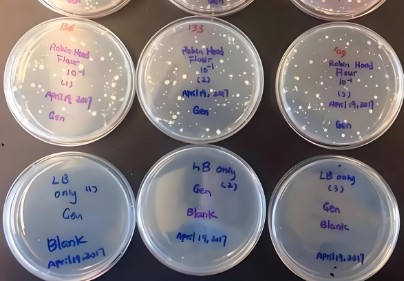
- Antibacterial activity against common pathogens per ISO 22196 and JIS Z 2801 — the composite board surface is inoculated with Staphylococcus aureus and Escherichia coli, and the reduction in viable bacteria after 24 hours is measured to verify the claimed antibacterial efficacy and to ensure the board contributes to hygienic surface protection.
- Antifungal and mold resistance per ASTM G21 and ISO 846 — the board is inoculated with Aspergillus niger, Penicillium funiculosum, and other fungal spores, and the visible growth is assessed after 28 days under high humidity to confirm the board resists mold colonization in damp environments.
- Antiviral activity testing per ISO 21702 — for boards used in healthcare and public spaces, the reduction in infectious virus particles on the surface is measured to verify the antimicrobial treatment provides antiviral protection.
- Durability of antibacterial treatment after cleaning and abrasion per internal protocols and ASTM D4060 — the board is subjected to repeated wiping, cleaning, and mechanical abrasion cycles, and the antibacterial efficacy is remeasured to confirm the antimicrobial function is retained over the service life.
- Resistance to bacterial biofilm formation per ASTM E2871 — the composite board is tested in a flow cell or static culture to evaluate its ability to inhibit biofilm development, which is critical for surfaces in food processing and medical facilities.
- Leaching and migration of biocidal substances per ISO 10993-5 and EU Biocidal Products Regulation — the board is extracted with water and food simulants to verify that antimicrobial additives do not leach into the environment or contact fluids at unsafe levels.
Fire-Resistant and Reaction-to-Fire Testing for Composite Boards
- Euroclass reaction-to-fire classification per EN 13501-1 — the composite board is tested for ignitability, flame spread, and heat release using the single burning item test and the small flame test, generating the classification required for CE marking in European construction markets.
- Surface flame spread and smoke developed index per ASTM E84 — the Steiner tunnel test measures the flame spread and smoke generation of the composite board, verifying Class A or Class B performance for North American building code compliance and insurance requirements.
- Non-combustibility and limited combustibility per ISO 1182 and EN ISO 1716 — for mineral-core composite boards, the furnace test and calorific potential measurement confirm the core material does not contribute fuel to a fire, supporting use in fire-rated assemblies.
- Fire resistance integrity and insulation of the complete panel assembly per EN 1364-1 and ASTM E119 — a full-scale wall or ceiling specimen incorporating the composite board is exposed to the standard fire curve to establish the fire resistance rating for compartmentation and structural protection.
- Smoke density and toxic gas emission per ISO 5659-2 — for boards used in enclosed public spaces and transport, the specific optical density of smoke and the concentration of toxic combustion gases are measured to meet life safety evacuation requirements.
- Glow-wire ignitability and hot-wire resistance per IEC 60695-2-11 — the board is subjected to a glow-wire at defined temperatures to simulate contact with an overheated electrical component, verifying the material does not ignite or self-sustain combustion.
- Cone calorimetry for heat release rate per ISO 5660-1 and ASTM E1354 — the board is irradiated with a defined heat flux, and the heat release rate, total heat released, and effective heat of combustion are measured to provide the fundamental fire properties for performance-based fire engineering design.
Mechanical and Structural Performance Testing of Composite Boards
- Flexural strength and modulus per ISO 178, ASTM D790, and EN 310 — three-point bending tests determine the board's resistance to bending and its stiffness, ensuring the composite panel can support loads, span supports, and resist wind pressure without excessive deflection or failure.
- Tensile strength and elongation per ISO 527-2 and ASTM D638 — specimens are pulled to failure to measure the ultimate tensile strength and stretch, verifying the board can withstand pulling and handling stresses during installation and service.
- Impact resistance by Charpy and falling dart methods per ISO 179-1, ASTM D256, and ASTM D5420 — the energy absorbed during impact is measured to ensure the board withstands accidental knocks, tool drops, and hail without cracking or delamination.
- Compressive strength and indentation resistance per ISO 604 and ASTM D695 — the board is compressed to failure to confirm its load-bearing capacity when used as structural flooring, wall panels, or support surfaces.
- Screw and fastener pull-out strength per ASTM D1761 and EN 320 — the force required to pull a screw or fastener from the board edge or face is measured, providing design data for mechanically fastened composite board systems.
- Fatigue and repeated load testing per ASTM D7774 — the board is subjected to cyclic loading to simulate years of service stress, and the number of cycles to failure is recorded to predict long-term durability under dynamic loads.
Dimensional Stability, Weathering, and Environmental Durability Testing
- Dimensional stability under heat and moisture per ISO 16999 and ASTM D1037 — the board is exposed to controlled temperature and humidity cycles, and the percentage linear change is measured to ensure the composite board remains flat and dimensionally accurate in service.
- Water absorption and moisture resistance per ASTM D570 and ISO 62 — the mass of water absorbed after immersion is quantified to predict the board's resistance to swelling, warping, and loss of mechanical properties in wet environments.
- Freeze-thaw resistance per ASTM C666 and EN 12091 — water-saturated board specimens are cycled between freezing and thawing to verify no cracking, spalling, or loss of structural integrity occurs in cold climates.
- Accelerated weathering by xenon-arc and fluorescent UV exposure per ISO 4892-2, ASTM G155, and ASTM G154 — the board surface is subjected to simulated sunlight and moisture cycles to evaluate color retention, gloss loss, chalking, and retained mechanical properties after years of outdoor exposure.
- Resistance to cleaning agents and disinfectants per ISO 2812-1 and ASTM D543 — the composite board surface is exposed to common hospital disinfectants, industrial cleaners, and chemical agents to verify no staining, softening, or loss of antibacterial and fire-resistant properties occurs during routine maintenance.
- Thermal cycling and thermal shock per IEC 60068-2-14 — the board is cycled between hot and cold extremes to verify the multi-layer structure does not delaminate or crack under thermal expansion and contraction stresses.
Chemical Safety and Restricted Substance Compliance for Composite Boards
- RoHS compliance per IEC 62321 and EU Directive 2011/65/EU — quantitative screening for lead, mercury, cadmium, hexavalent chromium, PBBs, and PBDEs in the polymer matrix, flame retardants, colorants, and surface coatings to ensure the board meets global substance restrictions.
- REACH Annex XVII and SVHC screening — targeted analysis of Substances of Very High Concern including specific phthalate plasticizers, brominated flame retardants, and organotin stabilizers that may be present in the composite board formulation.
- Formaldehyde and volatile organic compound emissions per ISO 16000-3 and EN 16516 — chamber emission testing verifies that the composite board does not release harmful VOCs or formaldehyde into indoor air, a critical requirement for healthcare, school, and residential applications.
- Heavy metals in packaging per EU Directive 94/62/EC — verification that the sum concentration of lead, cadmium, mercury, and hexavalent chromium in the protective packaging, labels, and strapping is below the 100 ppm regulatory limit.
- Polycyclic aromatic hydrocarbons per AfPS GS 2019:01 PAK — for carbon-black-filled or dark-colored composite boards, the 15 restricted PAHs are extracted and quantified to confirm compliance with European consumer product safety limits.
- Food contact migration testing per EU Regulation 10/2011 and FDA 21 CFR — for boards used in food processing areas, the migration of substances into food simulants is measured to verify safety for indirect food contact.
Report Recognition and ISO/IEC 17025 Compliance
Every test method described in this corrosion-resistant, antibacterial and fire-resistant composite board testing service is covered by our ISO/IEC 17025 scope of accreditation. Our technical reports are accepted by European notified bodies for CE marking under the Construction Products Regulation, by North American building code officials and healthcare regulators, and by customs and procurement authorities across the Middle East, Australia, and Asia. Whether you require a complete qualification dossier for a new multi-functional composite board, a batch release inspection for an export shipment, or a root cause failure analysis of a field performance issue, our laboratory provides the measurement accuracy and regulatory expertise that the global high-performance building and industrial materials industry demands.