Copper Pipe Inspection Service for Global Plumbing and Industrial Applications
As an ISO/IEC 17025 accredited laboratory, we deliver a comprehensive copper pipe inspection service that verifies chemical composition, mechanical strength, dimensional accuracy, surface integrity, and corrosion resistance. Our copper pipe inspection service supports manufacturers and exporters of seamless copper tubes, plumbing pipes, and industrial copper conduits who must demonstrate conformity to ASTM, EN, ISO, and regional plumbing and pressure equipment codes across the European Union, North America, the Middle East, and Asia. Every test is conducted under our CNAS-accredited quality system, producing reports that are accepted by notified bodies, building authorities, and procurement teams worldwide.

Product Samples We Regularly Test in Our Copper Pipe Inspection Service
- Phosphorus-deoxidized copper tubes — ASTM B88 and EN 1057 seamless water and gas pipes for domestic plumbing and heating
- Air conditioning and refrigeration copper pipes — ASTM B280 and JIS H3300 C1220T tubes for HVAC and refrigeration systems
- Medical gas copper pipes — ASTM B819 and ISO 7396-1 degreased and capped tubes for oxygen and nitrous oxide distribution
- Industrial copper and copper alloy tubes — ASTM B111 and EN 12451 condenser and heat exchanger tubing for power plants and desalination
- Copper pipe coils and pancake coils — soft-temper and hard-temper copper tubes for field bending and brazing
- Coated and insulated copper pipes — polyethylene-sheathed and pre-insulated copper tubes for underground water and district heating networks
- Copper-nickel alloy pipes — CuNi 90/10 and 70/30 tubes for marine, offshore, and shipbuilding seawater systems
Core Copper Pipe Inspection Service for Chemical and Metallurgical Properties
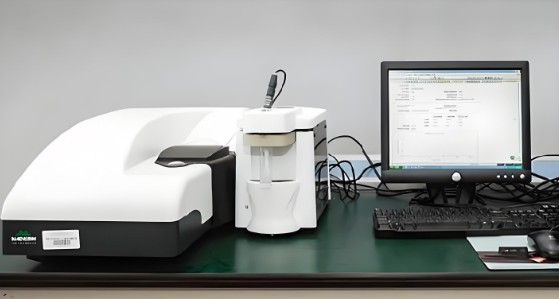
- Optical emission spectrometry and combustion analysis for alloy verification per ASTM E478 and ISO 4739 — the copper and phosphorus content, along with trace elements such as iron, lead, and bismuth, are quantified to confirm the pipe material meets the chemical composition limits for the specified grade, ensuring compliance with drinking water regulations and brazing compatibility.
- Microstructural examination and grain size measurement per ASTM E112 and ISO 2624 — the polished and etched cross-section is examined under an optical microscope to verify the grain size and to detect any embrittling phases or cuprous oxide inclusions that could lead to premature failure in service.
- Hydrogen embrittlement resistance per ASTM B577 and ISO 2626 — a specimen is heated in a hydrogen atmosphere and then examined metallographically to confirm the copper pipe is free from oxygen that would cause embrittlement during brazing or high-temperature service.
- Positive material identification using handheld XRF — non-destructive verification directly on the pipe surface to prevent material grade mix-ups during storage, cutting, and shipment.
Mechanical and Formability Testing in Our Copper Pipe Inspection Service
- Tensile strength, yield strength, and elongation per ASTM E8/E8M and ISO 6892-1 — longitudinal strip or full-section specimens are pulled to failure to measure the ultimate tensile strength and the percentage elongation, verifying the copper pipe conforms to the required temper designation for bending, flaring, and brazing.
- Hardness testing by Rockwell and Vickers methods per ASTM E18 and ISO 6507-1 — hardness values are measured on the pipe wall cross-section to verify uniform annealing and to confirm the pipe is in the specified soft, half-hard, or hard temper condition.
- Flattening and drift expanding tests per ASTM B153 and ISO 8493 — the copper pipe is flattened between parallel plates or expanded over a conical mandrel to a specified percentage without cracking, demonstrating the ductility required for mechanical joint assembly and field bending.
- Reverse bend and flaring tests per ASTM B153 and ISO 8494 — the tube end is flared to a defined angle and inspected for splits or surface discontinuities, confirming the pipe can accept compression and flare fittings without leaking.
Dimensional and Visual Inspection in Our Copper Pipe Inspection Service
- Outside diameter, wall thickness, and ovality per ASTM B251 and EN 1057 — laser micrometers and ultrasonic thickness gauges verify all dimensions conform to the specified tolerances, ensuring the copper pipe fits correctly into standard fittings and can be brazed without gaps.
- Straightness and length measurement per ASTM B251 and customer specifications — the maximum deviation from a straight line is measured with a laser alignment system or taut wire to guarantee the pipe can be installed without kinking or inducing stress in the plumbing system.
- Internal cleanliness, degreasing, and end capping verification for medical gas pipes per ASTM B819 — the pipe interior is inspected by borescope or solvent extraction to confirm it is free from residual drawing lubricants, oxide scale, and particulates that would contaminate the gas stream.
- Visual defect inspection under D65 illumination — systematic examination for pits, scratches, die marks, and corrosion stains against agreed acceptance criteria and master reference samples.
Non-Destructive Testing and Leak Tightness Verification
- Eddy current testing for surface and near-surface defects per ASTM E243 and ISO 10893-2 — encircling coil eddy current systems scan the full pipe length at production speeds to detect pinholes, seams, laps, and slivers that would cause leaks under pressure.
- Ultrasonic wall thickness mapping and lamination detection per ASTM B594 — pulse-echo ultrasonic testing verifies the pipe wall thickness at multiple points and detects any internal laminations or delaminations that would compromise the pressure rating.
- Hydrostatic pressure and leak tightness test per ASTM B828 and ISO 1402 — the complete copper pipe is pressurized with water to a defined pressure and held for a code-specified duration, with zero visible leakage or pressure drop permitted to verify the pipe's pressure containment capability.
- Pneumatic pressure and bubble emission testing per ASTM E1003 — for capillary and small-diameter copper tubes, a compressed air or nitrogen pressure test with immersion in water detects micro-leaks at joints and the tube body.
Corrosion Resistance and Environmental Testing for Copper Pipes
- Stress corrosion cracking resistance in ammoniacal atmosphere per ASTM G37 and ISO 6957 — stressed specimens of the copper pipe are exposed to a moist ammonia vapor environment, and the time to cracking is recorded to verify the pipe material is resistant to stress corrosion cracking in service environments containing ammonia or nitrates.
- Dezincification resistance of copper alloy pipes per ISO 6509 — for brass and copper-zinc alloy tubes, the depth of dezincification after exposure to a copper chloride solution is measured to confirm the material is resistant to selective zinc leaching in potable water and seawater.
- Neutral salt spray and cyclic corrosion resistance per ISO 9227 and ASTM B117 — the copper pipe, with and without protective coatings, is exposed to salt fog for up to 1000 hours to evaluate pitting and patina formation in coastal and industrial environments.
- Pitting corrosion resistance in synthetic tap water per ASTM D2688 and EN 12502 — the copper pipe is immersed in a controlled water chemistry representing aggressive drinking water, and the pitting rate is measured to predict the service life of domestic plumbing installations.
Report Recognition and ISO/IEC 17025 Compliance
All test methods described in this copper pipe inspection service are covered by our ISO/IEC 17025 scope of accreditation. Our test reports and certificates are accepted by European notified bodies for CE marking under the Construction Products Regulation and the Pressure Equipment Directive, by North American building officials and plumbing code authorities referencing ASTM and ASSE standards, and by customs and procurement agencies across the Middle East, Australia, and Asia. Whether you require a complete qualification dossier for a new copper pipe product, a batch release inspection for an export shipment, or a root cause failure investigation of a pitted or leaking copper plumbing system, our laboratory provides the measurement accuracy and metallurgical expertise that the global copper tubing industry demands.